
The Legal Side of Online Gambling While Travelling
Understanding the complex legal realities, tax implications, and risks of accessing online gambling platforms while crossing international borders.

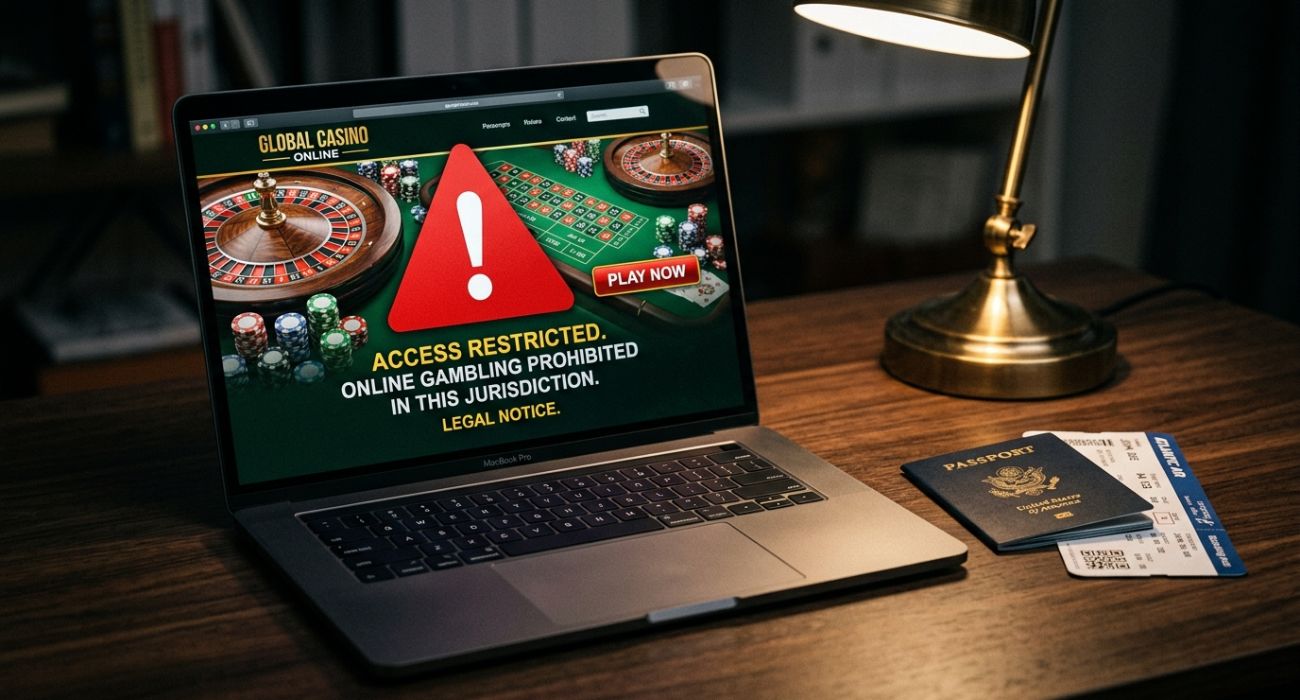
Image generated by AI
Somewhere between a long-haul flight and a hotel room in a city you've never slept in before, the urge to unwind with a bit of online gambling is entirely understandable.
A few spins, maybe a hand of blackjack, it sounds simple.
But the legal reality of gambling online while crossing borders is far messier than most travellers realise, and getting it wrong can have consequences that go well beyond a lost bet. Here's the thing: online gambling legality isn't governed by where a platform is licensed. It's governed by where you are sitting when you press play.
Your Location Is the Jurisdiction That Matters
This is the single most misunderstood aspect of cross-border online gambling.
A player might be registered with a platform licensed in Malta, using a card issued in the UK, while physically sitting in a country where online gambling is flatly prohibited, and that player is, technically, breaking local law.
Most gambling platforms operate under licences from reputable regulatory bodies: the UK Gambling Commission, the Malta Gaming Authority, Gibraltar, and Curaçao. These licences determine what the operator can and can't do. They say very little about what's legal for you as a visitor to another country.
Before logging into any platform abroad, it's worth spending five minutes researching the gambling laws of wherever you've landed. Countries like the UAE, Singapore, and much of Southeast Asia take a dim view of online gambling and enforcement, while inconsistent enforcement is not unheard of.
VPNs: A False Sense of Security
A common workaround travellers reach for is a VPN, masking their real location to appear as though they're still at home. On the surface, it solves the problem. In practice, it creates new ones.
Using a VPN to circumvent geo-restrictions on a gambling platform almost universally violates that platform's terms of service. If you win big while connected through a VPN, you may find the platform refuses to pay out, citing a breach of their access rules. More troubling: in jurisdictions where online gambling is illegal, using technical means to access prohibited services can escalate the legal risk rather than reduce it.
Savvy travellers who want to play it safe tend to stick with platforms that are explicitly licensed in and legally accessible from the country they're visiting. For those based in or visiting the UK, resources like Online-Casinos.com offer a useful starting point for finding regulated, compliant options without having to navigate the licensing small print yourself.
What "Legal Grey Area" Actually Means in Practice
Many countries haven't explicitly legislated against online gambling; they've simply never addressed it. This creates what legal professionals call a grey area, and it's a space travellers often misinterpret as permission.
A grey area is not a safe zone. It means the law hasn't caught up yet, not that the activity is condoned. Countries can and do prosecute under existing financial crime, anti-gambling, or public morality legislation, even when no specific online gambling statute exists. The absence of a clear law banning something is a far cry from a law permitting it.
The Tax Question Nobody Thinks to Ask
Even in jurisdictions where online gambling is fully legal for visitors, winnings may carry tax implications, either in the country you're visiting or back home. The UK, for example, does not tax gambling winnings for recreational players, but the rules differ significantly across Europe and become considerably more complex for digital nomads whose tax residency is itself in question.
Anyone spending extended periods abroad and regularly gambling online would be wise to consult a tax professional familiar with both their home jurisdiction and the countries they frequent. It's an unsexy piece of advice, but the kind that saves real money.
The Practical Takeaway
Gambling while travelling isn't inherently risky from a legal standpoint; millions of people do it without incident. The risk comes from assuming that a trusted platform and a functioning internet connection are the only requirements.
They're not. The law that applies is the law of the ground beneath your feet. Understanding that distinction, doing a small amount of research before arriving somewhere new, and choosing regulated platforms that operate transparently in your current jurisdiction, that's how responsible travellers approach it. Everything else is wishful thinking dressed up as strategy.
Disclaimer
This article is for informational and educational purposes only. It does not constitute legal, financial, or professional advice. While we strive to provide accurate and up-to-date information, travel policies, regulations, and conditions change rapidly. Always verify information with official sources before making travel decisions. Nomad Lawyer makes no representations about the accuracy, reliability, completeness, or suitability of the information provided. Readers should consult qualified professionals for advice specific to their circumstances. The views expressed in this article are those of the author and do not necessarily reflect the views of Nomad Lawyer.
Kunal K Choudhary
Co-Founder & Contributor
A passionate traveller and tech enthusiast. Kunal contributes to the vision and growth of Nomad Lawyer, bringing fresh perspectives and driving the community forward.
Learn more about our team →