
Why Modern Air Forces Remain Dependent on the F-4 Phantom II Despite Technological Advances
Breaking airline news and aviation industry updates for 2026.

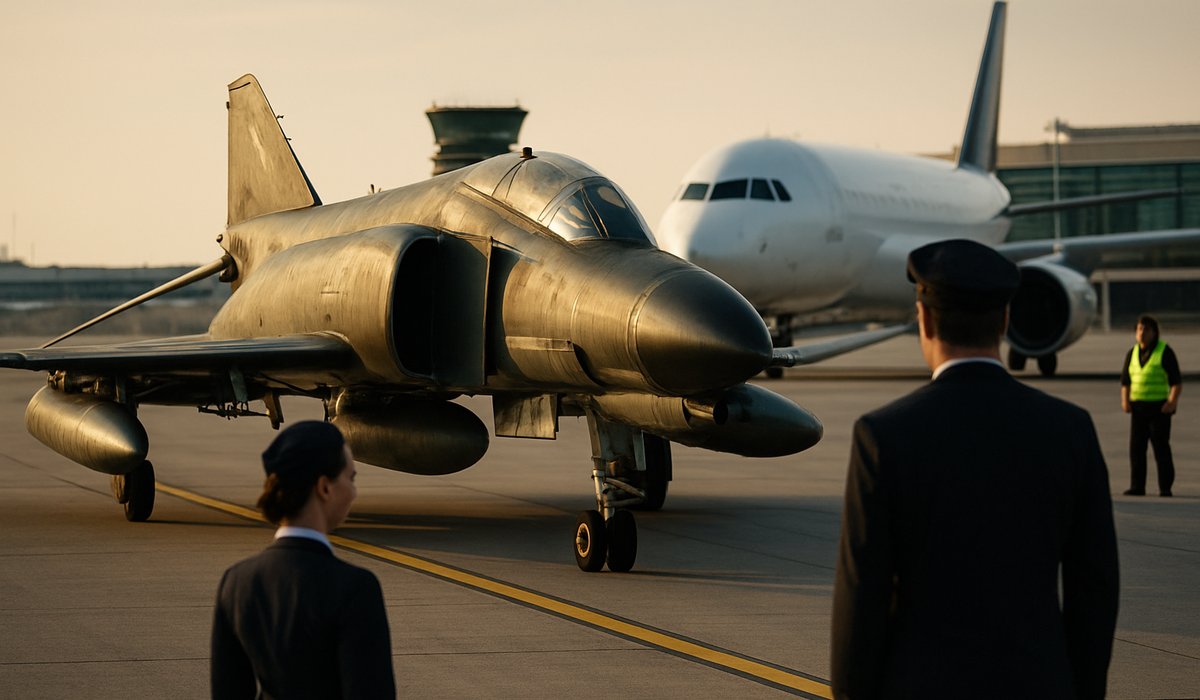
Image generated by AI
Why Modern Air Forces Remain Dependent on the F-4 Phantom II Despite Technological Advances
The Cold War-era fighter's robust engineering continues to outpace contemporary replacement strategies, creating a persistent capability gap in global aviation arsenals
A Design Philosophy That Endures
Decades after its introduction during the height of Cold War tensions, the F-4 Phantom II continues to defy retirement across multiple military branches worldwide. Originally engineered for naval carrier operations, the aircraft's brute-force construction and operational flexibility transformed it into the backbone of American air superiority—a role it maintained across the United States Air Force, Marine Corps, and Navy simultaneously. Today, despite revolutionary advances in avionics and materials science, military aviation specialists grapple with an uncomfortable reality: no single contemporary platform has successfully replicated the Phantom's versatility and combat effectiveness across such diverse operational demands.
The Versatility Challenge
The Phantom's ascendancy stemmed from a fundamentally different design philosophy than modern fighter programs. Built during an era when military requirements prioritized raw power and adaptability over specialization, the aircraft became the Swiss Army knife of tactical aviation. Its robust airframe could absorb extraordinary punishment, carry substantial ordnance loads across multiple configurations, and operate effectively from both forward bases and constrained carrier decks—capabilities that demanded significant engineering compromises in contemporary design.
Modern air forces face a fragmented landscape of specialized platforms: stealth-focused aircraft prioritize radar evasion at the expense of payload capacity; multi-role fighters sacrifice carrier compatibility for extended range; and carrier-capable aircraft often surrender high-altitude performance. The F-4 simply bundled these competing requirements into a single platform through sheer mechanical durability rather than sophisticated integration.
The Modernization Paradox
This fundamental design divergence creates a persistent capability gap that procurement strategists have yet to bridge effectively. While contemporary fighters excel in specific domains—superior avionics, advanced materials, networked warfare capabilities—they frequently sacrifice the operational flexibility that defined the Phantom era. The cost of replacing an entire fleet with specialized platforms often exceeds the economic and logistical burden of maintaining aging airframes with selective modernization programs.
Global air forces from allied nations to emerging powers continue operating Phantom variants, a testament to the aircraft's structural integrity and adaptability. Legacy systems, despite their age, continue demonstrating operational value that justifies continued investment in life-extension programs rather than wholesale replacement initiatives.
FAQ
Why can't modern fighters replace the F-4 Phantom II? Contemporary aircraft prioritize specialization over versatility, whereas the Phantom bundled multiple roles into a single robust platform through engineering-intensive design rather than technological sophistication.
How many countries still operate F-4 Phantoms? Multiple nations, including Turkey, South Korea, and Greece, continue operating upgraded Phantom variants despite availability of newer platforms.
What made the F-4 Phantom so durable? The aircraft's brute-force engineering approach emphasized structural robustness and mechanical redundancy over weight optimization and technological integration.
Are F-4 Phantoms still combat-effective today? With modern avionics upgrades and weapons integration, Phantom variants remain tactically relevant, though operationally limited compared to fifth-generation platforms.
Why haven't air forces completely retired their Phantom fleets? Economics and fleet commonality often favor selective modernization of existing airframes over expensive replacement with specialized platforms.
Related Travel Guides
Flight Delay Compensation Guide 2026
Understanding Airline Route Changes
Airport Security Process Updated (2026)
External Resources
Disclaimer
This article is for informational and educational purposes only. It does not constitute legal, financial, or professional advice. While we strive to provide accurate and up-to-date information, travel policies, regulations, and conditions change rapidly. Always verify information with official sources before making travel decisions. Nomad Lawyer makes no representations about the accuracy, reliability, completeness, or suitability of the information provided. Readers should consult qualified professionals for advice specific to their circumstances. The views expressed in this article are those of the author and do not necessarily reflect the views of Nomad Lawyer.
Kunal K Choudhary
Co-Founder & Contributor
A passionate traveller and tech enthusiast. Kunal contributes to the vision and growth of Nomad Lawyer, bringing fresh perspectives and driving the community forward.
Learn more about our team →