
Taiwan Industrial Tourism Generates NT$6.69B: How Semiconductor Plants and Smart Factories Reshape Experiential Travel
Taiwan's industrial tourism yields NT$6.69B (USD 211M) across 21.36M visits, as scientific tours generate USD 185 per head and anchor regional development.

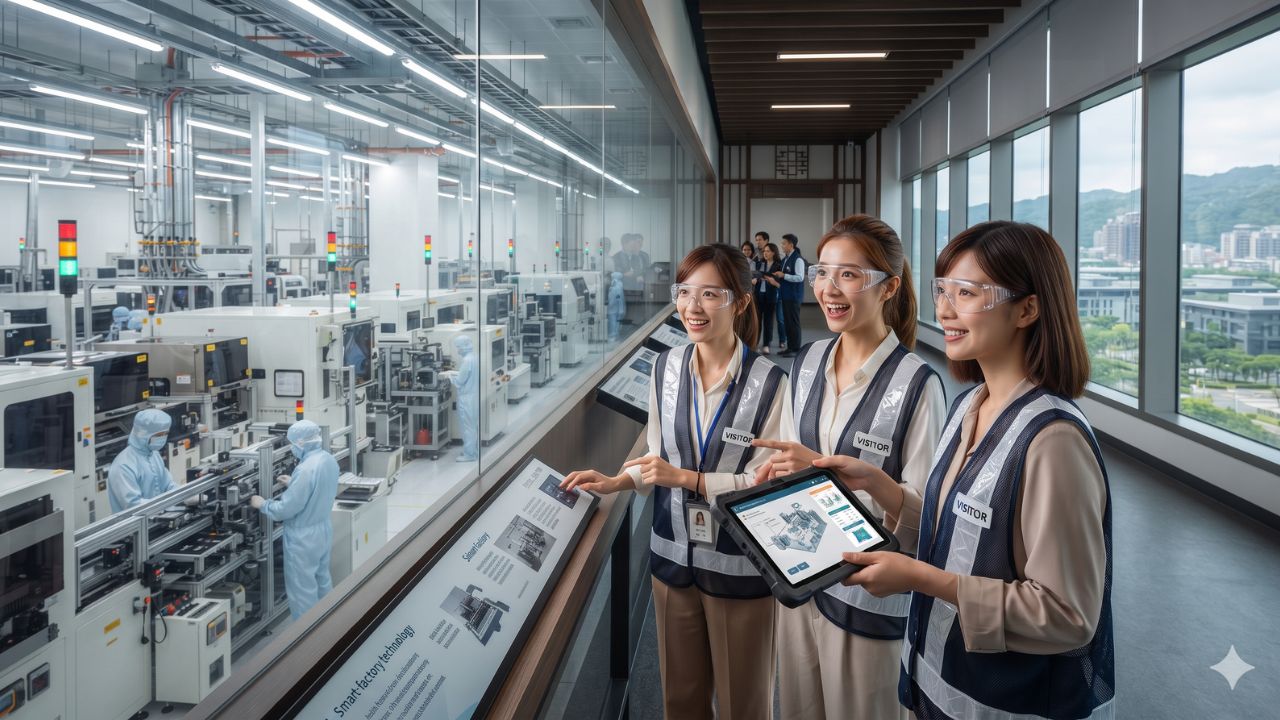
Generating NT$6.69 billion (USD 211 million) in direct annual economic output while attracting 21.36 million visitors across certified operational facilities, Taiwan’s industrial tourism sector has transformed manufacturing complexes into substantial drivers of regional economic growth. Guided by strategic oversight from the Taiwan Tourism Administration and the Industrial Development Administration (IDA), the island has systematically converted operational assembly lines, research campuses, and legacy workshops into specialized experiential destinations. Far from serving merely as company showcases, these certified sites have generated a 14 percent increase in hospitality and retail employment across peripheral industrial districts, providing rural and suburban communities with stable revenue streams independent of traditional metropolitan tourist centers.
The commercial expansion is accelerating under targeted capital allocations. Long-term forecasting models project the sector will expand at a compound annual growth rate (CAGR) between 5.3 percent and 8.5 percent through 2033, supported by an infusion of over USD 450 million in combined public infrastructure funds and private corporate capital. As commercial manufacturing faces global scrutiny regarding supply chain transparency and corporate sustainability overseen by the Ministry of Economic Affairs, Taiwan, opening plant doors directly to international travelers, corporate delegations, and academic groups establishes a resilient operational model for destination diversification.
The Factory Floor as an Economic Engine: Science Hubs Versus Heritage Repurposing
The sectoral architecture across Taiwan is divided into two primary disciplines: high-tech Scientific Tourism and Industrial Heritage Tourism. While both contribute to regional development, their financial return and visitor demographics diverge significantly:
- Scientific Tourism Dominance: Leveraging Taiwan's position in global advanced electronics and semiconductor fabrication, scientific facilities command 68 percent of total sector revenue and capture 62 percent of international tour reservations. Visitors to these advanced production environments spend an average of USD 185 per visit, driven by specialized technical delegations, trade buyers, and engineering professionals seeking direct exposure to automated cleanroom logistics and precision robotics.
- Industrial Heritage Preservation: Accounting for 32 percent of sector revenue and 38 percent of bookings, heritage sites focus on the adaptive reuse of historical sugar refineries, legacy coal mines, ceramic kilns, and traditional food-processing workshops. While generating a more modest average expenditure of USD 62 per visitor, these sites provide regional cultural continuity and appeal strongly to domestic families and travelers aged above 50 seeking nostalgic craft traditions.
A key factor supporting both segments is retail diversification. Direct on-site sales of proprietary merchandise, technical goods, regional artisanal crafts, and specialized food products account for 42 percent of total facility earnings, insulating operators against fluctuations in base ticket admissions.
Industrial Tourism Operational Matrix: Output, Demographics, and Facility Metrics
| Sector / Performance Metric | Operational Standard / Benchmark | Quantitative Figure | Commercial Significance and Sectoral Impact |
|---|---|---|---|
| Annual Sector Economic Output | Direct Financial Yield | NT$6.69 Billion (USD 211 Million) | Combined admissions, retail sales, and hospitality services |
| Total Annual Visitor Footfall | Certified Tour Facilities | 21.36 Million Visitors | Diverts international and domestic travel to secondary hubs |
| Peripheral Employment Uplift | Regional Economic Multiplier | +14.0% Hospitality & Retail Jobs | Direct job creation in suburban industrial manufacturing parks |
| Long-Term Growth Projection | Economic Forecast (to 2033) | 5.3% to 8.5% CAGR | Driven by interactive tools, immersive AR, and expanded access |
| Designated Capital Investment | Infrastructure Upgrades | > USD 450 Million | Public-private capital for interactive centers and renovations |
| Scientific Tourism Revenue Share | High-Tech Plants & Labs | 68.0% Market Share | Dominates sector earnings via electronics and biotech interest |
| Heritage Tourism Revenue Share | Cultural Workshops & Mines | 32.0% Market Share | Anchors regional cultural preservation and domestic leisure |
| Scientific Visitor Average Spend | Tech Hubs / Semiconductors | USD 185.00 per Visitor | High per capita spend on technology, branded goods, and VIP tours |
| Heritage Visitor Average Spend | Legacy Craft Centers | USD 62.00 per Visitor | Moderate spend focused on artisanal crafts and local cuisine |
| On-Site Retail Revenue Contribution | Merchandise & Food Sales | 42.0% of Total Earnings | High-margin secondary retail stabilizing baseline ticketing |
| Smart Facility IoT Integration | Certified Sites Audited | 72.0% of Facilities | Automated dashboards tracking visitor density and assembly lines |
| Visitor Dwell Time Expansion | Smart Display Deployment | +28.0% Average Duration | Interactive stations prolonging visits and increasing retail capture |
| Weekend Bottleneck Reduction | Automated Scheduling Systems | −35.0% Peak Congestion | Dynamic ticketing smoothing weekend visitor arrivals |
| Carbon-Neutral Tour Offerings | ESG Facility Compliance | 64.0% of Certified Sites | Verified green itineraries appealing to corporate and eco-travelers |
| Single-Use Plastic Reduction | Eco-Tour Reception Hubs | 40.0% Average Reduction | Operational waste-reduction protocols supporting ESG targets |
| Academic Weekday Footfall Share | K-12 and University Groups | 45.0% of Weekday Volume | Institutional partnerships smoothing off-peak operational flow |
| Formal Academic Agreements | STEM Educational Alliances | >320 Academic Institutions | Multi-year contracts guaranteeing steady off-peak attendance |
| Corporate Incentive Contribution | MICE Sector Revenue Share | 26.0% of Scientific Category | Corporate team-building packages (45–120 delegates per group) |
| Corporate Repeat Booking Rate | 24-Month Operational Window | 38.0% Repeat Reservation Rate | Strong corporate retention for technical training and incentives |
| Digital Channel Reservation Share | International Independent Pax | 78.0% of Bookings | Digital booking engines driving cross-border individual travel |
| Data-Driven Campaign Uplift | Digital Marketing Conversion | 3.2x Foreign Booking Surge | Targeted digital campaigns outperforming conventional promotion |
Academic Alliances and Corporate MICE Integration: Securing Steady Footfall
A primary operational challenge in tourism management is mitigating mid-week visitor lulls. Taiwan's certified industrial parks solve this problem through institutional educational alliances and corporate Meetings, Incentives, Conferences, and Exhibitions (MICE) programming.
Educational agreements represent a structural foundation for weekday facility viability. Formal contracts with more than 320 academic institutions supply 45 percent of total weekday visitor traffic across scientific production centers. These excursions integrate operational plant demonstrations directly into primary and secondary science, technology, engineering, and mathematics (STEM) curricula. By deploying augmented reality (AR) modules and interactive equipment simulators, certified centers achieve a 92 percent user satisfaction rating among youth demographics, establishing the Under 20 Years bracket as the fastest-growing revenue segment in the sector.
Concurrently, corporate enterprise clients generate 26 percent of total revenues within the scientific travel category. Commercial firms utilize specialized factory tours for executive education, operational benchmarking, and team-building retreats:
- Standard Delegation Capacity: Tailored corporate packages accommodate cohorts averaging 45 to 120 delegates per reservation.
- Corporate Retention: Facilities offering integrated workshops and executive meeting facilities record a 38 percent repeat reservation rate across a 24-month operational cycle.
- ESG Alignment: With over 58 percent of corporate clients prioritizing destinations with verified sustainability standards, the rollout of carbon-neutral tour itineraries across 64 percent of facilities ensures compliance with corporate travel mandates.
Expert Analysis: Semiconductor Supply Chains, High-Yield Spending, and Municipal Multipliers
Taiwan’s industrial tourism model demonstrates how high-value manufacturing can be leveraged into an exportable travel product.
For international travelers, visiting an active semiconductor or precision engineering facility provides direct insight into the hardware powering global telecommunications and computing. This technical access commands pricing power, evidenced by the USD 185 average visitor spend in scientific facilities—nearly triple the USD 62 average observed at traditional heritage sites. This spending directly supports peripheral economies, generating a 14 percent employment increase across local hospitality and retail sectors surrounding industrial corridors.
The operational success of the model relies on several core mechanisms:
- Intelligent Facility Management: The integration of IoT sensors and monitoring dashboards across 72 percent of facilities allows plant operators to manage tourist traffic without disrupting production. Dynamic queue scheduling cuts weekend bottlenecking by 35 percent, while interactive displays increase visitor dwell times by 28 percent, directly lifting on-site retail conversion.
- Demographic Tailoring: Visitor motivation varies predictably across age cohorts. While travelers under 20 focus on STEM education, travelers aged 20 to 30 utilize visits for career exploration, the 30 to 40 segment drives family weekend leisure, the 40 to 50 bracket seeks technical appreciation, and visitors above 50 engage with cultural heritage.
- Digital Global Distribution: Digital booking platforms account for 78 percent of international independent traveler reservations. The geographic distribution of foreign bookings shows strong regional reach: travelers from the Asia-Pacific region account for 54 percent of overseas demand, followed by North America at 22 percent and Europe at 16 percent. Long-haul interest spans diverse markets, including the United States, Canada, Germany, France, the United Kingdom, Italy, Russia, China, Japan, South Korea, India, Australia, Indonesia, Thailand, Malaysia, Mexico, Brazil, Argentina, Colombia, Turkey, Saudi Arabia, and the United Arab Emirates.
Key Takeaways
- NT$6.69 Billion Direct Economic Yield: Certified industrial tourism sites in Taiwan generate NT$6.69 billion (USD 211 million) in direct annual output across 21.36 million visitor entries.
- Scientific Tourism Outearns Heritage: High-tech science hubs capture 68 percent of sector revenue with an average spend of USD 185 per visitor, compared to USD 62 at historical heritage sites.
- Smart IoT Plant Management: IoT sensor networks across 72 percent of certified plants lengthen visitor dwell times by 28 percent while reducing weekend bottlenecks by 35 percent.
- STEM and Corporate Stability: More than 320 academic agreements drive 45 percent of weekday attendance, while corporate MICE groups contribute 26 percent of scientific category revenues.
- High-Margin On-Site Retail: Branded goods, specialized artisanal foods, and merchandise account for 42 percent of total facility earnings, supplementing standard admission ticketing.
FAQ: Taiwan Industrial and Scientific Tourism 2026-2027
What is the financial scale of industrial tourism in Taiwan?
Taiwan's certified industrial tourism sector produces NT$6.69 billion (USD 211 million) in direct annual economic output and welcomes 21.36 million visitors across high-tech plants and heritage centers.
How do visitors differ between scientific facilities and heritage sites?
Visitors to scientific hubs spend an average of USD 185 per visit, generating 68 percent of sector revenue, while visitors to historical craft and mining heritage sites spend an average of USD 62.
Can tourists visit active semiconductor and cleanroom facilities?
Yes. Certified high-tech manufacturing centers accommodate corporate delegations, student groups, and independent travelers through designated observation corridors, AR modules, and IoT-monitored visitor walkways.
How does industrial tourism support Taiwan's local communities?
Converting manufacturing assets into visitor attractions has generated a 14 percent increase in hospitality and retail employment across suburban and rural industrial districts outside primary metropolitan areas.
By transforming precision factory floors into interactive educational classrooms, Taiwan demonstrates that the future of travel economics lies in making modern production visible, accessible, and commercially engaging.
Related Travel Guides
Disclaimer
This article is for informational and educational purposes only. It does not constitute legal, financial, or professional advice. While we strive to provide accurate and up-to-date information, travel policies, regulations, and conditions change rapidly. Always verify information with official sources before making travel decisions. Nomad Lawyer makes no representations about the accuracy, reliability, completeness, or suitability of the information provided. Readers should consult qualified professionals for advice specific to their circumstances. The views expressed in this article are those of the author and do not necessarily reflect the views of Nomad Lawyer.
Raushan Kumar
Founder & Lead Developer
Full-stack developer with 11+ years of experience and a passionate traveller. Raushan built Nomad Lawyer from the ground up with a vision to create the best travel and law experience on the web.
Learn more about our team →