
Sydney Airport Delays Spark Passenger Protection Debate
Flight delays at Sydney Airport on July 16, 2026, highlight the gap in Australian traveler protection when air traffic control disruptions occur.

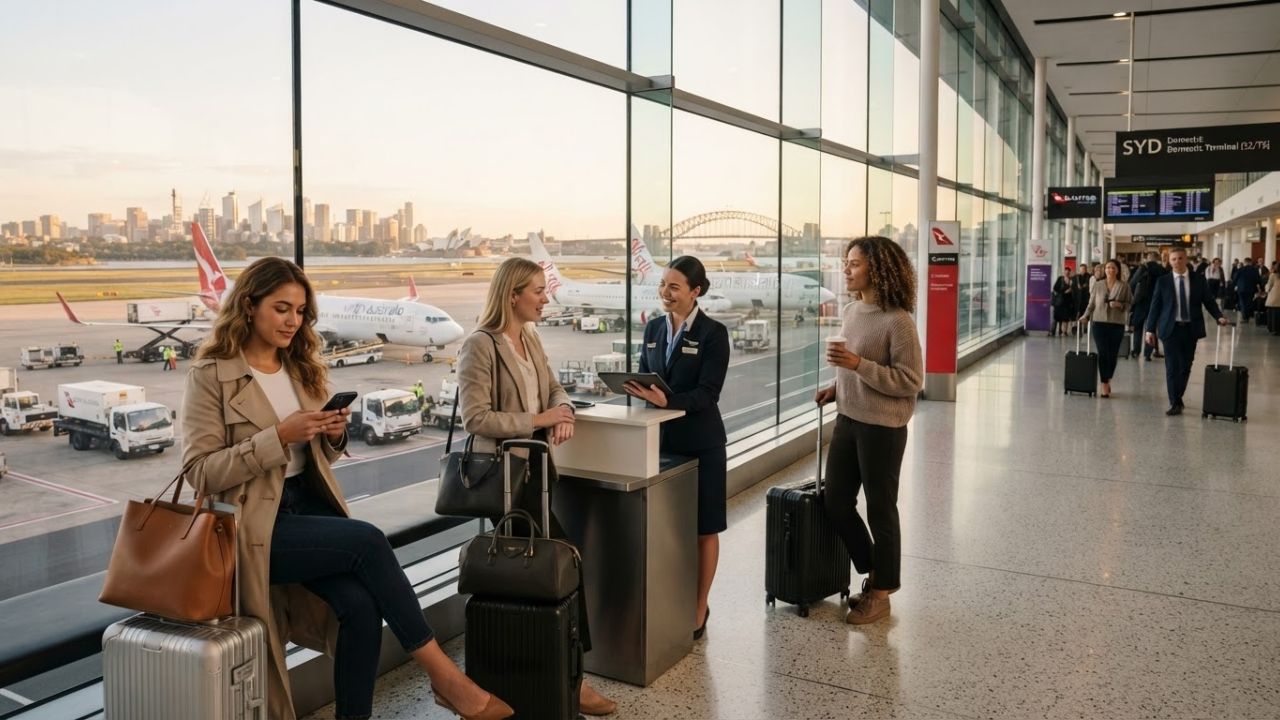
Image generated by AI
Sydney Airport Departure Delays Spark Urgent Passenger Protection Debate Over Airline Accountability for Air Traffic Control Disruptions in Australia
Flight departure delays at Sydney Airport on July 16, 2026, have highlighted gaps in Australian passenger protection rules. Because domestic airlines classify air traffic control shortages as outside their control, affected travelers frequently face limited access to food, hotel lodging, and transit compensation.
The Disruption Details
According to official air traffic flow metrics and terminal reports, domestic departures at Sydney Airport (SYD) experienced notable delays during the morning and early afternoon of Thursday, July 16, 2026. The daily Air Traffic Flow Management Plan issued by Airservices Australia at 1:06 PM indicated that the delays were beginning to ease, with 565 movements remaining for the day, comprising 290 arrivals and 275 departures. While weather conditions included light rain showers and low cloud cover between 1,500 and 2,500 feet, no Ground Delay Program was officially active at the time.
Although the primary reports did not specify the start time, average delay minutes, or the operational cause, the incident follows a pattern of recent service disruptions. In January 2026, Airservices Australia recorded four days of significant air traffic control disruptions at Sydney, leading to targeted efforts to improve controller recruitment, training, and scheduling resilience. Because passengers hold contracts with airlines rather than air traffic managers, these infrastructure failures create complex liability issues.
Airline Policies and Controllability Asymmetry
Under current Australian aviation regulations, the level of care a traveler receives depends on whether a delay is classified as controllable by the airline. Carrier policies maintain a strict distinction between internal issues like crew shortages and external disruptions like air traffic control restrictions. Qantas, Jetstar, and Virgin Australia all treat air traffic control delays as outside their operational control.
This distinction leads to an operational asymmetry where passengers delayed by an airline crew shortage receive meal vouchers and hotel rooms, while those delayed by an air traffic controller shortage do not. Under Australian Consumer Law, travelers are entitled to refunds or rebooking if a service is not provided within a reasonable timeframe. However, the ACCC indicates that consumer guarantees may not apply when a third party prevents the service from being delivered.
Airline Policy Treatment of Flight Disruption Categories
The operational categories and typical compensation treatments practiced by major Australian carriers are detailed in the table below:
| Disruption Category | Airline Policy Classification | Typical Passenger Remedy | Lodging & Meal Assistance |
|---|---|---|---|
| Crew or Staff Shortage | Internal / Controllable | Rebooking, refund, or flight credit | Provided under published guidelines |
| Engineering / Tech Failure | Internal / Controllable | Alternate flight or ticket refund | Vouchers and accommodation provided |
| Air Traffic Control (ATC) | External / Uncontrollable | Priority rebooking on next flight | Generally limited or rejected |
| Weather / Lightning Storm | External / Uncontrollable | Rebooking or flight credit | Passengers must cover personal costs |
| Third-Party Strike | External / Uncontrollable | Alternate flight options | Incidental expenses normally excluded |
Aviation Consumer Protection Bill 2026
The debate over traveler rights comes as the Aviation Consumer Protection Bill 2026 continues its passage through the Australian Parliament. First read on April 1, 2026, the proposed legislation seeks to establish an Aviation Consumer Protection Authority and an Aviation Consumer Ombudsperson to enforce a new consumer charter. However, the bill's primary mandates are structured around airlines and airports, leaving third-party providers like Airservices Australia largely separate.
This separation means that even if the bill becomes law, airlines may still avoid liability for delays caused by air traffic control staffing. Punctuality statistics published by the Bureau of Infrastructure and Transport Research Economics (BITRE) do not currently specify the cause of delays, making it difficult for passengers to verify airline claims. Mandatory cause coding remains a key proposal to improve transparency for consumer claims.
Flight & Airport Impact Breakdown
- Disruption Scope: Departure delays at Sydney Airport domestic terminals on July 16, 2026, which gradually eased by early afternoon.
- National Network Risk: Because half of the major domestic airline fleets rotate through Sydney daily, local delays quickly cascade to Melbourne, Brisbane, and Adelaide.
- Reduced Spare Capacity: Domestic capacity remains tight, with approximately 180,000 seats removed and flight volumes down 3.8% compared to the previous year.
- Attribution Difficulty: Passengers faced departure board delays without public access to specific cause data, complicating travel insurance claims.
- Separate Ticket Exposure: Missed connections on independently booked onward flights are generally not protected under standard domestic carrier policies.
Sydney Airport Operational and Passenger Data Metrics
The passenger statistics and operational capacity metrics for Sydney Airport and the broader domestic network are summarized in the table below:
| Passenger & Operational Metric | Recorded Statistics | System-Wide Transit Significance |
|---|---|---|
| Sydney Passengers (2025) | Over 42.54 million | Main hub operations for domestic routes |
| Sydney International (2025) | 17.17 million | Connecting point for inbound transit |
| Total Passengers (Q1 2026) | 10.78 million | High load factors across all terminals |
| Domestic Seat Reduction | 180,000 (May 2026) | Fewer reaccommodation options for delays |
| Domestic Flight Decline | 3.8% year on year | Tightened seat inventory during disruptions |
| Fleet Rotation Concentration | Approximately 50% daily | Sydney delays impact national schedules |
| Major Carrier Concentration | 76% of domestic flights | Major airline groups dominate capacity |
Passenger Rights & Advisory (Information Gain)
Travelers experiencing domestic delays at Sydney Airport should obtain written confirmation of the delay cause from the airline before leaving the gate. If a delay is within airline control and results in an overnight stay away from your home city, request meal and accommodation vouchers at the service desk. For disruptions caused by air traffic control or weather, contact your travel insurance provider to check coverage parameters.
For travelers connecting to international flights, ensure your travel documents and electronic registrations are complete. Non-EU passport holders connecting to flights heading to Europe should monitor their European Union ETIAS portal registrations. For connections transiting through major Indian airports, using the biometric Ministry of Civil Aviation of India Digi Yatra application can help expedite transit processing.
Industry Analyst View
Our analysis indicates that the lack of clear cause attribution during delays remains a major hurdle for consumer protection in Australia. Without independent verification of delay causes, airlines can easily classify controllable incidents as air traffic control issues to avoid lodging costs. Establishing public, real-time cause codes is essential for resolving disputes between passengers, airlines, and insurance providers.
Furthermore, the concentration of the domestic network around Sydney Airport means that air traffic management issues have national economic consequences. As passenger numbers grow, the federal government and Airservices Australia must prioritize air traffic control recruitment and scheduling resilience. Introducing a cause-neutral duty of care would protect passengers but would significantly increase operational costs for domestic airlines.
FAQ: Sydney Airport Delays
Why were departures delayed at Sydney Airport on July 16?
Departures experienced delays during the morning period, which eased by early afternoon, though official sources did not confirm a specific operational cause.
Am I entitled to a hotel room if my flight is delayed by air traffic control?
No, domestic airlines in Australia generally classify air traffic control issues as outside their control and do not cover hotel expenses.
How does the Aviation Consumer Protection Bill 2026 affect passengers?
The proposed bill seeks to establish a consumer ombudsperson and minimum standards, though it primarily regulates airlines and airports rather than air traffic control.
Related Travel Guides
- Thirteen International Airlines Extend Dubai Flight Suspensions Until October 2026 Disrupting Travel Connectivity and UAE Tourism Growth
- Thai Airways Expands Munich to Bangkok Nonstop Flights to Ten Weekly Services Starting December 2026 to Support Tourism Growth
- Emirates Completes Refurbishment of 100th Retrofitted Aircraft to Expand Premium Economy and Cabin Comfort Across Its Global Route Network
Disclaimer
This article is for informational and educational purposes only. It does not constitute legal, financial, or professional advice. While we strive to provide accurate and up-to-date information, travel policies, regulations, and conditions change rapidly. Always verify information with official sources before making travel decisions. Nomad Lawyer makes no representations about the accuracy, reliability, completeness, or suitability of the information provided. Readers should consult qualified professionals for advice specific to their circumstances. The views expressed in this article are those of the author and do not necessarily reflect the views of Nomad Lawyer.
Kunal K Choudhary
Co-Founder & Contributor
A passionate traveller and tech enthusiast. Kunal contributes to the vision and growth of Nomad Lawyer, bringing fresh perspectives and driving the community forward.
Learn more about our team →