
Switzerland Eco-Travel Analysis 2026: Record-Breaking Infrastructure and Sustainable Tourism Standards
An analysis of Switzerland's 2026 sustainable tourism framework, focusing on carbon capture, 98% hydropower reliance, and record-breaking alpine engineering.

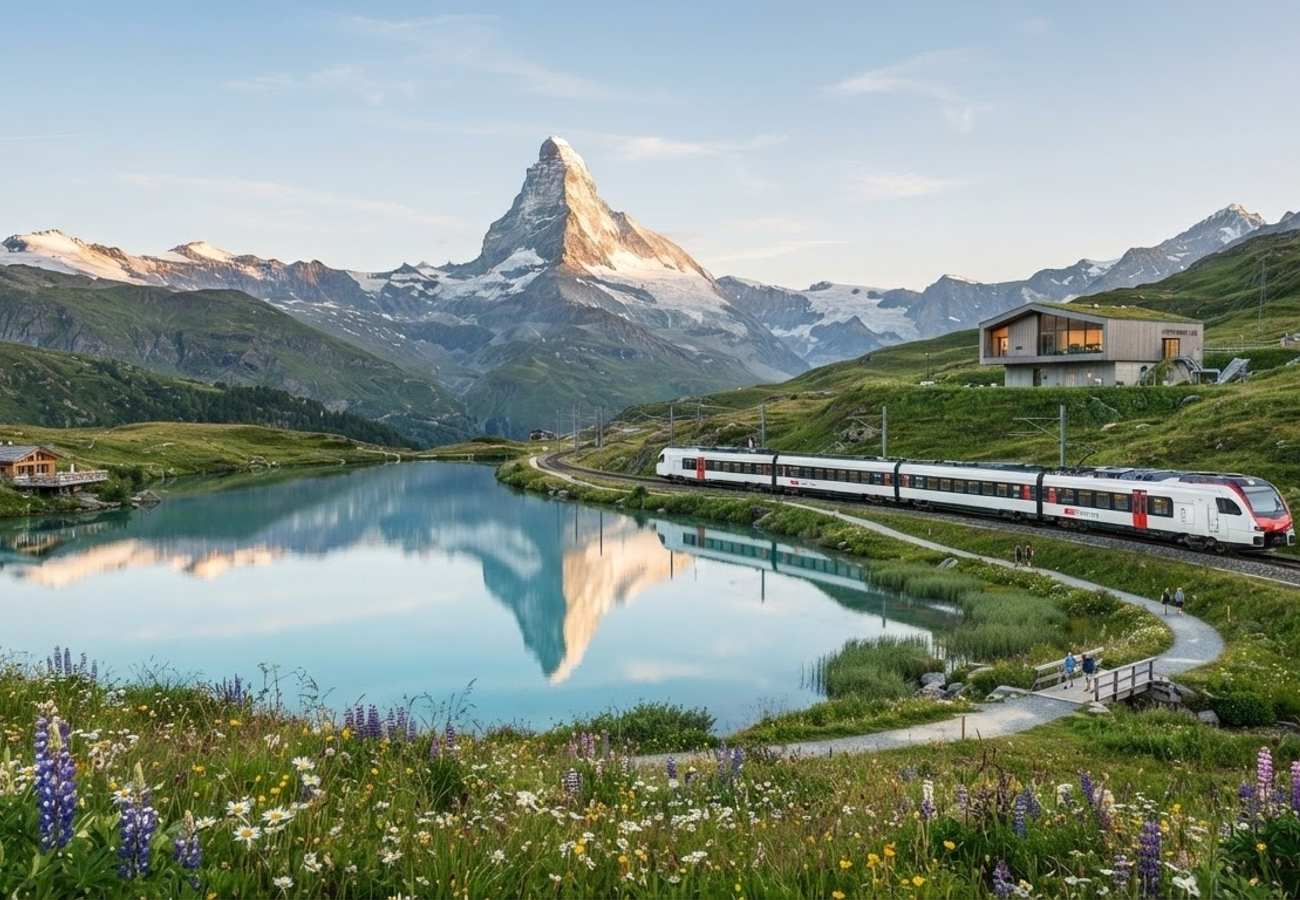
Image generated by AI
Switzerland has established a global benchmark for sustainable tourism in 2026, integrating decentralized governance with aggressive carbon-neutral infrastructure. The nation now operates on 98% hydropower, fundamentally altering the carbon footprint of alpine transit.
Administrative Framework and Multilingual Logistics
Switzerland operates under a decentralized governance model consisting of 26 cantons. Each canton maintains independent legislative bodies, judicial systems, and law enforcement. For the international traveler, this structure ensures high-efficiency municipal services and localized safety protocols that maintain consistent standards across diverse terrains.
The administrative distribution of power is strategically balanced to prevent urban congestion. While Bern serves as the federal capital, Zürich and Geneva function as the primary financial and international hubs. This prevents the "over-tourism" typical of centralized capitals and ensures that tourism infrastructure is distributed evenly across the territory.
Logistical fluidity is further supported by the official recognition of four national languages: French, German, Italian, and Romansh. This multilingual integration reduces administrative friction for European travelers and enhances the accessibility of regional transit networks.
2026 Environmental Stewardship and Resource Metrics
Our analysis of current Swiss environmental data reveals a systemic approach to waste and energy management that serves as a blueprint for global hospitality.
Waste and Carbon Management
- Recycling Rates: Municipalities currently recycle approximately 52% of all collected waste.
- Waste-to-Energy: Non-recyclable refuse is processed in waste-to-energy facilities, effectively eliminating the need for landfills.
- Carbon Capture: Commercial direct air capture systems are now active, extracting CO2 from the atmosphere for underground sequestration.
- Sustainable Construction: Captured carbon is being integrated into recycled concrete to reduce raw material consumption.
Energy and Aquatic Conservation
The Swiss energy grid is almost entirely decarbonized, with 98% of electricity derived from hydropower. This clean energy powers the entirety of the electric rail networks, cable cars, and alpine resorts.
The commitment to ecological restoration is evidenced by the long-term recovery of Lake Geneva. Phosphorus concentrations have been reduced from 89.5 micrograms per liter in 1970 to 16.9 micrograms per liter in 2026.
Engineering Landmarks and High-Altitude Infrastructure
Switzerland continues to leverage precision engineering to create high-capacity, low-impact tourist attractions. These sites represent the intersection of luxury travel and structural innovation.
| Landmark | Record/Statistic | Key Feature |
|---|---|---|
| Grande Dixence | Tallest gravity dam on Earth | Holds nearly 400 billion liters of water |
| Peak Walk | 107 meters long | Only suspension bridge connecting two peaks (3,000m altitude) |
| Niesen Mountain | 11,674 steps | Longest staircase in the world (2,363 meters) |
| St-Léonard Lake | Largest subterranean lake in Europe | Constant water temperature of 11°C |
| Jungfraujoch | 3,454 meters elevation | Highest railway station in Europe |
Passenger Rights & Eco-Tourism Advisory
For travelers visiting Switzerland in 2026, the shift toward "Circular Tourism" introduces specific operational changes.
Waste Management Compliance Visitors should be aware that local governments enforce a direct tax on household garbage bags. For the short-term traveler, this means that waste disposal in rentals or Airbnbs may incur additional costs if recycling protocols are not strictly followed.
Sustainable Transit Rights Given the 98% reliance on hydropower for rail, the Swiss Federal Railways (SBB) remains the gold standard for reliability. However, passengers should note that eco-regulations may limit vehicle access to certain "car-free" alpine villages. We advise travelers to verify "Last Mile" transit options via official cantonal transport apps to avoid fines or stranded logistics.
Culinary Upcycling The rise of "culinary upcycling"—transforming food by-products into gourmet items—is now a federal priority. Travelers will find that many high-end establishments have replaced traditional imports with upcycled local ingredients to meet sustainability mandates.
Industry Analyst View
The Swiss model proves that high-volume tourism is not incompatible with aggressive environmental targets. By decoupling tourism growth from carbon emissions through hydropower and direct air capture, Switzerland has mitigated the "tourism paradox" where visitors destroy the nature they come to see.
The integration of wildlife reintroduction programs further suggests a shift from "sightseeing" to "regenerative travel," where the presence of the tourist supports the restoration of the ecosystem rather than its depletion.
Switzerland's 2026 framework demonstrates that precision engineering and ecological stewardship are the ultimate luxuries in modern travel.
Related Travel Guides
Disclaimer
This article is for informational and educational purposes only. It does not constitute legal, financial, or professional advice. While we strive to provide accurate and up-to-date information, travel policies, regulations, and conditions change rapidly. Always verify information with official sources before making travel decisions. Nomad Lawyer makes no representations about the accuracy, reliability, completeness, or suitability of the information provided. Readers should consult qualified professionals for advice specific to their circumstances. The views expressed in this article are those of the author and do not necessarily reflect the views of Nomad Lawyer.
Raushan Kumar
Founder & Lead Developer
Full-stack developer with 11+ years of experience and a passionate traveller. Raushan built Nomad Lawyer from the ground up with a vision to create the best travel and law experience on the web.
Learn more about our team →