
Aviation Updates: Massive Star Alliance Restructuring Deploys 14 Carriers at Incheon to Shield Passengers From Asiana Exit Travel Chaos
As incredibly severe terminal gridlock chokes legacy networks, Star Alliance aggressively fortifies Incheon Airport to prevent devastating travel chaos following Asiana Airlines' dramatic December exit.

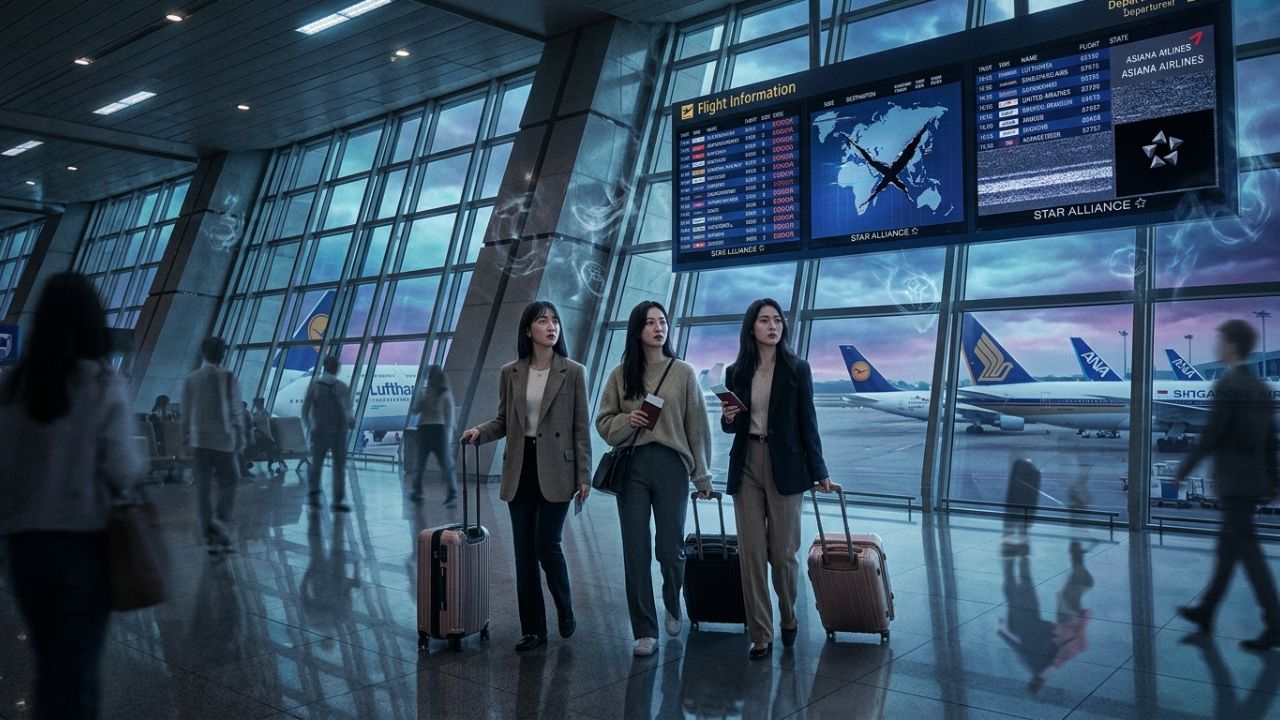
Image generated by AI
Aviation Updates: Massive Star Alliance Restructuring Deploys 14 Carriers at Incheon to Shield Passengers From Asiana Exit Travel Chaos
As incredibly severe terminal gridlock and massive legacy airline network failures completely suffocate primary aviation gateways across Asia, Star Alliance aggressively executes a massive structural defense strategy, utilizing Air Canada, Singapore Airlines, and United Airlines to shield millions of passengers from terrifying travel chaos following the dramatic December 2026 exit of Asiana Airlines.
While incredibly exhausted domestic and international passengers desperately navigate an incredibly brutal peak travel season defined by rolling flight cancellations and severe, localized airport disruptions, a massive, highly strategic shift in global alliance capacity is actively stabilizing the absolute highest levels of the trans-Pacific commercial aviation network. According to the absolute latest breaking airline news and official corporate development disclosures, the Star Alliance is aggressively preparing for the massive departure of South Korean giant Asiana Airlines. Desperate to ensure that the sudden removal of a deeply integrated legacy carrier does not completely destroy critical intercontinental travel itineraries out of Seoul, 14 major global carriers—including Air India, Air New Zealand, Singapore Airlines, and United Airlines—are rapidly fortifying their connectivity networks. At the time of reporting, real-time aviation analysts confirmed that this massive alliance restructuring heavily allows passengers to completely avoid the terrifying unpredictability of network collapse, securing highly reliable transit and unbroken loyalty benefits without ever falling victim to the paralyzing gridlock that typically follows major corporate realignments.
This highly critical capacity deployment explicitly exposes the international aviation network not just as a vital transit feed, but as a heavily congested, deeply fragile capacity zone prone to sudden, catastrophic failure during major corporate shifts. When an airline exits an alliance after 23 years, the resulting systemic demand shock frequently overwhelms ground handling crews and massive wide-body aircraft rotation schedules at central entry points, directly driving massive global travel chaos. Because traditional transit nodes frequently suffer from severe tarmac congestion leading to massive, unannounced communication breakdowns, this sudden, heavily orchestrated transition plan by Star Alliance serves as an absolute survival tactic. It completely bypasses the terrifying logistical nightmares of funneling tourists through saturated, failing infrastructure, representing a highly structural corporate intervention that forces all global competitors to acknowledge that alliance stability is the ultimate shield against systemic operational meltdowns.
Aviation Updates: The Strategic Defense of the Incheon Megahub
This massive, highly structural shift in regional network capacity perfectly illustrates the intense, incredibly fragile nature of modern intercontinental mobility.
According to highly detailed, official aviation updates, Star Alliance is set to officially lose Asiana on December 16, 2026, at precisely 23:59 Korea Standard Time. Asiana had been an incredibly vital component of the alliance's Asia-Pacific strategy since joining in 2003, and its withdrawal initially threatened to trigger massive airport disruptions across Seoul. However, to prevent total crowd panic and the terrifying threat of cascading flight cancellations, the alliance is aggressively maintaining a highly fortified presence at Seoul’s Incheon International Airport. Currently, 14 massive member airlines are actively operating out of the hub, collectively executing more than 1,900 direct flights every single month. By aggressively securing these 29 international destinations, Star Alliance guarantees that global connectivity through Incheon remains absolutely dominant, fully insulating transit passengers from the brutal reality of network contraction.
Section-Wise Breakdown: Navigating the Alliance Transition
The sudden, massive evolution of these critical transit expansion models actively impacts several incredibly distinct, highly sensitive operational dynamics spanning multiple massive regional tourism sectors.
The Intercontinental Route Fortification
At the absolute core of this massive operational pivot is the severe congestion strangling trans-Pacific and Euro-Asian transit. To prevent passengers from experiencing sudden, agonizing travel chaos, the remaining 14 carriers are aggressively shouldering the capacity burden. European connectivity is absolutely secured through massive deployments by Lufthansa, SWISS, and LOT Polish Airlines. Simultaneously, long-haul Asia-Pacific access is violently maintained through the massive wide-body fleets of Singapore Airlines, Thai Airways, Air New Zealand, and EVA Air. Furthermore, the hyper-critical North American corridors remain heavily anchored by Air Canada and United Airlines. This perfectly balanced global coverage guarantees that corporate planners and leisure travelers can instantly bypass the threat of losing direct access to the South Korean economy.
The Frequent Flyer Survival Framework
Simultaneously protecting the incredibly sensitive financial ecosystem of airline loyalty, Star Alliance has executed a rigid, highly structured phase-out plan to prevent a massive points run that could crash booking systems. Passengers enrolled in any Star Alliance loyalty program will continue to earn miles on Asiana-operated flights departing on or before October 15, 2026. Furthermore, redemption privileges and critical elite status recognition—including priority check-in, priority boarding, and priority baggage handling—will remain fully active up to the final exit date of December 16, 2026. Gold-tier passengers will continue to access eligible Asiana lounges, ensuring that premium travelers are heavily insulated from the travel chaos and terminal overcrowding frequently experienced by economy passengers during massive transition periods.
The Post-2026 Alliance Reality
The ultimate execution of this massive transit shift heavily relies on proving that the alliance structure can withstand the loss of a major carrier without succumbing to airport disruptions. From December 17, 2026, Star Alliance will aggressively operate with 25 member airlines. While the departure of Asiana is a massive structural change, the highly managed phased approach proves that the remaining network is actively capable of absorbing extreme corporate shockwaves. By preserving network stability and ensuring continuity across frequent flyer programs, the alliance demonstrates that sophisticated routing integration is the only viable method to survive the highly volatile modern aviation sector.
Flight Details and Verified Carrier Impact Matrix
To fully understand the exact structural parameters of this massive performance upgrade and how airlines are desperately attempting to navigate complex capacity constraints, the following matrix explicitly details the operational metrics directly recorded by industry trackers operating out of Incheon.
Confirmed Star Alliance Incheon Carrier Matrix
| Country | Star Alliance Carrier at Incheon | Strategic Route Sector |
|---|---|---|
| Canada | Air Canada | North American Routes |
| United States | United Airlines | North American Routes |
| Singapore | Singapore Airlines | Long-Haul Asia-Pacific |
| New Zealand | Air New Zealand | Long-Haul Asia-Pacific |
| India | Air India | Central/South Asia Corridors |
| Germany | Lufthansa | European Connectivity |
Data explicitly reflects the massive, highly structural capacity deployment currently allowing 14 carriers to dominate Incheon transit and bypass the severe corporate disruption of Asiana's exit.
Passenger Impact: The Financial and Logistical Reality
For the highly demanding passengers actively engaged in this massive global mobility crisis, traditional, highly anticipated intercontinental travel is currently viewed as a high-stakes battle against alliance restructuring limits.
The immediate consequence of this massive tactical shift is measured in the profound logistical relief experienced by incredibly exhausted frequent flyers and highly mobile corporate commuters. Passengers originally paralyzed by the terrifying threat of losing their carefully planned trans-Pacific routings due to Asiana's withdrawal are now successfully securing deeply insulated itineraries through Air Canada, United Airlines, or Singapore Airlines. By aggressively utilizing the remaining 14 carriers at Incheon, travelers completely bypass the severe travel chaos that normally accompanies a legacy carrier departure. The massive, strictly enforced October and December loyalty deadlines guarantee that families will not lose precious mileage currency or elite lounge access battling sudden corporate policy shifts, completely neutralizing the paralyzing terror of arriving at an airport only to find status privileges violently canceled.
Industry Analysis: The Economics of Tactical Network Insulation
Aviation structural analysts strictly point out that this massive, multi-national operational shift perfectly illustrates the extreme, highly vital importance of heavily optimized alliance networks over independent carrier operations.
Economic data explicitly indicates that massive carrier networks are absolutely desperate to secure rapid schedule recoveries when a partner exits. The aggressive coordination by the remaining 25 Star Alliance members proves that modern aviation fundamentally requires continuous, heavy integration to outpace rising passenger anxiety and prevent flight cancellations. As travelers aggressively prioritize alliance stability and reduced transit complexity to escape travel chaos, airlines that fail to clearly communicate phase-out plans will rapidly lose massive market share. This sensational trend beautifully proves that alliances must aggressively deploy unified corporate defenses to successfully survive in a highly volatile operational market.
Conclusion: A Highly Fortified Post-Asiana Future
The massively evolving infrastructure dynamics directly defining the integration of high-volume demand into the Incheon Star Alliance network violently reflect a much broader, highly critical structural transformation currently dominating how commercial aviation is physically managed in 2026.
Rather than violently forcing massive international traffic into a panicked booking frenzy, Star Alliance is actively giving travelers the ability to reclaim their schedules. As Air Canada, Air India, and 12 other carriers heavily fortify their connectivity to bypass corporate disruption, travelers actively navigating the incredibly busy sector must absolutely remain highly vigilant. To actively survive potential travel chaos this season, passengers must aggressively monitor all breaking aviation updates, instantly burn or accrue Asiana miles before the strict October and December deadlines, and perfectly understand that escaping modern airport disruptions fundamentally requires extreme logistical intelligence and an absolute refusal to be caught unprepared during a major alliance realignment.
Key Takeaways
- Massive Alliance Restructuring: Asiana Airlines officially exits Star Alliance at 23:59 KST on December 16, 2026.
- Incheon Fortification: 14 remaining Star Alliance carriers, executing over 1,900 monthly flights, will shield travelers from Seoul-based travel chaos.
- Strict Loyalty Deadlines: Mileage earning on Asiana ends October 15, 2026, while redemptions and elite status privileges remain active until December 16, 2026.
- Global Route Protection: Air Canada, United, Lufthansa, and Singapore Airlines will actively prevent massive flight cancellations across the Pacific and Euro-Asian corridors.
- Passenger Survival Strategy: Frequent flyers are aggressively urged to strictly monitor loyalty deadlines and transition their bookings to the remaining 25 member airlines to avoid sudden airport disruptions.
Related Travel Guides
Massive UAE Visa Bombshell: Strict New 30-Day Escape Window Announced
Travel Chaos Cripples Spain as Iberia and Ryanair Suffer 1,079 Delays
Disclaimer
This article is for informational and educational purposes only. It does not constitute legal, financial, or professional advice. While we strive to provide accurate and up-to-date information, travel policies, regulations, and conditions change rapidly. Always verify information with official sources before making travel decisions. Nomad Lawyer makes no representations about the accuracy, reliability, completeness, or suitability of the information provided. Readers should consult qualified professionals for advice specific to their circumstances. The views expressed in this article are those of the author and do not necessarily reflect the views of Nomad Lawyer.
Preeti Gunjan
Contributor & Community Manager
A passionate traveller and community builder. Preeti helps grow the Nomad Lawyer community, fostering engagement and bringing the reader experience to life.
Learn more about our team →