
Global Music Tourism Explodes: United States Anchors the Colossal Stagecoach 2026 Festival
Obliterating traditional country music borders, Stagecoach 2026 has transformed into a massive international tourism magnet, drawing colossal crowds from Canada, Brazil, Argentina, and beyond to California.

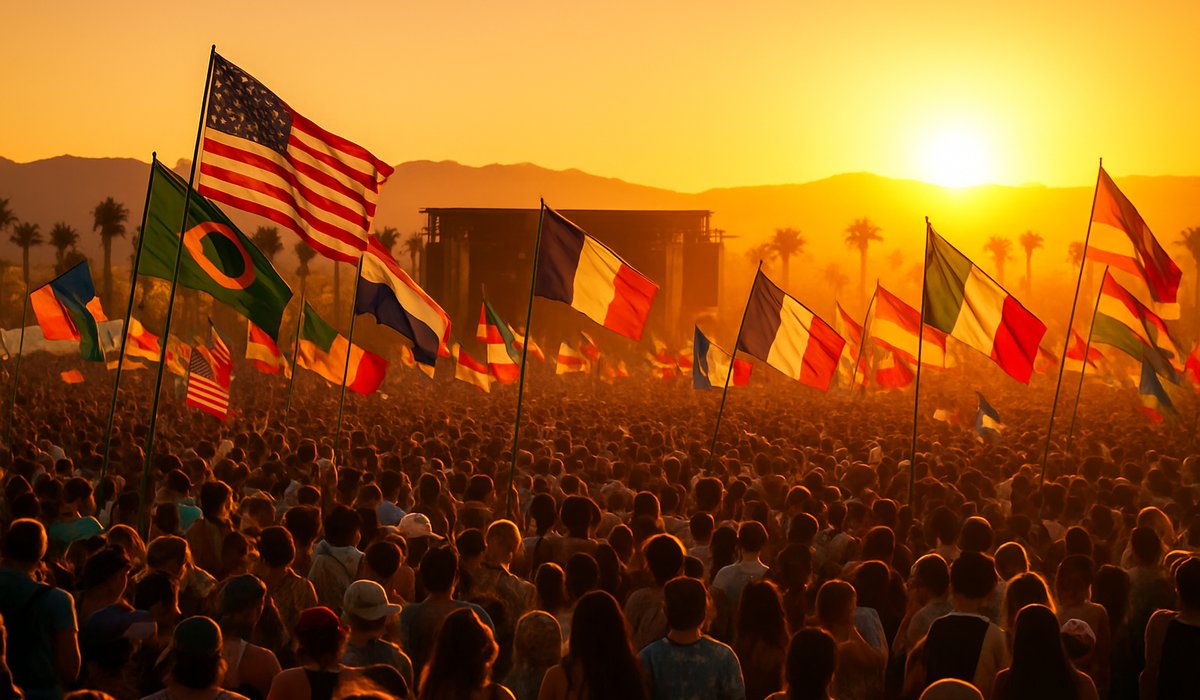
Image generated by AI
Country Music Shatters Border Constraints in the Californian Desert
Completely transcending its identity as a fiercely regional American pastime, the Stagecoach Country Music Festival has officially mutated into a colossal, heavily diversified global tourism juggernaut for 2026. Anchored securely in the sprawling, sun-beaten expanse of the Empire Polo Club in Indio, California, the festival is heavily confirming a massive influx of international travelers completely rewriting the demographic map. By aggressively tracking global ticket sales, organizers confirm that the United States is securely joined by enormous throngs of fans flying in from Canada, Mexico, Brazil, Argentina, Chile, Colombia, Peru, Costa Rica, and Panama to execute heavy, week-long music tourism itineraries.
Historically viewed strictly as the "country music sister" to the wildly global Coachella festival, Stagecoach has methodically leveraged cutting-edge production values, highly hybridized commercial lineups, and a fiercely unique desert aesthetic to shatter border constraints. International tourists are no longer viewing Stagecoach merely as a concert, but rather as the absolute pinnacle of an immersive, highly curated American cultural experience.
The Power of the Pan-American Tourism Surge
The influx of capital flowing from South America and Canada into rural California is absolutely staggering.
International tourists traveling for Stagecoach do not merely fly in for the weekend; they execute massive, highly lucrative two-week Californian deployments. Fans from Brazil and Argentina frequently utilize the festival as the strategic anchor point for a broader tourism loop, dropping thousands of dollars on luxury RV rentals, expansive road-trip itineraries pushing through the Mojave Desert down to Los Angeles, and deeply premium accommodation upgrades surrounding Palm Springs. Stagecoach effectively functions as a massive, subsidized advertising campaign for the Californian tourism board.
Analyzing the Stagecoach International Boom
| Ticket Buyer Origin | Motivation for Travel | Regional Economic Impact |
|---|---|---|
| Canada / Mexico | Geographic proximity and genre familiarity | Massive surges in cross-border airline route bookings |
| Brazil / Argentina | Cultural immersion and premium production | High spend on luxury RV rentals and VIP camping passes |
| All Int'l Travelers | 'The Ultimate Western Experience' | Explosive retail demand for western wear in Los Angeles |
What Guests Get
- Deconstructing the genre stereotype — realizing that American country music currently dominates global Spotify charts, driving genuine fanatical demand from continents traditionally disconnected from the genre.
- Event tourism mechanics — grasping that mega-festivals are highly strategic economic weapons; a single weekend in Indio mathematically generates more raw hotel tax revenue than an entire winter season.
- The psychological appeal — understanding why a tourist from Bogotá will happily spend $3,000 to stand in a dusty Californian desert field for three days (hint: absolute cultural escapism).
What This Means for Travelers
If you are planning to attend Stagecoach 2026: Do not assume you can casually secure a hotel room in Indio or Palm Springs a few months before the event. You are actively competing against high-budget international travelers who book deeply premium accommodations a full year in advance. If you did not secure local housing during the initial ticket pre-sale, you must immediately pivot to renting a highly distant Airbnb in outer desert communities and heavily rely on the expensive, centralized festival shuttle passes to move you onto the polo grounds.
For International Visitors: Aggressively prepare your hydration and environmental survival strategy. The Coachella Valley in late April is hostile. Temperatures routinely shatter 100°F (38°C) under zero humidity, followed aggressively by freezing, highly abrasive desert winds at night. You must pack heavy SPF, deeply protective bandanas for dust mitigation, and ensure you link a functional, international-friendly credit card to the festival's cashless RFID wristband system before arriving to avoid massive currency conversion lockouts on the field.
FAQ: Surviving Stagecoach 2026
Where exactly is Stagecoach located? The festival is held at the massive Empire Polo Club located in Indio, California, deeply positioned within the Coachella Valley. It is roughly a 2.5-hour drive intensely east from Los Angeles International Airport (LAX).
Can I just sleep in my car without a camping pass? Absolutely not. Stagecoach enforces brutal, highly secure perimeter sweeps. You cannot physically "stealth camp" in the massive dirt parking lots. You must possess a heavily vetted RV/camping wristband to remain on the property overnight, or face immediate ejection and municipal towing.
Is the festival cash-free? Yes. To maximize vendor speed, Stagecoach operates heavily as an entirely cashless ecosystem. Attendees must link a debit or credit card directly to their physical wristband prior to entry or utilize standard Apple/Google Pay via their smartphones for all food and merchandise.
Related Travel Guides
- Thai VietJet Restores Bangkok to Fukuoka Route in 2026 to Capture Surging Japan Tourism Demand
- Thailand Leads Southeast Asia in Sustainable Tourism Support Outranking Malaysia and Indonesia in 2026 Survey
- Thailand's 2026 TDAC Digital Immigration System: What US, UK, Australian Travelers Need to Know Before Arrival
Disclaimer
This article is for informational and educational purposes only. It does not constitute legal, financial, or professional advice. While we strive to provide accurate and up-to-date information, travel policies, regulations, and conditions change rapidly. Always verify information with official sources before making travel decisions. Nomad Lawyer makes no representations about the accuracy, reliability, completeness, or suitability of the information provided. Readers should consult qualified professionals for advice specific to their circumstances. The views expressed in this article are those of the author and do not necessarily reflect the views of Nomad Lawyer.
Raushan Kumar
Founder & Lead Developer
Full-stack developer with 11+ years of experience and a passionate traveller. Raushan built Nomad Lawyer from the ground up with a vision to create the best travel and law experience on the web.
Learn more about our team →