
St. Vincent and the Grenadines Aligns with Dominica to Reshape Caribbean Cruise Tourism Around Sustainable Value and Local Community Benefits for 2027
St. Vincent and the Grenadines joins Dominica and Eastern Caribbean partners in a 2027 cruise strategy prioritizing environmental limits, local supplier contracts, and premium eco-tourism.

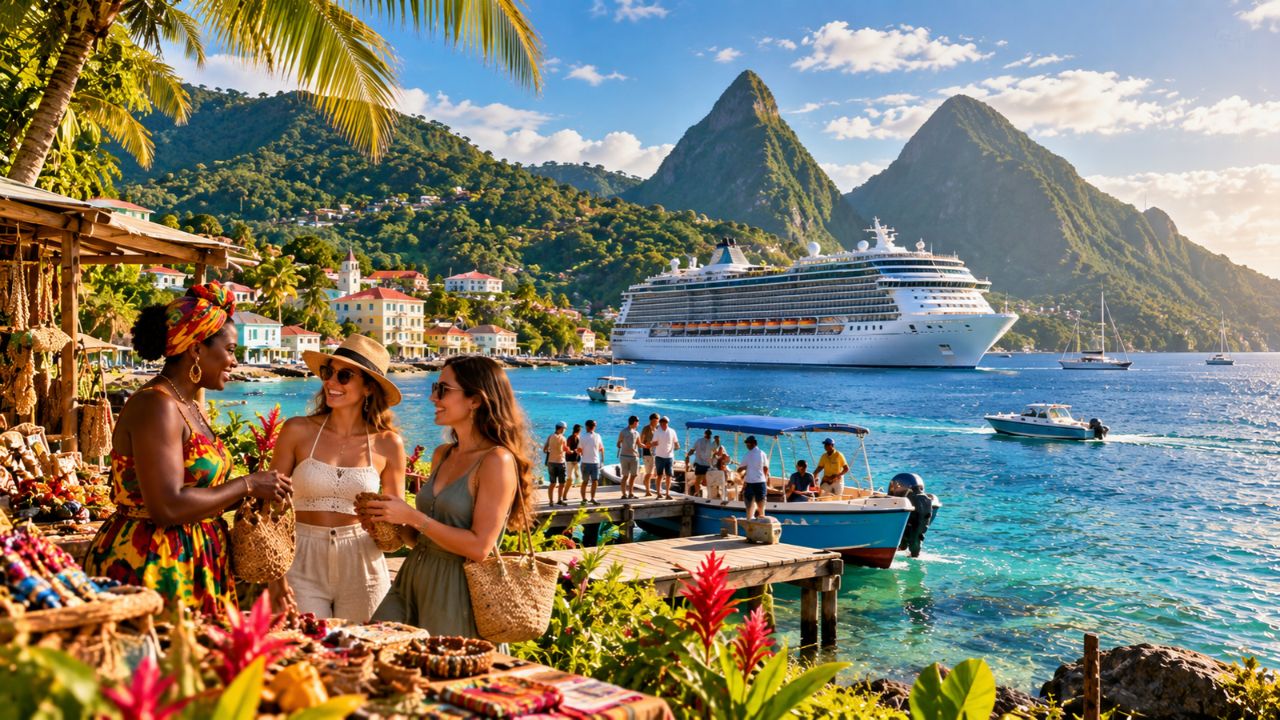
Image credit: Caribbean Tourism Organization
St. Vincent and the Grenadines has joined forces with Dominica and regional Eastern Caribbean partners to implement a coordinated 2027 cruise tourism strategy designed to transition the region from high-volume mass arrivals toward high-value, community-led sustainability. Building on bilateral tourism frameworks and published on 23 October 2026, the strategic pact establishes data-driven berth scheduling to prevent port overcrowding, restructures excursion royalties to benefit local farmers and artisans, and channels maritime revenues directly into marine reserve conservation and coastal resilience.
The joint initiative marks a structural pivot for Eastern Caribbean maritime tourism. For decades, the Caribbean has served as the world's most frequented cruise basin, yet smaller volcanic islands frequently shouldered environmental and infrastructure burdens without capturing equitable economic returns. By unifying policy standards across port scheduling, environmental compliance, and community revenue sharing, St. Vincent and the Grenadines (SVG) and Dominica are establishing a resilient Blue Economy model for small island developing states.
The Transition from Passenger Volume to Local Economic Value
Historically, Caribbean cruise traffic concentrated heavily on high-density mega-ports. As consumer preferences evolve toward slow tourism, authentic wilderness exploration, and ethical travel, smaller destinations are shifting their priorities from pursuing record passenger counts to optimizing economic retention per visitor.
Both St. Vincent and the Grenadines and Dominica possess distinct geographic and cultural assets: lush volcanic mountain terrain, pristine marine reserves, thriving rainforest ecosystems, and vibrant indigenous histories. The 2027 strategy capitalizes on these natural advantages by curating low-impact, high-yield visitor experiences that safeguard sensitive ecosystems while distributing tourism capital into rural island communities.
Four Core Pillars of the 2027 Eastern Caribbean Strategy
Official statements from the Ministry of Tourism, Civil Aviation, Sustainable Development, and Culture in SVG alongside Dominica’s Ministry of Tourism define four central pillars governing regional maritime cooperation:
- Controlled Visitor Flow: Implementing digital data-driven scheduling systems to ensure passenger numbers never exceed the social and ecological carrying capacity of local trails, waterfalls, and historic sites.
- Community-Centric Revenue Models: Restructuring port concession agreements, excursion licensing, and tour operator frameworks so that a higher percentage of passenger spending flows directly to independent guides, local transport operators, and handicraft artisans.
- Infrastructure Modernization: Upgrading specialized boutique maritime berths, including the Kingstown Cruise Terminal in SVG and the Roseau Cruise Ship Berth in Dominica, allowing them to service premium luxury and expedition-class vessels efficiently without overwhelming municipal traffic.
- Environmental Stewardship & Blue Economy Funds: Earmarking dedicated portions of passenger head taxes and national park excursion fees for marine biology research, coral reef propagation, and shoreline protection projects.
Growth Metrics: SVG Arrivals Surge and Dominica’s Spending Shift
Recent statistical releases for 2026 demonstrate the commercial viability of prioritizing quality over quantity:
- St. Vincent and the Grenadines: SVG recorded a 13.2% year-on-year increase in total visitor arrivals in August 2026, with stayover arrivals climbing 8.4% to reach nearly 87,000 visitors between January and August. For the 2026–2027 season, Kingstown is scheduled to receive a balanced roster of calls, including contemporary operators like Carnival Cruise Line and MSC Cruises, alongside luxury boutique operators such as SeaDream Yacht Club, Star Clippers, Silversea Cruises, and Emerald Cruises.
- Dominica: By emphasizing guided nature treks, diving expeditions, and heritage immersion, Dominica increased its average cruise passenger expenditure from roughly US$90 in previous seasons to approaching US$115 in 2026, proving that premium eco-attractions generate superior economic returns compared to unmanaged volume.
Agro-Tourism, Cultural Preservation, and Marine Protection
The economic framework places local empowerment at the center of maritime supply chains:
- Direct Agricultural Supply Contracts: Local farming cooperatives in both nations have secured supply arrangements to provide cruise ships and portside culinary establishments with fresh organic produce, tropical fruits, and artisanal coffee, retaining food expenditure within the domestic economy.
- Indigenous Kalinago Cultural Heritage: In Dominica, revenue generated from cultural excursions directly finances community preservation initiatives in the Kalinago Territory, supporting traditional architecture, craft weaving, and language documentation at Kalinago Barana Autê.
- Marine Conservation Funding: User fees collected from scuba diving, guided snorkeling, and whale-watching excursions in the Soufrière Scott’s Head Marine Reserve (Dominica) and the Tobago Cays Marine Park (SVG) directly fund patrol boats, reef monitoring, and marine park rangers.
Harmonizing Regional Customs and Maritime Regulations
The multilateral strategy builds upon earlier diplomatic benchmarks, including the 2025 Memorandum of Understanding (MOU) between Dominica and Barbados covering multi-destination packaging and air-sea connectivity.
Participating Eastern Caribbean governments are harmonizing customs and immigration protocols to facilitate streamlined maritime clearance for multi-island itineraries. Concurrently, environmental regulations governing shipboard wastewater management, fuel emissions in territorial waters, and anchorage restrictions near coral formations are being unified to ensure cruise operators adhere to consistent environmental standards across all ports.
Traveler Logistics Guide: Navigating Dominica and St. Vincent in 2027
- Primary Cruise Berths and Ports of Call:
- St. Vincent and the Grenadines: Mainline cruise ships dock at the Kingstown Cruise Terminal on St. Vincent. Smaller expedition yachts and sailing vessels frequently anchor at Port Elizabeth (Bequia), Clifton Harbour (Union Island), and Mayreau.
- Dominica: Larger cruise vessels berth at the Roseau Cruise Ship Berth or Woodbridge Bay Deep Water Harbour, located minutes from the capital. Expedition ships occasionally call at the Cabrits Cruise Ship Berth near Portsmouth, providing immediate access to Cabrits National Park.
- Regional Transit and Inter-Island Connectivity:
- Air Hubs: Argyle International Airport (SVD) on St. Vincent and Douglas-Charles Airport (DOM) on Dominica connect through regional carriers including Caribbean Airlines, interCaribbean Airways, and LIAT 2020.
- Maritime Ferry Links: The L’Express des Îles high-speed catamaran connects Dominica with Guadeloupe, Martinique, and St. Lucia. In SVG, Bequia Express and Admiral Ferries run multiple daily 1-hour passenger crossings between Kingstown and Bequia.
- Currency and Exchange Standards: Both nations utilize the Eastern Caribbean Dollar (XCD), officially pegged to the US dollar at a fixed rate of US$1 = EC$2.70. US currency is widely accepted for excursions and local markets, though travelers should carry small denominations ($5, $10, $20) for village craft stalls.
- Responsible Excursion Etiquette: Visitors to Morne Trois Pitons National Park in Dominica or the Vermont Nature Trail in St. Vincent must acquire official site passes. Utilizing certified local guides ensures visitor safety across steep volcanic hiking routes while supporting rural livelihoods.
Strategic Outlook: A Blue Economy Blueprint for Small Island States
The partnership between St. Vincent and the Grenadines, Dominica, and their Eastern Caribbean neighbors illustrates how destination governments can reshape international cruise tourism on their own terms. Rather than accommodating mass itineraries that stress fragile infrastructure, these island nations are curating a premium, sustainable cruise economy that balances ecological conservation with authentic community prosperity.
As the 2027 framework takes effect, the Eastern Caribbean is demonstrating that true luxury travel lies in environmental integrity, cultural authenticity, and equitable local partnerships.
FAQ: SVG and Dominica Caribbean Cruise Alignment 2027
What is the primary focus of the 2027 cruise agreement between SVG and Dominica?
The agreement focuses on shifting from high-volume cruise tourism to a value-over-volume model, using data-driven scheduling, community revenue sharing, and environmental conservation funds to benefit local populations.
How much did average cruise passenger spending rise in Dominica?
Average per-passenger spending in Dominica increased from approximately US$90 in previous seasons to approaching US$115 in 2026, driven by premium eco-tours and cultural excursions.
Which cruise operators are scheduled to call at St. Vincent during 2026–2027?
Scheduled operators at the Kingstown terminal include Carnival Cruise Line, MSC Cruises, SeaDream Yacht Club, Star Clippers, Silversea Cruises, and Emerald Cruises.
How do excursion fees support conservation in these islands?
A mandatory percentage of passenger fees from marine and park excursions is funneled directly into national marine biology funds, coral reef restoration, and ranger patrols in reserves such as Tobago Cays and Soufrière Scott’s Head.
Related Travel Guides
Eastern Caribbean Tourism Race: Dominica, Saint Kitts, and Suriname Airlift Tight
The 10 Best Eastern Caribbean Eco-Cruises in Dominica and St. Vincent, According to Reddit
Disclaimer
This article is for informational and educational purposes only. It does not constitute legal, financial, or professional advice. While we strive to provide accurate and up-to-date information, travel policies, regulations, and conditions change rapidly. Always verify information with official sources before making travel decisions. Nomad Lawyer makes no representations about the accuracy, reliability, completeness, or suitability of the information provided. Readers should consult qualified professionals for advice specific to their circumstances. The views expressed in this article are those of the author and do not necessarily reflect the views of Nomad Lawyer.
Kunal K Choudhary
Co-Founder & Contributor
A passionate traveller and tech enthusiast. Kunal contributes to the vision and growth of Nomad Lawyer, bringing fresh perspectives and driving the community forward.
Learn more about our team →