
St Albans Roman Theatre of Verulamium: Britain's Oldest Open-Air Venue Drives Heritage Tourism Surge
The 2nd-century Roman Theatre of Verulamium in St Albans welcomes over 16,000 summer festival attendees annually, demonstrating how historic open-air performances power Hertfordshire's visitor economy.

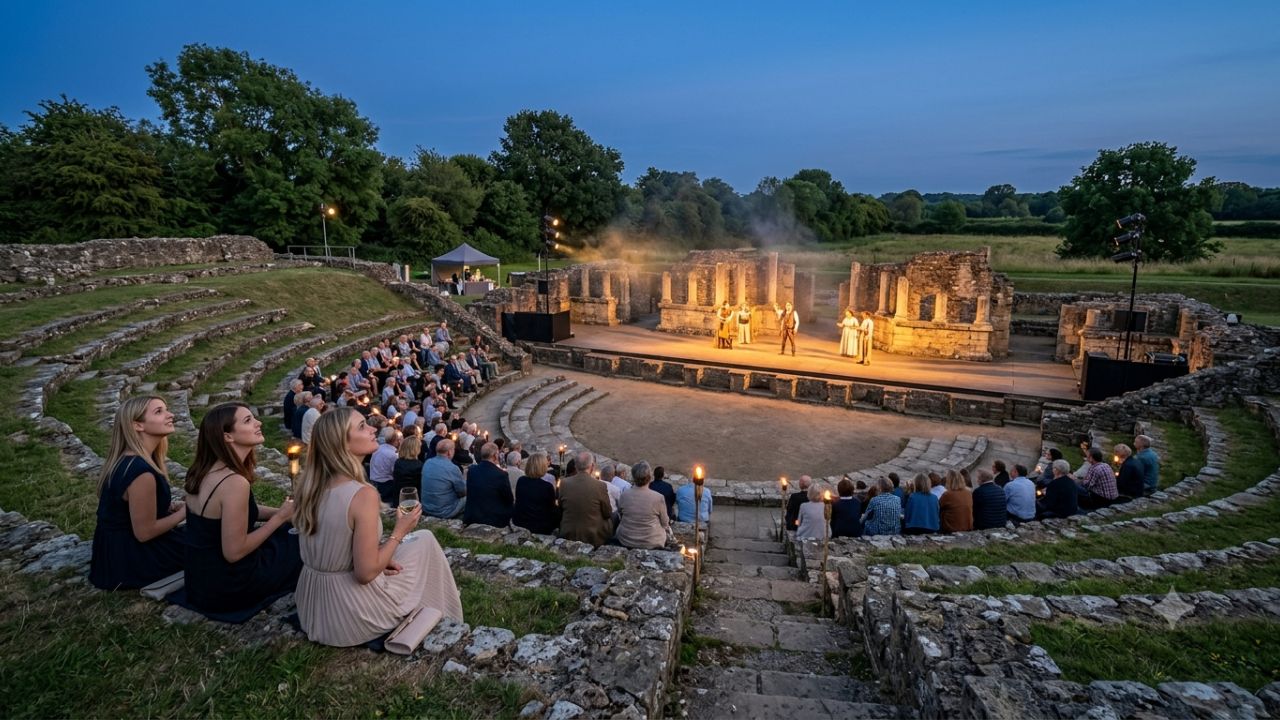
The Roman Theatre of Verulamium in St Albans hosts over 50 open-air theatrical and musical performances every summer.
The Roman Theatre of Verulamium in St Albans, Hertfordshire, stands as Great Britain’s oldest active performance venue, drawing over 16,000 summer festival attendees to ancient 2nd-century ruins while injecting substantial spending into the regional hospitality economy.
[St Albans, UK, Oct 6, 2026] — Located just 20 minutes north of central London by direct rail, St Albans has emerged as a landmark destination for cultural and heritage tourism across the United Kingdom. At the heart of this regional renaissance is the Roman Theatre of Verulamium, an architectural marvel constructed around 140 AD during the peak of Roman occupation in Britain. Unlike traditional Roman amphitheatres designed primarily for gladiatorial contests, the Verulamium complex featured a permanent stage structure built specifically for theatrical plays, musical recitals, and civic pageantry.
Following its official archaeological rediscovery in 1847 and centuries of protection as a scheduled ancient monument across 8 acres of parkland, the site was revitalized in 2014 through a pioneering open-air summer festival initiative. Today, the venue hosts more than 50 individual seasonal performances ranging from Shakespearean drama and Greek tragedies to modern plays and live concerts, establishing a national model for sustainable heritage conservation combined with live entertainment.
Historical Timeline and Architectural Engineering Specifications
| Historic Parameter / Metric | Architectural & Archaeological Data | Contemporary Heritage Relevance |
|---|---|---|
| Original Construction Date | c. 140 AD (2nd Century) | Height of Roman occupation in Britain |
| Major Structural Expansion | c. 300 AD (4th Century) | Expanded spectator tiers & stage depth |
| Ancient Seating Capacity | Up to 2,000 Spectators | Designed for major regional gatherings |
| Site Rediscovery Year | 1847 | Official archaeological identification |
| Protected Parkland Area | 8 Acres of Scheduled Parkland | Managed under strict conservation rules |
| Primary Structural Feature | Permanent Proscenium Stage | Unique acoustic design divergent from amphitheatres |
Architectural Evolution of Verulamium Theatre:
[140 AD: Initial Construction] ➔ Permanent proscenium stage & acoustic seating bowl
           │
[300 AD: 4th-Century Expansion] ➔ Seating capacity expanded to 2,000 spectators
           │
[1847: Archaeological Rediscovery] ➔ Formal protection as scheduled ancient monument
           │
[2014: Festival Launch] ➔ Professional outdoor summer staging & annual residency
The engineering of the Verulamium theater was optimized for unamplified acoustic projection. The natural slope of the seating bowl, combined with permanent masonry backdrop walls, allowed actor voices to carry across all seating tiers without electronic amplification. Modern temporary staging platforms installed for the summer festival are designed to float over ancient foundations without disturbing underlying 2nd-century stonework.
Regional Visitor Metrics and Economic Multiplier Analysis
The transformation of quiet archaeological ruins into an active performance venue has generated significant economic benefits for St Albans and the broader county of Hertfordshire:
| Tourism Indicator / Metric | Official Performance & Economic Metric | Hospitality & Economic Impact |
|---|---|---|
| Annual Summer Festival Attendance | 14,000 to 16,000 Attendees | Direct seasonal visitors for outdoor theatre |
| Annual Seasonal Performance Count | 50+ Individual Shows | Shakespeare, Greek drama, modern plays & concerts |
| Total St Albans Annual Visitors | 2.1 Million Total Visitors | Combined heritage, retail, and leisure arrivals |
| London Rail Travel Duration | 20 Minutes (Thameslink Railway) | Direct high-frequency transit connection |
| Secondary Local Economic Multiplier | £1.40 per £1 Ticket Spent | Secondary spending in local shops & restaurants |
| Theatregoer Hospitality Capture | 65% Visit Local Pubs/Cafes | Pre-show dining and artisan food pop-ups |
| Heritage Site Sightseeing Admission | From £3.00 Adult Entry | Accessible daytime archaeological access |
| Educational Tour Pricing | £2.00 per Student | Guided school visits and heritage learning |
| Open-Air Travel Demand Surge | +35% European Preference | Shift toward outdoor historic performance venues |
| Digital Engagement & Geotag Growth | +40% Social Media Increase | Online photo sharing and travel geotagging |
Economic Ripple Effect of St Albans Heritage Theatre:
[Festival Ticket Sale (£1.00 Base)]
            │
            ├─► Local Hospitality (£1.40 Secondary Spend): 65% pre-show dining in local pubs
            ├─► Transport Infrastructure: 2.1M annual visitors via 20-min Thameslink train
            └─► Preservation Funding: Reinvested into site conservation & £2 student access
Rail Infrastructure and Eco-Friendly Transit Accessibility
St Albans benefits from exceptional public transport connectivity. Thameslink rail services connect London St Pancras International directly to St Albans City station in 20 minutes. This frictionless transit link enables London residents and international travelers to attend evening open-air performances without relying on personal motor vehicles, aligning with sustainable tourism objectives.
Hospitality Synergy and Local Gastronomy
Regional hospitality surveys indicate that 65% of evening theatregoers patronize independent pubs, tea rooms, and pop-up food vendors in St Albans before curtain-up. Local enterprise reports demonstrate that every £1.00 spent on event tickets generates an additional £1.40 in secondary economic activity across the surrounding business district.
Heritage Preservation Protocols and Visitor Amenities
Operating a high-capacity cultural festival within a scheduled ancient monument requires strict environmental governance. Preservation teams maintain daily visitor caps and low-impact staging installations to ensure zero degradation of 2nd-century masonry.
| Facility / Accessibility Upgrade | Operational Specification | Conservation Standard |
|---|---|---|
| Demountable Staging System | Modular elevated wooden platforms | No physical anchors into historic stone |
| Accessibility Pathways | Smooth wheelchair-friendly ramps | Fully accessible seating sections |
| Visitor Amenities | Seasonal pop-up bar & local beverages | Non-permanent structural footprint |
| Educational Programs | Guided student tours at £2.00/student | Curriculum-aligned Roman history tours |
| General Sightseeing | Self-guided daytime access from £3.00 | Year-round archaeological discovery |
Conservation & Hospitality Operational Framework:
[Verulamium Heritage Site (8-Acre Protected Zone)]
                    │
                    ├─► Environmental Controls: Daily visitor caps & protective decking
                    ├─► Accessibility: Wheelchair ramps & step-free paths
                    └─► Visitor Services: On-site pop-up bar, £3 day entry & £2 school tours
Frequently Asked Questions
What makes the Roman Theatre of Verulamium in St Albans unique in Great Britain?
Constructed around 140 AD, it is recognized as Britain's oldest active performance space featuring a permanent proscenium stage structure rather than a standard circular amphitheatre.
How quickly can travelers reach St Albans from central London?
St Albans is accessible via a 20-minute direct Thameslink train ride from London St Pancras International station.
What are the attendance numbers and ticket prices for the site?
The summer open-air festival attracts 14,000 to 16,000 attendees across 50+ seasonal shows. Daytime sightseeing admission starts at £3.00 for adults, with educational student group tours priced at £2.00 per student.
Related Travel Guides
Disclaimer
This article is for informational and educational purposes only. It does not constitute legal, financial, or professional advice. While we strive to provide accurate and up-to-date information, travel policies, regulations, and conditions change rapidly. Always verify information with official sources before making travel decisions. Nomad Lawyer makes no representations about the accuracy, reliability, completeness, or suitability of the information provided. Readers should consult qualified professionals for advice specific to their circumstances. The views expressed in this article are those of the author and do not necessarily reflect the views of Nomad Lawyer.
Raushan Kumar
Founder & Lead Developer
Full-stack developer with 11+ years of experience and a passionate traveller. Raushan built Nomad Lawyer from the ground up with a vision to create the best travel and law experience on the web.
Learn more about our team →