
SS United States Reef Plan Triggers Florida Marine Policy Showdown
The iconic SS United States ocean liner faces sinking as an artificial reef off Florida in early 2026, sparking nationwide debate between marine tourism advocates and historic preservation groups over the $10 million project.

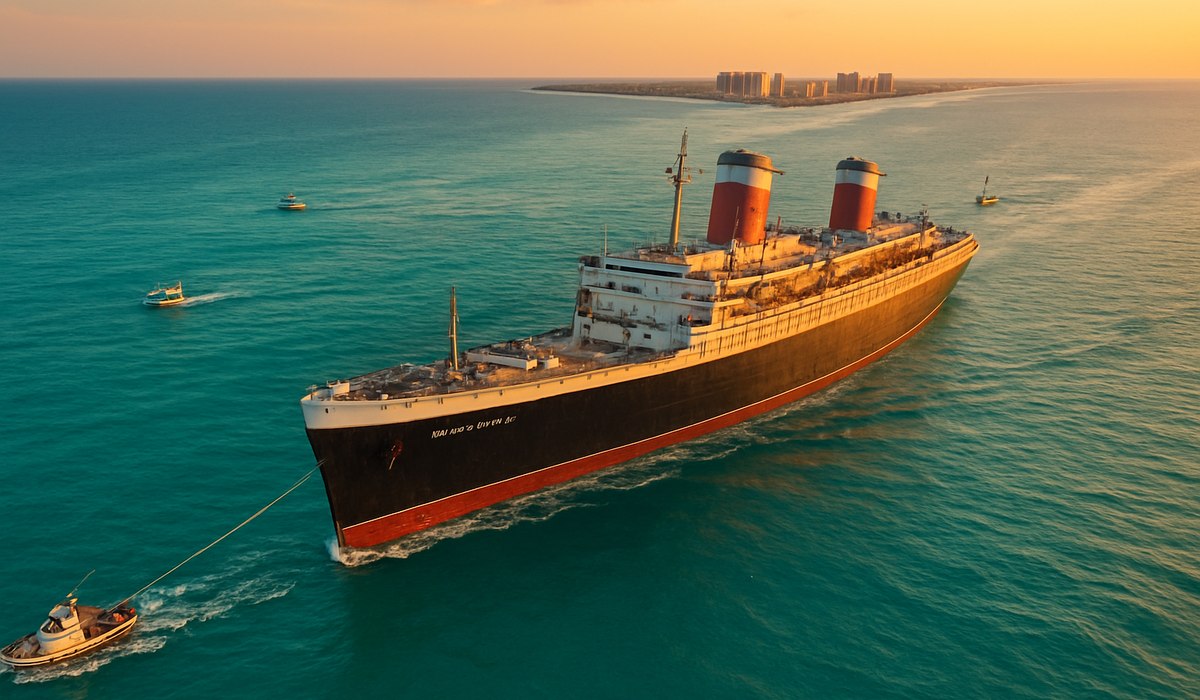
Image generated by AI
The Historic Liner's Final Voyage: Understanding the SS United States Reef Project
The SS United States, holder of the transatlantic speed record since 1952, is set to be deliberately sunk off Florida's Panhandle coast in early 2026 as the world's largest artificial reef. Okaloosa County has invested more than $10 million to acquire, remediate, and deploy the 990-foot vessel as a deepwater marine structure southwest of Destin. The decision marks a pivotal moment in American maritime policy, where environmental innovation collides with cultural preservation concerns. The ship's transformation from historic icon to reef structure reflects broader questions about how travelers and policymakers value heritage versus economic development.
The vessel departed Philadelphia in early 2025 and currently undergoes extensive environmental preparation in Mobile, Alabama. Federal agencies and state environmental teams oversee remediation work to remove fuel residues, asbestos, and polychlorinated biphenyls before the final deployment. This $10 million investment represents one of the largest artificial reef initiatives in the nation's history.
From Record-Breaking Liner to Contested Reef Project
The SS United States reef initiative began as a solution to decades of failed redevelopment proposals. Launched in 1952, the ship once symbolized American engineering prowess and Cold War naval strategy. After decommissioning, the vessel sat in Philadelphia for decades while various development groups proposed museum conversions and stationary attractions.
The Okaloosa County project emerged as a practical alternative. Rather than pursue expensive urban restoration, stakeholders opted for marine habitat creation. The nonprofit SS United States Conservancy negotiated a compromise arrangement: the ship would be scuttled as an artificial reef while salvageable components like funnels and interior fixtures would support a land-based museum concept.
County officials frame the plan as economic stimulus for coastal communities. Florida's Gulf Coast boasts one of the nation's most active artificial reef networks. The artificial reef designation promises to attract dive charters, recreational fishing expeditions, and marine tourism revenue. Early estimates suggest the reef could generate $15 million annually in diving and tourism activity within five years.
The project also addresses practical concerns about ship dismantling. Traditional scrapping costs exceed $25 million. Converting the vessel to marine infrastructure avoids these expenses while creating lasting community benefits.
Florida's $10 Million Investment in Marine Tourism
Okaloosa County's $10 million commitment represents substantial public investment in the marine tourism sector. The funding covers ship acquisition, environmental remediation, towing operations, and monitoring infrastructure. This investment demonstrates Florida's confidence in artificial reef economics.
Florida currently maintains over 2,000 artificial reef sites along its coastlines. These structures support charter fishing operations, recreational scuba diving, and marine research. The SS United States reef project scales these established programs to unprecedented proportions.
Project planners expect significant tourism multiplier effects. Hotels, restaurants, dive shops, and charter boat operations anticipate increased demand. The nearby Destin area, already a premier Florida tourism destination, positions itself to capture additional visitors interested in diving experiences.
Environmental remediation costs comprise the largest budget component. Federal and state regulations require extensive ship preparation before scuttling operations can proceed. The Mobile, Alabama facility currently removes hazardous materials and loose debris under EPA supervision. This preparation phase ensures compliance with the National Fishing Enhancement Act of 1984, which establishes standards for artificial reef deployment.
Monitor the Florida Department of Environmental Protection and Okaloosa County tourism websites for updates on reef construction timeline and diving access schedules.
Heritage Advocates Challenge the Sinking Plan
Preservation organizations have mounted significant opposition to the sinking plan. The SS United States Conservancy, while accepting the reef arrangement as a compromise, acknowledges legitimate heritage concerns. Other preservation coalitions argue that deliberately sinking a nationally significant vessel sets dangerous precedent.
Critics contend that the ship represents irreplaceable Cold War American history. No comparable ocean liner exists in working condition or restoration-ready state. Once scuttled, recovery becomes economically and practically impossible. This finality troubles heritage advocates who see the decision as culturally shortsighted.
A New York-based preservation coalition filed federal complaints in 2025 seeking to halt the project and pursue alternative funding for stationary museum conversion. These groups argue that federal resources should prioritize heritage preservation over marine tourism development.
Preservation opponents also question the permanence of artificial reef benefits. Unlike museum exhibits, reef ecosystems depend on environmental variables beyond human control. Climate change, water quality shifts, and ecological dynamics could undermine long-term reef viability, critics maintain.
The debate reflects broader American tensions between economic development and cultural stewardship. Both perspectives carry merit: communities deserve economic opportunity, yet irreplaceable artifacts warrant protective consideration. Federal policymakers continue evaluating how maritime heritage and environmental policy should interact.
Environmental and Economic Implications
The artificial reef project operates under rigorous environmental oversight. Federal regulations mandate site selection, habitat assessments, and long-term monitoring protocols. The SS United States reef site, positioned in over 100 feet of water southwest of Destin, meets federal depth and distance requirements for large vessel deployment.
Environmental preparation proves crucial for ecosystem health. Residual contaminants like fuel oil and hazardous materials can degrade surrounding marine environments. Months of Mobile-based remediation address these risks. Asbestos removal, bilge cleaning, and structural assessment ensure the vessel meets contemporary environmental standards.
Marine biologists predict favorable reef development outcomes. Steel structures, once clean, provide substantial surface area for coral colonization, sponge growth, and fish habitat. Gulf of Mexico precedent demonstrates that properly prepared vessels support productive reef ecosystems within 2-3 years.
Economic projections suggest strong tourism potential. Recreational diving generates approximately $2,400 per diver daily in equipment rental, guide services, accommodation, and dining. Estimates place potential annual reef-related expenditure at $12-18 million within the greater Destin-Okaloosa region.
However, climate-related marine stress complicates long-term predictions. Gulf ecosystems face warming waters, oxygen depletion, and storm intensity challenges. These environmental variables could affect reef colonization rates and ecosystem resilience. Independent environmental review organizations have called for transparent monitoring protocols and adaptive management capacity.
Review the National Oceanic and Atmospheric Administration (NOAA) artificial reef guidance for comprehensive information on reef science and ecological monitoring standards.
Key Data Table: SS United States Reef Project Facts
| Metric | Details |
|---|---|
| Ship Length | 990 feet (302 meters) |
| Launch Year | 1952 |
| Historic Achievement | Transatlantic speed record holder for ocean liners |
| County Investment | $10.2 million |
| Deployment Timeline | Early 2026 (targeted scuttling date) |
| Water Depth | Over 100 feet southwest of Destin, Florida |
| Remediation Location | Mobile, Alabama shipyard facility |
| Previous Service | Passenger liner and dual-purpose troop carrier |
| Project Scope | World's largest artificial reef deployment |
| Estimated Annual Tourism Impact | $12-18 million regional economic activity |
| Federal Regulatory Framework | National Fishing Enhancement Act of 1984 |
| Competing Heritage Proposal | Land-based museum using salvaged ship components |
What This Means for Travelers
The SS United States reef project opens exciting new opportunities for diving enthusiasts and marine tourism explorers. Here's what travelers should know:
-
Plan Destin diving trips for summer 2026 onward. The reef becomes accessible to recreational divers approximately 3-6 months after scuttling. Contact local dive shops beginning June 2026 for experience availability and certification requirements.
-
**Expect
Disclaimer
This article is for informational and educational purposes only. It does not constitute legal, financial, or professional advice. While we strive to provide accurate and up-to-date information, travel policies, regulations, and conditions change rapidly. Always verify information with official sources before making travel decisions. Nomad Lawyer makes no representations about the accuracy, reliability, completeness, or suitability of the information provided. Readers should consult qualified professionals for advice specific to their circumstances. The views expressed in this article are those of the author and do not necessarily reflect the views of Nomad Lawyer.
Preeti Gunjan
Contributor & Community Manager
A passionate traveller and community builder. Preeti helps grow the Nomad Lawyer community, fostering engagement and bringing the reader experience to life.
Learn more about our team →