
Sri Lanka's Skyway Renaissance: Etihad Entrusts SriLankan Airlines with Elite Airbus A330 Pilot Training
Etihad Airways selects SriLankan Airlines to deliver specialized Airbus A330 Line Flying Under Supervision training for six senior examiner pilots, positioning Colombo as a regional aviation hub.

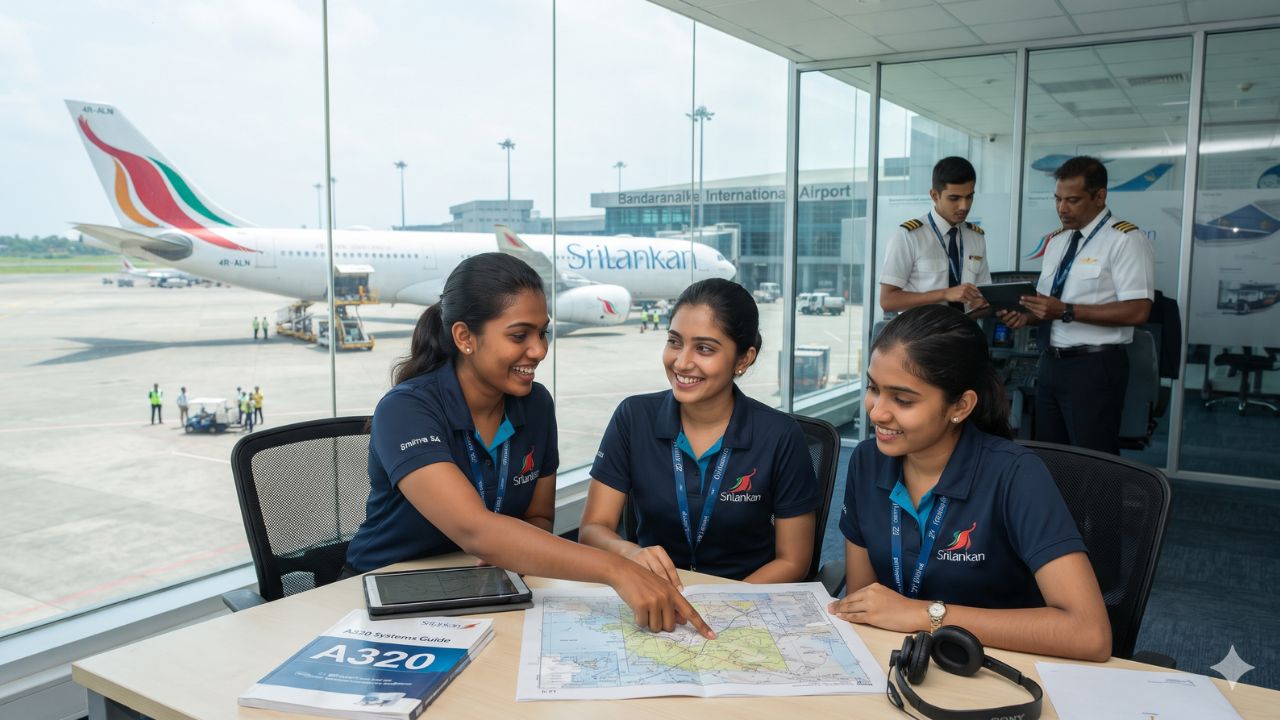
In a remarkable inversion of traditional aviation training flows where South Asian carriers routinely dispatch flight crews to the Persian Gulf for advanced instruction, Abu Dhabi’s Etihad Airways has entrusted SriLankan Airlines to conduct specialized widebody training for six of its most senior supervisory aviators—including five Type Rating Examiners (TREs) and one Senior Type Rating Examiner (STRE). Delivered on SriLankan Airlines' frontline fleet of widebody Airbus A330 aircraft, the rigorous Line Flying Under Supervision (LFUS) curriculum signals an unprecedented vote of international confidence in the technical prowess and operational pedigree of Sri Lanka’s flag carrier. Supported by high-level clearances from the Civil Aviation Authority of Sri Lanka and the Ministry of Defence, this milestone engagement demonstrates that Colombo is rapidly evolving from a tropical leisure transit stop into a premier knowledge-based aeronautical center for the wider Indian Ocean region.
The cross-border initiative brings together experienced Sri Lankan line instructors and veteran examiners from the United Arab Emirates, demonstrating how established flag carriers can leverage existing heavy-jet assets to export specialized aeronautical services beyond routine passenger routes.
The Gulf-Colombo Training Corridor: Elite Airbus A330 Supervised Line Flying
Line Flying Under Supervision represents the pinnacle of commercial flight training, placing qualified pilots in command of actual scheduled flights under the direct oversight of master instructors. For the six visiting Etihad Airways examiners, the Airbus A330 LFUS curriculum was specifically calibrated to hone advanced operational oversight, crew resource management, and instructional evaluations across demanding intercontinental sectors.
Conducting this instruction on SriLankan Airlines' operational routes placed the visiting Gulf examiners in dynamic operational environments. Sri Lanka’s geographical position at the crossroads of the northern Indian Ocean presents pilots with demanding equatorial flight conditions—including the energetic convective storm systems of the Intertropical Convergence Zone (ITCZ), extensive oceanic crossings across the Bay of Bengal, and complex monsoon wind patterns. Flying widebody Airbus aircraft through these variable weather systems alongside veteran Sri Lankan captains provided the visiting examiners with invaluable real-world training depth.
The strategic vision behind the initiative was highlighted by Captain Chaminda De Zoysa, Head of Flight Operations at SriLankan Airlines. He noted that the successful completion of the assignment demonstrated the practical value of the carrier's Airbus A330 fleet, seasoned flight instructors, and established ground training infrastructure in supporting tier-one global airlines. De Zoysa emphasized that SriLankan Airlines Flight Training possesses the technical capacity to function as a regional partner, delivering bespoke flight instruction and recurrent training to carriers across South Asia, Southeast Asia, and the Middle East.
Regulatory Precision and Strategic Bilateral Clearances
Hosting foreign airline examiners for active line operations requires extensive inter-agency diplomacy and regulatory alignment. Before the Etihad examiners could occupy the flight deck on commercial sectors, comprehensive operational frameworks had to be formulated and cleared by the Civil Aviation Authority of Sri Lanka (CAASL) alongside the Sri Lankan Ministry of Defence.
This regulatory framework ensured that the training conformed strictly to the safety standards enforced by both the CAASL and the UAE General Civil Aviation Authority (GCAA). Because Type Rating Examiners and Senior Type Rating Examiners represent the supreme supervisory tier responsible for testing, certifying, and licensing other captains within an airline’s hierarchy, their training requirements far exceed standard pilot line training. The smooth execution of the syllabus across multiple departments demonstrates that Sri Lanka’s aviation infrastructure can support the highest echelons of international flight standardization.
While SriLankan Airlines clarified that the assignment represents a completed collaborative program rather than a newly signed long-term commercial joint venture, the engagement establishes an invaluable precedent. It proves that national carriers navigating economic transitions can unlock high-yield revenue streams by commercializing technical knowledge and operational assets.
Airbus A330 Training Profile and Regional Aviation Cooperation Matrix
The table below summarizes the operational parameters, trainee credentials, aircraft specifications, and regulatory frameworks governing the Etihad Airways and SriLankan Airlines flight training collaboration.
| Operational Dimension | Program Specification | Technical & Strategic Details |
|---|---|---|
| Host Airline & Facility | SriLankan Airlines Flight Training | Bandaranaike International Airport (CMB), Katunayake, Sri Lanka |
| Partner Airline | Etihad Airways | National airline of the United Arab Emirates, Abu Dhabi |
| Visiting Trainee Profile | Six elite examiner pilots | 5 Type Rating Examiners (TREs) and 1 Senior Type Rating Examiner (STRE) |
| Aircraft Platform | Airbus A330 Fleet | Twin-aisle widebody aircraft deployed on scheduled international sectors |
| Curriculum Framework | Line Flying Under Supervision (LFUS) | Live commercial sector training emphasizing flight deck supervision and standardization |
| Regulatory Clearances | CAASL & Ministry of Defence | Bilateral oversight ensuring full compliance with Sri Lankan and UAE air safety rules |
| Operational Leadership | Capt. Chaminda De Zoysa | Head of Flight Operations, SriLankan Airlines |
| Regional Strategic Goal | South Asian Training Hub | Position Colombo as an export center for advanced pilot instruction and airline services |
Visitor Insider Tips: Exploring Colombo and the Western Aviation Coast
Travelers visiting Sri Lanka—whether for aviation industry engagements or independent coastal exploration—can take advantage of insider logistical advice to maximize their time on the island:
- Master the Airport Expressway Transit: When touching down at Bandaranaike International Airport (CMB) in Katunayake, avoid winding coastal backroads. Hop aboard the comfortable, air-conditioned Colombo-Katunayake Expressway (E03) luxury bus from the terminal concourse. For less than 500 Sri Lankan rupees, the bus whisks travelers directly to Colombo Fort / Bastian Mawatha in just 25 to 30 minutes, bypassing hours of suburban traffic.
- Base Yourself in Coastal Negombo for Flight Logistics: If you have early-morning departures or aviation business at Katunayake, base yourself along Porutota Road in Negombo rather than central Colombo. Negombo is situated just 15 minutes north of the runway, offering oceanfront boutique hotels, golden sand beaches, and immediate access to sunrise boat rides across the historic Dutch canal network.
- Aviation Spotting Along Negombo Lagoon: Aviation enthusiasts can find premier aircraft-spotting vantage points along the southern rim of Negombo Lagoon and the perimeter roads near 18th Mile Post. Long-haul Airbus A330s and regional narrowbodies make dramatic final approaches over coconut palm groves and traditional outrigger fishing catamarans (oruwas).
- Indulge in Authentic Street Gastronomy: Skip sterile hotel buffets and seek out neighborhood tea boutiques and night stalls in Pettah or Bambalapitiya. Order fresh egg hoppers (crispy bowl-shaped rice flour pancakes) with caramelized onion lunu miris, alongside piping-hot chicken or vegetarian kottu roti chopped rhythmically on sizzling iron plates with metal blades.
Cultural and Environmental Context: Maritime Crossways and Modern Island Resilience
Sri Lanka’s emergence as an aviation training hub reflects an enduring geographical legacy. For millennia, the teardrop-shaped island at the center of the Indian Ocean served as a vital maritime sanctuary for Arab, Chinese, Persian, and European traders navigating the monsoon winds along ancient maritime silk corridors. The transfer of modern aeronautical expertise between Abu Dhabi and Colombo represents a natural 21st-century evolution of these historic Indian Ocean merchant and cultural ties.
Furthermore, developing high-value aeronautical training and technical aviation exports provides vital economic diversification for Sri Lanka as it accelerates post-crisis economic recovery. Rather than relying solely on agricultural exports and seasonal holiday arrivals, cultivating advanced aerospace competencies generates high-skilled employment and elevates the country's international standing.
This modernization coexists with deep cultural and ecological responsibilities. From the protected wildlife corridors of Yala and Wilpattu to the UNESCO World Heritage ramparts of the Ancient City of Galle, tourism in Sri Lanka is increasingly oriented toward sustainable preservation. Managed under guidelines championed by the Sri Lanka Tourism Development Authority, sustainable travel programs encourage low-impact community homestays in the central highlands and marine conservation initiatives safeguarding blue whales and sea turtles along the southern coast. By pairing technological sophistication in the skies with ecological reverence on the ground, Sri Lanka presents an inspiring model of sustainable island progress.
FAQ: Aviation and Travel in Sri Lanka 2026
Why did Etihad Airways send senior pilots to train with SriLankan Airlines?
Etihad chose SriLankan Airlines to deliver specialized Airbus A330 Line Flying Under Supervision (LFUS) training for six elite examiner pilots, leveraging SriLankan's experienced instructors, fleet, and operational infrastructure.
How do travelers get from Colombo Airport to the city center quickly?
The express bus running along the Colombo-Katunayake Expressway (E03) takes approximately 25 to 30 minutes to reach Colombo Fort directly from the airport terminal, offering the fastest and cheapest connection.
Do tourists need an entry visa before arriving in Sri Lanka?
Yes. International travelers must obtain an electronic travel authorization (ETA) online through official government portals prior to departure, which permits short-term tourist visits upon passport verification at arrival.
What is the best time of year to visit Sri Lanka's western coast and Colombo?
The optimal travel window for Colombo, Negombo, and the southwest coast spans from December through April, when dry weather, calm seas, and minimal rainfall create ideal travel conditions.
By uniting world-class flight deck discipline with warm island hospitality, Sri Lanka proves that its horizons reach far beyond its shores into the highest skies of international aviation.
Related Travel Guides
Disclaimer
This article is for informational and educational purposes only. It does not constitute legal, financial, or professional advice. While we strive to provide accurate and up-to-date information, travel policies, regulations, and conditions change rapidly. Always verify information with official sources before making travel decisions. Nomad Lawyer makes no representations about the accuracy, reliability, completeness, or suitability of the information provided. Readers should consult qualified professionals for advice specific to their circumstances. The views expressed in this article are those of the author and do not necessarily reflect the views of Nomad Lawyer.
Preeti Gunjan
Contributor & Community Manager
A passionate traveller and community builder. Preeti helps grow the Nomad Lawyer community, fostering engagement and bringing the reader experience to life.
Learn more about our team →