
SR-71 Blackbird military test pilot survives Mach 3 ejection in 2026 aerospace milestone
In a remarkable aerospace engineering story revisited in 2026, SR-71 Blackbird military test pilot Bill Weaver survived an involuntary ejection at Mach 3 and 78,000 feet. His 1966 survival defied physics and changed aviation safety protocols forever.

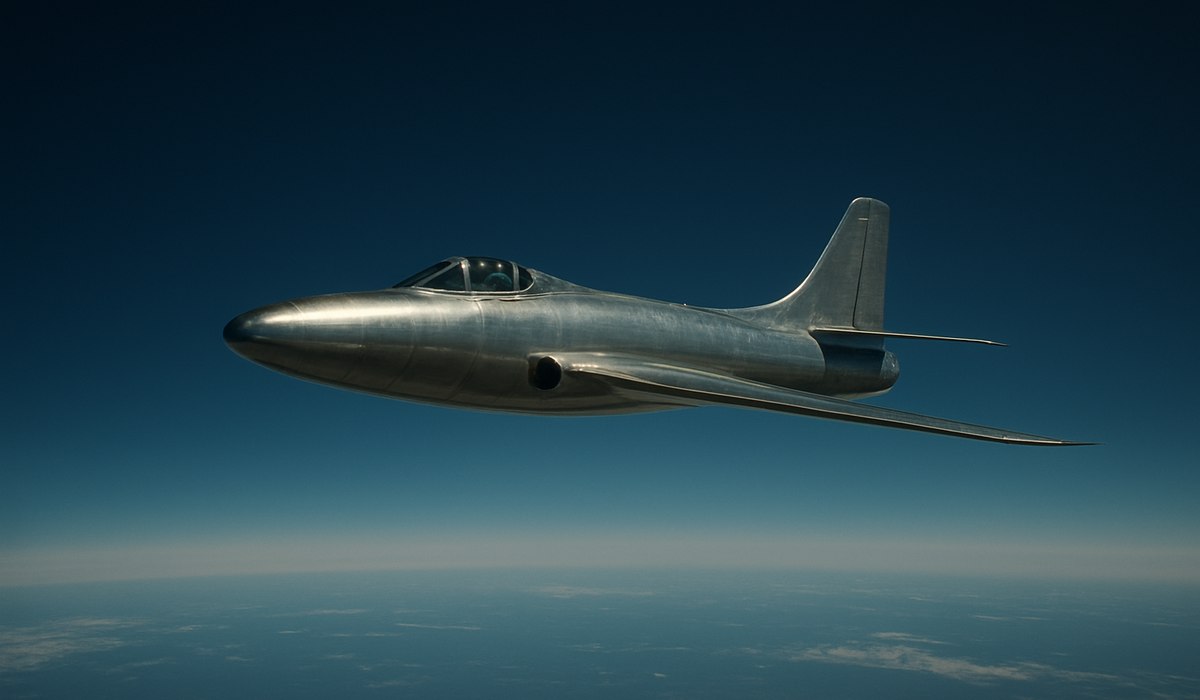
Image generated by AI
The Impossible Survival: When an SR-71 Blackbird Military Test Pilot Defied Death
Bill Weaver, a legendary SR-71 Blackbird military test pilot, survived one of aviation's most extraordinary events on January 25, 1966. While conducting high-altitude stress testing over Edwards Air Force Base, Weaver's experimental aircraft experienced a catastrophic mid-air disintegration at Mach 3.2 and nearly 79,000 feet. Against all conceivable odds, Weaver fell 15 miles through the upper atmosphere and lived to tell the tale. This Cold War aerospace engineering incident remains a defining moment in test flight history, demonstrating both human resilience and the extreme limits of aviation engineering during the Space Race era.
The SR-71 Blackbird Program: America's Secret Speed Weapon
The SR-71 Blackbird military test pilot program emerged from Lockheed's legendary Skunk Works division, the secretive aerospace engineering facility that designed some of the Cold War's most advanced aircraft. Developed during the 1960s, the SR-71 represented the pinnacle of manned reconnaissance technology, capable of flying faster than three times the speed of sound while photographing adversary territory from altitudes exceeding 80,000 feet.
The Blackbird family evolved from earlier experimental platforms like the A-12 and YF-12, each pushing the boundaries of what engineers believed possible. The SR-71 Blackbird military test pilot program required selecting only the most exceptional aviators—men willing to operate aircraft that occasionally behaved unpredictably at extreme velocities. Bill Weaver embodied this elite breed. After joining Lockheed in 1956, Weaver accumulated experience flying the Mach 2-capable F-104 Starfighter before transitioning to the even more demanding Blackbird family of aircraft.
The variable geometry inlet system that powered Blackbird performance proved both revolutionary and temperamental. At Mach 3, these inlet systems generated most of the aircraft's usable thrust while managing shock waves that could instantaneously collapse under unfavorable conditions. Even minor disturbances could trigger "unstarts"—catastrophic losses of inlet shock recovery that eliminated engine thrust on affected sides within milliseconds.
Bill Weaver's Catastrophic Flight: The Physics of Disaster
The January 25, 1966 mission appeared routine: accelerate the SR-71 to approximately Mach 3.2, climb to 78,000 feet, and conduct systematic testing to evaluate center-of-gravity shifting procedures designed to reduce trim drag. Weaver occupied the front cockpit while Jim Zwayer, a Lockheed flight test reconnaissance specialist, sat in the rear. Their objective seemed manageable, pushing the aircraft's performance envelope but within established safety parameters.
As Weaver entered a planned right-hand bank, the right engine inlet experienced a severe unstart. The sudden asymmetric thrust collapse created violent yawing, rolling, and pitching moments. Weaver applied full opposite control input, but the combination of reduced aerodynamic stability, extreme structural loads, and asymmetric thrust forces exceeded the aircraft's controllable envelope instantaneously. The sequence unfolded in mere seconds—far too quickly for recovery procedures to take effect.
Within moments, structural loads throughout the airframe surpassed design limits. The SR-71 Blackbird military test pilot's aircraft did not crash conventionally. Instead, it disintegrated mid-air under combined bending and torsional forces that exceeded engineering margins. The airframe essentially came apart around its crew as massive g-forces mounted. Weaver lost consciousness during the violent breakup, unaware of what would follow.
The Physics of Survival: Falling Through the Stratosphere
What happened next transcended contemporary understanding of human physiology. Weaver's unconscious body separated from the aircraft wreckage at approximately 78,000 feet, positioned within a small section of fuselage that acted as an impromptu capsule. This fragment tumbled downward through the stratosphere, with Weaver protected from the extreme cold and thin atmosphere by the metal shell surrounding him.
The survival sequence involved multiple factors converging at precisely the right moments. High-altitude physics meant that even at 78,000 feet, sufficient air density existed to generate drag that prevented supersonic acceleration. As the fuselage fragment descended through progressively denser atmosphere, drag increased. Weaver remained in an unconscious but life-sustainable state throughout the extended fall, protected from temperature extremes by both the fuselage material and his pressure suit.
Approximately 15 miles into his descent, at an altitude where useful parachute deployment became possible, Weaver regained consciousness. His ejection seat had separated during the mid-air breakup, and his parachute system functioned despite the catastrophic circumstances. Weaver deployed his parachute and continued descending through increasingly dense atmosphere, finally landing safely in the desert near Edwards Air Force Base.
His remarkable survival—later confirmed through medical examination showing surprisingly minimal injuries—revealed that human bodies could endure extraordinary ordeal when protected by even minimal structural shielding and appropriate pressure suits. The incident generated intense interest from aerospace engineers studying survival margins at extreme altitudes and velocities.
Legacy of Cold War Aviation Testing and Survival Innovation
The incident profoundly influenced subsequent aerospace engineering approaches to emergency systems design. Engineers recognized that even unplanned ejection scenarios from extreme altitudes required redundant protection systems. Pressure suit technology advanced significantly, and subsequent experimental aircraft incorporated enhanced structural integrity at fuselage junctures likely to separate during catastrophic events.
Bill Weaver's survival validated previously theoretical models of high-altitude descent dynamics. The incident demonstrated that controlled descent from near-space altitudes, even when unplanned, could result in human survival if fundamental physics principles aligned favorably. This knowledge influenced design requirements for subsequent generations of experimental aircraft, including those developed during the Space Race era.
The SR-71 Blackbird military test pilot program continued operating successfully following investigation and modification of inlet control systems. Enhanced automatic unstart recovery procedures were implemented across the fleet. The program ultimately accumulated over 3,500 operational flight hours, achieving its reconnaissance objectives while maintaining an acceptable safety record given the extreme operational environment.
| Event Element | Technical Details | Survival Factor | Legacy Impact |
|---|---|---|---|
| Aircraft Velocity | Mach 3.2 (approximately 2,100 mph) | Aerodynamic drag slowed descent rate | Validated extreme-altitude descent models |
| Initial Altitude | 78,000 feet (23,774 meters) | Sufficient air density for parachute deployment | Redefined high-altitude emergency procedures |
| Fall Duration | Approximately 11-12 minutes | Extended descent allowed consciousness recovery | Enhanced pressure suit design standards |
| Structural Protection | Fuselage fragment capsule effect | Shielded pilot from extreme environment | Influenced emergency system architecture |
| Pressure Suit Function | Full-pressure suit systems intact | Maintained physiological viability | Advanced suit technology development |
| Parachute Deployment | Manual deployment following consciousness recovery | Successful landing in desert terrain | Validated parachute reliability at extreme altitudes |
What This Means for Travelers: Aviation Safety Evolution in 2026
While the SR-71 Blackbird military test pilot incident occurred six decades ago, its lessons directly enhanced modern commercial aviation safety systems that protect millions of travelers daily in 2026:
- Pressure Cabin Protection: Modern aircraft cabin pressurization systems incorporate redundancy principles established through extreme-altitude survival research. Your commercial airliner maintains breathable atmosphere through automated systems designed with multiple backup layers—directly influenced by high-altitude testing protocols that Weaver's
Disclaimer
This article is for informational and educational purposes only. It does not constitute legal, financial, or professional advice. While we strive to provide accurate and up-to-date information, travel policies, regulations, and conditions change rapidly. Always verify information with official sources before making travel decisions. Nomad Lawyer makes no representations about the accuracy, reliability, completeness, or suitability of the information provided. Readers should consult qualified professionals for advice specific to their circumstances. The views expressed in this article are those of the author and do not necessarily reflect the views of Nomad Lawyer.
Preeti Gunjan
Contributor & Community Manager
A passionate traveller and community builder. Preeti helps grow the Nomad Lawyer community, fostering engagement and bringing the reader experience to life.
Learn more about our team →