
SR-71 Blackbird Cold War aviation: Test pilot survives Mach 3 breakup
Test pilot Bill Weaver survived the SR-71 Blackbird disintegrating at Mach 3.18 in 1966, making aviation history with the first supersonic ejection. He returned to flying within two weeks in 2026.

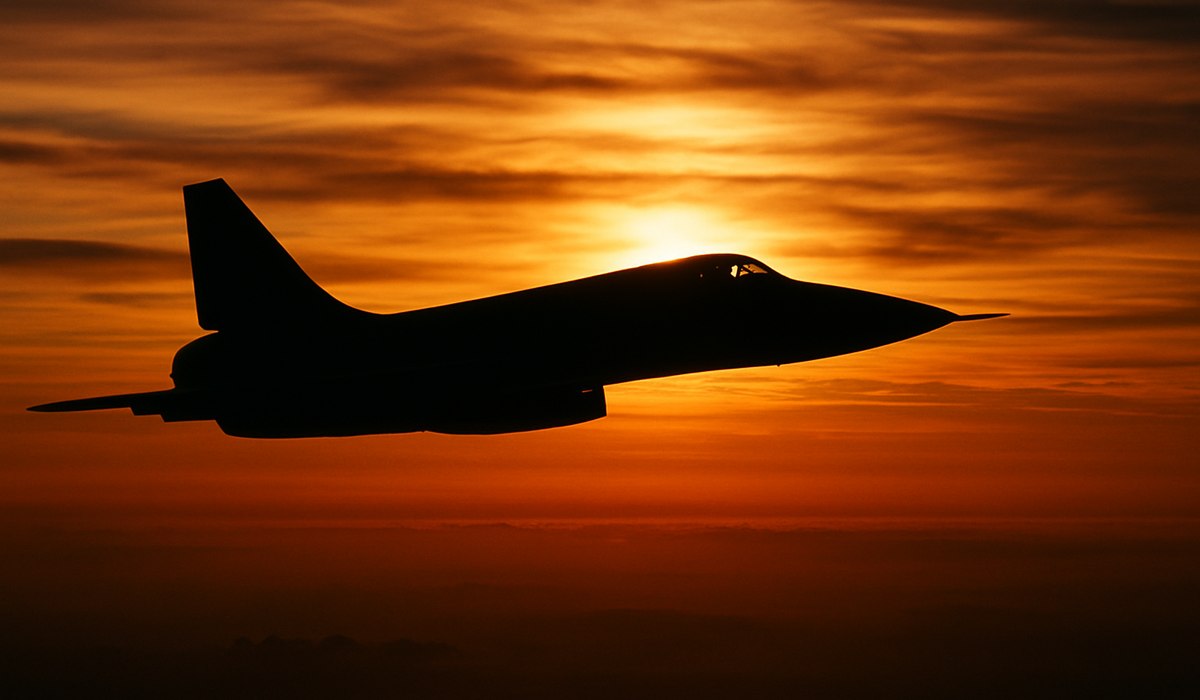
Image generated by AI
The Fastest Aircraft Ever Built
The SR-71 Blackbird remains aviation's most legendary military achievement. Despite retirement nearly three decades ago, this hypersonic spy plane holds the distinction of being the fastest air-breathing crewed aircraft ever constructed. Developed by Lockheed's secretive "Skunk Works" division, the Blackbird represented the pinnacle of Cold War aerospace engineering, capable of reaching speeds exceeding Mach 3 and altitudes above 85,000 feet. Its role in reconnaissance missions during the Cold War made it an icon of American technological superiority. However, even the most advanced machines face mechanical challenges—and the SR-71 Blackbird Cold War aviation program would encounter a test that nearly derailed the entire initiative before it truly began.
The SR-71 Blackbird: Aviation's Fastest Legend
The Lockheed SR-71, nicknamed the "Habu" after a venomous snake, represented the absolute pinnacle of 1960s aeronautical engineering. This sleek, titanium-hulled aircraft could cruise at temperatures exceeding 600 degrees Fahrenheit due to air friction at hypersonic speeds. The Blackbird first flew in December 1964, just months after President Lyndon B. Johnson's election victory. By January 1966, the aircraft had barely achieved operational status with the U.S. Air Force, making it extraordinarily vulnerable to program cancellation. The military valued the SR-71 Blackbird Cold War aviation capabilities so highly that even catastrophic failures weren't permitted to ground the initiative permanently.
The aircraft's design incorporated revolutionary innovations: fuel that could withstand extreme heat, engines capable of sustained supersonic operation, and reconnaissance systems unmatched by any contemporary competitor. Learn more about Cold War military technology at the Smithsonian Institution.
The Fateful Mission of January 1966
On January 25, 1966, at 11:20 a.m., test pilot Bill Weaver and flight systems specialist Jim Zwayer launched SR-71 aircraft 61-7952 from Edwards Air Force Base in California. Their mission involved investigating procedures to reduce drag and improve high-Mach performance—requiring the aircraft to fly with its center of gravity positioned further aft than normal. This configuration reduced longitudinal stability, a critical factor in what would follow.
The flight proceeded nominally through initial refueling operations with a KC-135 Stratotanker. Weaver and Zwayer then accelerated to Mach 3.2, climbing to 78,000 feet. Minutes into this second leg, disaster struck: a catastrophic engine unstart occurred, causing instantaneous and irrecoverable loss of thrust. Weaver attempted urgent communication with Zwayer through the aircraft's intercom system, but the connection became garbled. The situation deteriorated rapidly as the aircraft's aerodynamic control became impossible to maintain at hypersonic speeds.
Surviving the Unsurvivable
What happened next made Bill Weaver an unwilling participant in aviation history. The SR-71 Blackbird Cold War aviation program's most critical test would be whether anyone could survive what came next. Attempting to warn Zwayer, Weaver experienced extreme g-forces that caused him to lose consciousness before the aircraft literally disintegrated around him. "I blacked out, succumbing to extremely high g-forces," Weaver later recalled. "The SR-71 then literally disintegrated around us. From that point, I was just along for the ride."
Weaver completed the first supersonic ejection from an SR-71, an achievement nobody had survived before. Regaining consciousness mid-parachute descent, Weaver struggled to comprehend his survival. In his own words, he initially believed: "I realized this was no dream; it had really happened. That was also disturbing, because I could not have survived what had just happened. Therefore, I must be dead."
Fortunately, Weaver's survival training activated despite his shock. He landed safely on a sprawling cattle ranch in northeastern New Mexico. The ranch's owner, Albert Mitchell Jr., immediately contacted the New Mexico State Police, the U.S. Air Force, and the nearest hospital. Sadly, Jim Zwayer perished instantly during the ejection sequence, suffering a fatal broken neck. His sacrifice remained a somber footnote to Weaver's miraculous survival. Read more about Cold War aviation safety at the National Air and Space Museum.
The Remarkable Return to Flight
The most astounding aspect of this SR-71 Blackbird Cold War aviation incident may be what happened afterward. Despite the trauma of watching his aircraft disintegrate and his copilot perish, Bill Weaver returned to flying SR-71 aircraft within just two weeks. Military leadership recognized that canceling the program over a single mechanical failure would undermine America's reconnaissance capabilities during an intensifying Cold War.
Weaver's second mission operated from Lockheed Martin's assembly and test facility in Palmdale, California. During this flight, he experienced another harrowing moment when a misadjusted microswitch triggered the "Pilot Ejected" warning light. For a heart-stopping moment, Weaver faced the possibility of another emergency—though this proved to be merely a false alarm caused by mechanical malfunction rather than actual system failure.
The SR-71 Blackbird program ultimately continued for more than three decades, establishing numerous speed and altitude records. Though eleven additional aircraft were lost in accidents throughout the program's lifetime, no further fatalities occurred. The program became a testament to American Cold War aerospace achievement, with reconnaissance missions proving invaluable during periods of heightened international tension.
Key Data Table: SR-71 Blackbird Cold War Aviation
| Aspect | Details |
|---|---|
| Maximum Speed | Mach 3.35+ (2,193 mph / 3,530 km/h) |
| Operational Altitude | 85,000+ feet (25,908+ meters) |
| Initial Flight Date | December 22, 1964 |
| Operational Status Achieved | January 1966 |
| Aircraft Designation | Lockheed SR-71A |
| Test Pilot | Bill Weaver |
| Flight Systems Specialist | Jim Zwayer |
| Accident Date | January 25, 1966 |
| Accident Location | Northern New Mexico |
| Fatalities | 1 (Jim Zwayer) |
| Return to Flight | Two weeks post-incident |
| Total Aircraft Lost | 12 (throughout program) |
| Program Retirement Year | 1998 |
What This Means for Travelers
Understanding aviation history enriches travel experiences, especially for those visiting aerospace museums and historical sites across America.
-
Visit Edwards Air Force Base: Located in the Mojave Desert, Edwards remains an active aerospace testing facility offering limited public tours and a museum showcasing aircraft development history.
-
Explore the National Air and Space Museum: Washington, D.C.'s premier aviation museum features SR-71 artifacts and comprehensive Cold War aerospace exhibits accessible to all visitors.
-
Tour Lockheed Martin Palmdale Facility: Some organized groups can arrange guided tours of the assembly facility where Weaver flew post-incident operations.
-
Understand Cold War Context: Knowledge of programs like SR-71 enhances appreciation for Cold War-era museum exhibits and historical sites throughout the Western United States.
-
Accessibility Considerations: Most aviation museums offer wheelchair access, audio guides in multiple languages, and extended hours during summer tourist seasons for optimal visit planning.
FAQ: SR-71 Blackbird Cold War Aviation
**Q: Could Bill Weaver have
Disclaimer
This article is for informational and educational purposes only. It does not constitute legal, financial, or professional advice. While we strive to provide accurate and up-to-date information, travel policies, regulations, and conditions change rapidly. Always verify information with official sources before making travel decisions. Nomad Lawyer makes no representations about the accuracy, reliability, completeness, or suitability of the information provided. Readers should consult qualified professionals for advice specific to their circumstances. The views expressed in this article are those of the author and do not necessarily reflect the views of Nomad Lawyer.
Raushan Kumar
Founder & Lead Developer
Full-stack developer with 11+ years of experience and a passionate traveller. Raushan built Nomad Lawyer from the ground up with a vision to create the best travel and law experience on the web.
Learn more about our team →