
Spirit Airlines' Demise Signals End of Budget Air Travel Era in America
Breaking airline news and aviation industry updates for 2026.

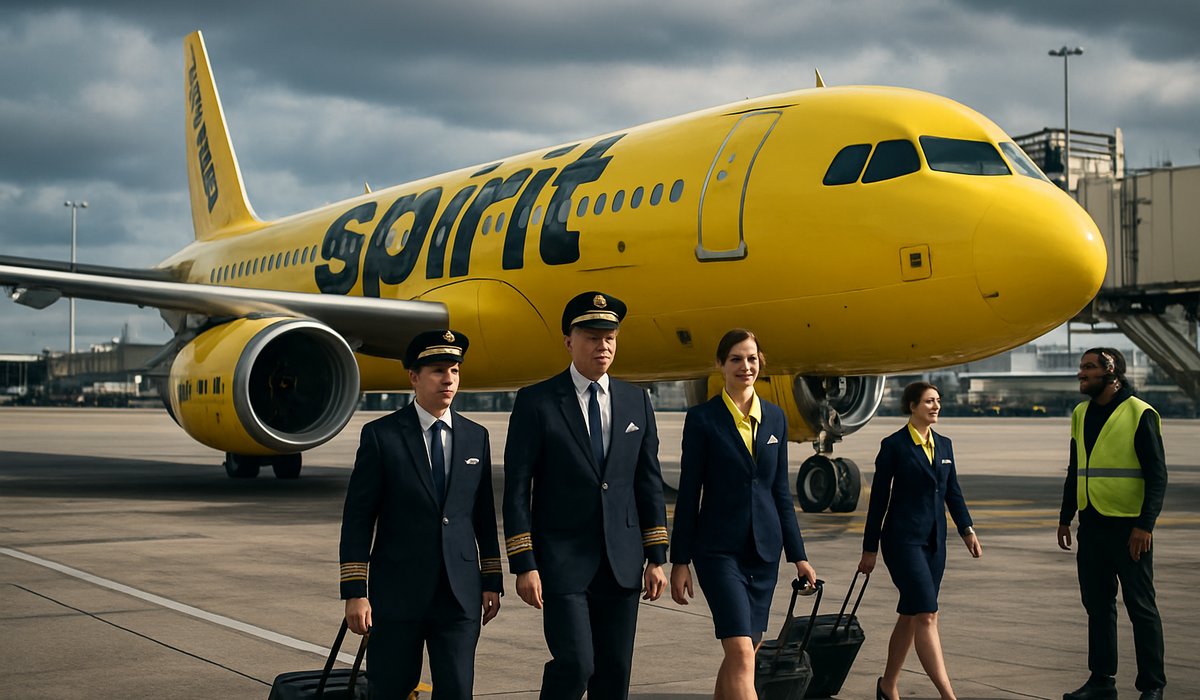
Image generated by AI
Spirit Airlines' Demise Signals End of Budget Air Travel Era in America
The collapse of a major ultra-low-cost carrier could fundamentally reshape airfare pricing and reshape consumer expectations for domestic flights
The Budget Airline Model Crumbles
The aviation industry faces a pivotal moment as budget carriers that underpinned affordable air travel across the United States confront an existential crisis. For nearly two decades, airlines operating on razor-thin profit margins—most notably Spirit Airlines—delivered fares that rivaled the cost of ground transportation, fundamentally altering how millions of Americans accessed commercial flight. Industry analysts now warn that the structural collapse of this business model may permanently alter the competitive landscape, leaving travelers facing substantially higher ticket prices across the board.
Spirit Airlines' financial deterioration represents far more than a single company's failure. The carrier epitomized the ultra-low-cost carrier (ULCC) segment that thrived by accepting minimal margins, maximizing ancillary revenue through baggage charges and seat fees, and operating with lean operational structures. This formula enabled promotional fares—often advertised at prices below a week's gasoline—that became the benchmark against which consumers measured airfare affordability.
Market Dynamics Shift
The erosion of this competitive pressure creates immediate implications for the broader aviation sector. Legacy carriers and mid-size operators no longer face the same downward pressure on base fares that once forced them to compete aggressively on ticket prices. With the departure of aggressive ultra-low-cost competition, airline pricing strategies are recalibrating toward higher base fares and expanded ancillary fees.
Multiple factors precipitated Spirit Airlines' decline: elevated jet fuel costs stemming from geopolitical instability, post-pandemic debt burdens, and operational challenges that eroded the efficiency advantages these carriers once maintained. Simultaneous capacity constraints across the industry have reduced the need for aggressive price competition, allowing established carriers to maintain higher margins while still filling seats.
Industry Realignment Ahead
Consumer expectations built over two decades of budget-friendly airfare now confront market realities. Analysts project that the removal of ultra-low-cost carriers willing to operate on negligible margins will result in a baseline price increase across domestic routes. While other budget carriers remain operational, industry observers question whether sufficient competitive pressure exists to restore the pricing dynamics that characterized the previous decade.
The implications extend beyond ticket prices. Ancillary fee structures—baggage charges, seat selection fees, and reservation modifications—will likely expand as carriers compensate for reduced base-fare competition. This structural shift reflects fundamental changes in aviation economics, suggesting that the era of sub-$50 cross-country flights may have permanently concluded.
FAQ: Understanding the Future of Airline Pricing
What caused Spirit Airlines' financial collapse? Multiple factors including elevated jet fuel prices, post-pandemic debt obligations, operational inefficiencies, and reduced competitive necessity for ultra-low pricing converged to destabilize the carrier's business model.
Will airline baggage charges increase further? Yes, expect airlines to expand and increase ancillary fees as base-fare competition diminishes following the departure of aggressive ultra-low-cost carriers from major markets.
Are other budget airlines at risk? While other low-cost carriers operate more sustainably, the ultra-low-cost segment faces structural headwinds as jet fuel prices remain elevated and legacy carriers strengthen pricing power.
How will this affect domestic flight costs? Domestic airfare should increase measurably across major routes as the competitive floor established by ultra-low-cost carriers disappears from the marketplace.
When will consumers notice price increases? Changes are already underway, with more significant increases anticipated as airlines adjust their pricing strategies throughout 2024 and beyond.
Related Travel Guides
External Resources
Disclaimer
This article is for informational and educational purposes only. It does not constitute legal, financial, or professional advice. While we strive to provide accurate and up-to-date information, travel policies, regulations, and conditions change rapidly. Always verify information with official sources before making travel decisions. Nomad Lawyer makes no representations about the accuracy, reliability, completeness, or suitability of the information provided. Readers should consult qualified professionals for advice specific to their circumstances. The views expressed in this article are those of the author and do not necessarily reflect the views of Nomad Lawyer.
Kunal K Choudhary
Co-Founder & Contributor
A passionate traveller and tech enthusiast. Kunal contributes to the vision and growth of Nomad Lawyer, bringing fresh perspectives and driving the community forward.
Learn more about our team →