
Spirit Airlines Files Chapter 11 Bankruptcy for Second Time in Two Years and Seeks Emergency Government Bailout From Trump Administration to Avoid Liquidation as Jet Fuel Crisis Cripples Ultra-Low-Cost Model
Spirit Airlines has filed for Chapter 11 bankruptcy protection for the second time in two years and is seeking an emergency bailout of hundreds of millions of dollars from the Trump administration — offering an equity stake in return — as soaring jet fuel prices push the ultra-low-cost carrier to the brink of liquidation.

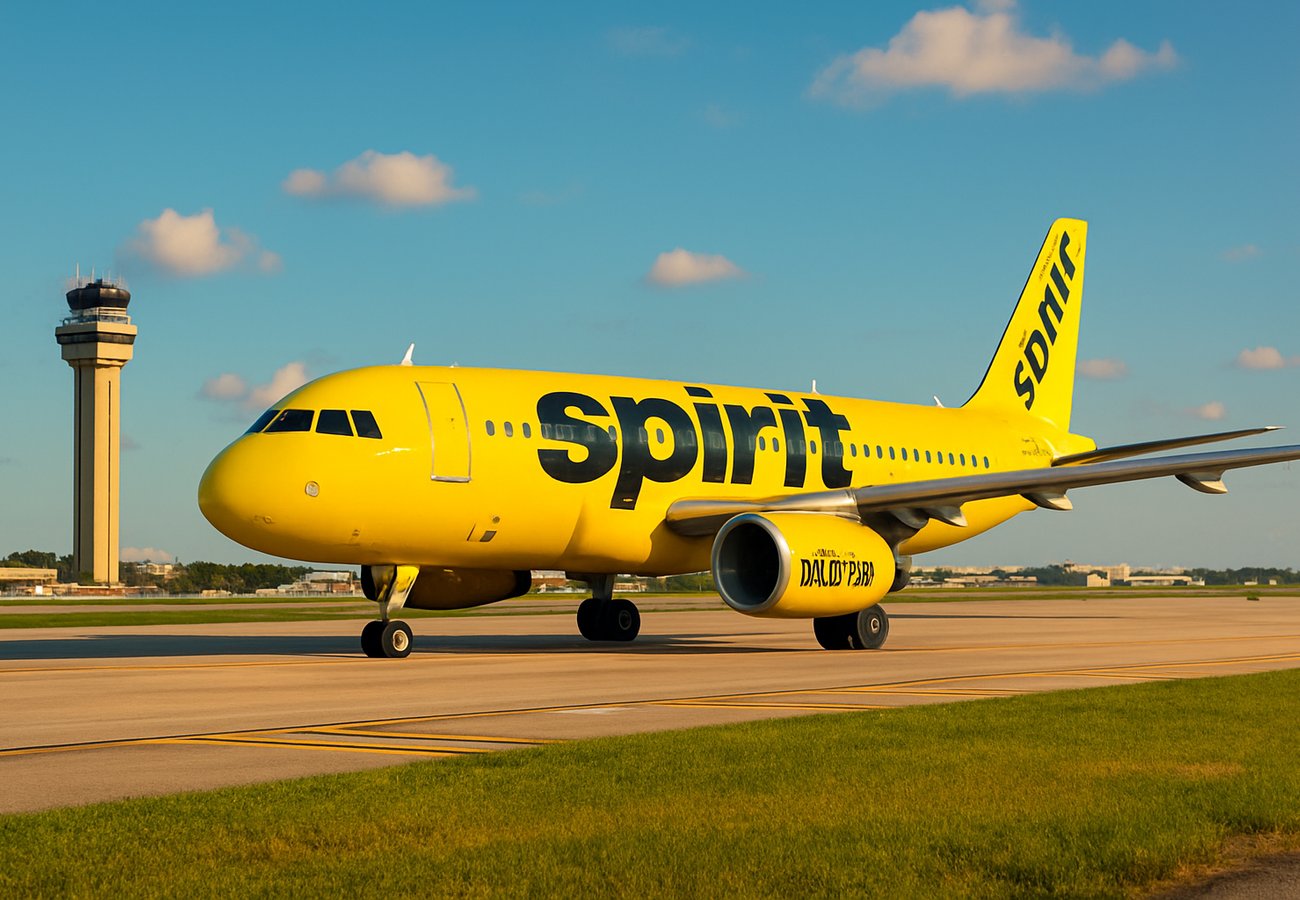
Image generated by AI
Spirit Airlines Files Chapter 11 Bankruptcy for Second Time in Two Years and Seeks Emergency Government Bailout From Trump Administration to Avoid Liquidation as Jet Fuel Crisis Cripples Ultra-Low-Cost Model
An Airline on the Edge: Rising Fuel Costs, a Second Bankruptcy, and a Bailout Request That Could Reshape How Washington Treats Struggling Carriers
UNITED STATES — Spirit Airlines is facing the most acute financial crisis in its history, and the clock is running out. The ultra-low-cost carrier has filed for Chapter 11 bankruptcy protection for the second time in two years — an almost unprecedented sequence for a major US commercial carrier — and is now in direct talks with officials from the Trump administration seeking an emergency bailout package that could reach hundreds of millions of dollars. In exchange, Spirit has offered the federal government an equity stake in the airline, a structural arrangement that would make Washington a de facto co-owner of one of America's most recognisable budget carriers. If no deal is reached within days, the airline faces the very real prospect of complete liquidation — a scenario that would strand thousands of employees and disrupt low-cost travel access for millions of passengers across the US domestic network.
Quick Summary
- Spirit Airlines has filed Chapter 11 bankruptcy for the second time in two years.
- The airline is seeking an emergency bailout of hundreds of millions of dollars from the Trump administration, offering an equity stake in return.
- The crisis is driven primarily by soaring jet fuel prices, not a collapse in passenger demand.
- Spirit had hoped to exit its first bankruptcy by summer 2026 — rising fuel costs have derailed that plan.
- Without a bailout, Spirit faces liquidation within days, raising questions about the long-term viability of ultra-low-cost carriers in the US.
The Second Bankruptcy: How Spirit Got Here
Spirit Airlines' current predicament reflects the brutal economics of operating at the ultra-low-cost end of the market. The airline's model — built on aggressive base fares subsidised by ancillary fees, high seat density, and minimal operational overhead — leaves almost no buffer when exogenous costs spike sharply. Jet fuel represents one of the largest operating expenses for any carrier; for an ultra-low-cost carrier with thinner margins than mainstream competitors, a sustained fuel price surge is not just painful — it is potentially fatal.
Spirit had filed for Chapter 11 protection previously, working through a restructuring process it had hoped to conclude by summer 2026. However, the unpredictable escalation in jet fuel prices — driven in part by the global energy disruptions rippling from the Strait of Hormuz standoff — derailed the recovery timeline, leaving the airline unable to meet its financial obligations despite restructuring efforts.
Now, facing a second Chapter 11 filing within two years, Spirit has escalated directly to the federal government.
The Bailout Proposal: Equity for Emergency Funding
The mechanics of Spirit's bailout request are structurally unusual but not without precedent in US aviation history. The airline is proposing that the federal government provide emergency cash injection in exchange for an ownership stake — making the Trump administration a shareholder in Spirit Airlines in the same way governments have historically taken equity positions in airlines during existential crises.
The offer of equity rather than a simple loan creates a different risk profile for the government. As a shareholder, Washington would share in any future upside if Spirit successfully restructured — but would also be exposed to further losses if the airline's situation deteriorates. This structure has historically been deployed in aviation bailouts precisely because it provides the government with a potential return on its intervention rather than simply absorbing a loss via a grant or forgivable loan.
Whether the Trump administration is willing to accept the arrangement — and under what terms — remains the central unresolved question.
The Core Question: Should Taxpayers Bail Out a Low-Cost Carrier?
Spirit's request has immediately reignited a debate that surfaces every time a major US airline approaches the government for support. The argument for intervention rests on the systemic consequences of liquidation: thousands of jobs lost, reduced competition on domestic routes, higher fares for millions of price-sensitive travelers who depend on ultra-low-cost options, and the knock-on effects for airports in smaller markets where Spirit provides the only affordable service.
The argument against intervention is equally pointed. Unlike the post-9/11 or COVID-era bailouts — where the entire industry faced a collapse in demand entirely beyond its control — Spirit's crisis is rooted primarily in the structural fragility of its own business model under foreseeable market stress. Critics argue that providing taxpayer funds to prop up a carrier whose fundamentals were already marginal before the fuel spike risks setting a precedent that insulates airlines from the consequences of their own strategic choices.
The Trump administration's decision will effectively answer a question US aviation policy has avoided for years: at what point does government responsibility for aviation system stability require intervention in the viability of individual carriers?
What Liquidation Would Mean for US Aviation
A Spirit Airlines liquidation would not simply remove one carrier from a crowded market. Its consequences would be felt most sharply in the segments of the market it has historically served:
- Price-sensitive domestic travelers who rely on Spirit's ultra-low base fares would see reduced competition on many routes, almost certainly translating into higher fares from remaining carriers.
- Airport communities — particularly smaller and mid-size airports where Spirit represents a significant share of total seat capacity — would face immediate reductions in connectivity.
- Competing ultra-low-cost carriers like Frontier and Avelo would face a complex calculation: beneficial short-term capacity reduction on competitive routes, but potentially increased regulatory and public scrutiny of the entire ULCC model.
- Employees — pilots, cabin crew, maintenance staff, and ground workers — would face immediate job losses in a market where airline hiring has already tightened significantly.
A Warning Signal for the Entire ULCC Sector
Spirit's situation is not occurring in isolation. Across the ultra-low-cost carrier sector globally, the same fuel price pressures, the same thin margin structures, and the same post-pandemic demand volatility are creating similar stress. While Spirit is the most visible case in the US, other ULCC operators are watching closely — and their financial teams are running the same sensitivity analyses on fuel price trajectories.
If the Trump administration does intervene for Spirit, it will create both a precedent and a signal: that ULCC carriers operating at the edge of viability can expect government support when external shocks overwhelm their model. Whether that prospect improves or worsens capital market discipline in the sector is one of the harder questions for aviation economists to resolve.
What Happens Next
The immediate path forward is binary. Either the Trump administration agrees to the equity-for-funding arrangement — potentially with conditions around operational restructuring, job protections, or governance changes — or Spirit proceeds toward liquidation proceedings. There is very limited middle ground available given the timeline Spirit has indicated.
Analysts are watching for: the administration's formal response; any intervention from Spirit's creditors, who would lose significantly in a liquidation; and whether any strategic acquirer emerges at the last moment, as has happened in previous US airline bankruptcy cycles.
Conclusion: A Crisis Built on Thin Margins and Thick Fuel Bills
Spirit Airlines' second bankruptcy and emergency bailout request is the clearest possible illustration of the structural risk embedded in ultra-low-cost carrier economics. The airline did not fail because travelers stopped flying — demand remains strong. It failed because its margin structure left no room to absorb the fuel cost shocks now rolling through global aviation. The Trump administration's decision in the coming days will determine not just Spirit's fate but the future framework for government involvement in US airline viability — a question that, once answered, will be very difficult to walk back.
FAQ: Spirit Airlines Bankruptcy and Bailout 2026
Q: How many times has Spirit Airlines filed for bankruptcy? A: Spirit Airlines has now filed for Chapter 11 bankruptcy protection twice within two years, making it one of the most repeated bankruptcy filers among major US commercial carriers in recent history.
Q: What is Spirit Airlines asking the Trump administration for? A: Spirit is seeking an emergency cash bailout of hundreds of millions of dollars from the federal government, offering the government an equity stake in the airline in return for the financial support.
Q: Why is Spirit Airlines in financial trouble in 2026? A: The primary driver is soaring jet fuel prices, which have dramatically increased Spirit's operating costs. As an ultra-low-cost carrier with thin margins, Spirit has little financial buffer to absorb sustained fuel cost spikes. The airline had hoped to exit its first bankruptcy by summer 2026, but rising costs derailed that plan.
Q: What happens if Spirit Airlines is liquidated? A: Liquidation would mean the airline ceases all operations, with immediate consequences including thousands of job losses, reduced low-cost seat capacity on domestic US routes, higher fares on affected corridors, and significant disruption to passengers who rely on Spirit's affordable pricing.
Q: Has the US government ever taken an equity stake in an airline before? A: Yes — equity arrangements and government financial interventions in distressed airlines have precedent in US aviation history, particularly during periods of systemic industry crisis such as post-9/11 and during the COVID-19 pandemic.
Disclaimer
This article is for informational and educational purposes only. It does not constitute legal, financial, or professional advice. While we strive to provide accurate and up-to-date information, travel policies, regulations, and conditions change rapidly. Always verify information with official sources before making travel decisions. Nomad Lawyer makes no representations about the accuracy, reliability, completeness, or suitability of the information provided. Readers should consult qualified professionals for advice specific to their circumstances. The views expressed in this article are those of the author and do not necessarily reflect the views of Nomad Lawyer.
Raushan Kumar
Founder & Lead Developer
Full-stack developer with 11+ years of experience and a passionate traveller. Raushan built Nomad Lawyer from the ground up with a vision to create the best travel and law experience on the web.
Learn more about our team →