
Spain's Laguna Rosa Pink Lake Draws Summer Crowds to Torrevieja Costa Blanca in 2026
The vibrant pink waters of Laguna Rosa in Torrevieja are becoming a primary driver for tourism diversification on Spain's Costa Blanca, blending industrial salt production with eco-tourism.

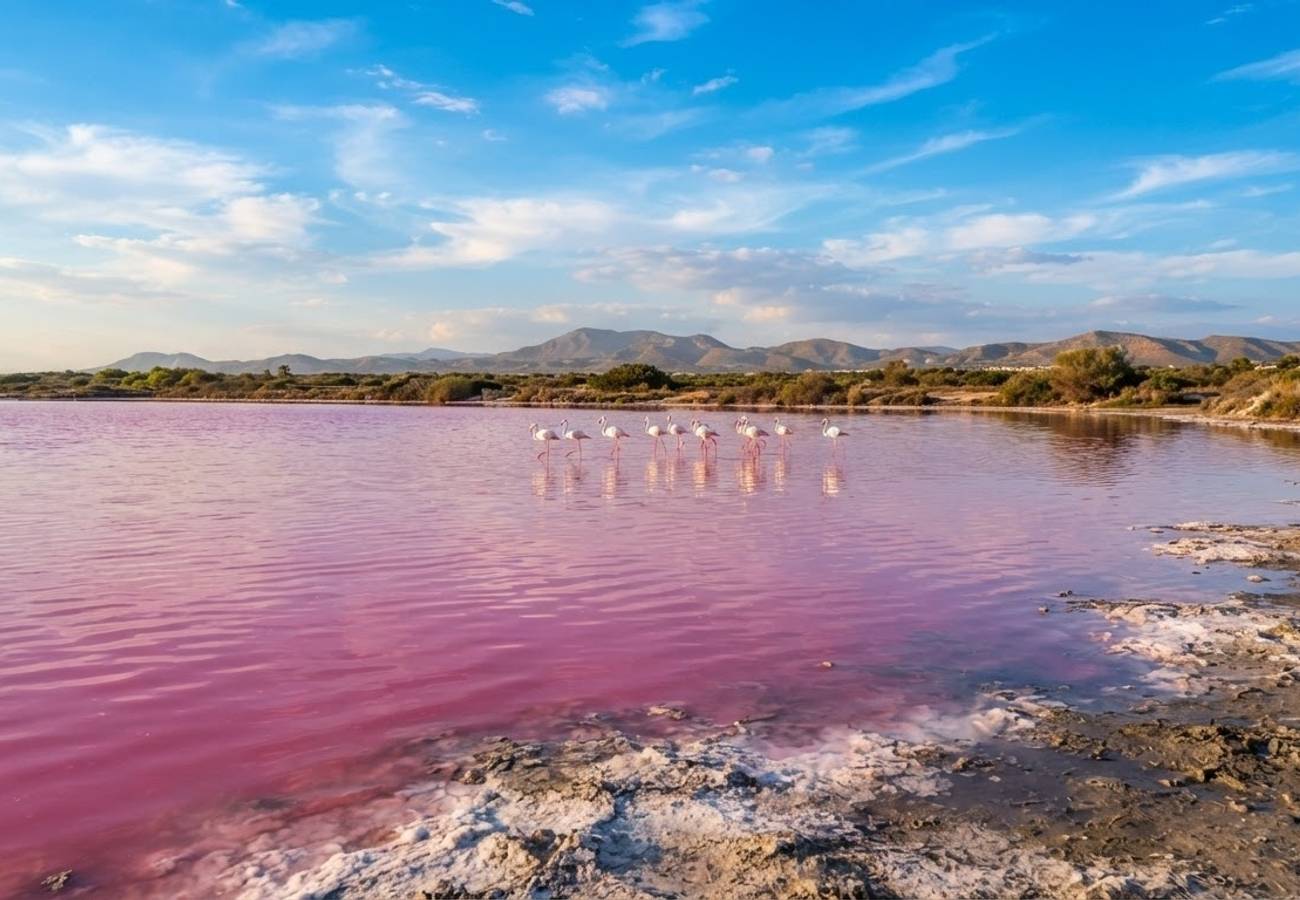
Image generated by AI
The vivid raspberry hues of Laguna Rosa are transforming Torrevieja from a standard beach destination into a hub for nature-focused travelers. This saltwater phenomenon is currently peaking in color, driving a surge in visitors to the Alicante province this August.
The Costa Blanca region is witnessing a shift in traveler preferences as the pink waters of Laguna Rosa emerge as a headline attraction. Located within the protected Lagunas de La Mata y Torrevieja Natural Park, this site offers a dramatic visual alternative to the crowded Mediterranean beaches typically associated with the area.
The Torrevieja basin stands as one of Europe's largest operational salt lagoons. It represents a unique intersection where industrial salt extraction coexists with strict environmental conservation efforts.
The Science Behind the Pink Hue
The lagoon's striking color is not artificial but a result of extreme salinity. This environment supports specific microorganisms, including halophilic bacteria and microalgae, which thrive in high-salt concentrations.
The intense pigmentation is further enhanced by Artemia salina, a tiny crustacean. Depending on the salt concentration, ambient light, and temperature, the water shifts across a spectrum from a pale blush to a deep raspberry.
Beyond the water, the surrounding wetlands serve as a critical habitat for migratory birdlife. Flamingos are frequently spotted in the area, adding to the site's aesthetic and ecological value.
Peak Season and Visitor Trends
For those timing their visit, August and September are the optimal months. High temperatures and increased evaporation intensify the surface salinity, typically resulting in the most vivid pink tones.
Recent travel data from August 2026 indicates that international tourists are increasingly integrating the pink lake into broader Alicante itineraries. These visitors often pair a trip to the lagoon with:
- Boat excursions to Tabarca Island.
- Urban sightseeing in Alicante city.
- Visits to the Torrevieja marina and waterfront cafes.
Regional tourism strategies are leveraging the lagoon to diversify the local economy. By positioning the salinas as a strategic niche, Torrevieja is differentiating itself from other Mediterranean resorts that rely solely on "sun-and-sand" tourism.
Access Regulations and Environmental Protection
Due to its status as both a protected natural area and an active industrial site, strict access rules are in place. Swimming in Laguna Rosa is strictly prohibited.
Visitors must adhere to the following guidelines to ensure environmental preservation:
- Use only designated paths and miradores (viewpoints).
- Remain behind fences surrounding the salt works.
- Avoid walking on mudflats or salt crusts, which are fragile and potentially hazardous.
To manage the influx of tourists, seasonal tourist trains and organized excursions operate from the Torrevieja seafront. Local development plans are also introducing new urban green spaces and serviced lookout points to prevent spontaneous, harmful access to sensitive shorelines.
Evolution Toward Wellness and Eco-Tourism
The Torrevieja salinas are transitioning from a purely industrial export hub to a center for wellness and eco-tourism. Regional planners are now promoting the area's dry, saline air and tranquil walking routes as a health-oriented escape from dense urban centers.
This shift is evident in new excursion models designed for cruise passengers docking in Alicante. These half-day itineraries often synthesize three distinct local experiences:
- The vivid landscapes of the pink lagoons.
- Local vineyard tours.
- Regional food tastings.
By promoting birdwatching and eco-routes, the region aims to encourage "slow travel," extending the average length of stay and reducing the environmental pressure on the most popular photography spots.
Managing Social Media Expectations
The rise of Laguna Rosa has been fueled by highly saturated images on social media, often depicting "bubblegum-pink" water. However, destination managers warn that actual colors vary based on wind, weather, and lighting.
Official communications now emphasize the lagoon's broader value—such as its role in bird migration and the centuries-old tradition of salt harvesting—to move the narrative beyond a simple "Instagram stop" toward a deeper appreciation of the wetland ecosystem.
Visitor Quick-Reference Guide
| Feature | Detail |
|---|---|
| Location | Lagunas de La Mata y Torrevieja Natural Park, Alicante |
| Peak Color Window | August to September |
| Primary Cause of Color | Halophilic bacteria, microalgae, and Artemia salina |
| Permitted Activities | Photography, birdwatching, guided walks |
| Prohibited Activities | Swimming, walking on salt crusts |
| Transport Options | Tourist trains, private vehicle, bus |
Key Takeaways
- Visual Peak: The most intense pink colors occur in late summer (August/September) due to evaporation.
- Strict Rules: Swimming is banned; visitors must stay on marked trails to protect the ecosystem.
- Diversification: Torrevieja is using the lagoon to pivot from traditional beach tourism to wellness and eco-tourism.
- Industrial Balance: The site remains one of Europe's largest working salt lagoons.
FAQ
Can you swim in the pink lake? No. Swimming is prohibited because the lagoon is a protected natural area and an active industrial salt production site.
When is the best time to see the pink color? The water is typically most vivid between August and September when heat and evaporation increase salinity.
How do I get to Laguna Rosa? Visitors can use seasonal tourist trains from the Torrevieja seafront, or travel via bus or private car to the designated viewpoints.
A striking balance of industrial heritage and natural wonder, Laguna Rosa continues to redefine the Costa Blanca experience.
Related Travel Guides
Disclaimer
This article is for informational and educational purposes only. It does not constitute legal, financial, or professional advice. While we strive to provide accurate and up-to-date information, travel policies, regulations, and conditions change rapidly. Always verify information with official sources before making travel decisions. Nomad Lawyer makes no representations about the accuracy, reliability, completeness, or suitability of the information provided. Readers should consult qualified professionals for advice specific to their circumstances. The views expressed in this article are those of the author and do not necessarily reflect the views of Nomad Lawyer.
Raushan Kumar
Founder & Lead Developer
Full-stack developer with 11+ years of experience and a passionate traveller. Raushan built Nomad Lawyer from the ground up with a vision to create the best travel and law experience on the web.
Learn more about our team →