
Spain Issues Urgent Warning Amid Coastal Spain Tourism Disruption as Extreme Heatwave Forces Cancellation of Iconic San Juan Festival Across Barcelona, Valencia, and Alicante: New Travel Alert
A severe heatwave forces Spain to cancel the San Juan festival beach bonfires in Barcelona, Valencia, and Alicante, triggering coastal Spain tourism disruption.

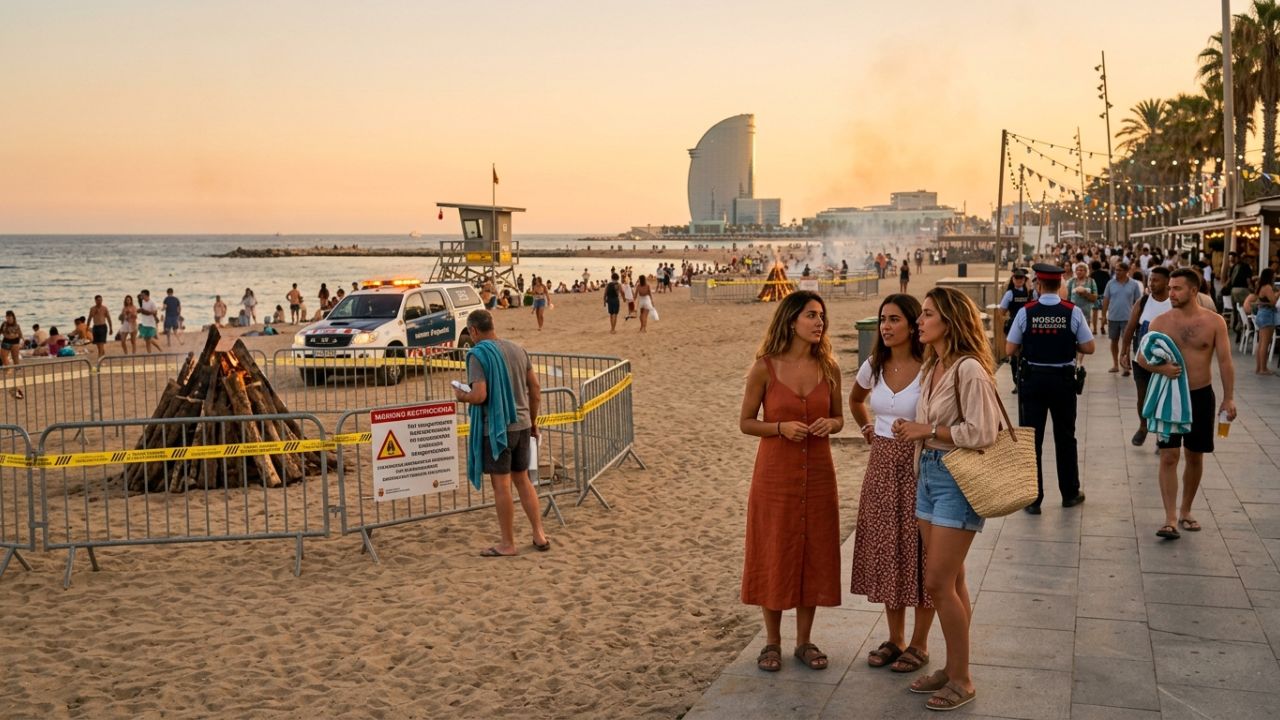
Image generated by AI
Published on June 23, 2026
An unprecedented early-summer heatwave across Spain has triggered widespread coastal Spain tourism disruption as municipal authorities cancel the iconic San Juan festival's beach bonfires and fire displays. With the Spanish State Meteorological Agency (AEMET) issuing extreme heat warnings above 40°C, destinations like Barcelona, Valencia, Alicante, and San Sebastián are enforcing strict beach fire bans to protect public safety and prevent wildfires. International and domestic travelers currently visiting these coastal areas must seek air-conditioned environments, adjust their outdoor itineraries to avoid peak midday sun, and comply with all local emergency gathering restrictions.
The sudden arrival of a blistering tropical air mass has forced local governments to prioritize environmental and civil protection over long-standing cultural customs. The San Juan festival, which serves as a major driver of early-summer coastal tourism, traditionally draws millions of domestic and international visitors to Spain’s extensive shoreline. However, with meteorological sensors registering record-breaking heat indexes, the threat of catastrophic fires in nearby coastal vegetation has made large-scale open-air fire festivals impossible to sustain safely.
Quick Summary
- Widespread Festival Cancellations: Authorities across popular destinations, including Barcelona, Valencia, Alicante, and San Sebastián, have banned the traditional beach bonfires and fireworks for the San Juan festival.
- Extreme Temperature Alerts: The Spanish State Meteorological Agency (AEMET) has issued orange and red weather warnings as temperatures exceed 40°C due to a hot air mass arriving from North Africa.
- Elevated Wildfire Risk: Dry conditions combined with intense heat have prompted civil protection units to restrict access to forest-adjacent tourist trails and establish bans on open flames.
- Severe Economic Impact: The cancellation of these major coastal gatherings is affecting hotel occupancy, night tourism revenues, and local hospitality businesses during late June.
- Adaptive Tourism Strategies: Coastal tour operators and hoteliers are shifting to indoor cultural experiences, water-based recreation, and early morning or late evening excursions.
This sudden suspension of festival activities has interrupted summer vacation plans for thousands of incoming tourists, forcing the local hospitality sector to adapt quickly. As emergency teams establish safety cordons around critical fire-risk areas, visitors are urged to cooperate with local safety officers. This travel update details the scope of the restrictions, the meteorological drivers of the crisis, and alternative options for travelers navigating the affected areas.
Event and Incident Details: Extreme Temperatures Trigger Coastal Spain Tourism Disruption
The current coastal Spain tourism disruption is directly linked to a dangerous early-season weather system that has enveloped the Iberian Peninsula. According to safety advisories published on June 23, 2026, municipal administrations in the Basque Country and along the Mediterranean coastline have implemented emergency bans on fireworks, open flames, and large gatherings. The Spanish State Meteorological Agency (AEMET) has placed multiple provinces under orange and red warning thresholds, noting that temperatures exceeding 40°C present an immediate hazard.
This heatwave has forced a reorganization of municipal public spaces and popular tourist beaches that typically host the annual San Juan celebrations. Below is a comparative breakdown of how key tourist hubs are managing the restrictions and adapting their services:
| Destination / Hub | Local Meteorological Warning | Enforced Public Safety Restrictions | Tourism Sector Adaptation Measures |
|---|---|---|---|
| Barcelona | Red warning (AEMET) | Total ban on beach bonfires; restrictions on fireworks and large gatherings. | Shifting focus to indoor air-conditioned tours; promoting museums. |
| Valencia | Red warning (AEMET) | Suspended all traditional beachfront fire pits; beach access restricted at night. | Restaurants hosting indoor dinners; promoting evening city walks. |
| Alicante | Orange warning (AEMET) | Complete ban on coastal fire celebrations; fireworks displays postponed. | Tour guides rescheduling historical walks to early morning hours. |
| San Sebastián | Orange warning (AEMET) | Bans on open flames along the Basque coastline; forest-adjacent trails closed. | Promoting water-based recreation and indoor cultural exhibitions. |
| Madrid & Seville | High temperature advisory | Recommendations to avoid outdoor exposure; midday city sightseeing suspended. | Travel operators reorganizing timetables to avoid afternoon peaks. |
| Malaga | High temperature advisory | Reinforcement of civil protection patrols; increased fire risk surveillance. | Hoteliers promoting indoor dining and controlled, fire-free events. |
This structured response indicates a uniform effort by regional tourism boards to prioritize public safety over cultural continuity during this extreme weather event.
Risk and Impact: Analyzing the Economic Consequences of Coastal Spain Tourism Disruption
The direct impacts of this severe weather event extend far beyond altered festival schedules, presenting substantial operational risks to Spain's summer travel economy. The cancellation of San Juan events—which typically mark the unofficial start of the peak summer season—has created significant disruptions for service providers and visitors alike.
The primary operational risks and economic consequences resulting from this heatwave include:
- Decline in Nightlife and Festival Revenues: Beachside bars, restaurants, and entertainment venues are reporting reduced earnings as traditional late-night beach gatherings are banned.
- Losses in Hotel Bookings: Tourism boards in Valencia, Alicante, and San Sebastián have highlighted a drop in hotel occupancy rates as visitors cancel or shorten their weekend trips.
- Wildfire Ignition Risks: Extremely dry conditions combined with temperatures over 40°C have made coastal vegetation zones highly vulnerable to accidental fires from sparks or fireworks.
- Midday Mobility Disruptions: High heat stress has forced transport providers to adjust schedules, while travelers are avoiding daytime city tours, leading to reduced urban business activity.
- Overwhelmed Civil Resources: Civil protection units and medical emergency services are operating under heightened alert, diverting personnel to prevent heat-related health issues and monitor fire outbreaks.
To minimize these losses, regional hospitality associations are coordinating with local governments to redirect tourist foot traffic toward indoor cooling hubs.
What Authorities and Government Bodies Are Saying About the Disruption
Spanish civil protection units and municipal leaders have strongly defended the bans, characterizing them as necessary preventative actions to protect public health and the environment. Officials from the state weather service, AEMET, explained that the current atmospheric conditions, driven by hot air moving from North Africa, present an extreme threat of spontaneous ignition in dry coastal grasslands. They emphasized that permitting open bonfires under such conditions would be highly irresponsible.
At the same time, regional government tourism departments are working to assess the economic damages while maintaining a strict stance on public safety protocols. Officials have stated that while they regret the impact on local festival economies, the preservation of human life and the prevention of ecological disasters must remain the top priorities. They also noted that long-term recovery will rely on developing climate-resilient travel products and integrating emergency weather plans into local tourism marketing.
Practical Traveler Advice: Navigating Spain's Heatwave Restrictions
For international and domestic tourists currently traveling through Barcelona, Valencia, Alicante, or other affected coastal regions, travel experts recommend the following safety and logistical adjustments:
- Avoid Midday Sun Exposure: Schedule all outdoor sightseeing and physical activities for the early morning (before 10:00) or late evening (after 20:00) to minimize heat stress.
- Strictly Obey Beach Bans: Do not light open flames, candles, or launch fireworks on any Mediterranean or Basque beaches, as local civil protection units are issuing heavy fines for violations.
- Verify Event Schedules: Contact your hotel front desk or local tourism information centers to verify the status of community gatherings and see if alternative, fire-free celebrations are planned.
- Utilize Indoor Attractions: Shift your itinerary toward Spain's world-class museums, art galleries, and historic indoor landmarks that offer air-conditioned relief during the hottest hours.
- Monitor Transport Updates: Check digital transit applications and confirm details with tour operators, as train and bus services may modify their timetables due to heat-related infrastructure stress.
- Stay Hydrated and Prepared: Always carry a refillable water bottle, wear light-colored, breathable clothing, and memorize the locations of nearby public cooling centers or pharmacies.
Broader Context: A Continental Heatwave Puts Pressure on Spain's Infrastructure
The severe weather and resulting festival cancellations in Spain are not isolated incidents but part of a larger climate trend affecting southern and western Europe. Meteorological agencies in France, Italy, Germany, and the United Kingdom have also issued high-temperature red alerts, reflecting a massive heat dome spanning the continent. The Copernicus Climate Change Service has reported that early-season heatwaves are increasing in both intensity and frequency, pushing traditional European travel infrastructure to its limits.
This continental weather system is impacting cross-border travel patterns, causing rail delays in France, water restrictions in Italy, and changes in flight availability. As one of the primary summer destinations in Europe, Spain faces the dual challenge of protecting its massive influx of summer visitors while safeguarding its local natural resources. European tourism and civil defense bodies are currently coordinating to share best practices for managing mass gatherings under extreme thermal conditions.
What to Expect Next: Shifting Tourism Strategies and Climate Adaptation
As climate patterns continue to evolve, Spain’s tourism sector is planning for long-term adaptation rather than treating these heatwaves as temporary disruptions. Industry analysts expect a short-term dip in late June visitor numbers, but they anticipate that the market will adjust through modernized, climate-resilient planning. Operators are already shifting their marketing and operational focus to cater to changing traveler habits.
Key adaptation trends shaping the future of coastal tourism in the region include:
- Climate-Adjusted Programming: Rescheduling outdoor cultural festivals to cooler months or shifting events to late-night hours.
- Expanded Indoor Infrastructure: Investing in air-conditioned public spaces, indoor recreational zones, and covered pedestrian walkways in tourist districts.
- Heat-Resilient Marketing: Promoting "coolcation" travel packages and highlighting destinations with milder microclimates.
- Integrated Crisis Systems: Developing real-time weather warning apps and coordinating safety protocols directly linking meteorological alerts to hospitality services.
These measures reflect a broader transformation in Mediterranean travel, where climate awareness is becoming central to destination sustainability and visitor safety.
Conclusion: Safety First as Spain Adapts to Climate Extremes
The cancellation of Spain’s historic San Juan celebrations highlights the growing intersection between changing weather patterns and global tourism. While these restrictions alter traditional holiday plans, prioritizing civil safety and wildfire prevention remains crucial during extreme weather events. By staying informed, choosing air-conditioned indoor alternatives, and following local directives, travelers can navigate these seasonal disruptions safely and responsibly.
Related Travel Guides
Europe Unveils New Coolcation Corridor for Summer Tourism in 2026
The 10 Best Heat-Resilient Coastal Escapes in Spain, According To Reddit
Disclaimer: Weather advisories, heatwave alerts, and local municipal restrictions can change rapidly under extreme meteorological conditions. Travelers are advised to monitor official Spanish civil protection updates, check AEMET alerts regularly, and verify the status of public events and transit services directly before scheduling their trips.
FAQ: Spain San Juan Cancellations and the 2026 Heatwave
Why are the San Juan festival celebrations in Spain cancelled in 2026?
The cancellations are due to a severe early-summer heatwave, with temperatures exceeding 40°C, combined with dry conditions that create extreme wildfire risks.
Which cities in Spain have restricted the San Juan beach bonfires?
Barcelona, Valencia, Alicante, and San Sebastián are the primary cities that have banned traditional bonfires, fireworks, or restricted beach gatherings.
What is driving the extreme heatwave in Spain?
A hot air mass moving in from North Africa is driving temperatures past seasonal norms across multiple regions, resulting in orange and red warnings.
How are Spanish tour operators adapting to the heatwave restrictions?
They are shifting schedules to early morning or late evening, rearranging itineraries to focus on indoor cultural experiences, water-based recreation, or controlled non-fire community events.
What actions should travelers take to stay safe during the heatwave?
Travelers should avoid outdoor activities during peak hours (midday), stay hydrated, check local event and transit schedules for updates, and respect all beach bans and trail closures.
Disclaimer
This article is for informational and educational purposes only. It does not constitute legal, financial, or professional advice. While we strive to provide accurate and up-to-date information, travel policies, regulations, and conditions change rapidly. Always verify information with official sources before making travel decisions. Nomad Lawyer makes no representations about the accuracy, reliability, completeness, or suitability of the information provided. Readers should consult qualified professionals for advice specific to their circumstances. The views expressed in this article are those of the author and do not necessarily reflect the views of Nomad Lawyer.
Kunal K Choudhary
Co-Founder & Contributor
A passionate traveller and tech enthusiast. Kunal contributes to the vision and growth of Nomad Lawyer, bringing fresh perspectives and driving the community forward.
Learn more about our team →