
Aviation Updates: Massive Travel Chaos Strikes Madrid and Ibiza as 23 Flight Delays Paralyze Summer Routes
As catastrophic logistical bottlenecks severely paralyze major transit grids, travelers in Spain face devastating travel chaos following severe delays across Madrid and Ibiza.

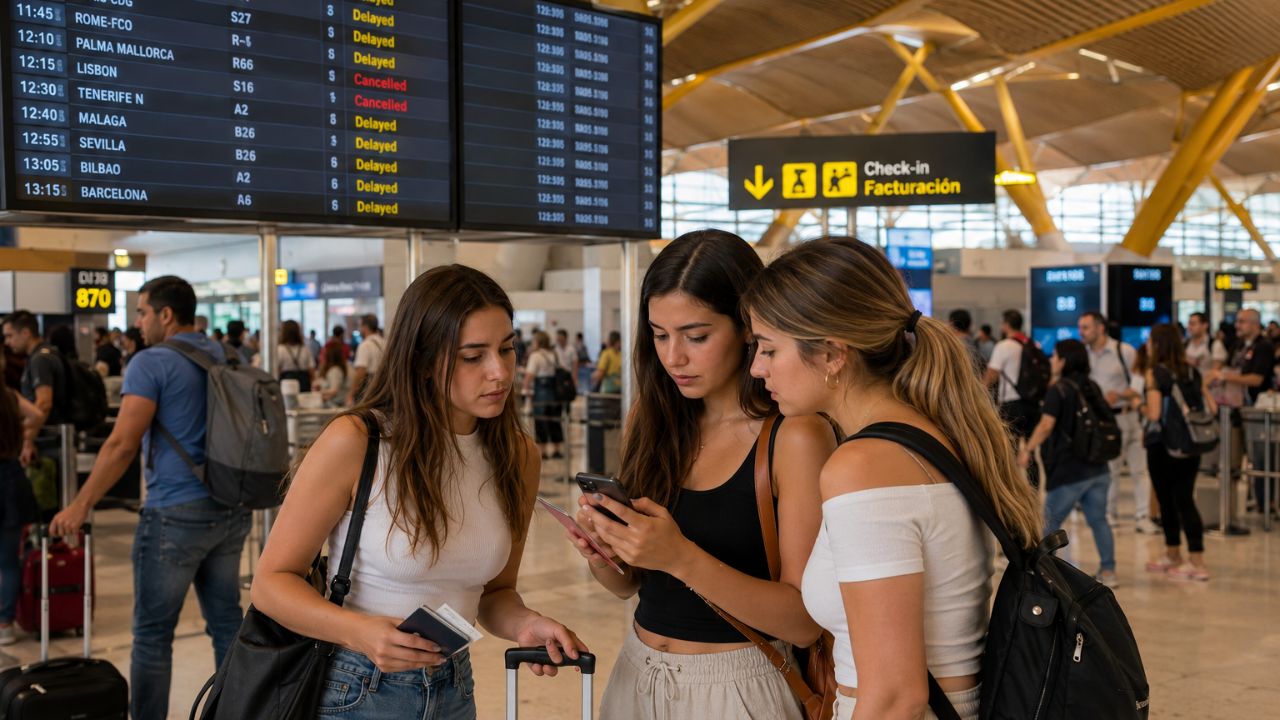
Image generated by AI
Aviation Updates: Massive Travel Chaos Strikes Madrid and Ibiza as 23 Flight Delays Paralyze Summer Routes
As extreme operational friction and suddenly compounding infrastructure bottlenecks continue to terrorize standard travel itineraries, Spain’s massive summer tourism season has fractured, plunging thousands of passengers across Madrid and Ibiza into a terrifying spiral of severe travel chaos.
Image generated by AI
As high-impact airline news platforms rapidly issue continuous, grim aviation updates regarding the intense fragility of massively congested primary transit grids, preparing for an absolute structural meltdown has officially become a domestic traveler's only defense mechanism. Amidst widespread rolling travel chaos, severe airport disruptions, and the terrifying threat of devastating flight cancellations severely plaguing heavily overcrowded European hubs, travel plans for dozens of highly anxious passengers passing directly through Spain were completely destroyed. Adolfo Suárez Madrid-Barajas Airport and Ibiza Airport actively recorded an incredibly frustrating combined total of 23 flight delays and two complete cancellations, creating a brutal, highly challenging day for both departing and arriving travelers. While regional operations continued without any reported safety concerns, the massive disruptions forcefully served as a grim reminder of the immense, crushing pressure placed entirely on Europe’s fragile aviation network during the absolute busiest travel period of the year.
Expanded Overview: The Collapse of Summer Punctuality
To fully comprehend the sheer scale of this severe operational strain, commercial aviation analysts must closely examine exactly how massive localized passenger processing delays violently reshape terminal stability and international transit security.
The massive disruption pattern actively terrorizing the global passenger mindset is primarily defined by extreme check-in delays and heavily saturated boarding gates. For millions of heavily invested travelers, international airport journeys violently begin with excitement—whether it is a long-awaited Balearic vacation, a deeply important family reunion, or a highly critical corporate business trip. However, these unexpected, rolling flight disruptions immediately bring absolute uncertainty, making real-time flight monitoring and continuous communication with commercial airlines more absolutely important than ever. The massive delays explicitly forced exhausted travelers to aggressively monitor airline updates before ever daring to leave their coastal resorts or city hotels.
Section-Wise Breakdown: Navigating the Spanish Gridlock
Terminal operations are violently degrading across competing hubs, forcing major domestic and international operators to furiously deploy highly advanced operational frameworks to strictly ensure smooth transit flows.
The Meltdown at Madrid-Barajas: Spain’s largest international gateway, Adolfo Suárez Madrid-Barajas Airport, handled the absolute brutal majority of the day’s irregular operations. The massive airport heavily registered exactly 17 delayed flights and 2 entirely cancelled flights. Madrid-Barajas serves exactly as Spain’s massive primary hub for both domestic and international aviation, directly connecting Europe with highly critical destinations across North America, Latin America, Africa, and Asia. With hundreds of massive aircraft movements fiercely taking place every single day, even relatively minor, isolated operational constraints incredibly easily create violent ripple effects straight across major airline schedules.
Ibiza’s Minor Contractions: Meanwhile, Ibiza Airport, one of Spain’s absolutely busiest seasonal tourism airports, actively experienced a comparatively lighter level of structural disruption. Operational figures directly showed exactly 6 delayed flights with absolutely no cancellations. The Balearic island remains one of Europe’s absolutely most sought-after summer destinations, heavily attracting massive volumes of visitors from across the continent. Despite the intense, crushing additional pressure associated incredibly closely with seasonal tourism, the strict absence of absolute cancellations powerfully suggests that local airport operations remained largely, fiercely resilient throughout the grueling reporting period.
Major Airlines and Routes Impacted: The terrifying wave of operational friction aggressively swept across some of the absolute largest commercial carriers operating in Europe. Heavy delays fiercely hit massive flagship and budget carriers incredibly including Iberia, Air Europa, Ryanair, Vueling, and easyJet. The crippling cascading effects violently disrupted highly lucrative, heavily utilized domestic and international routes, strictly including critical connections to Barcelona, London, Paris, Rome, Palma de Mallorca, and Lisbon.
Strategic Details: Verified Spanish Airport Disruption Matrix
To ensure stranded passengers and commercial aviation analysts can accurately track the incredibly precise operational telemetry of this massive network strain, the verified structural data has been consolidated into the exact, mandatory matrix below.
| Operational Metric / Hub | Verified Disruption Data |
|---|---|
| Combined Flight Delays | 23 Delays |
| Combined Cancellations | 2 Cancellations |
| Madrid-Barajas Impact | 17 Delays, 2 Cancellations |
| Ibiza Airport Impact | 6 Delays, 0 Cancellations |
| Airlines Affected | Iberia, Air Europa, Ryanair, Vueling, easyJet |
| Routes Impacted | Barcelona, London, Paris, Rome, Palma, Lisbon |
| Air Traffic Management | EUROCONTROL & ENAIRE |
| Passenger Rights Law | Regulation (EC) No. 261/2004 |
| Regulatory Oversight | AESA & Aena |
(Source: Aena, EUROCONTROL, and Regional Aviation Authorities)
Industry Analysis: The Macroeconomic Impact of Cascading Failures
Air travel explicitly across massive global transit corridors continues to massively struggle, driven violently by incredibly fragile air traffic flow constraints and severely overloaded security infrastructures.
Delays can violently result from a highly volatile combination of operational and environmental factors. Common structural reasons heavily include massive aircraft arriving heavily behind schedule, severe air traffic flow restrictions aggressively coordinated across Europe by EUROCONTROL, and terrifying weather disruptions actively affecting interconnected routes. Because Europe’s massive aviation system strictly functions as a highly, intensely interconnected network, operational challenges at one single airport can effortlessly, incredibly quickly influence flight schedules across multiple international borders.
Passenger Impact: Protecting the Vacation Baseline
For the everyday premium international traveler and highly stressed vacationer, the immediate consequence of this massive logistical strain directly translates to a monumental, highly verified spike in required transit vigilance.
Travelers violently affected by these severe delays or devastating cancellations within Europe may be fiercely legally protected strictly under Regulation (EC) No. 261/2004, which clearly establishes common, rigid rules regarding mandatory passenger assistance and severe financial compensation under highly qualifying circumstances. Depending directly on the exact cause of disruption, passengers may be legally entitled to critical assistance such as meals, hotel accommodation, and alternative transportation. Passengers are violently, aggressively encouraged to strictly retain all boarding passes and receipts if any additional unexpected expenses are incurred during the terminal meltdown.
Conclusion: A Network Reimagined
Ultimately, the aggressive, massive wave of 23 delays and 2 cancellations across Madrid and Ibiza actively marks a massively significant stress test for Spanish aviation infrastructure. The severe disruptions completely prove that even highly modernized European terminals remain incredibly vulnerable to the cascading effects of modern summer flight schedules.
As Spain’s massive aviation infrastructure continues to fully support one of Europe’s absolute largest tourism industries, occasional operational challenges remain a brutal reality. For anyone fiercely preparing to fly through Madrid or the Balearic Islands in the coming days, aggressively utilizing mobile app notifications, understanding EC 261 passenger rights, and leaving massive time buffers is the absolute only way to successfully survive the grueling realities of 2026 travel chaos.
Key Takeaways
- Massive Spanish Delays: Adolfo Suárez Madrid-Barajas and Ibiza Airports recorded a combined 23 severe flight delays and 2 complete cancellations.
- Global Carriers Hit: Major airlines heavily impacted by the meltdowns include Iberia, Air Europa, Ryanair, Vueling, and easyJet.
- Routes Paralyzed: The disruptions caused severe chaos for passengers traveling to Barcelona, London, Paris, Rome, Palma de Mallorca, and Lisbon.
- EUROCONTROL Impact: European air traffic flow management heavily dictates these cascading delays as massive summer demand crushes available airspace.
- Passenger Protection: Stranded travelers are legally protected under EU Regulation (EC) No. 261/2004, potentially qualifying for compensation and free hotel accommodations.
FAQ: Spain Summer Airport Travel Chaos 2026
Why are there so many flight delays in Madrid and Ibiza? The recent wave of 23 combined flight delays at Madrid-Barajas and Ibiza airports was heavily caused by standard operational friction, which can include late-arriving aircraft, crew scheduling issues, and massive European air traffic flow restrictions heavily coordinated by EUROCONTROL.
Which airlines were affected by the Madrid and Ibiza delays? The severe flight disruptions aggressively impacted major European carriers including Iberia, Air Europa, Ryanair, Vueling, and easyJet.
Am I entitled to compensation for my delayed flight in Spain? Travelers violently affected by severe delays or devastating cancellations within Europe may be legally protected strictly under Regulation (EC) No. 261/2004, which establishes common rules regarding mandatory passenger assistance and financial compensation.
What routes were impacted by the Spanish airport meltdowns? The crippling cascading effects violently disrupted highly lucrative, heavily utilized domestic and international routes, strictly including critical connections to Barcelona, London, Paris, Rome, Palma de Mallorca, and Lisbon.
Related Travel Guides
Peru Lima Airport Delays LATAM American Airlines Travel Chaos 2026
IATA Global Air Travel Demand Fuel Hikes Travel Chaos 2026
Canada Free Flow Customs Transit Travel Chaos 2026
Disclaimer: This article is strictly for informational and aviation tracking purposes. The specific operational telemetry (23 delays, 2 cancellations) and airline impacts (Ryanair, easyJet, Iberia) are based on verified Aena and EUROCONTROL analytics data available at the time of publication. Security wait times, European air traffic congestion, and EC 261 compensation eligibility are highly dynamic and subject to immediate modification by the operating authorities. Passengers navigating the European aviation grid should explicitly verify exact terms, conditions, and real-time transit alerts via official travel portals prior to departure.
Disclaimer
This article is for informational and educational purposes only. It does not constitute legal, financial, or professional advice. While we strive to provide accurate and up-to-date information, travel policies, regulations, and conditions change rapidly. Always verify information with official sources before making travel decisions. Nomad Lawyer makes no representations about the accuracy, reliability, completeness, or suitability of the information provided. Readers should consult qualified professionals for advice specific to their circumstances. The views expressed in this article are those of the author and do not necessarily reflect the views of Nomad Lawyer.
Kunal K Choudhary
Co-Founder & Contributor
A passionate traveller and tech enthusiast. Kunal contributes to the vision and growth of Nomad Lawyer, bringing fresh perspectives and driving the community forward.
Learn more about our team →