
Madrid-Barajas, Barcelona, and Ibiza Airports Record 434 Flight Delays and 16 Cancellations Disrupting Summer European Tourism Corridors
Madrid-Barajas, Barcelona, and Ibiza airports recorded 434 flight delays and 16 cancellations on July 5, 2026, amid peak summer travel volumes.

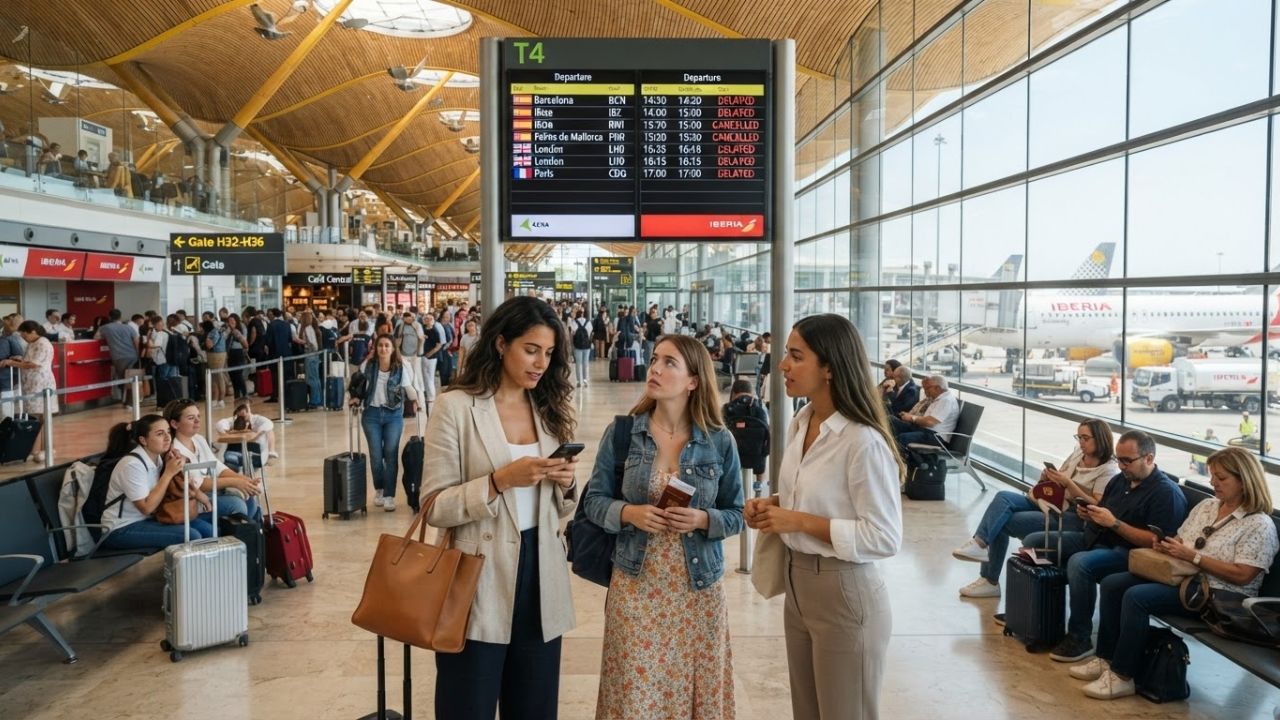
Image generated by AI
Air travel hubs across Spain are facing operational delays during the peak holiday season. Adolfo Suárez Madrid-Barajas, Barcelona International, and Ibiza airports have registered 434 flight delays and 16 cancellations.
Madrid-Barajas Airport Registers Highest Volume of Delayed Flight Operations
According to reports, the flight disruptions occurred on July 5, 2026, amid heavy summer tourist traffic.
Official statistics published by the Aena airport management group confirm the schedule revisions.
Madrid-Barajas recorded 199 delayed flights and 7 cancellations, the highest among the Spanish airports monitored.
As Spain's primary international hub, Madrid-Barajas connects European networks with Latin America and North America.
When arrival delays build up at Bariloche or regional European ports, they disrupt aircraft rotation plans for international flights.
The tables below display the airport-by-airport disruption figures and the affected carriers.
Flight Delays and Cancellations at Key Spanish Airports
| Airport Hub Gateway | City Location | Total Delayed Departures | Total Flight Cancellations | Primary Operational Focus |
|---|---|---|---|---|
| Adolfo Suárez Madrid-Barajas | Madrid | 199 delayed flights | 7 cancelled flights | Primary international transit hub |
| Barcelona International | Barcelona | 185 delayed flights | 4 cancelled flights | High-density summer tourism hub |
| Ibiza Airport | Ibiza | 50 delayed flights | 5 cancelled flights | High-season holiday island airport |
| Combined System Total | Spanish Network | 434 delayed flights | 16 cancelled flights | Peak seasonal aviation demand |
Affected Air Carriers and Operational Network Reach
| Operating Air Carrier | Service Focus Category | Expected Disruption Impact | Key Routing Corridors | Regional Base Hub |
|---|---|---|---|---|
| Iberia | Full-Service Flag Carrier | Elevated delays in Madrid | Latin America, domestic trunk routes | Madrid-Barajas Hub |
| Vueling | Low-Cost Carrier | Elevated delays in Barcelona | Domestic Spain, Western Europe | Barcelona El Prat Hub |
| Air Europa | Full-Service Network | Moderate delays | Canary Islands, Madrid corridors | Madrid-Barajas Hub |
| Ryanair | Low-Cost Carrier | High frequency delays | UK, Germany, point-to-point Spain | Multi-base operations |
| easyJet | Low-Cost Carrier | Moderate delays | London, Geneva, Paris corridors | European leisure networks |
| Lufthansa | European Flag Carrier | Scattered delays | Munich, Frankfurt connection hubs | German transfer hubs |
| British Airways | European Flag Carrier | Scattered delays | London Heathrow, London Gatwick | London Heathrow Hub |
Barcelona Airport Manages Heavy Summer Passenger Flows
Barcelona International Airport recorded 185 delayed flights alongside four cancellations.
As one of Europe's premier leisure destinations, Barcelona El Prat handles massive airline traffic during summer.
Air traffic routing services coordinated by ENAIRE indicate that runway slot limits played a role in the delays.
Airlines like Vueling and Ryanair had to adjust turnaround schedules to keep their fleets moving.
The low cancellation count shows that ground crews worked to keep flights operating rather than removing schedules.
Ibiza Airport Reports Seasonal Disruptions to Island Flight Routes
Ibiza Airport reported 50 delayed flights and 5 cancellations, affecting seasonal holiday travel.
Because island airports have fewer daily flights, even a single cancellation can leave passengers waiting for hours.
Many passengers connect to Ibiza via low-cost carriers operating tight daily aircraft rotations.
A delayed departure from the mainland can cause an aircraft to miss its subsequent return slot to Ibiza.
Airport personnel worked to manage terminal crowds and assist passengers with rebooking.
European Aviation Systems Navigate Peak Holiday Traffic Volumes
The delays in Spain reflect broader scheduling pressures across the entire European aviation network.
During the peak summer months, air traffic controllers manage thousands of daily aircraft movements.
Airspace bottlenecks over Southern Europe regularly lead to minor delays that accumulate throughout the day.
National regulators like the Spanish Aviation Safety and Security Agency (AESA) monitor safety compliance during disruptions.
Airlines are advised to maintain standby aircraft to absorb late-arriving flights and crew rotations.
Passenger Compensation Rights Remain Protected Under European Rules
Passengers affected by delays or cancellations may be eligible for compensation under EU Regulation 261/2004.
The regulation requires airlines to provide meals, refreshments, and hotel accommodation during extended delays.
The Spanish Aviation Safety and Security Agency (AESA) oversees compliance with passenger rights rules.
Travelers are advised to keep boarding passes and receipt records for any additional travel expenses.
Airlines typically provide updates via text or mobile apps to guide passengers through rebooking.
Why This Matters
Our analysis of the flight data indicates that summer traffic volumes regularly push Spanish airports to their capacity limits. When Madrid or Barcelona experience high delays, it quickly impacts regional island destinations like Ibiza.
Low-cost carriers rely on quick aircraft turnarounds to remain profitable, but these tight schedules leave no room for error.
A minor delay early in the day can quickly cascade into multiple delayed flights by evening.
For travelers, choosing morning flights is the most effective way to avoid these cumulative delay patterns.
Ultimately, these disruptions show the need for improved coordination between airport operators and air traffic control.
Industry Outlook
Market trends suggest that European airports will continue to invest in automated baggage and passenger flow tools to handle rising numbers. Airlines will focus on maintaining spare fleet capacity during the holiday season.
Expect flight schedules to return to normal once the summer travel peak ends and traffic volumes decrease. The Spanish aviation market is projected to maintain strong growth.
Key Takeaways
- System Congestion: Madrid, Barcelona, and Ibiza airports recorded 434 delayed flights and 16 cancellations on July 5, 2026.
- Madrid Barajas Delays: Spain's largest airport recorded the highest volume with 199 delays.
- Barcelona Congestion: Barcelona El Prat reported 185 delayed departures and arrivals.
- Island Sensitivity: Ibiza reported 50 delays and 5 cancellations, affecting holiday travelers.
- Passenger Rights: Travelers are protected under EU Regulation 261/2004 during flight disruptions.
FAQ
Why are flights delayed at Madrid and Barcelona airports today?
Flights are delayed due to high summer passenger volumes, airspace congestion, and aircraft scheduling adjustments.
What are the disruption figures for Ibiza Airport?
Ibiza Airport reported 50 delayed flights and 5 cancellations on July 5, 2026.
Are passengers entitled to compensation for delayed flights in Spain?
Yes, under EU Regulation 261/2004, passengers may be eligible for food, accommodation, or compensation depending on the delay cause.
Which airlines are most affected by the disruptions?
The delays impacted major carriers operating in Spain, including Iberia, Vueling, Ryanair, Air Europa, Lufthansa, easyJet, and British Airways.
Disclaimer
This article is for informational and educational purposes only. It does not constitute legal, financial, or professional advice. While we strive to provide accurate and up-to-date information, travel policies, regulations, and conditions change rapidly. Always verify information with official sources before making travel decisions. Nomad Lawyer makes no representations about the accuracy, reliability, completeness, or suitability of the information provided. Readers should consult qualified professionals for advice specific to their circumstances. The views expressed in this article are those of the author and do not necessarily reflect the views of Nomad Lawyer.
Kunal K Choudhary
Co-Founder & Contributor
A passionate traveller and tech enthusiast. Kunal contributes to the vision and growth of Nomad Lawyer, bringing fresh perspectives and driving the community forward.
Learn more about our team →