
Southwest Airlines Flight WN2392 Los Angeles to Denver Boeing 737-800 Diversion Sparks Investigation as US Aviation Updates Highlight Rising Airport Disruptions and Summer Travel Chaos
Southwest Airlines Flight WN2392 from Los Angeles to Denver diverted to Colorado Springs following a series of unexplained operational disruptions.

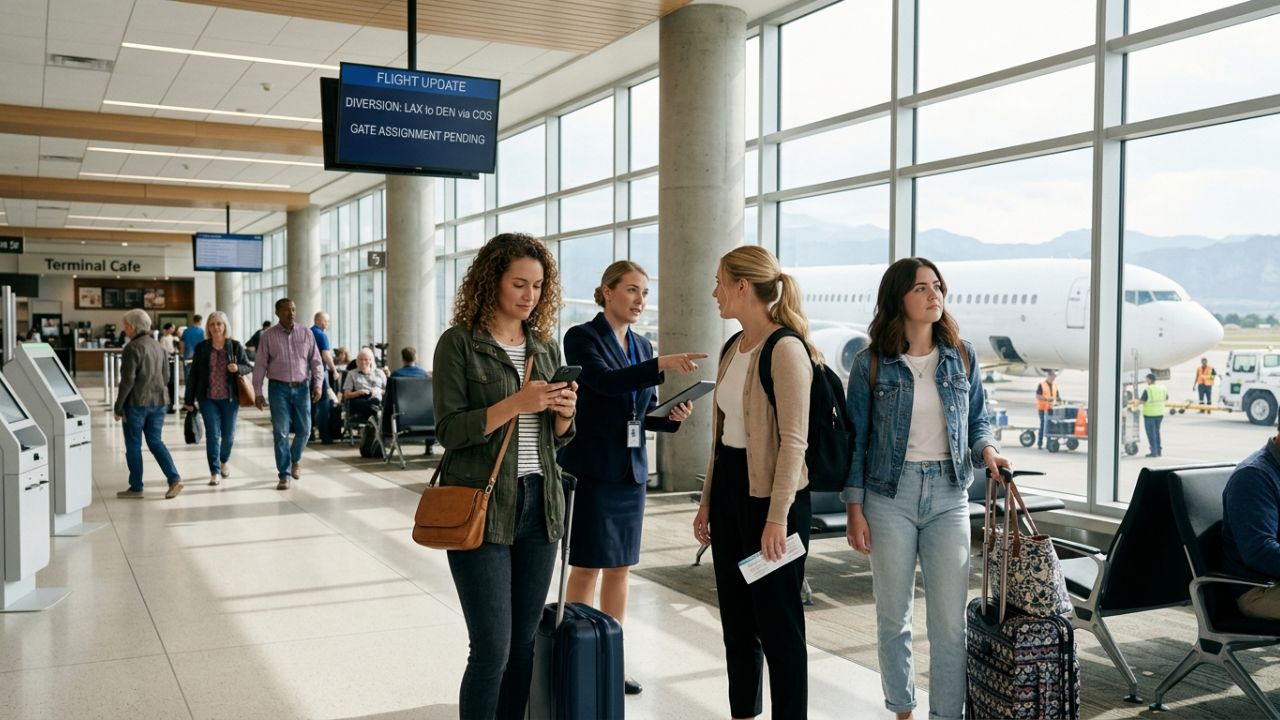
Image generated by AI
Quick Summary
- Southwest Airlines Flight WN2392, a Boeing 737-800, diverted from its Los Angeles to Denver route on June 27, 2026.
- The aircraft landed safely at Colorado Springs Municipal Airport (COS) instead of its intended destination.
- Aviation updates indicate the flight departed LAX after a delay, adding to the day's travel chaos.
- Neither Southwest Airlines nor the FAA has provided an official explanation for the sudden shift in flight path.
- No emergency was declared, and all passengers remained safe throughout the operational interruption.
Southwest Airlines Flight WN2392 Los Angeles to Denver Boeing 737-800 Diversion Sparks Investigation as US Aviation Updates Highlight Rising Airport Disruptions and Summer Travel Chaos
DENVER — In a sudden disruption to the high-volume summer corridor between California and Colorado, Southwest Airlines Flight WN2392 was forced to abort its descent into Denver International Airport, opting for an unexpected diversion to Colorado Springs. The incident, involving a workhorse Boeing 737-800, has added another chapter to the ongoing travel chaos affecting the United States' domestic aviation network this week. While the aircraft landed without incident, the lack of an immediate official explanation has left hundreds of passengers and aviation analysts searching for answers amidst a backdrop of increasing airport disruptions nationwide.
The flight, which originated at Los Angeles International Airport (LAX), was scheduled for a routine hop across the Rockies. However, aviation updates confirm that the journey was anything but standard. After departing LAX behind schedule, the crew eventually turned the aircraft toward Colorado Springs Municipal Airport (COS), approximately 70 miles south of the intended destination. This move has triggered a wave of interest in airline news circles, as the aviation community monitors how major US carriers are managing the intense operational pressures of the mid-year travel surge.
Expanded Overview: The Pulse of American Aviation Disruptions
The diversion of Flight WN2392 is not an isolated event but rather a symptom of a highly stressed aviation ecosystem. During the peak summer months, US air traffic corridors become some of the most congested in the world. Even minor technical assessments, shifting weather patterns, or air traffic control bottlenecks can lead to significant flight cancellations and diversions. For Southwest Airlines, a carrier that prides itself on point-to-point efficiency, a diversion so close to a major hub like Denver signifies a calculated operational decision that prioritized safety over schedule.
Analysts point out that the Boeing 737-800 (registration N8581Z) is one of the most reliable narrow-body jets in service. When such an aircraft is diverted without an emergency declaration, it often points to external factors—such as "gate availability" at the destination hub, sudden wind shear reports, or precautionary mechanical reviews. However, until the carrier breaks its silence, the event remains classified under "unexplained operational deviations," contributing to the overall sense of uncertainty currently permeating the airline news cycle in North America.
Section-Wise Breakdown: The Path to Colorado Springs
Departure from Los Angeles (LAX)
Flight WN2392 began its day with a delay. Departing from LAX, one of the world's busiest gateways, the aircraft was already facing the uphill battle of a congested schedule. In the high-stakes environment of summer travel, a delayed departure often narrows the window for arrival at busy hubs like Denver (DEN), where landing slots are tightly managed by the FAA.
The Mid-Air Decision
As the Boeing 737-800 crossed the Colorado state line, flight tracking data shows a clear deviation from the standard arrival route into Denver. Instead of initiating the final descent sequence, the crew transitioned into a path toward the south. This decision was made without a "Mayday" or "Pan-Pan" call, suggesting that while the interruption was necessary, it did not pose an immediate threat to the hull or its occupants.
Arrival at Colorado Springs (COS)
The landing at Colorado Springs Municipal Airport was described as routine. Ground crews at COS, which often serves as a primary diversion point for Denver-bound traffic, were reportedly ready to receive the aircraft. However, the subsequent lack of a prompt ferry flight back to Denver or a detailed passenger update has intensified the spotlight on Southwest’s communication protocols during this period of aviation updates.
Flight Details and Technical Specifications
To understand the scope of the interruption, it is essential to look at the specific technical data associated with the service.
Flight WN2392 Operational Profile
| Flight Attribute | Data Detail |
|---|---|
| Flight Number | WN2392 |
| Airline | Southwest Airlines |
| Aircraft Type | Boeing 737-800 |
| Registration | N8581Z |
| Origin | Los Angeles International Airport (LAX) |
| Intended Destination | Denver International Airport (DEN) |
| Actual Landing Site | Colorado Springs Municipal Airport (COS) |
| Date of Operation | June 27, 2026 |
| Status | Diverted / Safely Landed |
| Emergency Declared | None |
Passenger Impact: Navigating the Colorado Front Range
For the passengers aboard Flight WN2392, the experience was a jarring conclusion to what was supposed to be a short flight. While the physical landing at COS was safe, the logistical fallout was significant.
- Missed Connections: Denver is a major hub for Southwest. Passengers on WN2392 likely missed connecting flights to the East Coast and the Midwest, contributing to a secondary wave of flight cancellations for individuals.
- Ground Transit: Travelers often face the dilemma of waiting for the aircraft to be cleared for a "hop" to Denver or arranging their own ground transportation for the 70-mile drive north—an expensive and time-consuming alternative during travel chaos.
- Communication Gaps: The primary complaint among travelers during such airport disruptions is the lack of real-time info. Without a clear "why," the stress of the diversion is amplified by the uncertainty of the recovery timeline.
Industry Analysis: The Mechanics of a Diversion
In the United States, commercial airlines operate under the most stringent safety regulations in the world. A pilot's decision to divert is rarely scrutinized by the airline negatively because "err on the side of caution" is the industry's golden rule.
Possible Causes for Unexplained Diversions:
- Saturation at Hub: Denver International often experiences "ground delay programs" during peak hours. If a flight is delayed at the origin (as WN2392 was), it may lose its arrival slot, forcing a diversion if fuel reserves reach a certain threshold.
- Precautionary Indicators: A cockpit warning light for a non-critical system (like a galley fan or a minor hydraulic sensor) can prompt a landing at the nearest suitable airport for a maintenance check.
- Crew Duty Limitations: If a delay at the gate pushes the crew toward their legal "duty hours" limit, they may choose to land at an alternate to avoid a violation while in the air.
Each of these scenarios is a regular part of aviation updates, yet they contribute to the broader perception of travel chaos when they occur during high-traffic weekends.
Conclusion: The Outlook for Recovery
Southwest Airlines Flight WN2392 serves as a reminder that even the most routine journeys are subject to the complexities of the modern airspace. While the diversion to Colorado Springs was handled with professional precision, the incident highlights the need for robust contingency planning by both airlines and passengers. As the summer season continues, airport disruptions are likely to remain a frequent headline in airline news.
For Southwest, the focus now shifts to aircraft N8581Z's return to service and the reconciliation of passenger grievances. For the broader industry, the goal remains the stabilization of the US aviation network to prevent minor diversions from cascading into systemic failures.
Key Takeaways
- Safety First: Flight WN2392 made a safe landing at COS; no injuries or emergencies were reported.
- Strategic Diversion: The Boeing 737-800 diverted late in its journey, missing its Denver arrival after a delayed LAX departure.
- Aviation Silence: Both Southwest and aviation authorities have yet to release a definitive cause for the diversion.
- Hub Impact: Denver’s congestion remains a primary suspect in recent US airport disruptions.
- Passenger Resilience: Travelers are advised to monitor aviation updates closely as summer travel chaos persists across major US hubs.
Frequently Asked Questions
Why would a flight divert so close to its destination? When an airport like Denver is "saturated" or experiencing sudden weather changes, the FAA may put aircraft into holding patterns. If a flight is running low on "holding fuel," the safest option is to land at a nearby alternate like Colorado Springs.
Is the Boeing 737-800 involved in Flight WN2392 safe? Yes. Registration N8581Z is a modern, well-maintained aircraft. Information suggests the diversion was an operational decision rather than a response to a critical mechanical failure.
Can I get a refund if my flight is diverted? Typically, airlines will provide transportation to your final destination (either by flying the plane once cleared or by bus). While full refunds are rare for diversions where you eventually reach your destination, you may be eligible for vouchers or partial compensation for the inconvenience.
How common are these "unexplained" aviation updates? Fairly common. Airlines often wait for a full maintenance or post-flight report before issuing a statement to avoid spreading inaccurate information during a developing situation.
How much extra time should I plan for during the summer travel season? Given the current level of travel chaos, aviation experts recommend arriving at the airport 3 hours early and leaving at least a 4-hour window for any connecting flights at major hubs like LAX or Denver.
Disclaimer
This article is for informational and educational purposes only. It does not constitute legal, financial, or professional advice. While we strive to provide accurate and up-to-date information, travel policies, regulations, and conditions change rapidly. Always verify information with official sources before making travel decisions. Nomad Lawyer makes no representations about the accuracy, reliability, completeness, or suitability of the information provided. Readers should consult qualified professionals for advice specific to their circumstances. The views expressed in this article are those of the author and do not necessarily reflect the views of Nomad Lawyer.
Kunal K Choudhary
Co-Founder & Contributor
A passionate traveller and tech enthusiast. Kunal contributes to the vision and growth of Nomad Lawyer, bringing fresh perspectives and driving the community forward.
Learn more about our team →