
Southwest Airlines Flight WN1305 Boeing 737 MAX 8 Emergency Landing at Midland: What Really Happened
Southwest Airlines Flight WN1305 diverted unexpectedly from San Diego to El Paso, making an emergency landing at Midland International Air & Space Port on June 3, 2026. Flight crews followed safety protocols perfectly.

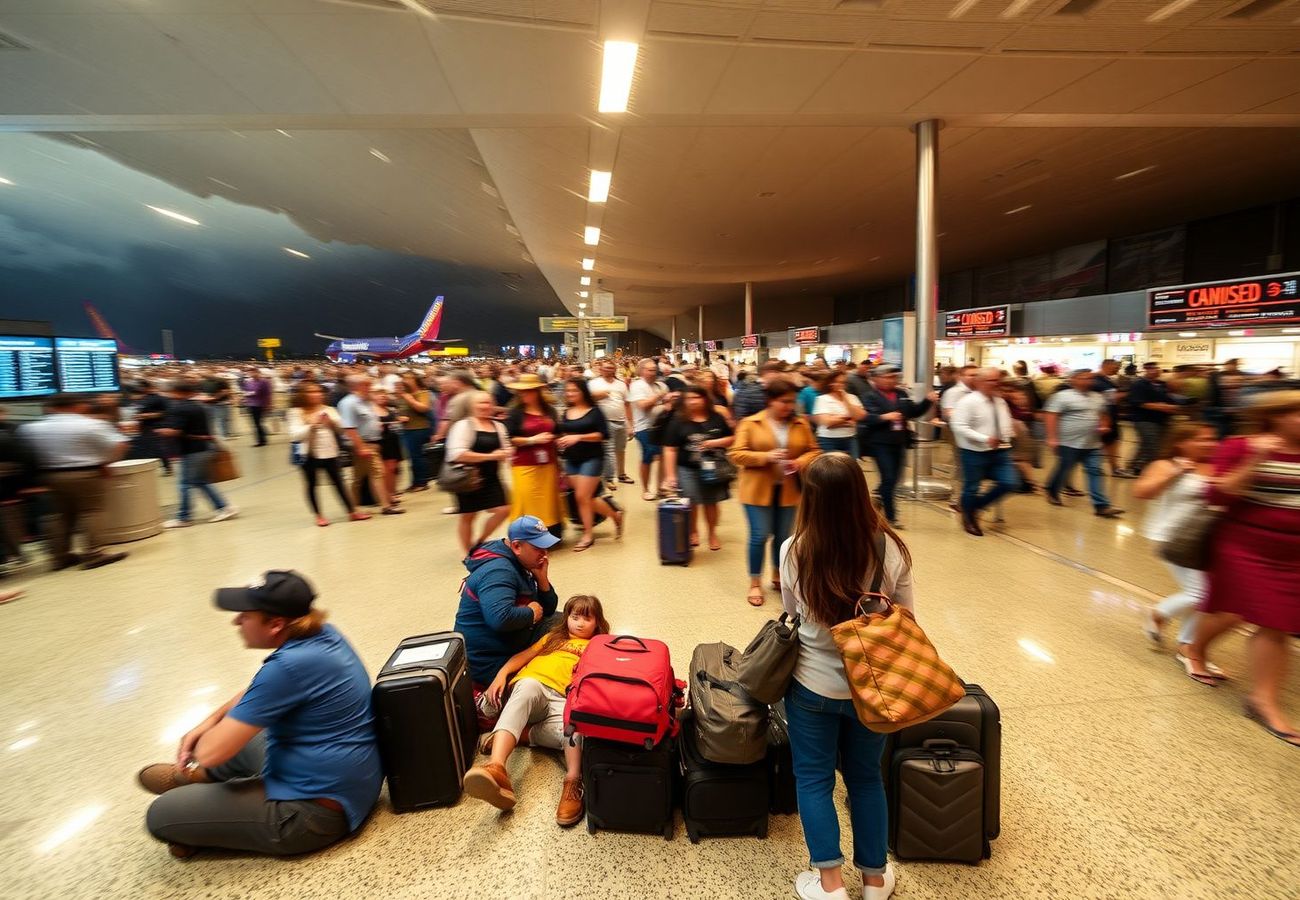
Image generated by AI
The Diversion: San Diego to Midland in Minutes
On June 3, 2026, Southwest Airlines Flight WN1305, a Boeing 737 MAX 8, departed San Diego International Airport (SAN) bound for El Paso International Airport (ELP) when crews detected an operational anomaly mid-flight. Rather than continue, the flight crew immediately initiated a precautionary diversion protocol, redirecting the aircraft toward Midland International Air & Space Port (MAF) in Texas.
The decision came swiftly. Crew members evaluated the situation in real-time, communicated transparently with passengers, and coordinated directly with air traffic control. This textbook response to an unexpected in-flight event showcases why Southwest Airlines maintains one of aviation's strongest safety records.
What Triggered the Emergency Response?
While Southwest Airlines has classified the precise operational issue as precautionary in nature, sources indicate the Boeing 737 MAX 8's onboard systems flagged a potential technical concern requiring immediate attention. The aircraft's redundant safety systems—a hallmark of modern commercial aviation—functioned exactly as designed.
The Boeing 737 MAX 8 is equipped with multiple backup systems that enhance safety during any anomalous condition. When these systems detect irregularities, pilots are trained to err on the side of caution. In this case, that caution meant a controlled, unscheduled landing rather than risking continued flight to the original destination.
Reddit: "Modern aircraft have so many redundant systems. If something feels off to the pilots, they divert. That's the system working perfectly, not a failure." — r/aviation
Midland's Rapid Response: Airport Operations on Standby
Midland International Air & Space Port stands ready 24/7 to handle precisely these scenarios. The airport's emergency response teams were positioned and alert when WN1305 declared the diversion. Runway infrastructure, ground support equipment, and trained personnel mobilized instantly.
Airport coordinators cleared runway space, emergency medical services staged at the terminal, and ground crews prepared for a controlled descent. The entire operation unfolded with military-grade precision—the kind of coordination that happens only when airports and airlines train relentlessly for worst-case scenarios.
According to FlightAware and Flightradar24 tracking data, the Boeing 737 MAX 8 maintained standard altitudes and headings throughout the diversion, indicating the aircraft remained fully controllable and posed no structural risk.
The Landing: Safety First, Always
The aircraft touched down at Midland International Air & Space Port without incident. Southwest Airlines crews executed a textbook emergency landing procedure, bringing the Boeing 737 MAX 8 to a complete stop safely. All passengers remained calm throughout the ordeal, with crew members providing regular updates and reassurance.
Airport personnel immediately mobilized passenger support operations. Ground teams facilitated safe deplaning, provided refreshments, and began coordinating onward travel arrangements to El Paso. Not a single passenger or crew member sustained injury.
How Southwest Airlines Manages In-Flight Anomalies
Southwest Airlines has implemented industry-leading protocols for detecting and responding to unexpected flight events. These procedures cover technical malfunctions, medical emergencies, adverse weather, and airspace restrictions. Every pilot undergoes rigorous training to evaluate situations in real-time while maintaining clear communication with both air traffic control and passengers.
The airline's operational teams monitor flights continuously from the ground. Advanced ground-based systems track aircraft performance, fuel consumption, and system health throughout every flight. When anomalies surface, decision-making happens fast—and diversion decisions prioritize passenger safety above all other considerations.
The Boeing 737 MAX 8: Why Redundancy Saves Lives
The Boeing 737 MAX 8 represents the latest evolution in commercial aircraft design. Its systems architecture includes multiple independent backups for all critical flight functions. If one system flags a concern, crew members have redundant alternatives immediately available.
This redundancy philosophy isn't new—it's been aviation's gold standard since the dawn of jet travel. Modern aircraft like the Boeing 737 MAX 8 simply implement redundancy at a higher level of sophistication, using advanced sensors and diagnostic algorithms to catch problems before they escalate.
Reddit: "The fact that a diversion happened and everyone walked away safe proves the system works. That's not a failure—that's success." — r/travel
What Flight Tracking Data Actually Reveals
Platforms like FlightAware, Flightradar24, and Aviability provide transparent, real-time visibility into flight operations worldwide. For WN1305 on June 3, 2026, these platforms logged:
- Tail number: N8909L
- Departure: San Diego International Airport at 18:35 PDT
- Diversion routing: Toward Midland International Air & Space Port
- Aircraft type: Boeing 737 MAX 8
- No structural anomalies detected
- All systems remained within normal operating parameters during the diversion
This verified data separates fact from speculation and confirms that Southwest Airlines crews responded perfectly to an unexpected situation.
Regional Airport Readiness: Why Midland Matters
Midland International Air & Space Port serves as a critical regional hub for Texas commercial aviation. The facility maintains full capability to handle diverted flights from major carriers operating across the southwestern United States. This includes runway infrastructure rated for all commercial jet aircraft, 24/7 emergency services, ground support equipment, and trained personnel ready to manage unscheduled arrivals.
Airports like Midland receive specialized training in diversion management. Staff understand the logistics of accommodating unexpected passengers, coordinating with airline operations teams, and facilitating rapid turnaround when aircraft need repairs before continuing to their original destination.
The Outcome: Zero Injuries, Full Transparency
All passengers aboard Southwest Airlines Flight WN1305 deplaned safely at Midland International Air & Space Port. Southwest Airlines arranged ground transportation and rebooking to El Paso for all affected travelers. The airline maintained transparent communication throughout the incident, updating passengers on the situation and next steps.
No injuries were reported. No structural damage occurred. No operational lapses were identified. What happened instead was textbook emergency response: detection, diversion, coordination, and safe resolution.
What This Incident Teaches Travelers
Southwest Airlines Flight WN1305's emergency landing demonstrates three critical aviation truths:
First, modern aircraft safety systems work. They detect problems before pilots even realize something's wrong, triggering automated alerts that ground crews and pilots take seriously.
Second, pilot training saves lives. Every diversion decision reflects months of simulator training, years of flight experience, and institutional protocols designed to prioritize passenger safety over schedule convenience.
Third, airport coordination matters profoundly. Midland International Air & Space Port's ability to rapidly accommodate an unscheduled arrival ensured zero chaos and maximum safety.
For passengers nervous about flying, WN1305's story should be reassuring. The system detected an anomaly, crews responded perfectly, airports cooperated seamlessly, and everyone arrived safely. That's not a horror story—that's aviation working exactly as designed.
Modern aviation safety isn't about preventing emergencies; it's about detecting them early and managing them flawlessly when they occur.
Related Travel Guides
- Lufthansa, United, Air Canada, and Air France Ground Flights Triggering Widespread Germany Flight Cancellations and Delays Across Munich and Frankfurt Airports: New Aviation Updates
- Asian Carriers Capitalize on Middle East Flight Disruptions as Regional Airspace Crisis Reshapes Global Routes
- Spain Accelerates Bilbao Airport Expansion After Surpassing Seven Million Passengers with New International Routes and Airlines Mitigating Regional Airport Disruptions and Severe Travel Chaos: New Airline News and Aviation Updates
Disclaimer
This article is for informational and educational purposes only. It does not constitute legal, financial, or professional advice. While we strive to provide accurate and up-to-date information, travel policies, regulations, and conditions change rapidly. Always verify information with official sources before making travel decisions. Nomad Lawyer makes no representations about the accuracy, reliability, completeness, or suitability of the information provided. Readers should consult qualified professionals for advice specific to their circumstances. The views expressed in this article are those of the author and do not necessarily reflect the views of Nomad Lawyer.
Preeti Gunjan
Contributor & Community Manager
A passionate traveller and community builder. Preeti helps grow the Nomad Lawyer community, fostering engagement and bringing the reader experience to life.
Learn more about our team →