
Thailand and Southeast Asian Nations Issue Urgent Weather Warnings as an Active Southwest Monsoon Triggers Heavy Rain, Thunderstorms, and Rough Seas During Peak Holiday Season: New Travel Alert
Widespread weather alerts have been issued in Thailand, Vietnam, Cambodia, Laos, Malaysia, and Myanmar due to a severe active southwest monsoon.

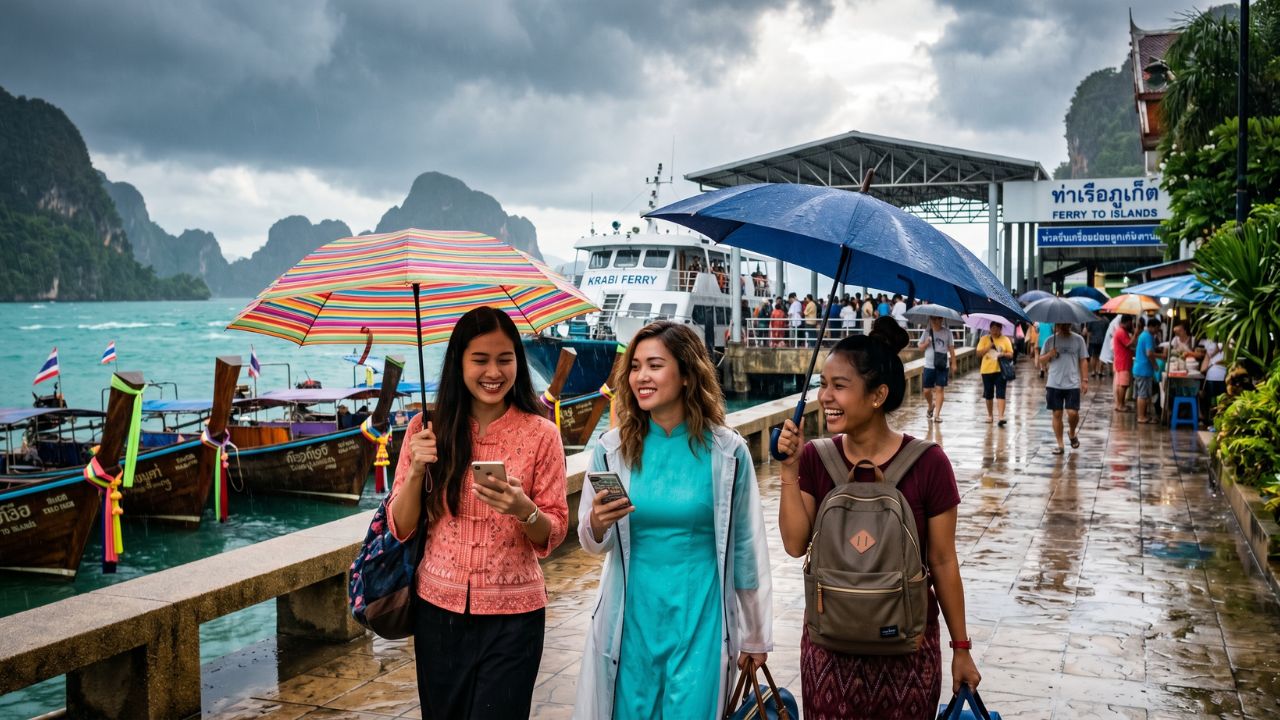
Image generated by AI
Published on June 19, 2026
As an active southwest monsoon continues to strengthen across the Andaman Sea and the Gulf of Thailand, weather offices have issued nationwide travel alerts for major tourist destinations in Thailand, Vietnam, Cambodia, Laos, Malaysia, and Myanmar. The severe weather pattern is bringing widespread thunderstorms, flash flooding, and rough seas, creating significant hazards for domestic transportation, ferry services, and island tourism. Travelers exploring the region during this peak holiday period must monitor meteorological updates closely, remain flexible with their itineraries, and avoid marine activities during storm periods.
Quick Summary
- Monsoon Warnings Active: The Thai Meteorological Department issued warnings for thunderstorms, flash floods, and landslides between June 18 and June 24, 2026.
- Regional Instability: A low-pressure cell over northern Vietnam is amplifying atmospheric instability, creating a broader weather emergency across Southeast Asia.
- High-Risk Zones: Eastern Thailand faces the highest weather threat, with persistent heavy rain and localized flooding expected to continue after other areas improve.
- Marine Tourism Suspensions: Small boats are advised to stay ashore as waves are forecast to exceed 2 metres during thunderstorms in the Andaman Sea and Gulf of Thailand.
- Metropolitan Impacts: Bangkok is preparing for storm coverage across 40% to 60% of the area, likely causing waterlogging and traffic congestion through June 20.
The regional weather advisory issued by the Thai Meteorological Department (TMD) warns that the strengthening atmospheric system will bring unstable weather patterns across mainland Southeast Asia. A low-pressure system situated over northern Vietnam has intensified the monsoon, pulling high volumes of tropical moisture across regional borders. Because these combined weather patterns impact flight safety, marine operations, and road networks, tourism offices are urging travelers to prioritize personal safety and check forecast maps before initiating journeys.
Event/Incident Details: Monsoon Forecasts and Regional Wave Heights
The current weather advisory is active from June 18 through June 24, 2026, with thunderstorms and localized rain forecasted across all primary regions. The TMD projects that while rainfall will ease across several provinces by June 21, eastern Thailand faces a prolonged threat of severe, persistent downpours.
To help travelers evaluate their safety, authorities have published structural projections detailing storm coverage, regional risks, and marine wave heights.
The table below outlines the nationwide weather outlook and the expected travel impacts:
| Forecast Period | Weather Outlook | Travel Impact |
|---|---|---|
| June 18–20 | Widespread thunderstorms with heavy rainfall across most regions | Possible flight delays, slower highway transit, ferry suspensions |
| June 21–24 | Rain decreases in many regions but remains heavy in eastern Thailand | Continued localized travel disruptions and flooding in eastern provinces |
Provinces in eastern Thailand face the highest risk during this period, with continuous rain expected even after storm activity declines elsewhere. The table below details expected thunderstorm coverage and risks by region:
| Region | Thunderstorm Coverage (Early Period) | Heavy Rain Risk |
|---|---|---|
| Northern Thailand | 40–60% | Moderate |
| Northeastern Thailand | 40–60% | Moderate |
| Central Thailand | 40–60% | Moderate |
| Eastern Thailand | 60–70% | High |
| Southern Gulf Coast | 40–60% | Moderate |
| Southern Andaman Coast | 40–60% | Moderate |
| Bangkok Metropolitan Region | 40–60% | Moderate |
Marine safety is a primary concern for island tourism. The table below outlines the forecasted wave heights for major marine areas during the monsoon period:
| Marine Area | Wave Height (Normal Conditions) | Wave Height (During Thunderstorms) |
|---|---|---|
| Upper Andaman Sea | 1–2 metres | Above 2 metres |
| Lower Andaman Sea | Around 1 metre | Above 2 metres |
| Gulf of Thailand | Around 1 metre | Above 2 metres |
Risk/Impact: Localized Floods, Landslides, and Marine Hazards
The intense weather system poses severe hazards to regional transit networks and outdoor tourist attractions. Persistent rainfall saturates the soil in high-elevation areas, creating risks of mudslides and highway blocks.
The primary risks and potential disruptions for travelers include:
- Flash Floods and Runoff: Areas near foothills, low-lying valleys, and rivers face immediate risks of flash flooding and forest runoff.
- Landslide Dangers: Mountainous highways and scenic rural roads are subject to sudden soil slips, which can block transportation.
- Marine Excursion Disruptions: High wave heights exceeding 2 metres during storms have forced temporary suspensions of diving, island-hopping, and fishing tours.
- Urban Inundation: Widespread street flooding in Bangkok and major cities can cause severe traffic congestion and delay transport.
What Authorities Are Saying: Thai Meteorological Department Safety Guidelines
In response to the active monsoon, the Tourism Authority of Thailand (TAT) has advised international travelers to coordinate closely with their tour operators and avoid coastal areas when storms approach. The TMD has issued strict mandates advising small boats to stay in port during periods of heavy rain and wind shear.
Additionally, national park administrations are monitoring foothill trails and waterfall sites, warning that heavy forest runoff may trigger immediate trail closures to protect hikers. Border agencies and transport departments in Vietnam, Cambodia, Laos, Malaysia, and Myanmar are cooperating to monitor cross-border highways and maritime routes for storm safety.
Practical Traveler Advice: How to Plan Around Active Southwest Monsoon Disruptions
Travelers exploring Thailand and neighboring countries should follow these guidelines to manage travel risks:
- Verify Ferry Statuses: Check marine weather alerts and verify boat operations with local pier masters before attempting to travel to offshore islands.
- Review Airline App Alerts: Monitor flight boards for potential delays, especially at regional airports during afternoon storm windows.
- Avoid Driving Through Standing Water: Never cross flooded roadways; find alternative routes or wait until local drainage clears the water.
- Coordinate Hotel Bookings: Keep hotels updated on your travel progress, as transportation delays may affect check-in times.
- Pack Waterproof Equipment: Protect your passports, electronic gear, and travel documents in waterproof bags or dry sacks.
- Consult Local Park Rangers: Verify park trail conditions with rangers before attempting mountain climbs or waterfall visits.
Broader Context: Transnational Weather Systems and Active Southwest Monsoon Geography
The current weather emergency highlights the interconnected nature of Southeast Asian geography. The active southwest monsoon acts as a driver of seasonal weather, drawing moisture from the Indian Ocean across the Andaman Sea and mainland Southeast Asia.
The atmospheric instability is enhanced by a low-pressure cell sitting over northern Vietnam, which pulls storm fronts across Laos, Cambodia, and northern Thailand. To help travelers navigate these transnational patterns, the Vietnam National Authority of Tourism (VNAT) has published safety guidelines for travelers visiting northern provinces. Understanding these regional interactions helps travelers prepare for sudden weather transitions when crossing international borders.
What to Expect Next / Looking Ahead: Weather Transitions and Tourism Recovery
While weather conditions are expected to improve across most of Thailand after June 21, the eastern provinces will remain under alert for persistent rainfall. Regional emergency services will maintain monitoring of landslide-prone highways and river basins.
Ferry operators and marine tourism providers are preparing to resume normal schedules as soon as wave heights decrease below the 2-metre mark. Travelers are advised to maintain flexible itineraries and check weather updates before scheduling outdoor activities. Regional agencies expect a swift recovery of travel activities once the low-pressure system over northern Vietnam disperses.
Conclusion
The active southwest monsoon highlights the need for careful planning when traveling during the rainy season. While Thailand and neighboring Southeast Asian nations remain open to tourism, respecting weather alerts and prioritizing safety is essential. By staying informed and maintaining travel flexibility, visitors can enjoy a safe and memorable holiday across the region.
Related Travel Guides
- US Gulf Coast Issues Urgent Flooding Warning as Hurricane Arthur Batters Travel Sector, Urging Travelers to Suspend Non-Essential Journeys: Latest Update on the Atlantic Hurricane Season 2026
- European Border Authorities Suspend Biometric Scans at Amsterdam, Frankfurt, London Gatwick, and Brussels to Rescue Millions of Tourists from EES Summer Gridlock: New Travel Alert
- The 10 Best Backpacking Safety Tips for Thailand and Southeast Asia During Monsoon Season, According to Reddit
FAQ: Active Southwest Monsoon and Southeast Asia Travel
What is causing the heavy rain and rough seas in Southeast Asia?
The storm activity is caused by a strengthening active southwest monsoon pulling moisture from the Indian Ocean, combined with a low-pressure cell over northern Vietnam.
What are the dates of the weather warning?
The nationwide advisory covers June 18 to June 24, 2026.
Which region faces the highest risk of persistent rain?
Eastern Thailand faces the highest and most persistent rainfall risk, which is forecast to continue even after conditions improve in other areas.
How high are wave heights expected to reach during the storm?
Wave heights may exceed 2 metres during thunderstorms in the Upper Andaman Sea, Lower Andaman Sea, and the Gulf of Thailand.
Should I cancel my trip to Southeast Asia?
No, but travelers should maintain flexible itineraries, monitor local weather bulletins, and verify ferry and flight schedules before travel.
Disclaimer
This article is for informational and educational purposes only. It does not constitute legal, financial, or professional advice. While we strive to provide accurate and up-to-date information, travel policies, regulations, and conditions change rapidly. Always verify information with official sources before making travel decisions. Nomad Lawyer makes no representations about the accuracy, reliability, completeness, or suitability of the information provided. Readers should consult qualified professionals for advice specific to their circumstances. The views expressed in this article are those of the author and do not necessarily reflect the views of Nomad Lawyer.
Kunal K Choudhary
Co-Founder & Contributor
A passionate traveller and tech enthusiast. Kunal contributes to the vision and growth of Nomad Lawyer, bringing fresh perspectives and driving the community forward.
Learn more about our team →