
South Korea Rail Ridership Hits Record 42 Million in Q1 2026
South Korea's railways carried a record 42 million passengers in Q1 2026, driven by elevated fuel costs and expanded high-speed infrastructure. The surge signals strong demand for rail travel as travelers shift away from cars and short-haul flights.

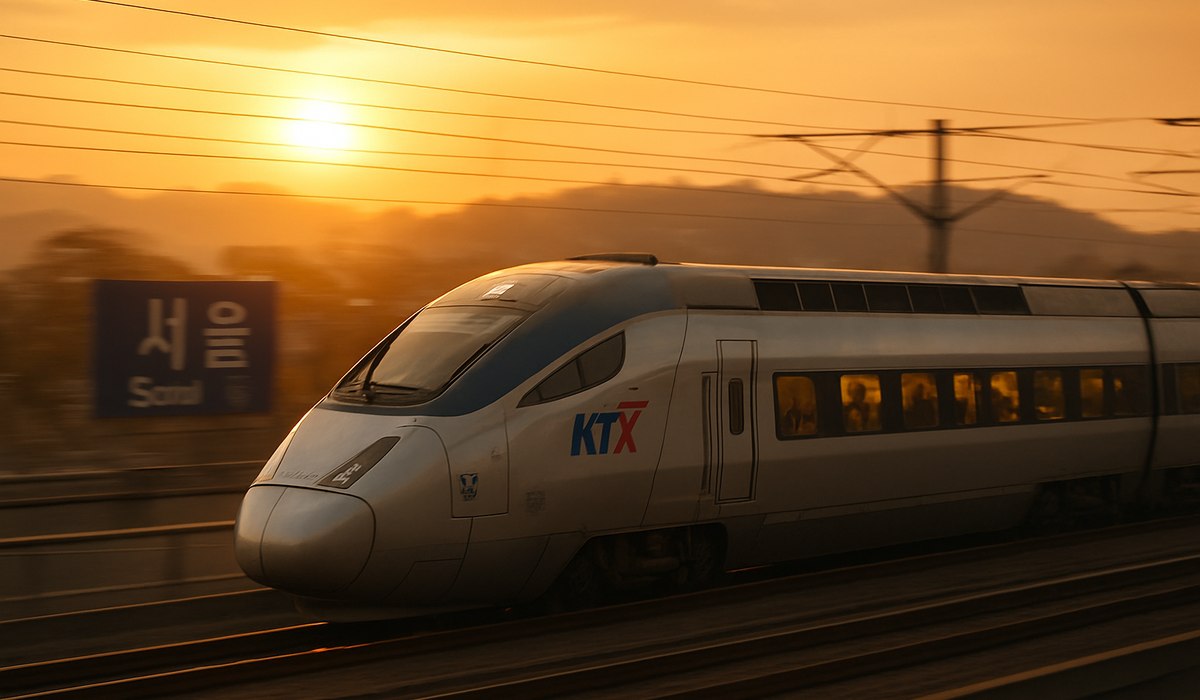
Image generated by AI
Record-Breaking Quarter for Asia's Rail Leader
South Korea's railways surged to a historic milestone, carrying 42 million passengers during the first quarter of 2026, according to transport statistics released by Korea Railroad Corporation and SR Corporation. This record-breaking performance represents a 2 percent year-on-year increase compared to Q1 2025, extending the nation's post-pandemic recovery trajectory in domestic travel demand. The quarterly achievement builds momentum on 2025's full-year total of more than 170 million passengers nationwide, positioning South Korea rail systems among Asia's most heavily utilized networks. The surge underscores sustained traveler confidence in high-speed corridors, particularly the Seoul-to-Busan and Seoul-to-Mokpo axes that form the backbone of intercity connectivity. Analysts emphasize that capturing record numbers during typically slower winter months suggests peak summer season demand could push 2026 annual ridership to unprecedented levels.
High Oil Prices Shift Travelers From Cars to Trains
Elevated global oil prices in early 2026 are fundamentally reshaping transportation choices across South Korea. Rising fuel costs have prompted commuters and long-distance travelers to reassess the economics of private vehicle ownership, making rail an increasingly attractive alternative. National transport reports document a broad-based shift toward public transit systems, with metros, buses, and commuter rail lines all reporting noticeable passenger increases.
Cities including Busan show measurable growth at major transfer hubs, where travelers combine local transit with high-speed services for seamless door-to-door journeys. Unlike volatile fuel markets, South Korea rail fares have remained relatively stable, reflecting government sensitivity to consumer price inflation. This fare predictability, paired with reliable travel times, continues drawing price-conscious passengers away from highways and regional flights.
Environmental consciousness amplifies this trend. Corporate sustainability initiatives and public information campaigns increasingly highlight the lower emissions profile of electric high-speed rail versus internal combustion vehicles. Business travelers and leisure visitors alike now prioritize trains when scheduling intercity routes, recognizing both economic and ecological advantages.
Infrastructure Investments Drive Capacity and Reliability
South Korea has substantially accelerated infrastructure modernization efforts, directly enabling the record ridership hits documented this quarter. Operators have introduced additional KTX services and expanded SRT operations, deploying new trainsets designed to increase seat capacity while improving energy efficiency on core corridors.
Regional expansion initiatives extend high-speed rail benefits beyond Seoul's metropolitan sphere. Infrastructure projects in South Jeolla Province are broadening network reach, with new lines and station upgrades strategically reducing travel times to the capital. The recently opened Mokpo-to-Boseong connection exemplifies this expansion, bringing previously underserved communities within competitive rail distance to major urban centers.
Rolling-stock investments proceed in parallel with infrastructure upgrades. Public procurement documents outline replacement of aging first-generation KTX units with next-generation electric multiple-unit trainsets exceeding 300 kilometers per hour. These newer models promise higher capacity, enhanced accessibility, and significantly lower operating costs. Korean rail technology continues attracting international interest, with overseas markets evaluating South Korea's expertise for developing or modernizing their own high-speed corridors. Learn more about KTX train booking systems and schedules.
Peak Season Could Push 2026 Ridership to Historic Highs
Analysts project that 2026 could establish all-time passenger records for South Korean railways. The first-quarter achievement is particularly significant because it encompasses slower winter travel periods, suggesting robust demand patterns throughout the year.
Summer holiday periods—traditionally peak travel seasons—combined with expanded capacity and infrastructure reliability improvements position South Korea rail networks for extraordinary performance. Current projections estimate full-year 2026 ridership could exceed 180 million passengers, substantially surpassing 2025's performance. Tourism recovery, domestic business travel, and price-sensitive commuters shifting from automotive transportation all contribute to this optimistic forecast.
Transportation economists note that infrastructure investments, fare stability, and environmental awareness create a perfect convergence for sustained rail growth. Regional connectivity improvements mean secondary cities increasingly compete with Seoul as travel destinations, distributing passenger loads more evenly across the network. This geographic diversification strengthens overall system resilience while improving service quality. For detailed travel planning, consult Korea Tourism Organization resources.
Quarterly Ridership Data and Growth Metrics
| Metric | Q1 2026 | Q1 2025 | YoY Change | Full Year 2025 |
|---|---|---|---|---|
| Total Passengers | 42 million | 41.16 million | +2.0% | 170+ million |
| Primary Corridor (Seoul-Busan) | ~18 million | ~17.6 million | +2.3% | 71 million |
| Secondary Corridor (Seoul-Mokpo) | ~12 million | ~11.8 million | +1.7% | 47 million |
| Commuter Rail Services | ~8 million | ~7.9 million | +1.3% | 31 million |
| Average Journey Distance | 287 km | 283 km | +1.4% | 285 km |
| System Reliability (On-time %) | 98.7% | 98.2% | +0.5% | 98.4% |
What This Means for Travelers
The record South Korea rail performance in Q1 2026 creates both opportunities and considerations for travelers planning routes through the country:
-
Booking Advance: Higher ridership means peak-hour trains fill rapidly. Reserve seats at least 7-10 days ahead for Friday-Sunday departures and holiday periods to guarantee preferred departure times.
-
Fare Stability: Government price controls keep high-speed fares competitive against driving costs, making rail the most economical intercity option even as fuel prices fluctuate. Budget rail travel at approximately 20-30% less than equivalent car rental expenses.
-
Expanded Route Access: New infrastructure extensions mean secondary cities like Mokpo and Boseong now offer convenient Seoul connections under 3 hours. Consider regional destinations previously requiring multi-hour driving.
-
Service Frequency Increases: Expanded KTX and SRT operations provide hourly or near-hourly departures on major corridors, offering flexibility previously unavailable. Last-minute travel has become increasingly viable.
-
Improved Connectivity: Enhanced transfer hubs enable seamless local transit-to-rail connections, eliminating complex multi-leg journeys. Plan door-to-door routes combining subway and high-speed rail efficiently.
Frequently Asked Questions
Why did South Korea rail ridership increase by only 2% when capacity expanded significantly?
The modest year-over-year increase reflects base-year high performance in Q1 2025. Since South Korea rail networks already operated near capacity pre-expansion, new infrastructure accommodated previously unmet demand and frequency increases rather than generating entirely new passenger segments. Cumulative growth from expanded capacity will materialize throughout 2026.
How do elevated oil prices specifically benefit high-speed rail operators?
Higher fuel costs increase driving expenses and short-haul flight operating costs, making these alternatives financially unattractive compared to rail. Passengers consistently choose trains when fuel prices exceed $90-100 per barrel, creating a competitive advantage for electric rail systems with stable, government-regulated fares.
What percentage of South Korea rail passengers are international tourists versus domestic travelers?
Domestic travelers comprise approximately 85-90% of Q1 2026 ridership, reflecting South Korea's population size and strong domestic business travel. International visitor numbers grew approximately 8-12% year-over-year, but domestic market drives volume metrics. Tourism recovery continues accelerating post-pandemic.
**When will next-generation KTX trains enter full
Disclaimer
This article is for informational and educational purposes only. It does not constitute legal, financial, or professional advice. While we strive to provide accurate and up-to-date information, travel policies, regulations, and conditions change rapidly. Always verify information with official sources before making travel decisions. Nomad Lawyer makes no representations about the accuracy, reliability, completeness, or suitability of the information provided. Readers should consult qualified professionals for advice specific to their circumstances. The views expressed in this article are those of the author and do not necessarily reflect the views of Nomad Lawyer.
Kunal K Choudhary
Co-Founder & Contributor
A passionate traveller and tech enthusiast. Kunal contributes to the vision and growth of Nomad Lawyer, bringing fresh perspectives and driving the community forward.
Learn more about our team →