Slovenia Restricts New Tourist Visas for Russians but Keeps Essential Travel Open

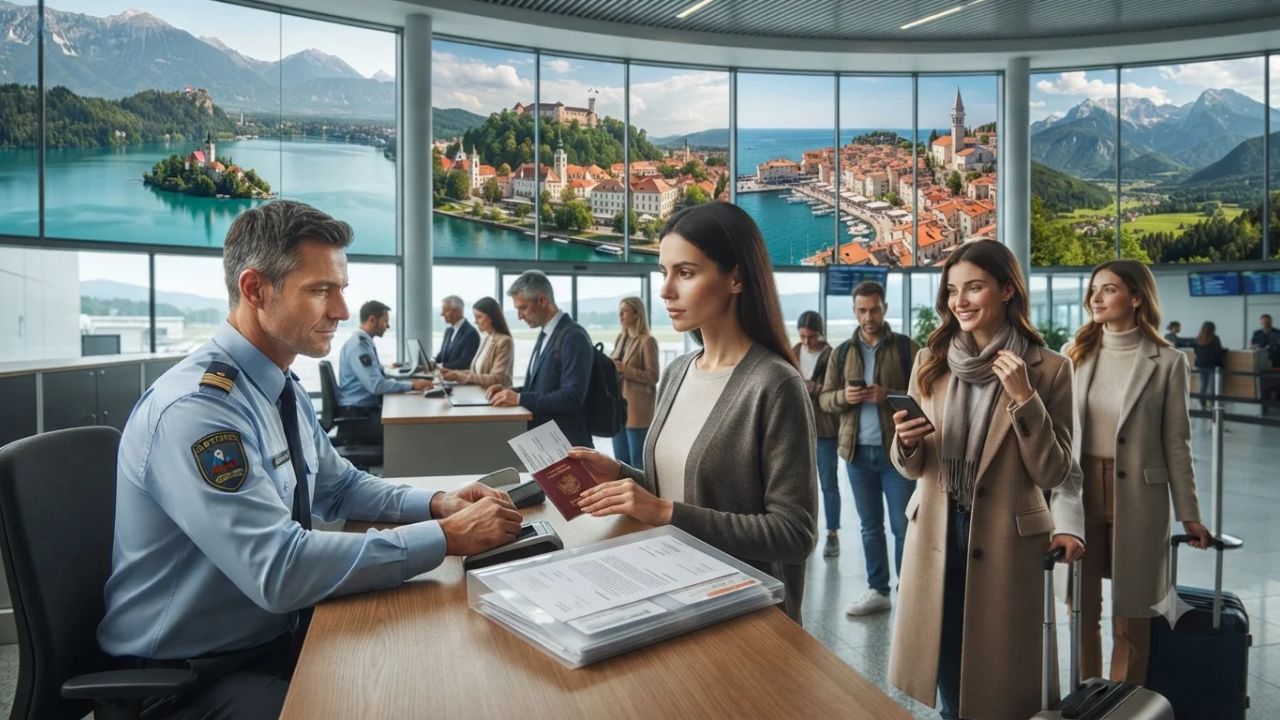
Slovenia has instituted a comprehensive global suspension on new tourist visa applications submitted by Russian citizens, closing its consular channels to leisure holidaymakers while maintaining strict exemptions for verified business travel, international transport crews, academic programs, and existing Schengen visa holders.
The diplomatic directive, formally confirmed by the Slovenian Ministry of Foreign and European Affairs on 23 November 2026 following initial operational pauses across external visa processing centres, marks an important realignment in Central Europe's immigration architecture. The revised guidelines prohibit Russian nationals from applying for short-stay Schengen visas (Type C) intended for recreational holidays, private visits, and the vast majority of sporting events. Most significantly, the restriction carries worldwide extraterritorial reach: Russian passport holders are barred from submitting tourist visa applications regardless of where they legally reside, effectively preventing applicants from seeking consular appointments in third-party hubs such as Serbia, Turkey, Armenia, or the United Arab Emirates.
SLOVENIA VISA POLICY REFORM: CORE REGULATORY BENCHMARKS
| Category / Entity | Details / Impact |
|---|---|
| Policy Dimension | Statutory Rule & Consular Implementation |
| Official Announcement Date | 23 November 2026 (Slovenian Foreign Ministry) |
| VFS Global In-Country Freeze | 16 November 2026 (Application intake paused) |
| Geographic Scope of Ban | Worldwide (Applies to all Russian nationals) |
| Target Travel Categories | General tourism, leisure, and private visits |
| Status of Existing Visas | Fully Valid (Subject to standard 90/180 rule) |
| Status of EU Residence Permits | Fully Valid (Permits visa-free entry) |
| Primary Essential Exemptions | Business delegations, transport crew, EU kin |
| Sports Participation Rules | World & European Championship athletes only |
| Commercial Visa Impact | 1,968 tourist visas issued to Russians (2025) |
Executive Summary: The Anatomy of Slovenia’s Worldwide Visa Freeze
Slovenia’s decision aligns its national consular operations with European Commission directives governing visa issuances to citizens of the Russian Federation. However, the practical rollout has established a rigorous framework that distinguishes between casual vacationers and travelers with verified economic, familial, or humanitarian justifications.
The initial operational halt occurred quietly on 16 November 2026, when VFS Global visa application centres operating across the Russian Federation ceased booking and accepting appointments for tourist visas. VFS Global published formal notifications on 17 November, followed by an official policy clarification from the Slovenian Foreign Ministry in Ljubljana on 23 November.
THE BIFURCATED CONSULAR PIPELINE FOR RUSSIAN TRAVELERS
| Category / Entity | Details / Impact |
|---|---|
| Exemption Category | Mandatory Documentary Evidence Required |
| Business Executives & Traders | Formal corporate invitation, trade contract, |
| and prior authorization from Embassy Moscow | |
| International Transport Crews | Commercial pilot licenses, seaman books, |
| international road transport (TIR) permits | |
| Conference & Academic Attendees | Official conference registration, symposium |
| agenda, verified institutional sponsorship | |
| EU / EEA Citizen Family Members | Certified marriage/birth certificates proving |
| direct familial relationship to an EU citizen | |
| World/European Championship | Official accreditation from international |
| Athletes & Sporting Delegations | sports federations (amateur events barred) |
| Critical Infrastructure Experts | Government or utility contracts verifying |
| specialized engineering or technical role | |
| National D-Visas & Residence | University admission, registered employment |
| Permits (Study and Work) | contracts processed via interior ministry |
1. Corporate Commerce and International Conferences
Business-driven mobility remains legally protected. Russian executives, commercial buyers, and technical specialists traveling to Slovenia for verified trade negotiations, investment audits, or industrial equipment inspections can continue to submit visa applications.
Similarly, professionals attending academic symposia, scientific congresses, and international business conventions remain eligible. However, administrative scrutiny has intensified dramatically: applicants submitting documents through visa centres in the Russian Federation must secure advance authorization directly from the Slovenian Embassy in Moscow before their files can be formally accepted for consular adjudication.
2. International Transport and Logistics Workers
Slovenia’s strategic geographical position at the crossroads of Central Europe and the Adriatic Sea makes international freight transit essential. To protect regional supply chains, professional transport workers—including commercial airline pilots, certified flight crew, maritime seafarers joining vessels at the Port of Koper, and long-distance freight lorry drivers—are fully exempt from the visa suspension.
3. Family Members of European Union Citizens
Under European Union Directive 2004/38/EC, family members of EU and EEA citizens enjoy protected rights of free movement. Russian citizens who are the legal spouse, registered civil partner, or dependent child of an EU citizen retain the statutory right to apply for entry visas to accompany or join their family member in Slovenia. These applications continue to be processed under expedited, fee-exempt European statutory frameworks.
4. High-Level Elite Athletes
While standard sporting trips, club exchanges, and amateur marathons are prohibited under the leisure travel ban, an explicit exemption exists for elite athletes participating in officially sanctioned World Championships and European Championships. National team athletes, certified coaches, and technical delegates presenting official accreditation from recognized international sports governing bodies can secure entry visas for competition purposes.
5. Educational and Professional Long-Stay Immigration
The restriction on short-stay tourist visas does not restrict long-stay national immigration. Russian students admitted to Slovenian universities, medical researchers, and foreign workers holding validated Slovenian employment contracts proceed under separate national Type D visa and single residence permit procedures governed by the Slovenian Ministry of the Interior.
Pre-Existing Visas and the Schengen Borders Code: Preserving Lawful Entry Rights
A widespread misconception following the 23 November announcement was that Slovenia had enacted a total border shutdown for all Russian passport holders. Consular legal experts and border authorities have explicitly clarified the scope of the measures: pre-existing, valid Schengen visas are not cancelled.
BORDER ENTRY PROTOCOL: RUSSIAN PASSPORT HOLDERS
| Consular Processing Metric | Volume / Share Data |
|---|---|
| Total Short-Stay Visas Issued | 15,883 visas across all global missions |
| Total Tourist Visas Issued | 6,510 visas worldwide |
| Tourist Visas Issued to Russians | 1,968 visas issued to Russian citizens |
| Russian Share of Tourist Visas | 30.2% of all tourist visas issued by Slovenia |
| Representation Share | ~50% of Russian visas processed for partners |
| Primary Inbound Tourism Hubs | Ljubljana, Lake Bled, Piran, Rogaška Slatina |
During 2025, Slovenian diplomatic and consular posts issued 15,883 short-stay visas worldwide, of which 6,510 were categorized specifically as tourist visas. Russian citizens received 1,968 of these tourist visas—accounting for 30.2% of all tourist visas issued by the Republic of Slovenia globally.
The Diplomatic Representation Dimension
However, the statistical reality is nuanced. Consular records indicate that nearly half of the tourist visas issued to Russian nationals by Slovenian missions were processed on behalf of other Schengen member states under formal bilateral representation agreements.
In jurisdictions where smaller Schengen partners lack dedicated consular staff, Slovenia processes visa requests on their behalf. Consequently, a portion of the 1,968 visas issued to Russian citizens represented travelers whose primary destination was another European nation rather than Slovenia itself.
ESTIMATED ECONOMIC EXPOSURE IN SLOVENIA'S TOURISM REGIONS
| Category / Entity | Details / Impact |
|---|---|
| Tourism Destination / Sector | Nature of Tourism Exposure & Market Impact |
| Rogaška Slatina Spas | High exposure; historic destination for |
| health, wellness, and medical mineral water | |
| Ljubljana Boutique Hotels | Moderate exposure; cultural city breaks and |
| architectural heritage tourism | |
| Lake Bled & Julian Alps | Moderate exposure; scenic nature holidays, |
| alpine skiing, and outdoor active travel | |
| Adriatic Coast (Piran/Portorož) | Moderate exposure; seaside resorts, sailing, |
| and Mediterranean culinary corridors | |
| Destination Management Agencies | High exposure for specialized travel firms |
| catering to Russian-speaking luxury clients |
Impact on Domestic Tourism Corridors
For domestic hospitality providers in Slovenia, the absence of new Russian leisure travelers will be felt unevenly:
- Rogaška Slatina and Thermal Spas: The historic spa resort of Rogaška Slatina has for decades welcomed Russian guests drawn to its world-renowned magnesium-rich Donat mineral water and specialized medical rehabilitation clinics. These guests typically booked extended stays averaging 10 to 14 nights, generating significant per-visitor spending.
- Ljubljana and Coastal Corridors: In the capital city of Ljubljana and coastal towns like Piran and Portorož, Russian travelers represented a high-spending, if modest-volume, demographic. Independent hotels, luxury guesthouses, and fine dining establishments will experience booking adjustments as direct Russian tourist inflows contract.
The European Geopolitical Context: A Fragmented Schengen Landscape
Slovenia’s policy shift forms part of a wider geopolitical recalibration across the European Union that began following the February 2022 invasion of Ukraine. Over the past four years, the Schengen area has transitioned from a harmonized visa regime into a multi-tiered regulatory patchwork.
EUROPE'S SHIFTING VISA POLICIES TOWARD RUSSIAN TRAVELERS
| Entity / Route | Metrics | Operational Status |
|---|---|---|
| Policy Archetype | Member States Enforcing Policy | Core Regulatory Approach |
| Total Border | Poland, Estonia, Latvia, | Complete land-border closure |
| Entry Bans | Lithuania, Finland, Czechia | Bans Russian tourists even |
| with valid Schengen visas | ||
| Consular Visa | Slovenia, Netherlands, | Halts new tourist visas; |
| Suspensions | Belgium, Denmark, Baltic states | respects existing valid |
| visas and essential travel | ||
| Strict Scrutiny | France, Spain, Italy, | Accepts tourist visa apps; |
| Issuance | Germany, Greece, Hungary | elevated fees, longer waits, |
| single-entry preferences |
Milestones in European Visa Policy
- September 2022: The Council of the European Union fully suspended the 2007 EU-Russia Visa Facilitation Agreement. This decision raised standard visa application fees from €35 to €80 (later updated across Schengen to €90), extended consular processing times from 10 to up to 45 days, and mandated extensive supporting documentation.
- Autumn 2022: Frontline border states—Estonia, Latvia, Lithuania, Poland, and Finland—invoked national security clauses to enact total external land-border entry bans, prohibiting Russian citizens from entering for tourism even if they held valid Schengen visas issued by other EU states.
- November 2025: The European Commission issued updated, restrictive guidelines instructing member state consulates in Russia to severely limit the issuance of multiple-entry visas with extended validity periods, restricting the vast majority of approved applicants to single-entry documents matching exact travel dates.
- Late 2026: Slovenia’s implementation of a worldwide suspension on new tourist visa applications positions the nation alongside countries like the Netherlands, Belgium, and Denmark, which previously suspended tourist visa processing while keeping essential travel channels operational.
Despite these layered restrictions, Russia remained among the top five global applicant nationalities for Schengen visas in 2025, generating approximately 679,000 applications. While nations like France, Spain, and Italy continue to process Russian tourist visas, Slovenia’s move reflects a growing determination among Central European states to limit nonessential travel.
Practical Advisory: Managing Pending Applications, Appointments, and Travel Plans
For international travelers, corporate mobility managers, and tourism agencies navigating these changes, proactive management of travel schedules is critical to mitigate financial losses.
ACTION CHECKLIST FOR AFFECTED APPLICANTS AND TRAVELERS
| Traveler Status | Recommended Operational Action |
|---|---|
| Pending Submitted Applications | Application will undergo assessment under |
| standard guidelines; approval not guaranteed | |
| Upcoming Tourist Appointments | Expect systemic cancellation; cancel non- |
| refundable bookings to prevent cash loss | |
| Existing Schengen Visa Holders | Verify validity dates & remaining stay days; |
| travel remains legally permissible | |
| Eligible Business Applicants | Secure formal written invitation and pre- |
| clearance from Slovenian Embassy in Moscow | |
| EU Family Members | Compile certified marriage/birth documents; |
| apply under Directive 2004/38/EC procedures |
Status of Pre-Existing Submitted Applications
Slovenia’s Foreign Ministry clarified that applications formally submitted and accepted at visa application centres prior to the freeze will continue through the standard assessment process. However, the authorities emphasized that having submitted documents prior to the ban does not guarantee visa issuance; consulates will review every file against tightened national security and immigration benchmarks.
Managing Cancelled Appointments
Travelers holding pre-booked appointment slots for tourism or private visits that have not yet taken place should expect formal cancellation notifications from VFS Global. Affected individuals should immediately review their flight and hotel bookings, requesting refunds or date modifications under flexible booking policies rather than traveling to visa centres.
Transit and Multi-Destination Itineraries
Travelers planning multi-country European itineraries that include Slovenia must exercise care. If an itinerary relies on securing an entry visa through Slovenia, the traveler must restructure their travel plans. Under Schengen regulations (Article 5 of the Visa Code), an applicant must apply to the consulate of the country that constitutes their main destination. Applying to another Schengen nation simply because Slovenia has suspended tourist visas constitutes "consular shopping," which carries a high risk of outright visa refusal and passport notation.
Frequently Asked Questions About Slovenia’s Russian Visa Restrictions
Has Slovenia completely banned Russian citizens from entering the country?
No. Slovenia has suspended the acceptance and issuance of new tourist and nonessential short-stay visas for Russian citizens worldwide. Russian citizens who already hold valid, unexpired multiple-entry Schengen visas or valid residence permits issued by any Schengen country can continue to enter and travel within Slovenia.
Does the visa restriction apply to Russian citizens living outside Russia?
Yes. The updated policy applies extraterritorially to all Russian passport holders, regardless of their legal country of residence or the foreign diplomatic mission handling their file. Russian citizens living in third countries like Serbia, Turkey, or the UAE cannot apply for Slovenian tourist visas.
When did the new visa restrictions take effect?
VFS Global application centres in Russia halted tourist visa appointments on 16 November 2026. The Slovenian Ministry of Foreign and European Affairs formally confirmed and clarified the nationwide policy on 23 November 2026.
What categories of travel are exempt from the visa suspension?
Exemptions exist for essential travel purposes, including:
- Verified business activities and commercial delegations.
- Attendees of international conferences, symposia, and academic seminars.
- International transport workers, including airline pilots, flight crews, seafarers, and commercial lorry drivers.
- Qualifying direct family members of European Union and EEA citizens.
- Elite athletes competing in official World and European Championships.
- Long-stay university students and contracted workers under national Type D permits.
Can Russian business travelers apply directly through visa centres?
Russian business travelers and conference attendees can still apply, but those lodging applications through visa centres in the Russian Federation must obtain advance written pre-authorization from the Slovenian Embassy in Moscow before their files will be accepted.
What happens to tourist visa applications submitted before 16 November 2026?
Applications that were formally submitted and accepted by Slovenian consular authorities before the suspension took effect will continue through the evaluation process. However, prior submission does not guarantee approval, as applications remain subject to strict consular scrutiny.
Can Russian tourists with an existing valid French or Spanish Schengen visa enter Slovenia?
Yes. As long as the short-stay Schengen visa is valid, has multiple entries, and the traveler complies with the standard 90/180-day rule, they can enter Slovenia through air, sea, or land ports of entry, subject to standard border control checks.
How does this decision impact family visits?
Ordinary, casual private visits to friends or non-immediate relatives are suspended. However, immediate family members (spouses, registered partners, and dependent children) of EU/EEA citizens retain the right to apply under EU Directive 2004/38/EC. National family reunification procedures for residents in Slovenia also remain operational under separate domestic immigration laws.
How does Slovenia's policy compare to Finland and the Baltic states?
Slovenia’s policy is a consular suspension of new tourist visa issuances, which permits existing valid visa holders to enter. In contrast, Poland, Finland, Estonia, Latvia, and Lithuania enforce direct external border entry bans, which prohibit Russian tourists from crossing their borders even if they hold valid Schengen visas issued by other EU states.
Is there an expiration date for Slovenia’s visa restrictions?
No expiration or review date has been announced by the Slovenian government. The measures remain indefinite and will depend on European Union diplomatic consensus and broader geopolitical developments across the region.
Related Travel Guides
This article is for informational purposes. Flight routes, passenger regulations, visa rules, and transit advisories are subject to change by airlines and aviation authorities. Readers are advised to verify schedules and travel documentation with relevant carriers and border agencies before departure.
Related Stories
Montenegro Targets May 2027 for New eVisa Rollout Ahead of Peak Summer Tourist Season
Taiwan Entry Declaration Sparks Cross-Strait Tourism Controversy: Immigration Rules, Hotel Vouchers, and Traveler Guide