
Breaking Airline News: Singapore Airlines and Southwest Execute Massive Interline Agreement, Shielding Travelers from Transpacific Travel Chaos
Breaking airline news: Amidst a terrifying era of severe transit congestion, Singapore Airlines and Southwest aggressively deploy a massive interline agreement, violently shielding passengers from extreme transpacific travel chaos.

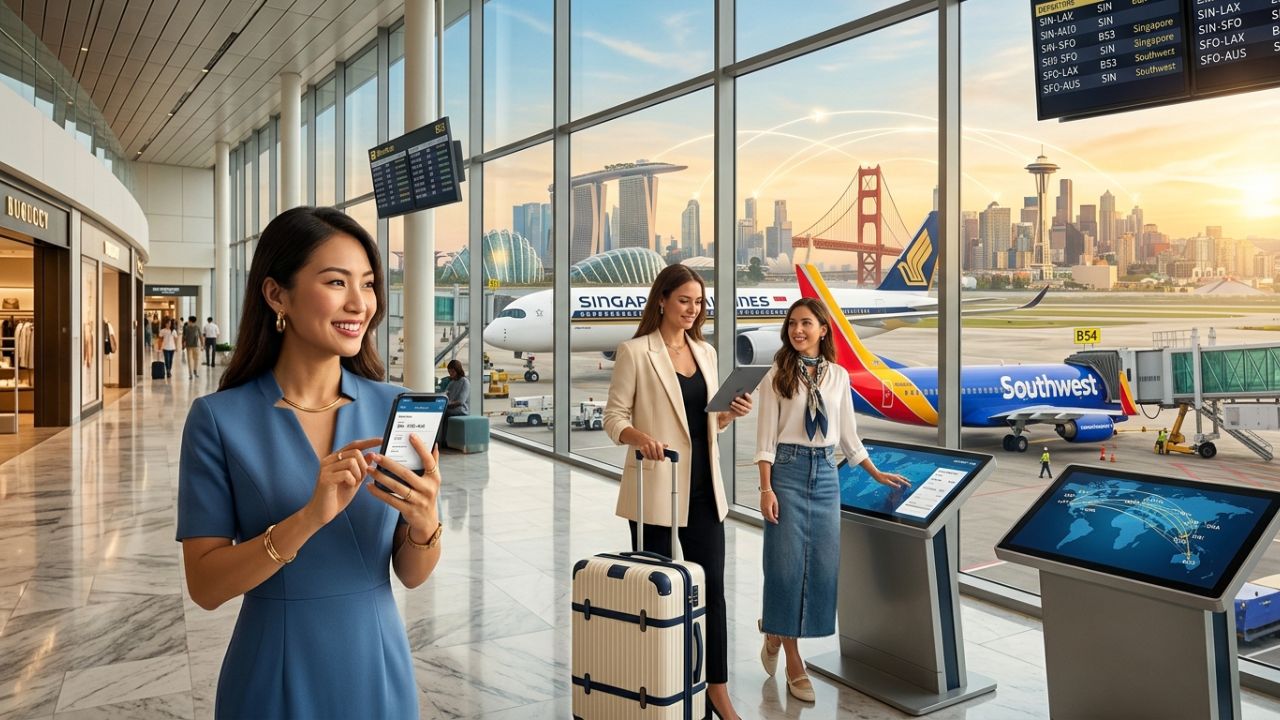
Image representing the intense strategic battle as Singapore Airlines and Southwest desperately inject massive, highly efficient routing capacity into the transpacific corridor, combating severe transit friction to prevent a massive operational meltdown for international passengers.
Breaking Airline News: Singapore Airlines and Southwest Execute Massive Interline Agreement, Shielding Travelers from Transpacific Travel Chaos
As paralyzing terminal bottlenecks, terrifying airspace constraints, and severe operational fragility violently threaten to completely shatter passenger mobility across the Pacific, two massive global aviation operators have executed a radical infrastructural defense. In a desperate bid to physically and psychologically rescue tourists and corporate executives from the terrifying threat of extreme travel chaos triggered by severe airport disruptions, Singapore Airlines and Southwest Airlines have aggressively launched a historic interline agreement. Officially announced on June 8 at the IATA Annual General Meeting in Rio de Janeiro, this strategic commercial pact acts as the ultimate extraction vector. By violently fusing the massive domestic reach of the US low-cost carrier with the impenetrable international network of the Southeast Asian flag carrier, the airlines have deployed a massive defense matrix against the severe flight cancellations currently destroying multi-leg itineraries.
In a harrowing display of modern aviation vulnerability, the sheer logistical nightmare of attempting to navigate fragmented, cross-continent corridors has historically forced passengers into terrifying transit scenarios. For years, securing a trip from a mid-western American city to the heart of Asia meant risking extreme physical exhaustion—navigating violently overloaded legacy mega-hubs, manually rechecking baggage during layovers, and facing absolute financial ruin if a missed connection destroyed a separately booked ticket. However, Singapore Airlines and Southwest are aggressively fighting back against this structural paralysis. This massive network integration establishes a highly efficient, single-ticket defense corridor. Travelers now possess the absolute assurance that by utilizing this newly fortified interline link, they are logistically shielded from the devastating effects of paralyzed transfer systems, ensuring they bypass the agonizing stress of terminal delays entirely.
Expanded Overview: The Massive Scale of the Transpacific Bypass
The terrifying crisis of overwhelming passenger stress currently gripping the global travel network brutally exposes the severe limitations of single-alliance itineraries during a massive operational meltdown. Recognizing that aggressively forcing travelers to self-connect leads directly to severe psychological friction, this agreement fundamentally rewrites the US-Asia transit matrix. The sheer scale of this infrastructural defense is immense. Through single-ticket access, Singapore Airlines passengers are now granted immediate entry to nearly 120 domestic destinations situated throughout the United States. Conversely, Southwest Airlines flyers suddenly gain an impenetrable pathway to more than 130 international destinations across Asia, the Middle East, and Australia.
Section-Wise Breakdown: The Operational Realignment
Shattering the Point-to-Point Gridlock: The Strategic Bypass
To survive the terrifying surge in intercontinental travel demand without triggering immediate terminal meltdowns, Southwest Airlines has aggressively evolved its historically domestic, point-to-point business model. This massive partnership allows the carrier to transform its extensive US route network into a vital, highly optimized feeder system for global trunk routes. Prior to this latest arrangement, Southwest executed similar, highly tactical defensive alliances with prominent global carriers, including ANA, China Airlines, Condor, EVA Air, Icelandair, Philippine Airlines, and Turkish Airlines.
Deploying the Capacity Fortress: West Coast Gateway Operations
The practical execution of this massive interline defense relies heavily on three primary US gateway airports where overlapping operations have been aggressively synchronized. These vital transit points—Los Angeles (LAX), San Francisco (SFO), and Seattle-Tacoma (SEA)—serve as the heavy transfer fortresses. The operational frequencies maintained by Singapore Airlines are structured to absorb massive passenger volumes: LAX receives up to ten flights weekly, SFO operates twice-daily, and SEA is heavily reinforced with five-times-weekly service directly from Singapore Changi Airport.
Operational Armor: Automated Baggage and Single-Ticket Defense
The most critical defense against modern travel chaos is logistical simplicity. The agreement introduces massive ground handling efficiencies to violently suppress transit stress. Entire multi-leg journeys can now be booked in a single transaction. Crucially, baggage transfers are performed automatically between the two carriers. Passengers are completely insulated from the terrifying ordeal of retrieving and re-checking massive luggage stockpiles at the intermediate West Coast gateways, radically decreasing the minimum connection times required to survive the busy international terminals.
Domestic Devastation Bypass: The Mid-Continent Contagion
From these fortified West Coast gateways, passengers can be seamlessly routed to a diverse array of domestic cities that previously required highly vulnerable legacy connections. The connectivity matrix aggressively incorporates Austin, Nashville, Denver, New Orleans, Chicago Midway, and Honolulu. The inclusion of unique domestic hubs like Chicago Midway and Denver allows for highly efficient mid-continent distribution, while Honolulu opens up massive, highly protected leisure travel pathways.
Crucial Passenger Intelligence: Loyalty Protocol Lockouts
Despite the massive operational integration, passengers must violently heed the strict loyalty limitations defining this interline matrix. Because this is not a comprehensive codeshare or alliance membership, frequent flyer point accrual is totally restricted. KrisFlyer miles absolutely cannot be earned on Southwest routes, and Southwest Rapid Rewards points cannot be accumulated on Singapore Airlines. Furthermore, premium loyalty perks—including complimentary lounge access, priority boarding upgrades, and specialized baggage allowances—are explicitly not cross-recognized. Passengers must prioritize the raw logistical survival of the single-ticket transfer over the pursuit of elite status perks.
Transpacific Interline Operational Matrix
To fully comprehend the massive logistical and strategic fallout of this terrifyingly efficient network defense, corporate travel managers and affected tourists must review the exact operational metrics defining the capacity strain. The following matrix provides a granular breakdown of the specific, officially verified statistical data driving this massive disruption mitigation effort.
| Operational Defense Metric | Verified Infrastructure Data |
|---|---|
| Aviation Operators | Singapore Airlines & Southwest Airlines |
| Partnership Designation | Formal Interline Agreement (Announced June 8, IATA AGM) |
| US Domestic Network Access | ~120 destinations via Southwest Airlines |
| Global Network Access | >130 destinations via Singapore Airlines |
| Primary US Gateway Hubs | Los Angeles (LAX), San Francisco (SFO), Seattle-Tacoma (SEA) |
| SIA Gateway Frequencies | LAX (10x weekly), SFO (2x daily), SEA (5x weekly) |
| Highlighted US Connections | Austin, Nashville, Denver, New Orleans, Chicago Midway, Honolulu |
| Baggage Logistics Protocol | Automated transfers (No manual re-check required at gateway) |
| Loyalty Point Accrual | Restricted (No KrisFlyer on Southwest; No Rapid Rewards on SIA) |
| Elite Perk Recognition | Null (No cross-recognized lounge access, boarding, or baggage perks) |
| Other Southwest Partners | ANA, China Airlines, Condor, EVA Air, Icelandair, Philippine Airlines, Turkish Airlines |
Passenger Impact: Surviving the Intercontinental Jump
For the thousands of global executives and tourists attempting to navigate the rapidly collapsing transit corridors between the US interior and Asia, this massive interline deployment represents a highly anticipated lifeline against severe delays. The brutal reality of enduring a terrifyingly sudden cancellation on a self-connected itinerary inflicts intense financial stress—leaving the passenger entirely stranded and forced to purchase a new international ticket. By aggressively booking these integrated tickets, passengers drastically reduce their exposure to these terrifying logistical environments, securing a highly reliable connection that completely bypasses the domino effect of regional travel chaos.
Survival Guide for Intercontinental Travelers
Travelers desperately preparing to navigate the modernized international network must immediately execute the following survival protocols:
- Violently Utilize the Single-Ticket Shield: If you are booking an extraction between the US mid-west and Southeast Asia, you must aggressively book the integrated SIA/Southwest itinerary. Relying on pieced-together flights heavily exposes you to the terrifying threat of sudden, uncompensated missed connections at LAX or SFO.
- Acknowledge the Loyalty Sacrifice: Understand that utilizing this massive bypass requires sacrificing points. Do not arrive at the gate expecting lounge access or priority boarding based on your elite status with either carrier.
- Exploit the Automated Baggage Transfer: Pack aggressively, knowing that your checked luggage will transit the West Coast gateways automatically. This removes the massive physical barrier of hauling bags through US customs and domestic re-check lines, a process that historically guarantees missed connections during peak travel surges.
Industry Analysis: The Economics of Interline Scaling
From a strategic aviation perspective, the travel turmoil currently threatening legacy networks highlights the terrifying vulnerability of airlines operating purely within massive alliances. Industry analysts confirm that the massive decision by Southwest to align with premium legacy carriers like Singapore Airlines is a highly aggressive, tactical response designed to completely dominate the hybrid feeder market. By deploying massive, integrated capacity without the capital expenditure of formal alliance membership, the airlines completely avoid the massive financial bleeding associated with isolated route expansion, effectively shielding their profit margins while monopolizing global passenger traffic.
Conclusion: A Strategic Retreat to Ensure Aviation Survival
As the extremely critical global travel season accelerates, the massive route announcements executed by Singapore Airlines and Southwest represent a massive warning to competitors attempting to force passengers into unreliable, fragmented connecting networks. The aggressive maneuvering proves that capturing market dominance requires terrifyingly swift and highly optimized interline deployments, utilizing automated baggage and single-ticket protections to connect passengers safely while shielding them from the brutal reality of major infrastructure unreliability. By acting aggressively to secure tickets on this newly fortified dual-carrier routing, travelers can successfully survive intense travel surges and completely avoid the paralyzing physical threat of transpacific travel chaos.
Key Takeaways
- Massive Tactical Integration: Singapore Airlines and Southwest Airlines launched a formal interline agreement to seamlessly connect the US interior with Asia.
- Crushing the Connectivity Bottleneck: The agreement utilizes automated baggage transfers and single-ticket booking, bypassing the massive transit stress at LAX, SFO, and SEA.
- Strategic Route Defense: Southwest passengers gain access to over 130 global destinations, while SIA passengers can connect to nearly 120 US cities, including Denver and Midway.
- Strict Loyalty Limitations: Passengers cannot earn KrisFlyer miles on Southwest or Rapid Rewards on SIA, and no elite perks are cross-recognized.
- Traveler Advisory: Intercontinental tourists must aggressively utilize this unified ticketing to bypass the extreme risk and financial peril associated with self-connecting across unallied carriers during peak travel chaos.
Related Travel Guides
Disclaimer
This article is for informational and educational purposes only. It does not constitute legal, financial, or professional advice. While we strive to provide accurate and up-to-date information, travel policies, regulations, and conditions change rapidly. Always verify information with official sources before making travel decisions. Nomad Lawyer makes no representations about the accuracy, reliability, completeness, or suitability of the information provided. Readers should consult qualified professionals for advice specific to their circumstances. The views expressed in this article are those of the author and do not necessarily reflect the views of Nomad Lawyer.
Kunal K Choudhary
Co-Founder & Contributor
A passionate traveller and tech enthusiast. Kunal contributes to the vision and growth of Nomad Lawyer, bringing fresh perspectives and driving the community forward.
Learn more about our team →