
Singapore Airlines Defeats Asian Travel Chaos by Launching Daily Flights to Shanghai and Hangzhou Amid Massive China Demand
Breaking airline news: Singapore launches aggressive daily flights to Shanghai and Hangzhou, heavily fortifying its China network to shield passengers from severe Asian travel chaos.

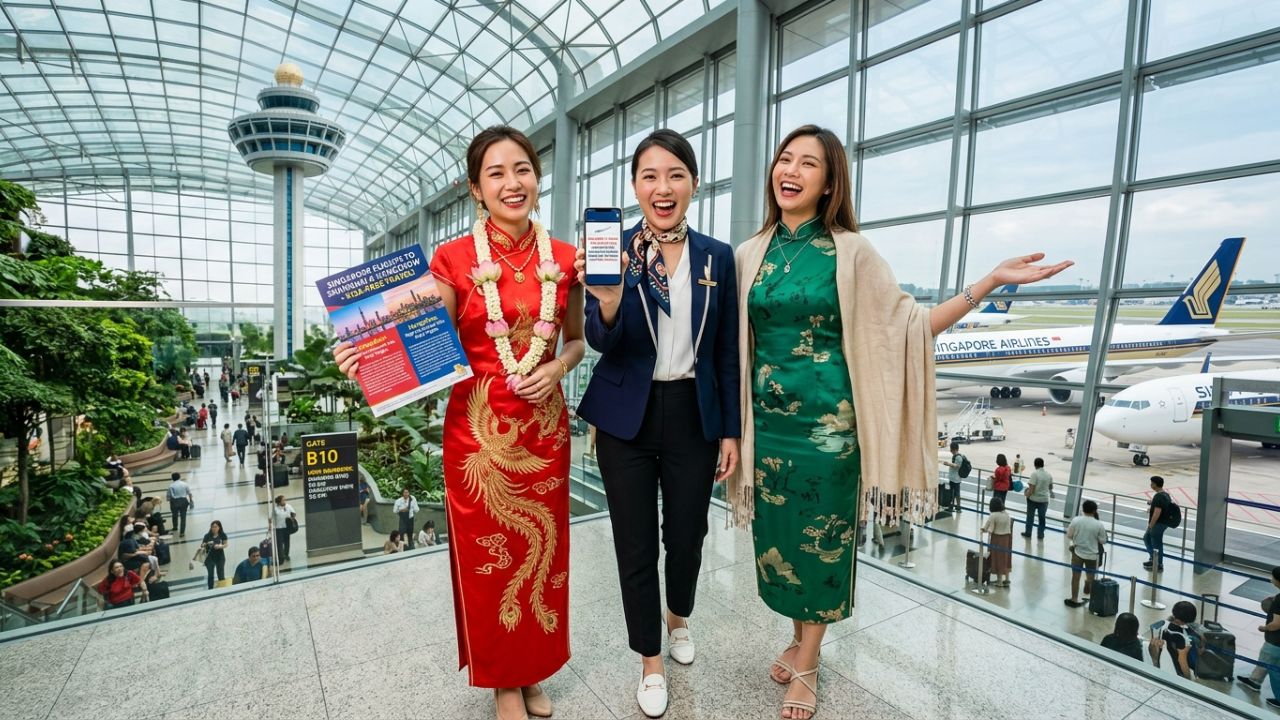
Image representing the massive aviation expansion out of Singapore Changi Airport, where the launch of daily flights to Shanghai and Hangzhou is successfully shielding international travelers from severe airport disruptions and travel chaos across the Asia-Pacific grid. (Image Credit: Aviation Tracking)
Singapore Airlines Defeats Asian Travel Chaos by Launching Daily Flights to Shanghai and Hangzhou Amid Massive China Demand
Fortifying the Asia-Pacific Grid Against Severe Operational Disruptions
The Asia-Pacific commercial aviation network is currently battling severe capacity constraints, frequently subjecting international passengers to brutal travel chaos. As business and leisure demand violently rebounds across the continent, under-prepared airlines are buckling under the pressure, triggering rolling flight cancellations and agonizing airport disruptions at major transit nodes. However, according to the latest breaking airline news, Singapore has successfully engineered a massive operational defense against this regional gridlock. By aggressively capitalizing on highly lucrative visa-free travel arrangements, Singapore has officially launched direct, daily flights connecting Singapore Changi Airport with two of mainland China’s most critical economic hubs: Shanghai and Hangzhou. This incredibly robust capacity injection proves that high-frequency routing is the ultimate shield against the crushing congestion that currently defines the post-pandemic travel landscape.
This massive network expansion is not merely a scheduled route addition; it is a highly strategic geopolitical and economic maneuver. By rapidly scaling its China-bound operations, Singapore has effectively monopolized the premium travel corridor between Southeast Asia and the mainland. For the international traveler, this translates to absolute operational stability. Instead of navigating fractured, low-frequency itineraries that are highly vulnerable to sudden airport disruptions, passengers now have access to a heavily fortified daily pipeline. With passenger volumes across the Singapore–China corridor surging to an astonishing 115 percent of pre-pandemic levels, this expansion guarantees that both high-yield corporate executives and leisure tourists can bypass the grueling travel chaos that plagues weaker, uncoordinated regional networks.
Section-Wise Breakdown: The Architecture of the China Network
The operational deployment connecting Singapore with Shanghai and Hangzhou reveals a meticulously calculated strategy designed to absorb massive volume without breaking the schedule:
The Changi Hub Defense According to recent aviation updates, Singapore Changi Airport serves as the impregnable fortress anchoring this massive expansion. By successfully operating more than 112 weekly flights to China, Singapore has established itself as the absolute premier aviation crossroad for the Asia-Pacific region. This staggering frequency provides immense operational redundancy. When severe weather systems or ATC strikes threaten to cause massive flight cancellations across the continent, Changi’s deep schedule ensures that stranded passengers can be rapidly re-accommodated. The newly instituted visa-free travel arrangements have poured fuel on this demand, eliminating bureaucratic friction and dramatically accelerating short-haul, spontaneous travel without overwhelming the airport's highly efficient infrastructure.
Securing the Shanghai Economic Corridor The direct pipeline to Shanghai represents the crown jewel of this expansion. Operating since June 10, 2026, the daily service connecting Singapore directly with Shanghai Pudong International Airport is a masterclass in targeted capacity. The route is meticulously serviced by the highly efficient Boeing 737 MAX 8 aircraft. Configured with a balanced dual-class cabin structure, the aircraft is specifically deployed to absorb the intense, high-yield corporate traffic flowing between these two colossal global financial powerhouses. By guaranteeing a daily schedule, Singapore ensures that critical business mobility remains completely insulated from the erratic scheduling and localized travel chaos that frequently disrupts secondary Chinese aviation gateways.
Hangzhou and Secondary Market Expansion While Shanghai secures the financial elite, the launch of daily flights to Hangzhou (operating since June 1, 2026) represents a massive strategic pivot toward China’s booming digital and cultural sectors. Recognizing the sheer volume of traffic generated by Hangzhou's e-commerce hubs and the iconic West Lake, Singapore deployed heavy-lift capacity. This route utilizes the formidable wide-body Airbus A350-900. By deploying an A350 on a regional corridor, the airline maximizes seat volume and cargo payload, fiercely suppressing the threat of overbooked flights and airport disruptions. Hangzhou officially becomes Singapore’s ninth direct mainland destination, pushing the total group connectivity to an incredibly dominant 22 Chinese destinations and securing absolute dominance over the Southeast Asian market.
Operational Infrastructure Details: The Singapore-China Expansion Matrix
To provide exact, factual clarity on the immense scale of this network fortification, aviation analysts have mapped the specific aircraft deployments and route metrics. The following factual matrix details the precise breakdown of the Singapore to China expansion:
Factual Singapore-China Expansion Matrix
| Strategic Route Deployment | Operational Details & Capacity |
|---|---|
| Singapore to Shanghai (Pudong) | Daily service launched June 10, 2026 |
| Shanghai Aircraft Type | Boeing 737 MAX 8 (Business and Economy) |
| Singapore to Hangzhou | Daily service launched June 1, 2026 |
| Hangzhou Aircraft Type | Wide-body Airbus A350-900 (Business and Economy) |
| Network Footprint | Hangzhou marks the 9th direct mainland destination |
| Total Group Connectivity | Network now extends to 22 total Chinese destinations |
| Traffic Recovery Metric | Operations exceed pre-pandemic levels at approx. 115% |
| Total Weekly Frequency | Singapore operates more than 112 weekly flights to China |
Passenger Impact: Escaping Terminal Friction Through High-Frequency Routing
For the international traveler, the massive capacity injection by Singapore offers an unparalleled tactical advantage against the fragility of the commercial aviation network. Historically, navigating the Asia-Pacific region during peak periods involved terrifying exposure to systemic travel chaos. Tourists and business executives were routinely subjected to massive terminal queues and sudden flight cancellations as outdated airports buckled under the weight of surging demand. The new Singapore reality is entirely different. By leveraging visa-free access and booking directly onto a high-frequency A350-900 out of Changi, travelers are successfully bypassing congested legacy hubs. This strategic routing completely insulates the passenger from devastating airport disruptions, ensuring that valuable corporate negotiations in Shanghai or cultural tours in Hangzhou proceed with absolute friction-free precision.
Industry Analysis: Visa-Free Mobility vs. Network Congestion
The global aviation sector is fundamentally realizing that bureaucratic ease must be matched by massive physical infrastructure. The Singapore-China corridor is succeeding wildly because it perfectly aligned the removal of entry barriers (visa-free travel) with a massive surge in physical airframes (daily A350s and 737 MAXs). This proves that when governments reduce travel friction, airlines must aggressively fortify their networks to prevent catastrophic travel chaos. By operating over 112 weekly flights, Singapore has essentially built an impenetrable bridge to China, proving that the only effective defense against global flight cancellations is relentless, high-frequency scheduling combined with modern, high-capacity aircraft deployment.
Conclusion: Absolute Dominance Over the Asian Grid
The aggressive launch of daily flights to Shanghai and Hangzhou marks a monumental victory for global travelers seeking to evade the compounding threat of commercial travel chaos. By officially securing its 22-destination China network and surpassing 115% of pre-pandemic volume, Singapore has successfully engineered a highly fortified, disruption-free travel grid. Leveraging the wide-body capacity of the Airbus A350-900 and the seamless efficiency of visa-free access, inbound and outbound passengers are completely insulated from the devastating anxiety of mass flight cancellations and severe terminal congestion. As global demand continues to surge across the Asia-Pacific region, this incredibly robust operational model establishes a powerful new benchmark for seamless, high-volume international mobility.
Key Takeaways
- Massive Network Expansion: Singapore has launched highly aggressive daily flights to both Shanghai and Hangzhou to combat regional capacity limits.
- Shanghai Capacity: Operating since June 10, the daily Shanghai Pudong route utilizes the highly efficient Boeing 737 MAX 8 aircraft.
- Hangzhou Heavy-Lift: Operating since June 1, the Hangzhou route utilizes the wide-body Airbus A350-900 to absorb massive digital and tourism demand.
- Total Market Dominance: The addition of Hangzhou pushes Singapore's total group connectivity to an astonishing 22 Chinese destinations.
- Disruption Defense: By operating over 112 weekly flights to China, Singapore provides absolute redundancy, shielding travelers from severe travel chaos.
✈️ Frequently Asked Questions (Factual Aviation Data)
What new daily routes did Singapore recently launch to combat regional capacity limits? Singapore has officially launched daily flight services connecting Singapore Changi Airport to both Shanghai and Hangzhou in mainland China.
When did the daily services to Shanghai and Hangzhou begin operating? The daily flights to Hangzhou began operating on June 1, 2026, while the daily services to Shanghai Pudong International Airport commenced on June 10, 2026.
What specific aircraft are being deployed on these new routes? The Shanghai route is serviced by a Boeing 737 MAX 8 aircraft, while the Hangzhou route utilizes a heavier, wide-body Airbus A350-900 aircraft.
What is the current scale of Singapore's connectivity to mainland China? Hangzhou is now Singapore’s ninth direct destination in mainland China. When factoring in group subsidiary operations, the total network extends to 22 Chinese destinations.
How many weekly flights does Singapore currently operate to China? In response to the massive surge in demand, Singapore now operates an incredibly robust schedule of more than 112 weekly flights to China.
What is the current passenger recovery rate on the Singapore-China corridor? Passenger traffic has surged past pre-pandemic levels, reaching an impressive recovery rate of approximately 115 percent.
What governmental policy has heavily driven this aviation expansion? The rapid acceleration in passenger demand and subsequent flight expansion is heavily driven by the recent implementation of visa-free travel arrangements between the two nations.
Where was this strategic route and capacity data officially sourced from? The specific flight frequencies, aircraft deployments, and recovery metrics were sourced from official regional aviation reports analyzing the Singapore-China corridor.
🌍 Related Travel Guides & Flight Resources
- Navigate Airport Disruptions Like a Pro Master the art of surviving unexpected travel chaos with our expert strategies.
- Breaking Airline News & Evasion Routes Stay ahead of the delays with our real-time aviation updates and route intelligence.
- Global Flight Cancellation Defense Grid Essential legal rights and compensation tactics when your flight goes down.
⚖️ Disclaimer
The aviation network statistics, flight frequency data, and route deployment metrics provided in this report are for informational purposes only. Aircraft operational deployments (including the use of the Boeing 737 MAX 8 and Airbus A350-900), specific weekly flight frequencies (e.g., 112 weekly flights), and visa-free governmental regulations are highly volatile and subject to immediate change based on shifting global economic conditions, seasonal passenger demand, and bilateral government policy. All data regarding the Singapore to Shanghai and Hangzhou route expansion has been officially sourced from industry aviation reports as of June 2026, and remains completely fluid. NomadLawyer does not guarantee the absolute accuracy or current validity of the information provided and assumes no liability for travel disruptions, sudden flight cancellations, altered itineraries, or any financial consequences resulting from the use of this content. Passengers are strongly advised to independently verify all visa requirements and flight statuses prior to booking.
Disclaimer
This article is for informational and educational purposes only. It does not constitute legal, financial, or professional advice. While we strive to provide accurate and up-to-date information, travel policies, regulations, and conditions change rapidly. Always verify information with official sources before making travel decisions. Nomad Lawyer makes no representations about the accuracy, reliability, completeness, or suitability of the information provided. Readers should consult qualified professionals for advice specific to their circumstances. The views expressed in this article are those of the author and do not necessarily reflect the views of Nomad Lawyer.
Kunal K Choudhary
Co-Founder & Contributor
A passionate traveller and tech enthusiast. Kunal contributes to the vision and growth of Nomad Lawyer, bringing fresh perspectives and driving the community forward.
Learn more about our team →