
Singapore and India Lead Global Travel Shift With AI Bookings and Cross-Border Digital Payments 2026
AI infrastructure investments and the expansion of instant cross-border payment systems like UPI and PayNow are fundamentally restructuring global travel and retail transactions in 2026.

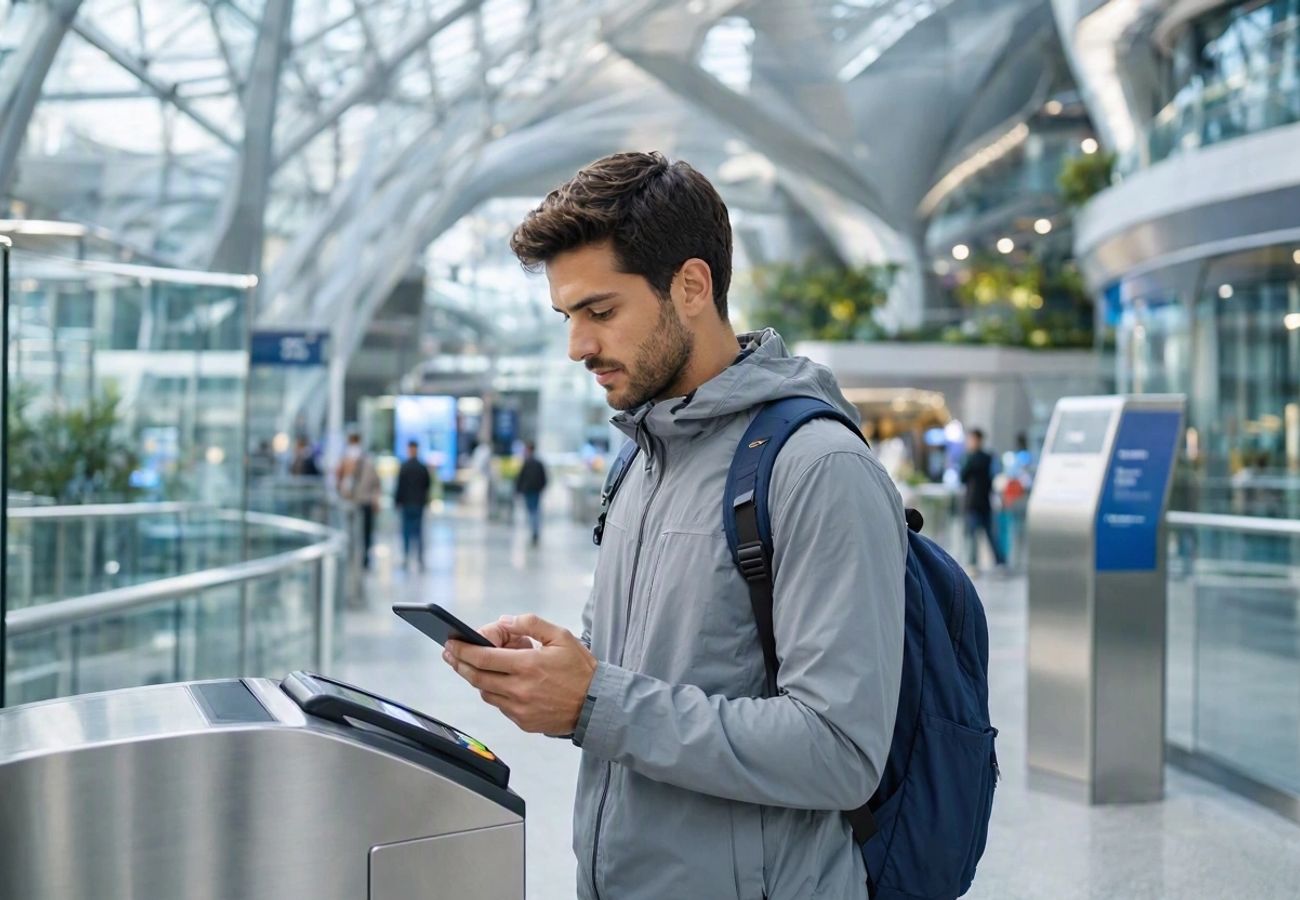
Image generated by AI
[Bangkok, October 17, 2026] — Global economic growth is projected to reach 3.1 percent in 2026, sustained by a massive surge in AI infrastructure investment that is offsetting geopolitical instability and energy price volatility.
The International Monetary Fund (IMF) confirmed these figures during its "Resilience Under Strain, Urgent Choices" report released at the Annual Meetings in Bangkok. While sovereign fiscal reserves remain tight due to Middle East conflicts and energy shocks, the aggressive deployment of capital into high-density data centers and semiconductor fabrication is creating a new macroeconomic floor. This technological shift is not merely industrial; it is actively rewriting the rules of international commerce, specifically through autonomous travel agents and the eradication of traditional banking frictions for global travelers.
AI Infrastructure as a Macroeconomic Buffer
The current economic climate is defined by a sharp divergence between nations integrated into the digital hardware value chain and those reliant on legacy energy exports. The IMF reports that global consumer price inflation is expected to hit 4.7 percent in 2026 before dipping to 4.1 percent in 2027.
Investment in "compute capital" has become a primary tool for national economic stability. India, for example, is leading major economies with a projected 7.0 percent growth rate through 2027, driven by a combination of sovereign technology funds and wide-scale cloud adoption.
2026-2027 Global GDP Projections and Drivers
| Economic Territory | 2025 Baseline GDP (%) | 2026 Projected GDP (%) | 2027 Projected GDP (%) | Primary Economic Driver |
|---|---|---|---|---|
| Global Aggregate | 3.5 | 3.1 | 3.4 | AI Capital offsetting hydrocarbon costs |
| United States | 2.8 | 2.3 | 2.3 | Private compute and consumer spending |
| India | 7.7 | 7.0 | 7.0 | Digital public infrastructure (DPI) |
| Euro Area | 0.9 | 1.1 | 1.2 | Recovery from energy cost pressures |
| China | 5.0 | 4.5 | 4.0 | Industrial policy and real estate pivots |
| United Kingdom | 1.1 | 1.3 | 1.4 | Service sector and tech corridors |
The Death of Correspondent Banking in Travel
For decades, international travelers and diaspora workers relied on legacy correspondent banking—a slow, expensive system of "sequential hops" that delayed settlements by days and imposed heavy fees. This architecture is being replaced by direct, bilateral fast-payment linkages.
The Reserve Bank of India (RBI) and NPCI International Payments Limited (NIPL) have scaled the Unified Payments Interface (UPI) to process over 640 million transactions daily. By integrating UPI directly with Singapore’s PayNow system via standardized API interfaces, the two nations have eliminated intermediate correspondent charges.
Travelers moving between these hubs no longer require traditional currency exchange or high-fee credit cards; they can execute instantaneous account-to-account transfers using simple proxy identifiers (such as phone numbers).
What This Means for Travelers
The convergence of AI-driven booking systems and sovereign payment rails creates a tangible shift in the travel experience:
- Zero-Fee Transactions: By bypassing traditional payment aggregators and using direct sovereign clearing channels, travelers avoid the 3-5% interchange fees typically associated with international credit card use.
- Instant Settlement: Funds move in real-time. There is no "pending" period for hotel deposits or tour bookings when using integrated systems like UPI-PayNow.
- AI-Agent Autonomy: The shift toward "multi-agent systems" means AI is moving beyond simple recommendations to executing complex, multi-city itineraries and handling the actual payments autonomously.
- Reduced Currency Risk: Real-time settlement reduces exposure to the volatile exchange rate fluctuations that often occur between the time of booking and the time of payment.
The Path to Global Interoperability
While the Singapore-India corridor serves as a successful blueprint, the next phase involves scaling these bilateral links into a multilateral framework. The goal is to move away from bespoke, one-to-one agreements toward a universal standard for cross-border liquidity.
Regulatory clarity is already emerging. The RBI has established a consolidated supervisory umbrella for payment aggregators, categorizing them into domestic online, physical point-of-sale, and cross-border entities. This legal framework allows overseas merchants to accept instant UPI settlements directly, fundamentally altering the retail landscape for tourists.
FAQ: AI and Digital Payments in Travel 2026
Do I need a special card to use UPI or PayNow abroad? No. These systems use your existing bank account linked to a mobile app. As long as your home country and destination have a bilateral linkage (like India and Singapore), you pay via your app using a proxy identifier.
How does AI infrastructure affect my flight prices? While AI centers drive GDP, the "multi-agent systems" mentioned are optimizing airline pricing and routing in real-time. This generally leads to more dynamic pricing but also more efficient, autonomous booking options.
Are these digital payments safer than credit cards? They utilize encrypted translation APIs and sovereign clearing channels, reducing the number of intermediaries who see your data. However, security depends on the two-factor authentication of your linked banking app.
Will other countries adopt the UPI-PayNow model? Yes. The IMF and various central banks are viewing these "digital public infrastructures" as essential for macroeconomic stability, suggesting a global rollout of similar instant-payment corridors.
The era of the travel agent is ending; the era of the autonomous payment agent has begun.
Related Travel Guides
Disclaimer
This article is for informational and educational purposes only. It does not constitute legal, financial, or professional advice. While we strive to provide accurate and up-to-date information, travel policies, regulations, and conditions change rapidly. Always verify information with official sources before making travel decisions. Nomad Lawyer makes no representations about the accuracy, reliability, completeness, or suitability of the information provided. Readers should consult qualified professionals for advice specific to their circumstances. The views expressed in this article are those of the author and do not necessarily reflect the views of Nomad Lawyer.
Naina Thakur
Contributor & Travel Specialist
Travel enthusiast and legal writer covering visa regulations, responsible tourism, and cultural journeys across global destinations.
Learn more about our team →