
Singapore Airlines Faces Lawsuit Over Severe Allergy Incident on Bali–Singapore Flight
A California resident has filed a federal lawsuit against Singapore Airlines after allegedly suffering anaphylaxis during a Premium Economy flight from Bali to Singapore in August 2025, following crew assurances that a meal was shellfish-free. The case is being pursued under the Montreal Convention.

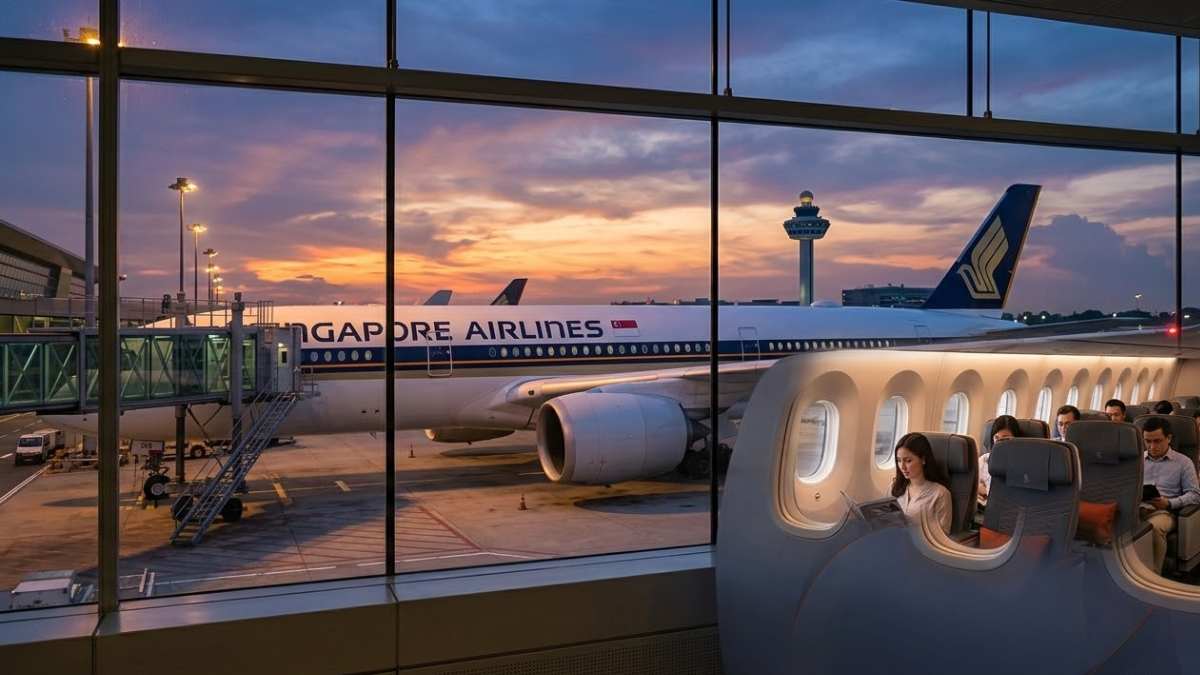
Image generated with AI
Quick Summary
- Tinyan Lawrence, a resident of Northern California, has filed a lawsuit against Singapore Airlines in a California federal district court
- The incident occurred in August 2025 aboard a Singapore Airlines A350 flying from Bali (DPS) to Singapore (SIN) — the first leg of a DPS–SIN–SFO itinerary
- Lawrence allegedly suffered anaphylaxis after consuming a chicken and pasta meal that cabin crew confirmed was free of shellfish; a EpiPen was administered midflight, and a second dose was required at Singapore Changi Airport
- The lawsuit is brought under Article 17 of the Montreal Convention, with standard compensation capped at approximately USD 216,470 — a ceiling that can be lifted if negligence is proven
- Singapore Airlines has declined to comment while legal proceedings are active; a nearly identical prior case involving a different passenger on a Frankfurt–New York flight resulted in an emergency diversion to Paris
California Passenger Sues Singapore Airlines Following Midflight Anaphylaxis on Bali Route
A federal lawsuit filed in California is drawing sharp scrutiny to inflight food allergy protocols at Singapore Airlines after a Northern California traveller allegedly experienced life-threatening anaphylaxis during a Premium Economy flight between Bali in Indonesia and Singapore in August 2025. The legal complaint, pursued under the Montreal Convention's international liability framework, claims that cabin crew confirmed a meal was safe for a passenger with a documented shellfish allergy — and that the assurance proved fatally flawed. The case highlights an expanding category of airline litigation in which passengers are testing the outer limits of carrier responsibility for food safety at 35,000 feet.
The Flight: Bali to Singapore to San Francisco
Tinyan Lawrence was travelling with her husband and infant son, returning to the United States after a family holiday in Bali, Indonesia. The itinerary was a three-segment journey: departing from Ngurah Rai International Airport (DPS) in Bali, transiting through Singapore Changi Airport (SIN), and continuing to San Francisco International Airport (SFO).
The incident that forms the basis of the lawsuit occurred on the first leg — the DPS–SIN segment — aboard a Singapore Airlines A350. Lawrence and her family were seated in the airline's Premium Economy cabin, a product marketed on the promise of elevated comfort and attentive service on international routes.
What Was Ordered — and What Was Allegedly Confirmed Safe
During the inflight meal service, two main course options were presented to Premium Economy passengers: tom yum soup and a chicken and pasta dish.
Lawrence, who reportedly suffers from a severe shellfish allergy, declined the tom yum soup on precautionary grounds given the likelihood of seafood content in that dish. Before accepting the chicken and pasta entrée, she allegedly asked a cabin crew member directly whether the dish contained any shellfish ingredients.
According to the lawsuit filed in California, the crew member confirmed that the chicken and pasta meal did not contain shellfish. Based on that assurance, the meal was served and consumed.
Rapid Onset of Anaphylaxis During the Flight
Within a short time of consuming the meal, Lawrence began to experience symptoms consistent with a severe allergic reaction. The legal complaint describes the onset as rapid, with signs of anaphylaxis appearing after only a few bites.
Symptoms documented in the filing included:
- Throat swelling and airway constriction causing difficulty breathing
- Facial swelling and inflammation around the eyes that allegedly impaired vision
- Dizziness and lightheadedness
- Stomach cramps and flushed skin
- Development of hives
The combination of these symptoms — particularly airway compromise — placed the passenger in immediate medical danger while the aircraft was airborne over Southeast Asia.
EpiPen Administered Midflight
As the reaction escalated, Lawrence's husband retrieved an EpiPen from her carry-on luggage and administered the epinephrine injection, the recognised first-line emergency treatment for anaphylaxis. The injection achieved temporary stabilisation, allowing the flight to continue to Singapore without diversion.
The lawsuit additionally alleges that the crew's response to the unfolding medical emergency was delayed — a claim that, if substantiated in court, could significantly affect the strength of the negligence argument underpinning the Montreal Convention claim.
Second EpiPen Required at Changi Airport — After Being Directed to Wrong Location
After the aircraft landed at Singapore Changi Airport, the family sought professional medical care within the terminal. According to the legal filing, airport personnel allegedly directed them to an incorrect medical facility, introducing further delay before treatment could be administered.
During this period, symptoms from the allergic reaction began to intensify again. A second EpiPen was administered to manage the returning anaphylaxis before medical professionals were eventually located within the airport and formal treatment was provided.
The sequence — rebound symptoms, direction to a wrong facility, a second epinephrine dose — forms a significant part of the complaint's characterisation of post-landing medical handling.
Family Grounded in Singapore Overnight
Medical personnel who evaluated Lawrence at Changi Airport determined she was not fit to immediately resume long-haul travel. The family remained in Singapore overnight while she recovered. Travel to San Francisco on the onward SIN–SFO segment resumed the following day after medical clearance was obtained.
The Legal Framework: Montreal Convention Article 17
The lawsuit is brought under Article 17 of the Montreal Convention, the international treaty that establishes liability rules for airlines operating across national borders. Under this framework, carriers can be held liable for bodily injuries sustained by passengers during international air travel.
Standard compensation under the Convention is capped at 151,880 Special Drawing Rights (SDR) — a unit issued by the International Monetary Fund — which at current exchange rates equates to approximately USD 216,470.
Critically, this cap is not absolute. Under the Montreal Convention's two-tier liability structure, the ceiling can be challenged — and potentially exceeded — if the claimant can demonstrate that the injury resulted from the airline's negligence or wrongful act. The question of whether the alleged crew confirmation that the meal was shellfish-safe constitutes negligence is expected to become the central contested issue as proceedings continue in California.
A Nearly Identical 2024 Case
The Lawrence lawsuit is not the first time Singapore Airlines has faced this category of legal action. In a separate case filed the previous year, passenger Doreen Benary alleged that she had disclosed a shellfish allergy to cabin crew before being served a meal containing shellfish — this time on a flight operating between Frankfurt Airport (FRA) in Germany and New York John F. Kennedy International Airport (JFK).
The Benary incident reportedly escalated to the point where the operating flight was forced to divert to Paris Charles de Gaulle Airport (CDG) in France so that emergency medical treatment could be administered on the ground.
The juxtaposition of two similar incidents — one ending in an in-flight EpiPen administration and an overnight Singapore stay, another ending in an emergency European diversion — raises pointed questions about the consistency of Singapore Airlines' allergy disclosure processes across its international routes.
Singapore Airlines Declines to Comment
Singapore Airlines has confirmed that no public comment will be offered on the case while it remains before the court. The airline has not publicly disputed or confirmed the specific factual claims set out in the complaint.
Legal proceedings in the California district court are ongoing.
Key Facts: Singapore Airlines Allergy Lawsuit
| Detail | Information |
|---|---|
| Plaintiff | Tinyan Lawrence, Northern California |
| Airline | Singapore Airlines |
| Filing jurisdiction | California federal district court |
| Incident date | August 2025 |
| Route at time of incident | Bali (DPS) to Singapore (SIN) |
| Full itinerary | DPS → SIN → SFO |
| Aircraft type | Airbus A350 |
| Cabin | Premium Economy |
| Allergy | Shellfish |
| Meal consumed | Chicken and pasta (allegedly confirmed shellfish-free by crew) |
| Emergency treatment | EpiPen administered midflight; second EpiPen at SIN |
| Post-landing delay | Allegedly directed to wrong medical facility at Changi Airport |
| Overnight stop | Singapore, before resuming to San Francisco |
| Legal basis | Article 17, Montreal Convention |
| Standard liability cap | 151,880 SDR ≈ USD 216,470 |
| Cap removal clause | Negligence or wrongful act by carrier |
| Airline comment | Declined — proceedings ongoing |
| Related prior case | Doreen Benary (FRA–JFK); resulted in emergency diversion to CDG |
What This Means for Travelers
This case has direct implications for anyone travelling internationally with a food allergy — particularly on long-haul flights connecting Bali, Singapore, Southeast Asia, and the United States.
Practical steps to protect yourself:
- Do not rely solely on verbal crew assurances regarding allergen content — request the printed meal ingredient card or ask to see the catering label if uncertain
- Always carry at least two EpiPens in your carry-on bag — the Lawrence incident required two doses, and midflight access to hold luggage is not guaranteed
- Notify the airline during the booking process using the Special Service Request (SSR) system — SFML (Seafood-Free Meal) or NLML (No Lactose Meal) codes alert both the caterer and operating crew in advance
- Consider Medical Travel Insurance that covers emergency stops, overnight stays, and repatriation costs — the Lawrence family's unplanned Singapore overnight demonstrates how quickly logistics can compound a medical event
- Document all allergy disclosures made to crew — note the time, crew name if available, and the specific question and answer — as this becomes relevant if a legal claim ever needs to be filed under the Montreal Convention
The outcome of the California proceedings could meaningfully affect how airlines operating across the Asia-Pacific and trans-Pacific corridors approach meal labelling, crew allergen training, and onboard emergency response — with implications extending well beyond Singapore Airlines.
Frequently Asked Questions
What happened to the passenger on the Singapore Airlines Bali flight? Tinyan Lawrence, a Northern California resident, allegedly suffered severe anaphylaxis — including throat swelling, facial inflammation, hives, and breathing difficulty — after consuming a chicken and pasta meal aboard a Singapore Airlines A350 flying from Bali to Singapore in August 2025. A cabin crew member had allegedly confirmed the meal was free of shellfish prior to serving it. An EpiPen was administered midflight, and a second dose was required at Singapore Changi Airport after symptoms returned.
What law is the Singapore Airlines allergy lawsuit based on? The lawsuit is filed under Article 17 of the Montreal Convention, the international treaty governing airline liability for passenger injuries on international flights. Standard compensation under the Convention is capped at approximately USD 216,470 (151,880 SDR), but this ceiling can be removed if the passenger demonstrates that the airline acted negligently or wrongfully — which is the central argument Lawrence is pursuing in California.
Has this happened on Singapore Airlines before? Yes. A separate case was filed the previous year by Doreen Benary, who alleged that Singapore Airlines served her a shellfish-containing meal on a Frankfurt-to-New York JFK flight after she had disclosed her allergy to cabin crew. That incident reportedly escalated to the point where the flight was diverted to Paris Charles de Gaulle Airport for an emergency landing to obtain medical treatment.
What can travellers with food allergies do to protect themselves on international flights? Travellers with serious food allergies should notify the airline during booking using Special Service Request codes (such as SFML for seafood-free meals), carry at least two EpiPens in carry-on luggage, request printed meal ingredient information rather than relying on verbal assurances, and purchase travel insurance that covers emergency stops and medical costs abroad. Documenting any allergy disclosures made to crew — including time and specifics — is also advisable in case a legal dispute arises under the Montreal Convention.
Disclaimer
This article is for informational and educational purposes only. It does not constitute legal, financial, or professional advice. While we strive to provide accurate and up-to-date information, travel policies, regulations, and conditions change rapidly. Always verify information with official sources before making travel decisions. Nomad Lawyer makes no representations about the accuracy, reliability, completeness, or suitability of the information provided. Readers should consult qualified professionals for advice specific to their circumstances. The views expressed in this article are those of the author and do not necessarily reflect the views of Nomad Lawyer.
Preeti Gunjan
Contributor & Community Manager
A passionate traveller and community builder. Preeti helps grow the Nomad Lawyer community, fostering engagement and bringing the reader experience to life.
Learn more about our team →