
Singapore Airlines Absorbs Billion-Dollar Air India Blow: Global Travel Chaos and Airspace Disruptions in Pakistan and Iran Trigger Massive Flight Cancellations for 2026
Singapore Airlines has reaffirmed its commitment to Air India despite absorbing SG$945 million in losses linked to Pakistan and Iran airspace disruptions.

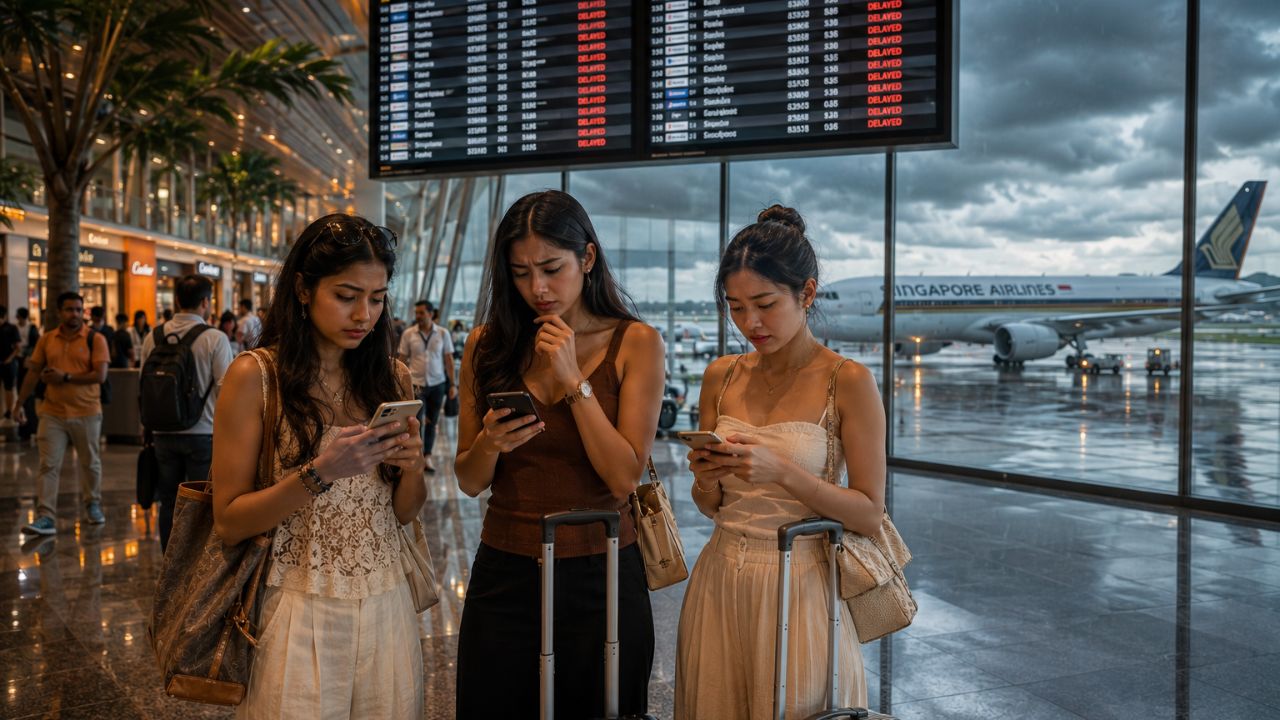
Image generated by AI
In a high-stakes demonstration of long-term strategic resolve, Singapore Airlines (SIA) has officially reaffirmed its multi-billion-dollar commitment to Air India, even as it absorbs a staggering SG$945.2 million share of the Indian carrier’s losses. This major airline news update comes at a time when the "India-Singapore Corridor" is being hammered by a perfect storm of geopolitical travel chaos and systemic airport disruptions. With airspace restrictions in Pakistan and Iran forcing longer, more expensive flight paths and triggering a wave of flight cancellations during the peak summer window, the financial resilience of the world’s most awarded airline is being put to the ultimate test. As SIA navigates a substantial drop in net profit due to its 25.1% stake in the newly merged Air India-Vistara entity, global travelers are being warned to prepare for a volatile season of aviation updates as rerouting and safety protocols reshape the Asian sky.
Breaking: The Billion-Dollar Gamble on the Indian Middle Class
Despite posting record annual revenues of SG$20.5 billion, Singapore Airlines’ bottom line has been significantly eroded by the turbulent performance of its Indian partner. Air India’s total losses for the fiscal year ending March 31, 2026, reportedly approached SG$3.56 billion (approx. US$2.8 billion), a deficit largely attributed to the unmanageable operational costs of bypassing restricted airspace.
Aviation analysts suggest that SIA’s decision to stay the course is a "Masterclass in Patience." By absorbing these losses now, the Singapore-based carrier is securing its foothold in what is projected to be the world’s fastest-growing aviation market. However, the immediate cost is high: the absence of previous accounting gains, combined with the Air India "Anchor," has seen SIA’s net profit settle at SG$1.18 billion, a significant decline from the prior year’s record highs.
Expanded Overview: The Pakistan and Iran 'Airspace Trap'
The financial bleeding at Air India is a direct consequence of the deteriorating geopolitical climate in South Asia and the Middle East. Pakistan’s airspace restrictions have effectively lengthened the "Europe-to-India" corridor, adding hours of flying time and millions in additional fuel expenditure. This was compounded by the escalating tensions involving Iran, which forced the airline to reduce services on critical transit routes between June and August.
For travelers, this has manifested as a season of "Unpredictable Transit." Major airport disruptions in Delhi and Mumbai have become commonplace as carriers struggle to manage crew duty-time limits on these extended routes. Furthermore, the tragic Flight 171 accident earlier in the year has intensified regulatory scrutiny, leading to more frequent flight cancellations as Air India prioritizes safety and fleet modernization over schedule density.
Section-Wise Breakdown: Evaluating the India-Singapore Aviation Alliance
The Vistara Legacy: From Premium Joint Venture to Merger
Singapore Airlines’ entry into India began with Vistara in 2015. The late-2024 merger between Vistara and Air India was supposed to be the "Great Leap Forward." While the integration has brought SIA’s premium service expertise to the national carrier, the legacy debt and operational hurdles of Air India continue to act as a drag on the partnership’s immediate profitability.
The Middle East Transit Crisis: Iran and Beyond
The Middle East remains the most critical transit region for passengers linking India with North America and Europe. The instability in Iran has disrupted the "Silk Road of the Skies," forcing Air India to reroute via more southerly, congested corridors. This has led to a spike in travel chaos for long-haul passengers, who now face longer durations and higher risk of missed connections at major hubs.
The Domestic Boom: India’s Infrastructure Revolution
Counter-intuitively, while the international market is suffering from airspace issues, India’s domestic sector is exploding. Massive airport modernization projects and a rising middle class with high disposable income are creating a "Domestic Buffer." SIA is betting that this domestic growth will eventually cross-subsidize the international losses once the "Airspace Trap" is resolved.
The Singapore Hub: Changi as the Ultimate Safety Net
For Indian travelers, Singapore Changi (SIN) remains the primary gateway to Southeast Asia and Australia. SIA is leveraging its home hub to capture high-yield premium traffic that is looking to avoid the airport disruptions of direct Middle Eastern transit. This "Safe Haven" strategy has helped SIA maintain strong revenue yields even while its equity in Air India bleeds.
Flight Details: Singapore Airlines FY2025 Strategic Financial Snapshot
The following table providing the financial and operational specifics of the SIA-Air India partnership as of May 16, 2026.
Singapore Airlines FY2025 Strategic Financial Snapshot
| Financial Metric | FY2025 Result (SG$) | Strategic Impact |
|---|---|---|
| Total Group Revenue | $20.5 Billion | Record-high passenger demand |
| Operating Profit | $2.38 Billion | Driven by improved international yields |
| Net Profit | $1.18 Billion | Impacted by Air India equity loss |
| Share of Air India Loss | $945.2 Million | Primary driver of profit decline |
| Earnings Per Share | 38.4 Cents | Reflective of restructuring period |
India Aviation Transformation Index (2026 Opportunities)
| Growth Area | Industry Impact for Travelers |
|---|---|
| Airport Modernization | Increased passenger handling / Reduced delays |
| Fleet Expansion | Higher competition and more route options |
| Middle-Class Travel Surge | Consistent demand for premium cabins |
| Vistara-Air India Merger | SIA-quality service on global routes |
Passenger Impact: Navigating the 'Peak Summer' Disruption
For travelers transiting through India or the Middle East, the SIA-Air India partnership offers both premium benefits and operational risks.
- Extended Flight Durations: Airspace diversions mean a flight from London to Delhi can take up to 2 hours longer than usual, increasing the risk of "Transit Fatigue."
- Systemic Flight Cancellations: During the June–August window, rerouting issues may lead to short-notice cancellations. Travelers are urged to monitor aviation updates daily.
- Antidote to Travel Chaos: Passengers booking on SIA-operated metal can enjoy the stability of the Changi hub, avoiding the airport disruptions seen at secondary transit points.
- Premium Consistency: The gradual rollout of Vistara-standard service across the Air India long-haul fleet is providing a significant upgrade to the "First-Class" experience, even amidst operational turmoil.
Industry Analysis: The 'Billion-Dollar Resilience' Strategy
Aviation specialists believe that Singapore Airlines is playing a "Twenty-Year Game" in the Indian subcontinent.
- Equity Preservation: Withdrawing from Air India now would mean forfeiting a 25.1% share in the world’s most promising growth market. SIA’s "Billion-Dollar Blow" is viewed as the entry fee for future dominance.
- Operational Synergy: By merging Vistara into Air India, SIA has successfully protected its premium brand while gaining access to Air India’s massive domestic slot portfolio.
- Geopolitical Hedging: The airspace issues in Pakistan and Iran are viewed as cyclical. SIA’s financial strength allows it to outlast these disruptions while competitors may be forced to exit.
Conclusion: A Strategic Pivot Amidst the Storm
The financial pain currently being absorbed by Singapore Airlines is a definitive aviation update on the cost of global ambition. While the SG$945 million loss is a significant hit, it reflects a calculated bet on the future of Asian mobility. As the industry battles through a season of travel chaos and airport disruptions triggered by airspace instability, SIA’s unwavering commitment to the "New Air India" is a signal to the world: India is too big to fail. For the global traveler, the message is one of cautious optimism—while the path may be longer and the flight cancellations more frequent, the partnership between Singapore and India is building the most powerful aviation ecosystem the region has ever seen.
Key Takeaways
- Financials: SIA reports SG$1.18B net profit, absorbing SG$945.2M in Air India losses.
- Causes: Pakistan and Iran airspace restrictions driving up costs and flight times.
- Merger: Vistara-Air India merger finalized; SIA holds 25.1% stake.
- Market: India set to be the fastest-growing aviation market; massive fleet and airport expansion underway.
- Disruptions: Flight 171 accident and Middle East instability causing flight cancellations.
- Transit: Singapore Changi remains a "Safe Haven" hub for Indian outbound travel.
Related Travel Guides
Disclaimer
This article is for informational and educational purposes only. It does not constitute legal, financial, or professional advice. While we strive to provide accurate and up-to-date information, travel policies, regulations, and conditions change rapidly. Always verify information with official sources before making travel decisions. Nomad Lawyer makes no representations about the accuracy, reliability, completeness, or suitability of the information provided. Readers should consult qualified professionals for advice specific to their circumstances. The views expressed in this article are those of the author and do not necessarily reflect the views of Nomad Lawyer.
Kunal K Choudhary
Co-Founder & Contributor
A passionate traveller and tech enthusiast. Kunal contributes to the vision and growth of Nomad Lawyer, bringing fresh perspectives and driving the community forward.
Learn more about our team →