
Singapore Airlines Reaffirms 25.1% Air India Stake Amid US$1.5 Billion Capital Call: Multi-Hub Strategy Guide 2026

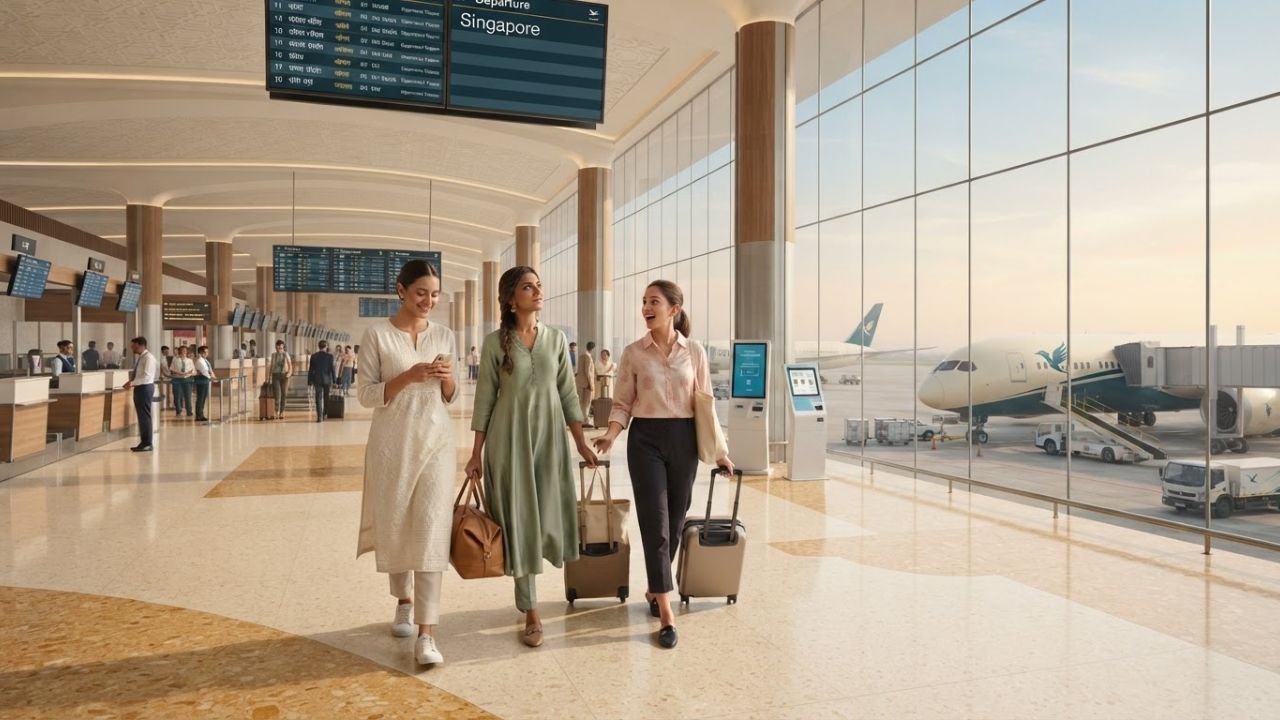
Singapore Airlines has reaffirmed its long-term strategic commitment to Air India despite a reported US$1.5 billion fresh equity requirement and restructuring losses that have weighed on the Singapore carrier's group earnings. Defending its 25.1% ownership stake in Parliament, Singapore’s Ministry of Transport emphasized that tapping India’s massive aviation and tourism expansion through a multi-hub model is essential for long-term growth beyond the city-state's domestic market.
International aviation is witnessing a decisive test of patience and capital discipline in South Asia. As Air India executes one of the most complex corporate turnarounds in commercial aviation history, co-owner Singapore Airlines (SIA) is maintaining its strategic conviction, positioning itself to capture the long-term rewards of India’s booming travel market.
While short-term financial headwinds and substantial capital demands have prompted legislative discussions in Singapore, government leaders and airline executives agree that a carrier based in a nation of 5.9 million residents cannot rely entirely on point-to-point domestic demand. By anchoring its presence directly within the world's most populous nation, SIA is building a multi-hub network designed to channel global traffic across Asia, Australasia, and North America.
The Local Trend Revealed: The US$1.5 Billion Capital Injection
Air India is reportedly seeking an estimated US$1.5 billion in fresh equity from its principal shareholders—Tata Sons and Singapore Airlines—to accelerate its multi-faceted overhaul. This capital injection is earmarked for wide-ranging modernization programs, including massive aircraft fleet orders, passenger cabin retrofits, modern digital reservation platforms, and operational integration following the merger with Vistara.
The financial scope of the transformation has drawn heightened scrutiny in Singapore, where SIA's 25.1% equity holding exposes the group to a proportional share of Air India's operational losses. However, addressing parliamentary inquiries, Singapore's Ministry of Transport made it clear that SIA is funding its Indian commitments entirely from its own balance sheet and operational cash reserves without requesting capital subsidies from state investment holding companies or public taxpayers.
Key financial and strategic dimensions governing the partnership include:
| Strategic Dimension / Metric | Operating Position / Target | Commercial Significance |
|---|---|---|
| SIA Equity Ownership | 25.1% holding in Air India | Direct equity stake alongside majority owner Tata Sons |
| Reported Equity Requirement | Approximately US$1.5 billion | Fresh capital funding fleet, product, and IT overhaul |
| SIA Financing Source | Internal balance sheet resources | No public capital or state subsidies requested |
| Transformation Horizon | Multi-year plan (up to a decade) | Comprehensive cultural, fleet, and operational overhaul |
| Strategic Rationale | Multi-hub international model | Accessing Indian domestic and outbound passenger volume |
| Alliance Synergy | Star Alliance bilateral connectivity | Coordinated codeshares, lounge access, and reciprocal points |
The Multi-Hub Strategy: Expanding Beyond Singapore's Borders
Singapore Airlines’ strategic rationale is rooted in aviation geography. While Singapore Changi Airport (SIN) remains one of the world's premier international transit hubs, the country's limited domestic population creates an inherent ceiling on organic origin-and-destination demand.
To achieve sustained revenue growth, SIA has pursued an aggressive multi-hub strategy. By investing in Air India, the Singaporean flag carrier secures direct commercial exposure to an Indian aviation market expanding at double-digit annual rates. India’s burgeoning middle class, expanding disposable incomes, and soaring demand for both international holidays and domestic regional connectivity provide the long-term passenger volumes that Singapore's home market cannot replicate.
Aviation analysts note that rebuilding a legacy carrier of Air India’s scale is not an overnight task. Aligning flight crews, upgrading engineering standards, inducting hundreds of new Airbus A350 and Boeing 787 jets, and elevating in-flight catering across international routes could take up to a decade. During this extended gestation period, operating profits will remain volatile, requiring disciplined capital management from both Tata Sons and Singapore Airlines.
Cultural & Environmental Value: Modern Fleets and Regional Tourism Dispersal
For the visitor, the real impact of this strategic partnership is the transformation of the Indian travel experience. For decades, international travelers exploring India faced aged aircraft cabins and fragmented domestic connections.
Air India’s fleet renewal—headlined by the induction of factory-fresh Airbus A350-900s and modernized Boeing 777-300ERs—brings state-of-the-art lie-flat business suites, modern premium economy cabins, and high-speed in-flight Wi-Fi to major trunk routes connecting Delhi and Mumbai with Singapore. These next-generation widebody aircraft cut fuel burn and carbon emissions by up to 25% per seat compared to previous-generation airliners, advancing sustainable long-haul aviation.
At the same time, the partnership acts as a catalyst for regional tourism distribution. Seamless interline agreements allow travelers arriving from North America, Europe, or Australia via Singapore Changi to connect smoothly through Air India’s domestic network to secondary cultural centers. International visitors can land in Delhi and transfer on a single ticket to heritage destinations like Varanasi, Udaipur, Kochi, or Amritsar, funneling tourism expenditures directly into regional hospitality providers, artisan weavers, and heritage conservation trusts.
Visitor Insider Tips: Navigating the Air India & SIA Network
Travelers flying between India, Singapore, and onward international destinations should leverage these practical tips:
- Maximize Dual Loyalty Benefits: Because both Singapore Airlines and Air India are members of the Star Alliance, passengers can cross-credit miles. Frequent flyers can credit Air India flights directly to Singapore Airlines KrisFlyer to earn Elite status credits, or redeem KrisFlyer miles for award travel across Air India's domestic Indian network.
- Experience Air India’s Flagship A350 Routes: When booking travel between India and Singapore, look specifically for flight schedules operated by Air India’s newly delivered Airbus A350-900. These aircraft feature world-class interiors, private business class suites with sliding doors, and superior cabin pressurization that significantly reduces jet lag.
- Smooth Changi Airport (SIN) Connections: When transferring at Singapore Changi between SIA and Air India, baggage is checked through to your final destination automatically. If your layover exceeds four hours, take advantage of the free Changi Airport city tour, or relax in the Terminal 2 or Terminal 3 transit lounges steps away from the indoor gardens.
- Savor Curated Regional Gastronomy: In-flight dining across both carriers showcases high culinary standards. On Air India, savor regional Indian masterclasses such as Awadhi chicken biryani, paneer lababdar, and freshly steeped masala chai. On Singapore Airlines, pre-order from the celebrated "Book the Cook" menu to enjoy authentic Hainanese chicken rice or signature satay skewers with peanut sauce.
- Digital Visa and Entry Compliance: Before departure, ensure you submit Singapore’s mandatory electronic SG Arrival Card with Health Declaration online via official ICA channels within 72 hours of flight departure. For foreign travelers entering India, secure the official Indian e-Tourist Visa online prior to check-in to avoid airport boarding delays.
Tourism Outlook: Building a World-Class Asian Aviation Axis
Singapore Airlines' steadfast commitment to Air India highlights a forward-looking vision that prioritizes long-term market leadership over short-term quarterly turbulence. While the reported US$1.5 billion funding requirement and ongoing restructuring losses represent significant commercial tests, the strategic logic remains compelling.
As Air India continues its decade-long transformation under the combined stewardship of Tata Sons and Singapore Airlines, global travelers will reap the rewards: an interconnected, high-service airline network linking the cultural treasures of the Indian subcontinent with the premier aviation gateway of Southeast Asia.
Related Travel Guides
Disclaimer
This article is for informational and educational purposes only. It does not constitute legal, financial, or professional advice. While we strive to provide accurate and up-to-date information, travel policies, regulations, and conditions change rapidly. Always verify information with official sources before making travel decisions. Nomad Lawyer makes no representations about the accuracy, reliability, completeness, or suitability of the information provided. Readers should consult qualified professionals for advice specific to their circumstances. The views expressed in this article are those of the author and do not necessarily reflect the views of Nomad Lawyer.
Raushan Kumar
Founder & Lead Developer
Full-stack developer with 11+ years of experience and a passionate traveller. Raushan built Nomad Lawyer from the ground up with a vision to create the best travel and law experience on the web.
Learn more about our team →