
Breaking Airline News: Singapore Airlines Deploys Massive A380 Fleet to Auckland, Sydney, and Melbourne to Combat Surging Travel Chaos in Winter 2026
Breaking airline news: Amidst a terrifying era of sudden passenger surges and operational strain, Singapore Airlines aggressively deploys its massive A380 superjumbos to defend the Australasian corridor against severe travel chaos.

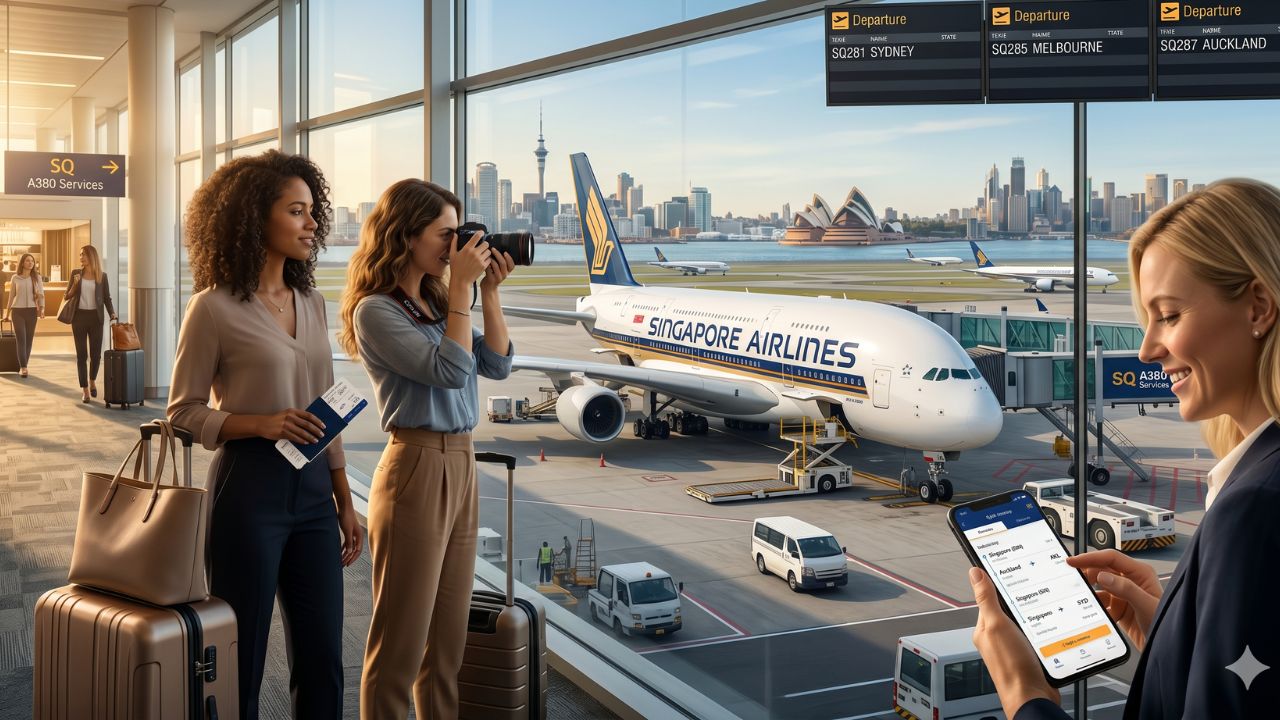
Image representing the intense strategic battle as global aviation leaders aggressively deploy massive A380 superjumbos to combat severe passenger congestion and mitigate systemic travel chaos.
Breaking Airline News: Singapore Airlines Deploys Massive A380 Fleet to Auckland, Sydney, and Melbourne to Combat Surging Travel Chaos in Winter 2026
As paralyzing airport disruptions, heavily constrained seating capacities, and massive waves of passenger congestion violently threaten the highly lucrative Asia-Pacific aviation network, a premier global carrier has launched an aggressive strategic defense. In a desperate bid to prevent catastrophic logistical gridlock during the upcoming IATA Winter 2026 schedule, Singapore Airlines is executing a massive redeployment of its Airbus A380 operations. Beginning October 25, 2025, the airline will inject tremendous wide-body capacity directly into Singapore Changi Airport (SIN), heavily reinforcing essential, high-volume routes to Auckland Airport (AKL), Sydney Airport (SYD), and Melbourne Airport (MEL) to actively combat severe regional travel chaos.
In a harrowing display of modern aviation strategy, the sheer volume of international travelers currently overwhelming the Australasian corridor is forcing network dispatchers to completely rewrite their fleet allocations. Singapore Airlines’ strategic deployment represents an absolutely staggering 29% increase in A380 capacity compared to the previous winter season. Operating a highly limited fleet of just 12 A380 aircraft, network planners are actively stripping massive superjumbos from other global corridors to reinforce the Australian and New Zealand fronts. This aggressive logistical maneuver guarantees that four of the carrier’s nine daily A380 flights are now entirely dedicated to defending the Australasian network against terrifying passenger bottlenecks, ensuring vital long-haul connections do not violently collapse under peak winter demand.
Expanded Overview: The Massive Scale of the Reinforcement
The terrifying crisis of overwhelming passenger demand currently gripping the trans-equatorial transit network brutally exposes the severe limitations of standard aircraft. Recognizing that standard wide-bodies were failing to clear the massive passenger queues, Singapore Airlines is executing a dramatic tactical upgrade for Auckland. By replacing the previously planned Boeing 777-300ER aircraft with the massive A380, the airline is violently expanding the route’s bandwidth. This aggressive aircraft upgrade immediately injects approximately 206 additional seats per day in each direction, representing a massive 78% surge in pure capacity. To ensure the route remains heavily fortified, the airline will maintain three daily services between Singapore and Auckland, aggressively supplementing the A380 with high-density Boeing 777 and Boeing 787-9 aircraft to fully absorb the massive passenger shockwaves.
Section-Wise Breakdown: The Operational Realignment
The Australasian Defense (Auckland, Sydney, Melbourne)
The massive operational shift aggressively centers around the defense of key southern gateways. With Melbourne physically rejoining the A380 network alongside Sydney and Auckland, Singapore Airlines has actively created an impenetrable wide-body shield across the region. Because these hubs operate as absolute primary turnaround points for long-haul premium traffic, injecting the massive A380 directly targets the severe seating shortages that routinely trigger travel chaos and severe rebooking delays for desperate intercontinental passengers.
The Middle Eastern and European Contraction
To execute this massive Australasian defense, Singapore Airlines was forced to execute severe strategic sacrifices across other major global corridors. To physically accommodate the return of the A380 to Auckland, the carrier aggressively ripped the superjumbo entirely out of its previously scheduled Dubai operations. Furthermore, the massive Frankfurt Airport (FRA) transit hub will suffer significantly reduced A380 utilization, with smaller aircraft actively substituting the superjumbo. Despite these targeted superjumbo reductions, the airline is aggressively fighting to maintain European connectivity, operating an expanded schedule that averages 18 daily departures to European destinations using alternative aircraft types.
Flight Details & Aviation Defense Matrix
To fully comprehend the massive logistical and strategic fallout of this hub defense, corporate travel managers must review the exact operational network currently being prioritized. The following matrix provides a granular breakdown of the specific, highly congested destinations that will receive the massive A380 superjumbo during the Winter 2026 schedule to prevent structural travel chaos.
Winter 2026 A380 Network Overview: Prioritized Defense Destinations
Note: The highly focused A380 network spans 9 routes serving 10 massive airports across Asia, Europe, Australia, and New Zealand.
| Airport Code | Official Transit Hub Location |
|---|---|
| SIN | Singapore Changi Airport |
| LHR | London Heathrow Airport |
| PVG | Shanghai Pudong International Airport |
| DEL | Delhi Airport |
| BOM | Mumbai Airport |
| SYD | Sydney Airport |
| MEL | Melbourne Airport |
| AKL | Auckland Airport |
Passenger Impact: Surviving the Terminal Nightmare
For the thousands of global passengers who frequently rely on the heavily congested Asia-Pacific corridor, this massive capacity injection is a vital lifeline against severe operational emergencies. The brutal reality of enduring a sudden seating shortage often inflicts intense psychological stress and entirely destroys meticulously planned luxury itineraries. By violently expanding the supply of premium suites, business class, and premium economy seats, Singapore Airlines is actively preventing the terrifying friction that results in missed international connections and entirely ruined corporate travel plans.
Survival Guide for Long-Haul Travelers
Travelers desperately navigating this high-demand era must immediately execute the following survival protocols:
- Target the A380: When booking travel from Singapore to Australia or New Zealand, aggressively verify the aircraft type. Securing a seat on the newly deployed A380 ensures maximum protection against standard overbooking chaos.
- Expect Routing Shifts: Passengers previously relying on the A380 for Frankfurt or Dubai transits must immediately check their itineraries, as smaller substitution aircraft may heavily impact available premium cabin inventory.
- Leverage the Hub: Utilize the heavily reinforced Singapore Changi Airport (SIN) as a secure defensive transit point to completely bypass congested, lower-tier regional airports.
Industry Analysis: The Fragility of the Superjumbo Fleet
From a strategic aviation perspective, the travel turmoil currently forcing these routing shifts highlights the terrifying vulnerability of relying on a limited superjumbo fleet. Because Singapore Airlines currently operates a tightly restricted fleet of just 12 A380s, any sudden surge in global demand forces a violent zero-sum operational game. When high-revenue Australasian markets threaten to buckle under peak traffic, the airline must aggressively penalize massive hubs like Dubai and Frankfurt to secure the necessary hardware. This incident proves that even highly optimized, premium-heavy global carriers must execute extreme tactical deployments to prevent major regional corridors from actively collapsing under modern travel pressures.
Conclusion: A Strategic Retreat to Ensure Aviation Survival
As the winter season rapidly approaches, the sudden, massive reallocation of the Singapore Airlines fleet represents a massive warning to intercontinental travelers. The aggressive shifting of the A380 proves that global flight schedules remain terrifyingly fragile and highly dependent on localized passenger demand. Corporate travel buyers, luxury tourists, and everyday passengers attempting to navigate this highly unstable era of aircraft shortages must maintain extreme flexibility. By acting aggressively to secure inventory on the heavily fortified Auckland, Sydney, and Melbourne routes, travelers can successfully survive the intense 2026 winter surge and completely avoid the paralyzing threat of regional travel chaos.
Key Takeaways
- Massive Capacity Surge: Singapore Airlines is deploying its Airbus A380 to Auckland, Sydney, and Melbourne, triggering a massive 29% increase in winter A380 capacity.
- Auckland Fortification: The A380 replaces the Boeing 777-300ER on the Auckland route from October 25, 2025, adding 206 seats daily (a 78% capacity explosion).
- Strategic Sacrifices: To physically secure the A380s for Australasia, the airline completely removed the superjumbo from Dubai and reduced its utilization in Frankfurt.
- Limited Fleet Tactics: 4 of the carrier’s 9 daily A380 flights are now fiercely concentrated on the Australia and New Zealand network.
- Traveler Advisory: Passengers booking premium travel to Europe or the Middle East must aggressively monitor their aircraft assignments due to the sudden global substitution protocols.
Related Travel Guides
Disclaimer
This article is for informational and educational purposes only. It does not constitute legal, financial, or professional advice. While we strive to provide accurate and up-to-date information, travel policies, regulations, and conditions change rapidly. Always verify information with official sources before making travel decisions. Nomad Lawyer makes no representations about the accuracy, reliability, completeness, or suitability of the information provided. Readers should consult qualified professionals for advice specific to their circumstances. The views expressed in this article are those of the author and do not necessarily reflect the views of Nomad Lawyer.
Kunal K Choudhary
Co-Founder & Contributor
A passionate traveller and tech enthusiast. Kunal contributes to the vision and growth of Nomad Lawyer, bringing fresh perspectives and driving the community forward.
Learn more about our team →