
Singapore Airlines' 25% Female Pilot Surge Reshapes Global Aviation Cockpit Culture in 2026
Singapore Airlines reports a landmark 25% increase in female pilots since 2020, signaling a seismic shift in aviation workforce diversity and reshaping passenger trust in long-haul travel.

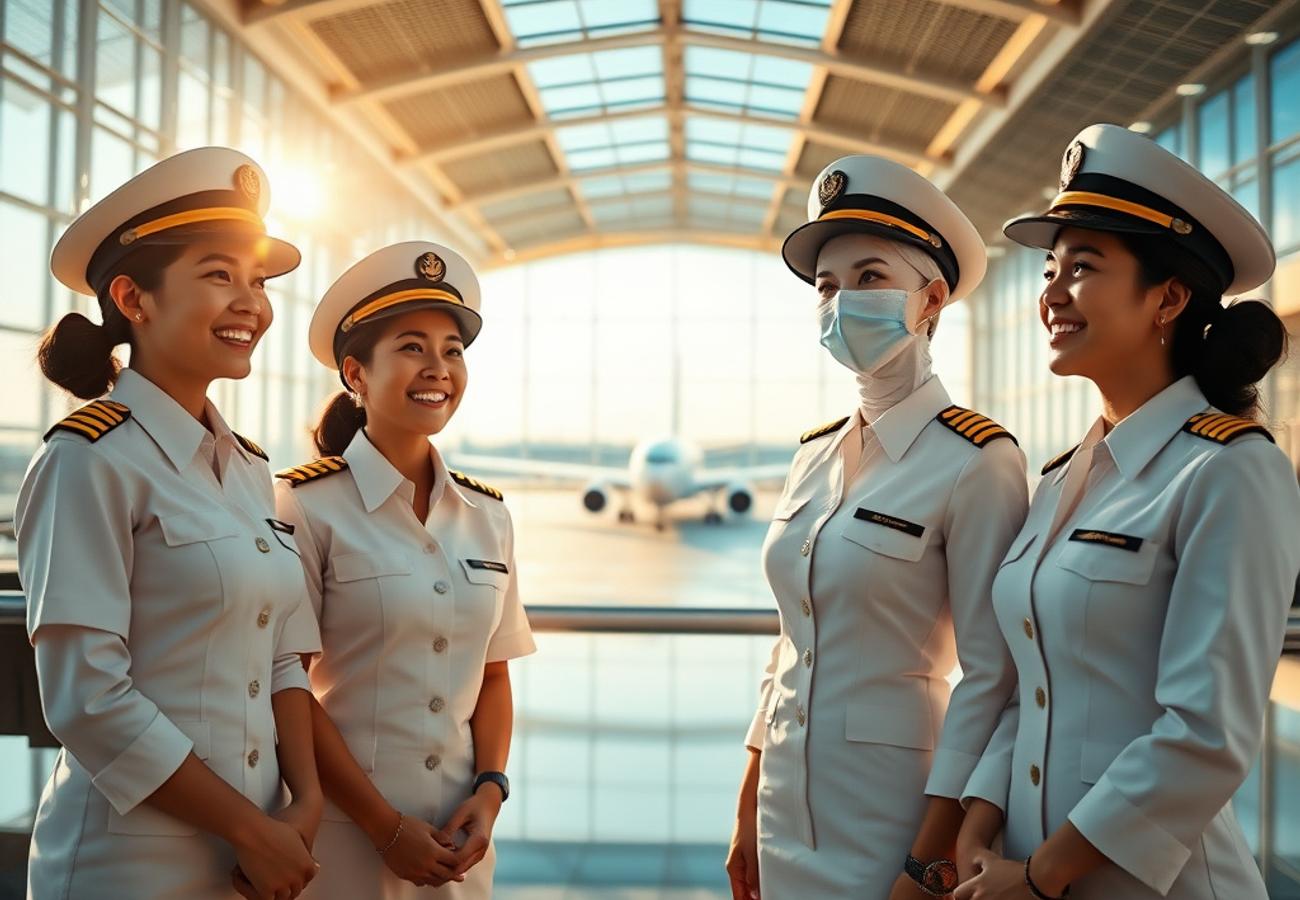
Image generated by AI
The Cockpit Revolution No One Saw Coming
Singapore Airlines just dropped a bombshell in its latest sustainability report: female pilot numbers have surged by 25% since 2020. On the surface, it reads like a standard diversity metric. Dig deeper, and you're looking at something far more significant—a seismic restructuring of global aviation culture that's reshaping how passengers perceive safety, trust, and the future of long-haul travel.
This isn't just about hiring percentages. This is about a fundamental shift in how the world's most competitive airline markets operate, who leads them, and what passengers expect when they board a Singapore Airlines flight bound for London, New York, or Sydney.
What Actually Changed in the Cockpit
The numbers are clean and compelling: a 25% increase in female pilots since 2020, officially documented in Singapore Airlines' sustainability report. But here's what makes this remarkable: Singapore Airlines didn't just hire more women. They restructured recruitment pathways, invested in training infrastructure, and—crucially—made diversity a core operational metric alongside safety and fuel efficiency.
Reddit: "This is the kind of airline news that actually matters. Not delays or new routes—actual systemic change." — r/travel
The shift signals that Singapore Airlines is no longer competing solely on price or routes. They're competing on workforce credibility, safety culture, and what industry insiders call "experience-centric aviation branding." For a carrier operating across 130+ destinations, that's a strategic masterstroke.
What's particularly striking is the timing. 2026 is the year when global airlines are finally being held accountable—not just by regulators, but by passengers—for who flies their aircraft and how those crews are trained. Singapore Airlines is front and center on that global stage.
Why This Matters for Your Next Flight
Passenger trust hinges on invisible factors. You can't see a pilot's training hours before takeoff. You can't audit an airline's safety culture at the gate. But you can track workforce diversity as a proxy for institutional commitment to excellence.
Here's what savvy travelers are now observing:
Airline reputation and trust: When major carriers publicly commit to—and achieve—concrete diversity targets, it signals internal discipline. An airline that manages crew diversity also tends to manage maintenance schedules, training protocols, and safety audits with equal rigor.
Long-haul reliability: For premium and business travelers on transcontinental routes, this matters deeply. Singapore Airlines operates some of the world's longest flights (up to 19+ hours). A diversified, well-trained cockpit crew directly correlates with consistency on ultra-long-haul operations.
Global workforce equity: The aviation industry has historically been one of the most male-dominated sectors globally. When Singapore, a regional aviation powerhouse, demonstrates that female pilots can be systematically integrated into senior operational roles, it sends a message to carriers across the Asia-Pacific, Europe, and North America.
Reddit: "The best airline reviews I read don't mention delays—they mention crew professionalism. This explains why." — r/AirTravel
The Global Context: Why Singapore's Leading
Aviation is notoriously resistant to change. The cockpit has been male-dominated for nearly a century. Yet over the past decade, several forces have converged:
Regulatory mandate: International aviation bodies, including ICAO (International Civil Aviation Organization), have increasingly tied funding and certifications to workforce diversity metrics. Singapore's regulatory framework has been among Asia's strictest and most progressive.
Training infrastructure expansion: Pilot training is expensive and time-intensive. Singapore has invested heavily in world-class training academies, making it possible to dramatically expand the pipeline of qualified candidates—regardless of gender.
Competitive pressure: Singapore Airlines operates in a hyper-competitive market. To differentiate from Emirates, Qatar Airways, Cathay Pacific, and others, they need credible operational advantages. Workforce diversity backed by concrete training standards is exactly that advantage.
Sustainability reporting: Investors increasingly scrutinize airlines not just on carbon emissions but on social metrics. The Singapore Airlines sustainability report reflects this shift—diversity is now a material business metric, not a PR afterthought.
What Changi Airport and Singapore's Aviation Hub Gain
This workforce transformation isn't isolated to airline operations. It ripples across Singapore's entire aviation ecosystem, particularly through Changi Airport (SIN), one of the world's busiest and most respected international hubs.
When a major carrier based in Singapore demonstrates world-leading diversity practices, it enhances the destination's reputation as a global aviation center. Business travelers booking connections through Changi, leisure tourists planning Asia-Pacific itineraries, and cargo operators all perceive Singapore as operationally excellence-focused and forward-thinking.
The spillover effect is real: tourism authorities, hospitality operators, and ground services providers all benefit from an enhanced "safety culture" perception tied to the airline's workforce practices.
The Passenger Trust Equation
Here's the hard truth about aviation: passengers don't consciously evaluate cockpit diversity. But they absolutely evaluate whether an airline feels professionally run, whether it inspires confidence, and whether it consistently delivers on promises.
A 25% increase in female pilots at Singapore Airlines is, at its core, evidence of systematic operational rigor. It proves the airline can:
- Design and execute multi-year workforce transformation initiatives
- Maintain training standards while expanding recruitment pools
- Integrate diversity into core operational metrics (not treat it as a separate HR issue)
- Communicate transparently about progress via sustainability reporting
All of these capabilities directly translate to better long-haul experiences, more reliable service delivery, and stronger passenger loyalty—particularly among premium and business travelers who pay top dollar for consistency.
What Happens Next: The Ripple Effect
Singapore Airlines' move is a competitive forcing function. Other major carriers will face pressure to:
- Publicly report female pilot representation metrics
- Expand pilot training programs in Asia-Pacific and globally
- Integrate diversity targets into sustainability disclosures (as investors increasingly demand)
- Position themselves against one another on workforce composition—not just route networks
This is already underway. International aviation organizations are increasingly tracking and publishing gender representation data across the industry, creating transparency that didn't exist five years ago.
For international travelers, the practical implication is straightforward: research your airline's safety record, training standards, and diversity metrics before booking long-haul flights. Airlines that lead on workforce transformation tend to lead on operational excellence across the board.
The Bottom Line
Singapore Airlines' 25% surge in female pilots is not primarily a diversity story. It's a signal that one of Asia's flagship carriers has fundamentally restructured how it recruits, trains, and deploys talent. That restructuring makes it a more reliable, more professionally rigorous airline.
For passengers concerned with safety culture, service consistency, and operational excellence on long-haul routes, that matters profoundly.
The cockpit is changing. The airlines that embrace it systematically will dominate the next decade of global aviation.
Related Travel Guides
Disclaimer
This article is for informational and educational purposes only. It does not constitute legal, financial, or professional advice. While we strive to provide accurate and up-to-date information, travel policies, regulations, and conditions change rapidly. Always verify information with official sources before making travel decisions. Nomad Lawyer makes no representations about the accuracy, reliability, completeness, or suitability of the information provided. Readers should consult qualified professionals for advice specific to their circumstances. The views expressed in this article are those of the author and do not necessarily reflect the views of Nomad Lawyer.
Raushan Kumar
Founder & Lead Developer
Full-stack developer with 11+ years of experience and a passionate traveller. Raushan built Nomad Lawyer from the ground up with a vision to create the best travel and law experience on the web.
Learn more about our team →