
Shenzhen Bao'an Airport Chaos: 108 Flights Delayed, 3 Canceled as Major Chinese Carriers Struggle on June 5, 2026
Shenzhen Bao'an International Airport experienced major disruptions on June 5, 2026, with 108 delayed flights and 3 cancellations affecting China Southern, Shenzhen Airlines, China Eastern, Air China, and other major carriers across Asia.

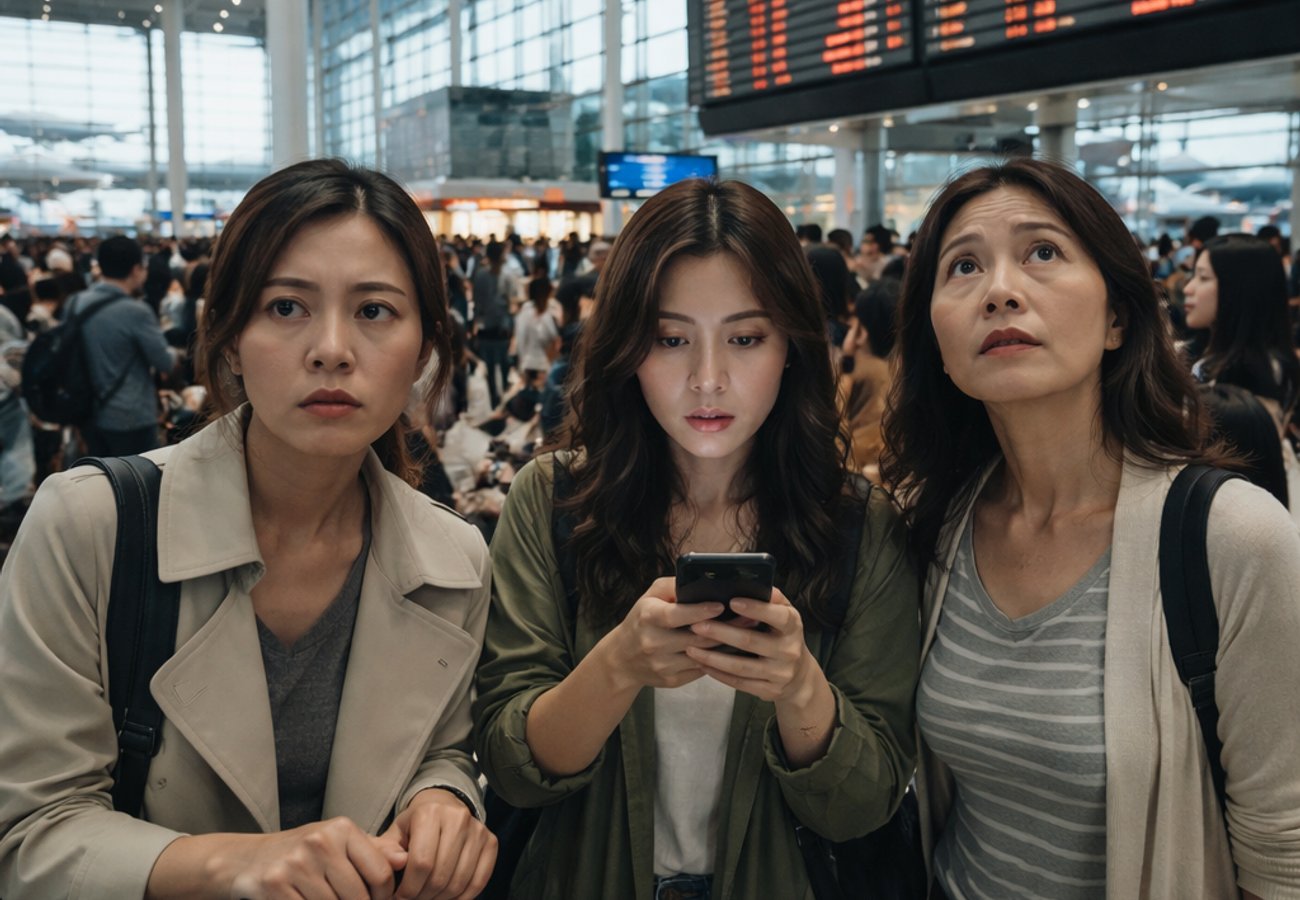
Image generated by AI
When an Airport's Busiest Day Becomes a Traveler's Nightmare
June 5, 2026 will be remembered as one of those days when Shenzhen Bao'an International Airport—one of China's most critical aviation hubs—buckled under operational pressure. The numbers tell a stark story: 108 delayed flights and 3 cancellations rippled across domestic and regional networks, affecting hundreds of thousands of passengers traveling to destinations across China, South Korea, Thailand, and Taiwan.
What makes this disruption particularly notable isn't the cancellation count—three seems manageable by modern aviation standards. Rather, it's the sheer volume of delays compressing the system, creating a domino effect that stretched far beyond the terminal gates.
The Delay-Over-Cancellation Strategy: What Airlines Actually Chose
Here's what caught my attention reviewing the operational data: airlines almost universally chose to delay flights rather than cancel them outright. Shenzhen Airlines reported just 1 cancellation despite 113 delays. China Southern Airlines canceled zero flights while dealing with 100 delays. This pattern repeated across the network.
Reddit: "My flight was 4 hours late, but at least I got there eventually. Could've been worse." — r/travel
This isn't random chance. When airport operations teams believe disruptions are temporary—whether from weather clearing, congestion easing, or traffic patterns normalizing—they instruct airlines to hold aircraft and adjust departure slots rather than abandon schedules entirely. It protects passenger confidence, avoids expensive rebooking cascades, and preserves aircraft positioning flexibility.
But the cost? Over 100 delayed aircraft creating a ripple effect through crew rotations, passenger connections, and downstream flights across multiple cities.
The Airline-Specific Breakdown: Who Suffered Most
The disruption wasn't evenly distributed. Two carriers bore the overwhelming burden:
Shenzhen Airlines: 113 delayed flights—the highest figure recorded. As the airport's dominant operator and primary base carrier, any slowdown in gate availability, runway sequencing, or air traffic flow hits Shenzhen Airlines hardest. The airline's extensive domestic network means these delays compound across dozens of city pairs.
China Southern Airlines: 100 delayed flights. As one of China's "Big Three" carriers, China Southern's schedule integrity is critical infrastructure for the nation's aviation network. A hundred delayed flights cascading from Shenzhen affects connectivity in Guangzhou, Beijing, Shanghai, and beyond.
The remaining disruption spread across major carriers: China Eastern Airlines (38 delays), Hainan Airlines (26 delays), Air China (24 delays), and XiaamAir (17 delays).
What this reveals is a systemic operational crisis—not isolated to one carrier or one factor, but affecting the entire airport's throughput simultaneously.
Why Weather Likely Triggered the Cascade
Weather remains the primary culprit behind disruptions at major Chinese airports. Shenzhen's location in southern China makes it particularly vulnerable to rapidly developing thunderstorm systems during warmer months. On June 5, several meteorological factors could have constrained operations:
- Thunderstorms reducing runway capacity
- Heavy rainfall affecting visibility and ground operations
- Strong crosswinds exceeding aircraft performance thresholds
- Convective weather systems triggering airspace restrictions
- Multiple lightning strikes forcing runway closures
Each weather event forces air traffic controllers to reduce departure rates, implement holding patterns, and sequence aircraft more conservatively—all of which accumulate delays without generating outright cancellations.
The Congestion Multiplier Effect
Shenzhen Bao'an International Airport is routinely ranked among China's top three busiest airports by passenger volume and flight movements. That's the ultimate double-edged sword.
When you're operating at near-capacity during normal conditions, any external shock—weather, equipment failure, or air traffic management restrictions—creates immediate bottlenecks:
- Runway congestion forces holding patterns
- Gate availability shrinks dramatically
- Aircraft sequencing becomes critically sensitive
- Crew duty times compress
- Passenger connections become vulnerable
A single weather event that might cause a 30-minute delay at a mid-tier airport can cascade into 2-3 hour delays at a capacity-constrained mega-hub. That's exactly what appears to have happened on June 5.
The Hidden Costs of Delays for Passengers
For travelers, the numbers obscure real human disruption. Passengers facing delays encounter cascading problems:
Connection Failures: Missed flights in downstream hubs. A delayed Shenzhen departure means missed connections in Guangzhou, Beijing, or Shanghai—potentially stranding passengers overnight.
Financial Strain: Hotels, meals, ground transportation, and last-minute rebooking fees multiply quickly. While EU regulations mandate automatic compensation for delays over 3 hours, China's domestic carriers have no equivalent legal requirement.
Documentation Chaos: Passengers traveling on multi-segment itineraries with different carriers face coordination nightmares. Baggage may not transfer smoothly. Visa-free stay windows may be jeopardized for international travelers.
Business Impact: Conference attendees miss keynotes. Business meetings get rescheduled. Job interviews get postponed. The human cost extends far beyond seat reassignment.
Reddit: "Lost my job interview because my flight was delayed 4 hours. Airlines should be liable for more than just ticket refunds." — r/travel
What Travelers Should Do When Disruptions Strike
If you're caught in operational disruption like this, immediate action matters:
Contact Your Airline First: Don't wait for airport announcements. Download the airline app, call customer service, or visit the ticket counter. Real-time information flows fastest through official airline channels—airport displays lag by 15-30 minutes.
Document Everything: Boarding passes, booking confirmations, delay notifications from the airline, baggage receipts—keep all records. If you're entitled to compensation (rare on domestic China flights, but possible on international routes), documentation proves your case.
Explore Rebooking Options Early: Airlines manage rebooking on a first-come, first-served basis. The earlier you initiate the conversation, the more available options exist. Later passengers face severely limited alternatives.
Check Baggage Status: Ensure your bags remain with your reboked flight or are held at baggage claim. Baggage recovery is exponentially harder when your flight routing changes unexpectedly.
Preserve Communication Records: Take screenshots of app notifications, SMS confirmations, and email correspondence. Airlines sometimes dispute delay compensation claims—written proof is your defense.
Know Your Rights: While Chinese domestic carriers aren't legally required to compensate delays, international carriers operating from Shenzhen must comply with IATA regulations and bilateral air service agreements that may provide compensation pathways. International travelers have stronger legal protections than domestic passengers.
The Broader Picture: Shenzhen's Infrastructure Limits
Today's disruption exposes something uncomfortable: Shenzhen Bao'an International Airport is approaching capacity limits. The airport currently handles approximately 45 million passengers annually. Construction of a second runway was completed in 2018, but that expansion merely postponed the fundamental constraint—the airport sits on a peninsula with limited expansion room for terminals, taxiways, and ground infrastructure.
When weather events or air traffic management restrictions hit a capacity-constrained airport, the system responds not with minor delays but with systemic congestion. Every flight gets pushed back. Every gate becomes precious. Every crew minute becomes critical.
This is aviation mathematics: you can't squeeze 50 million passengers through 45-million-passenger infrastructure without accepting increasingly frequent disruptions.
What Happens Next: Recovery Timeline
Airports rarely recover from major disruptions on the same calendar day. Aircraft rotations remain disrupted well into the next day. Crew scheduling incompatibilities cascade. Passenger rerouting backlogs take 24-48 hours to clear.
Expected recovery timeline for June 5 disruptions:
June 5 Evening: Primary backlog begins clearing as weather improves or traffic restrictions lift. First waves of delayed aircraft resume normal schedules.
June 6 Morning: Secondary delays from previous-day aircraft rotations impact early morning flights. Operations gradually normalize by midday.
June 6 Afternoon through Evening: Most disruptions resolved. Network schedules return to normal planning parameters.
Passengers reboked onto June 6 flights will likely experience minor delays themselves—the compounding effect of an already-stressed system.
The Lesson for Travelers: Flexibility is Your Greatest Asset
The most resilient travelers facing disruptions like this aren't the ones who panic or demand immediate solutions. They're the ones who:
- Build buffer time into connections (minimum 3 hours for domestic-to-international transfers)
- Choose flights with fewer downstream dependencies
- Keep flexible booking terms whenever possible
- Maintain direct airline contact throughout their journey
- Respond to delays with curiosity rather than anger
Airlines can move mountains, but they can't eliminate weather or repeal aviation physics. The best defense is anticipating that disruptions happen and building your itinerary accordingly.
Shenzhen's skies eventually cleared, but the digital footprints of disruption lasted days—a reminder that modern air travel operates on the thinnest margins.
Related Travel Guides
Travel India Latest: Qatar Joins Gulf Nations Disrupting Air India Schedules March 2026
Disclaimer
This article is for informational and educational purposes only. It does not constitute legal, financial, or professional advice. While we strive to provide accurate and up-to-date information, travel policies, regulations, and conditions change rapidly. Always verify information with official sources before making travel decisions. Nomad Lawyer makes no representations about the accuracy, reliability, completeness, or suitability of the information provided. Readers should consult qualified professionals for advice specific to their circumstances. The views expressed in this article are those of the author and do not necessarily reflect the views of Nomad Lawyer.
Kunal K Choudhary
Co-Founder & Contributor
A passionate traveller and tech enthusiast. Kunal contributes to the vision and growth of Nomad Lawyer, bringing fresh perspectives and driving the community forward.
Learn more about our team →