
Arrival Rules Slow San Francisco Flights Through October 2026
San Francisco International Airport's Runway 1 Right closure and new federal capacity limits reduce arrival rates to the mid-30s per hour, extending delays for passengers through October 2026.

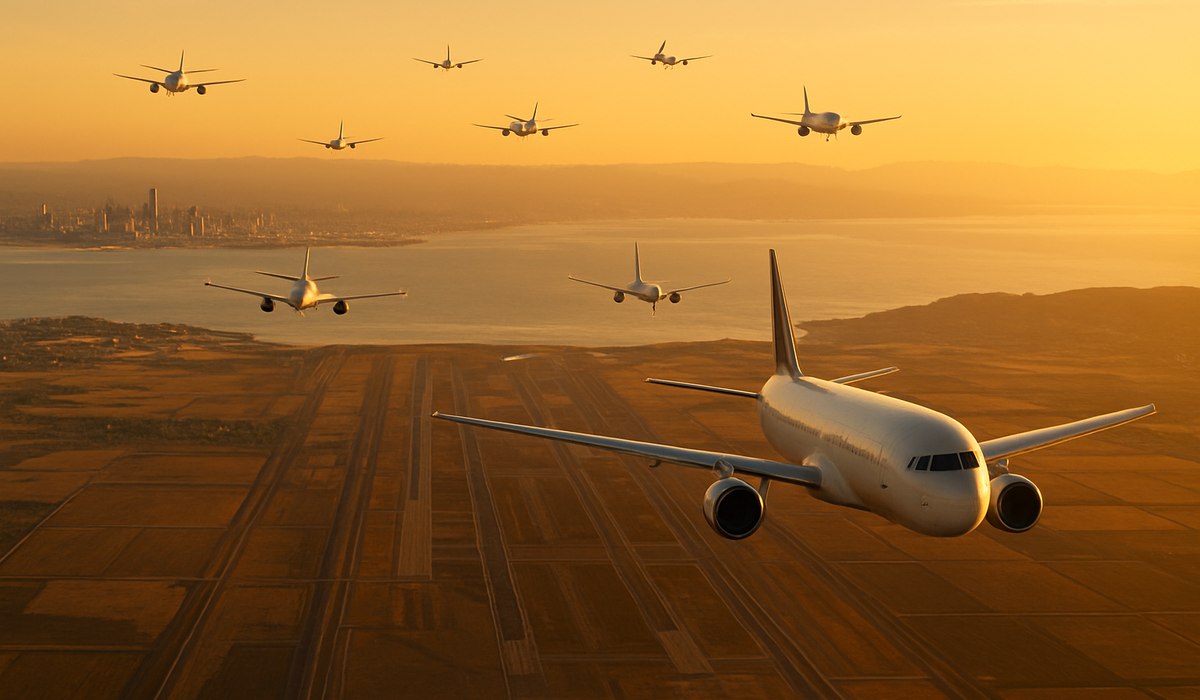
Image generated by AI
San Francisco's Runway Closure Creates Summer-Long Capacity Crunch
San Francisco International Airport has begun a six-month renovation of Runway 1 Right that fundamentally reshapes how aircraft arrive at the Bay Area's primary hub. Starting April 9, 2026, the closure forces all arriving traffic onto two runways—28 Left and 28 Right—while resurfacing and lighting work continues through October. The project, partially federally funded with a price tag in the hundreds of millions, concentrates virtually all jet operations onto a narrower landing corridor, directly triggering measurable delays and extended holding patterns for inbound passengers. Combined with newly implemented Federal Aviation Administration capacity limits, the arrival infrastructure squeeze has already reduced SFO's peak-hour landing rate from over 50 flights to the mid-30s in some operational windows.
Runway 1 Right Closure Cuts SFO Arrival Capacity
Runway 1 Right has served as SFO's crosswind-friendly alternative for decades, absorbing traffic during peak periods and bad-weather events. Its removal eliminates critical operational flexibility at one of North America's busiest airports. The resurfacing and lighting upgrades represent critical infrastructure investment, but the construction window directly overlaps with summer travel season, when passenger volumes typically peak.
Air traffic managers now sequence all converging streams of aircraft onto the 28-series runways, which already handle the majority of transcontinental and international operations. This consolidation extends arrival times considerably. Inbound passengers experience longer holding patterns over the Central Valley or offshore waters while controllers manage tighter spacing between consecutive aircraft. Flight crews report burn times up by 15–20 minutes on typical approaches. For passengers, gate-to-gate delays now regularly exceed 30 minutes during morning and evening peaks, with some flights experiencing hour-plus delays as aircraft wait for available gates after touchdown.
The runway closure directly impacts communities under the 28 approach paths. Residents report noticeably denser arrival traffic and shifted noise patterns as the concentrated stream of jets follows fewer flight paths than the pre-closure summer baseline.
Federal Capacity Limits and New Refund Rules Impact Operations
Beyond the runway closure, the FAA has implemented more restrictive arrival procedures at SFO, moving away from closely spaced parallel operations that previously enabled simultaneous approaches on both 28 runways. The updated procedures enforce staggered landing sequences with wider safety buffers between aircraft, further constraining hourly arrival capacity.
Arrival rules slow operations measurably under these new protocols. The combination of runway unavailability and conservative spacing requirements has reduced SFO's arrival throughput by roughly 30–40 percent on clear-weather days. Airlines responded by retiming select flights, consolidating thinner routes, and swapping aircraft types to optimize remaining schedule slots.
Simultaneously, the U.S. Department of Transportation's updated refund guidance applies new pressure to carriers. Passengers facing delays of several hours, route changes, additional connections, or altered arrival airports may qualify for cash refunds rather than rebooking alone. SFO-bound flights absorbing extra taxi-in and holding time now frequently cross these refund-eligibility thresholds. Airlines must process qualifying refunds within DOT-mandated timeframes, creating administrative and financial pressure to minimize operational disruptions.
This three-part constraint—runway closure, FAA capacity limits, and refund obligations—forces carriers into real-time optimization. Network coordinators across United, Delta, Southwest, and Alaska juggle routing decisions, gate assignments, and crew scheduling to operate within the narrower SFO envelope.
Extended Holding Patterns and Community Noise Impacts
Extended holding patterns represent a visible and audible consequence of the arrival capacity squeeze. Controllers guide arriving aircraft into spiral descent sequences over the Central Valley, where jets circle at 10,000 feet while waiting for earlier arrivals to clear landing queue space. Passengers report 20–35 minute holding periods on typical April–October flights, with fuel burn and flight time substantially above standard projections.
Noise impacts have already shifted community perception of airport operations. Residents along approach corridors to Runways 28 Left and 28 Right report increased frequency and concentration of jet noise during daylight hours. The single-runway alternative creates predictable traffic funneling that differs markedly from the distributed arrival pattern that historically employed Runway 1 Right as a pressure relief valve.
Community feedback mechanisms at SFO have received elevated complaints about continuous arrival flow and noise concentration. The airport has published updated noise mitigation guidance, though operational reality during peak travel windows offers limited relief. The closure period runs directly through summer 2026, capturing peak vacation travel and maximum passenger volumes.
What Airlines and Travelers Should Expect
Major carriers serving SFO have publicly disclosed modified schedules for April–October 2026. United Airlines, which operates the largest SFO hub, reduced its peak-hour arrivals by approximately 12–15 percent, consolidating some narrower-margin regional flights and focusing capacity on profitable transcontinental routes. Delta Air Lines and Southwest Airlines similarly adjusted inbound frequency and timing to align with the constrained arrival environment.
Passenger experience shifts accordingly. Arrival delays of 20–45 minutes have become baseline expectations rather than anomalies during peak periods. Airlines now include buffer time in published flight durations, reducing on-time performance pressures but transparently communicating longer total travel times to passengers.
Gate availability emerges as a secondary bottleneck. With fewer arrival slots per hour, aircraft queue longer at holding positions before pushing to gates. Deplaning processes stack sequentially, compressing the ground window between arrival and next-leg departure for connecting passengers.
Check with FlightAware for real-time SFO arrival status and current holding patterns. The platform provides minute-by-minute tracking of approach sequences and estimated gate assignment times.
Traveler Action Checklist
-
Book flights with 2+ hour connection windows if transiting through SFO during April–October 2026, accounting for extended arrival delays and potential gate assignment waiting time.
-
Monitor FAA delay advisories via FAA website before departure, as arrival capacity constraints trigger daily bottleneck notices during peak periods.
-
Document arrival delays exceeding 3 hours with flight confirmation numbers and timestamps, as DOT refund eligibility thresholds apply to qualifying disruptions.
-
Request cash refunds proactively through airline customer service if your flight qualifies under new US DOT guidelines, rather than accepting rebooking alone.
-
Plan for extended taxi-in time by avoiding tight connections or ground transportation reservations immediately after landing; add 30 minutes to standard arrival-to-ground time estimates.
-
Select arrival times outside peak windows (avoid 7–9 AM and 5–7 PM) when booking SFO flights through October 2026 to minimize holding pattern exposure.
-
Check airline notifications for schedule adjustments; carriers continue modifying April–October flights to optimize available arrival slots, and earlier notification allows rebooking flexibility.
Key Data Table: SFO Arrival Impact Summary
| Metric | Pre-Closure Baseline | Current (April 2026) | Change | Impact |
|---|---|---|---|---|
| Peak-hour arrival capacity | 50+ flights | 30–35 flights | −30–40% | Extended holding, gate delays |
| Typical holding pattern duration | 5–10 minutes | 20–35 minutes | +200–300% | Increased fuel burn, passenger fatigue |
| Parallel landing operations (clear weather) | Simultaneous approaches | Staggered sequences | Full conversion | Conservation-based spacing |
| Runway availability for crosswind landings | Runway 1 Right active | Closed through October | Unavailable | All traffic onto 28 series runways |
| Expected gate-to-gate delay ( |
Disclaimer
This article is for informational and educational purposes only. It does not constitute legal, financial, or professional advice. While we strive to provide accurate and up-to-date information, travel policies, regulations, and conditions change rapidly. Always verify information with official sources before making travel decisions. Nomad Lawyer makes no representations about the accuracy, reliability, completeness, or suitability of the information provided. Readers should consult qualified professionals for advice specific to their circumstances. The views expressed in this article are those of the author and do not necessarily reflect the views of Nomad Lawyer.
Raushan Kumar
Founder & Lead Developer
Full-stack developer with 11+ years of experience and a passionate traveller. Raushan built Nomad Lawyer from the ground up with a vision to create the best travel and law experience on the web.
Learn more about our team →