
Serengeti Bush Flight Emergency Landing at Kilimanjaro: Wildlife Airstrip Safety and Safari Travel Guide 2026

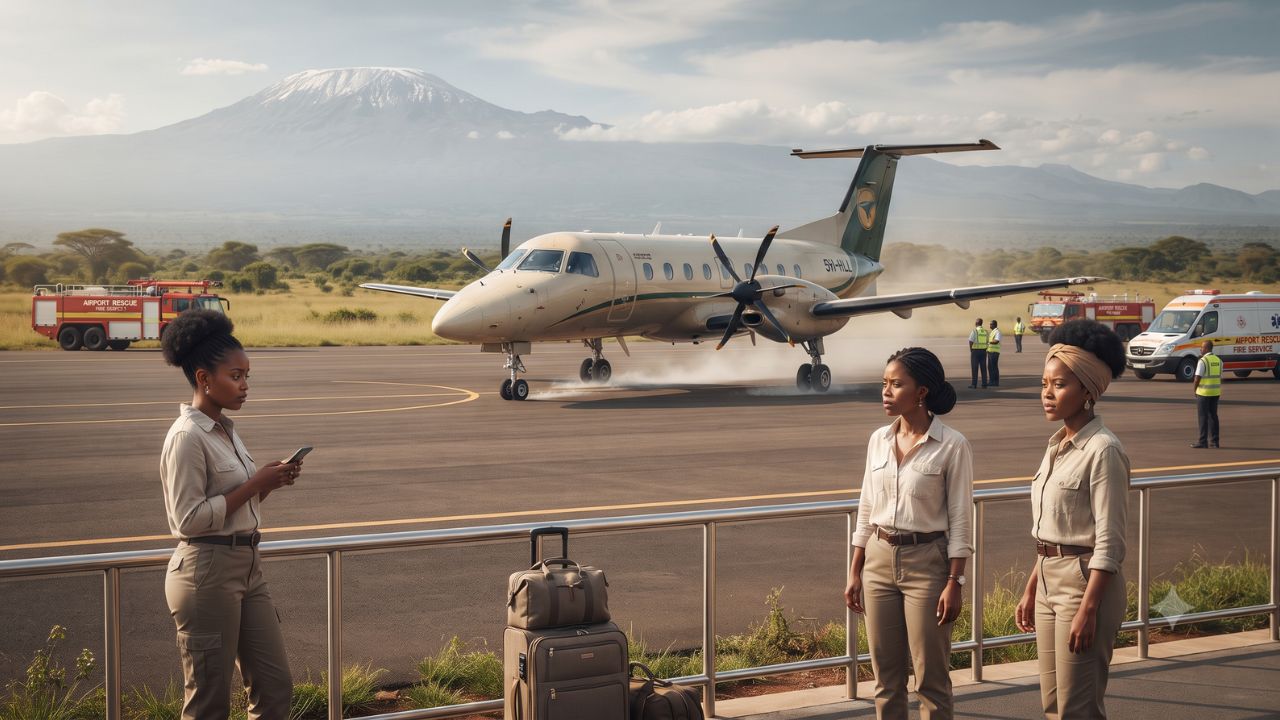
Bush planes operating from remote dirt and gravel strips in East Africa share runways directly with crossing wildlife, where ground crews must regularly clear grazing herds before aircraft can take off. On Sunday, 4 October 2026, an Embraer EMB-120 turboprop (registration 5H-HLL) carrying 26 passengers and 4 crew members was forced into an emergency belly landing at Kilimanjaro International Airport (JRO) after a reported collision with a zebra during departure from Seronera Airstrip in Serengeti National Park. After the takeoff impact disabled the main landing gear mechanisms, the flight crew diverted to Kilimanjaro, touching down with retracted landing gear and sliding safely to a stop along the runway without a single passenger or crew injury.
The incident underscores the intricate logistics of safari aviation across Tanzania's northern tourism circuit. Flights between bush strips like Seronera (SEU), Kogatende, and Grumeti and coastal beach hubs like Zanzibar (ZNZ) or Arusha save international travelers up to ten hours of grueling overland driving across rugged volcanic terrain. However, managing wildlife risks on unfenced conservation runways requires specialized piloting skills and dedicated ground coordination by the Tanzania National Parks (TANAPA) authority and local civil aviation regulators.
Incident Sequence: From Seronera Bush Strip to Kilimanjaro Runway
The chartered twin-turboprop was scheduled to fly tourists from the central Serengeti plains directly to Zanzibar. During the high-speed departure roll from Seronera's runway, the aircraft reportedly struck an ungulate crossing the airstrip corridor. Unable to safely lock down its main gear assembly for arrival, the crew executed a standard emergency diversion to Kilimanjaro International Airport, which offers longer paved runways, advanced foam-firefighting equipment, and hospital trauma links.
Tanzania Northern Safari Bush Aviation Matrix
| Airstrip / Hub | Runway Type & Elevation | Safety Infrastructure & Equipment | Primary Transit Function |
|---|---|---|---|
| Seronera Airstrip (SEU) | Tarmac / Compact Earth (1,524 m) | Automated Weather Station & Control Tower | Central Serengeti Game Drive Departures |
| Kogatende Airstrip (KOG) | Compacted Murram (1,370 m) | Visual Range Perimeter Checks & Windcones | Mara River Great Migration River Crossings |
| Kilimanjaro Airport (JRO) | Full Asphalt Runway (894 m) | Category IX Crash Fire Rescue & Full ILS | International Gateway & Emergency Diversion Base |
| Abeid Amani Karume (ZNZ) | Modern Concrete Runway (16 m) | Coastal Marine Radar & International Terminal | Beach Resort Transfers & Spice Island Tourism |
The belly landing caused substantial fuselage and prop damage, prompting Kilimanjaro International Airport authorities to temporarily halt all runway operations for several hours to clear debris and inspect the pavement. Scheduled domestic and international flights resumed normal rotations at approximately 16:30 local time.
What Makes Bush Aviation Different: Wildlife Corridors and Natural Runways
Flying into the African wilderness presents operational realities fundamentally distinct from standard commercial aviation:
- Unfenced Airfield Boundaries: Under national conservation mandates, airstrips inside national parks remain open corridors to preserve natural animal migration routes. Large herds of wildebeest, zebras, giraffes, and baboons frequently graze on the grassy verges lining the runway.
- Pre-Flight "Buzzer" Runs: Safari pilots routinely perform low-altitude flybys over dirt airstrips before landing to inspect surface conditions for recent rain ruts, termite mounds, or hidden animals resting near the touchdown zone.
- Infrastructure Upgrades: The Tanzania Civil Aviation Authority (TCAA) has recently modernized wilderness airfields. Following official inspections on 24 September 2026 by National Civil Aviation Safety Committee officials led by TCAA Director General Dr. Jabiri K. Bakari across Seronera, Kogatende, and Mikumi, automated weather stations and dedicated control towers are being deployed to reinforce flight coordination.
- Regulatory Operator Scrutiny: Public registry databases identify the aircraft 5H-HLL under commercial charter operations (frequently cited as Sindbard Air), with formal registration records held through Angelic Handlers Company Limited.
Visitor Insider Tips: Booking and Flying Safari Transfers
For travelers organizing a Tanzanian safari, managing regional flight connections requires calculated planning:
- Build 24-Hour Buffers for Island Transfers: Never book a tight three-hour transfer from a Serengeti bush strip to a scheduled intercontinental departure out of Kilimanjaro or Dar es Salaam. Weather shifts, wildlife clearances, or technical diversions can cause multi-hour delays. Stay overnight in Arusha or Stone Town before boarding long-haul international flights.
- Strict Soft-Sided Bag Restrictions: Bush flights operated by Cessna Grand Caravans or Embraer turboprops enforce rigid luggage caps of 15 kilograms (33 pounds) per passenger, inclusive of camera gear. Hard-shell suitcases cannot fit inside narrow belly pods and will be left behind at the airstrip.
- Secure Comprehensive Medical Evacuation Coverage: Ensure your travel insurance policy includes dedicated AMREF Flying Doctors emergency bush evacuation coverage, which guarantees rapid air ambulance transport from remote park airstrips to medical trauma facilities in Nairobi or Dar es Salaam.
- Sit Behind the Pilots for Wildlife Spotting: On smaller 12-to-30-seat turboprops, window seats just behind the flight deck offer magnificent low-altitude views of the Ngorongoro Crater, Olduvai Gorge, and vast migratory herds spreading across the savanna.
Cultural and Environmental Context: Balancing Tourism Transit and Wildlife Conservation
The Serengeti ecosystem represents one of the oldest and most delicate wildlife sanctuaries on earth. Every year, over 1.5 million wildebeest and 250,000 zebras traverse the plains during the Great Migration. Ensuring that tourism transport does not disrupt animal corridors or lead to fatal animal collisions remains a priority for park rangers and aviation authorities.
Runway security teams coordinate closely with indigenous Maasai tracking teams and TANAPA rangers to monitor animal movements adjacent to active airstrips. By pairing automated solar-powered warning systems with non-lethal acoustic deterrents, conservation managers aim to protect animal welfare while maintaining the reliable air links that fund community anti-poaching initiatives and local ranger salaries.
FAQ: Flying on Safari in Tanzania 2026
Is it safe to fly on bush planes in the Serengeti? Yes. Safari aviation in Tanzania is strictly regulated by the TCAA and TANAPA, utilizing experienced bush pilots trained to navigate unpaved runways, changing weather patterns, and local wildlife conditions.
What happens if a safari flight is diverted or delayed? Safari lodges and ground operators maintain direct radio and satellite contact with airstrip dispatchers, arranging emergency road transport or alternative flight rebooking if weather or runway closures occur.
What is the luggage weight limit on Serengeti bush flights? Most scheduled safari flights enforce a strict 15 kg (33 lb) luggage allowance in soft duffle bags with no rigid frames or wheels, allowing baggage to compress into small cargo holds.
How long does a flight take from the Serengeti to Zanzibar? Direct scheduled flights from Seronera Airstrip to Zanzibar take approximately 1 hour and 45 minutes to 2 hours, compared to an 8-to-10-hour overland and ferry journey.
Related Travel Guides
- Tanzania Northern Safari Circuit: Complete Itinerary for Serengeti and Ngorongoro
- East Africa Bush Flight Packing and Soft Luggage Protocol Guide
- Official Tanzania National Parks Authority Park Regulations and Visitor Guidelines
Above the endless golden plains of the Serengeti, flying is not just a mode of transport, but a breathtaking perspective on one of the planet's last truly wild landscapes.
Disclaimer
This article is for informational and educational purposes only. It does not constitute legal, financial, or professional advice. While we strive to provide accurate and up-to-date information, travel policies, regulations, and conditions change rapidly. Always verify information with official sources before making travel decisions. Nomad Lawyer makes no representations about the accuracy, reliability, completeness, or suitability of the information provided. Readers should consult qualified professionals for advice specific to their circumstances. The views expressed in this article are those of the author and do not necessarily reflect the views of Nomad Lawyer.
Naina Thakur
Contributor & Travel Specialist
Travel enthusiast and legal writer covering visa regulations, responsible tourism, and cultural journeys across global destinations.
Learn more about our team →