
Serbia Records 1.35M Foreign Tourists in 2026 Balkan Travel Boom

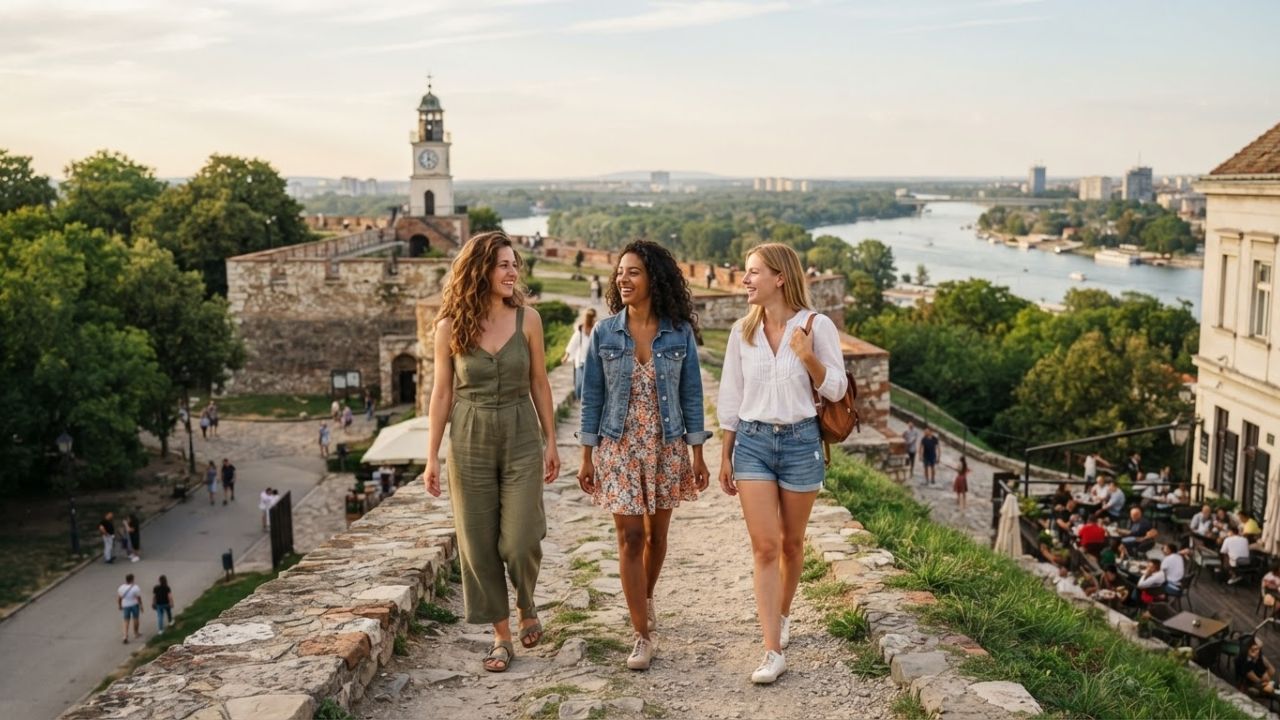
Serbia welcomed 1,358,422 foreign tourist arrivals between January and July 2026, generating 3,596,464 international overnight stays and fueling an accelerating Balkan travel boom that is rapidly expanding beyond the historic capital of Belgrade into regional heritage cities, mountain retreats, and thermal spa sanctuaries. Driven by sustained visitor growth across Turkey, Russia, Germany, and emerging transcontinental markets, official data from the Statistical Office of the Republic of Serbia (SORS) reveals a 5.0% annual rise in international travelers, with secondary destinations such as Subotica and Kuršumlija recording double-digit arrival increases.
The momentum marks a decisive evolution in Southeastern European travel patterns. Once regarded primarily as a short transit stop between Central Europe and the Aegean, Serbia has emerged as a multi-hub cultural destination. Through the national eTourist registry system, foreign arrivals reached 283,890 in July 2026 alone—up 3.7% year-on-year—while total domestic and international overnight stays across the country climbed to 7,366,510 during the first seven months of the year, confirming the country's rising appeal among independent cultural explorers and nature enthusiasts alike.
The Local Trend Revealed: Beyond Belgrade to Regional Hubs and Thermal Valleys
While Belgrade continues to command the largest international footprint, official data highlights rapid geographic decentralization across Serbia's municipal destinations:
- Belgrade’s Enduring Gateway Pull: The Serbian capital logged 741,638 foreign arrivals and 1,847,868 foreign overnight stays from January through July 2026 (a 4.6% increase in arrivals and a 7.6% rise in overnight stays), with 150,717 international visitors recorded in July alone. Travelers gravitate toward Kalemegdan Fortress, the bohemian cobbled quarters of Skadarlija, the Sava Promenade, and the historic Austro-Hungarian architecture of Zemun.
- Novi Sad’s Danube Allure: Vojvodina’s administrative hub registered 81,690 foreign arrivals (up 7.7% year-on-year) and 232,874 overnight stays. Anchored by the 18th-century Petrovaradin Fortress—famed for its inverted clock tower and underground military galleries—the city attracts visitors pairing urban history with excursions to the surrounding Fruška Gora wine corridors.
- Niš and Southern Heritage: As the birthplace of Emperor Constantine the Great, Niš recorded 50,352 foreign arrivals (+7.8%) and 100,779 overnight stays (+2.1%). Key historical draws include Niš Fortress along the Nišava River, the Ottoman-era Skull Tower (Ćele Kula), Čegar Hill, and the artisan cobblestone alleys of Kazandžijsko Sokače (Tinkers Alley).
- Subotica’s Art Nouveau Surge: Recording one of the strongest regional performances, northern Subotica welcomed 40,997 foreign arrivals (+10.5%) and 102,039 overnight stays (+14.2%). Its celebrated Hungarian Secessionist architecture—exemplified by Subotica City Hall, the Synagogue, and Raichle Palace—pairs with leisurely retreats to nearby Palić Lake.
- Kragujevac and Historical Memory: Central Serbia’s historic first modern capital recorded 13,193 foreign arrivals (+2.8%) and 51,491 overnight stays, drawing visitors to the Milošev Venac court complex, Prince’s Arsenal, and the Memorial Park October in Kragujevac.
- Kuršumlija’s Wellness Breakthrough: South-central Kuršumlija achieved the highest percentage growth among monitored towns, surging 24.4% to 12,664 foreign arrivals and 42,117 overnight stays (+17.0%). The area combines mineral-rich hydrotherapy at Prolom Banja and Kuršumlijska Banja with the natural rock pinnacles of Đavolja Varoš (Devil’s Town).
| Serbian City / Town | Foreign Arrivals (Jan–Jul 2026) | Annual Change vs 2025 | Foreign Overnight Stays (Jan–Jul 2026) | Defining Travel Experience |
|---|---|---|---|---|
| Belgrade | 741,638 | +4.6% | 1,847,868 | Kalemegdan Fortress, Skadarlija, Danube & Sava nightlife |
| Novi Sad | 81,690 | +7.7% | 232,874 | Petrovaradin Fortress, Vojvodina cuisine, Fruška Gora wineries |
| Niš | 50,352 | +7.8% | 100,779 | Roman heritage, Ottoman fortress, Kazandžijsko Sokače dining |
| Subotica | 40,997 | +10.5% | 102,039 | Hungarian Art Nouveau, Raichle Palace, Palić Lake |
| Kragujevac | 13,193 | +2.8% | 51,491 | Milošev Venac, royal court heritage, Šumadija traditions |
| Kuršumlija | 12,664 | +24.4% | 42,117 | Kuršumlijska & Prolom thermal spas, Đavolja Varoš earth pyramids |
Parallel to urban tourism, Serbia's alpine and spa sanctuaries recorded strong figures. Mountain resort Zlatibor registered 97,123 foreign arrivals and 256,520 overnight stays (with 19,121 arrivals in July alone), followed by Kopaonik with 31,083 foreign arrivals and 134,112 stays. In the wellness sector, Vrnjačka Banja recorded 25,938 foreign arrivals and 77,446 stays, complemented by Banja Vrdnik (21,844 arrivals) and Sokobanja.
Cultural & Environmental Value: Preserving Living Traditions and Regional Ecology
The dispersion of international tourism into secondary Serbian regions fosters direct environmental stewardship and village preservation:
- Sustaining Agrarian Heritage and Salaš Homesteads: In northern Vojvodina, rural farmsteads known as salaši preserve centuries-old farming and culinary methods. Travelers staying in these family-run estates provide revenue that directly sustains heirloom seed preservation, organic horticulture, and horse-breeding traditions.
- Safeguarding Protected Geoparks and Thermal Springs: In southern Serbia, visitors exploring Đavolja Varoš support designated protected natural monuments managed under the Institute for Nature Conservation of Serbia. Concurrently, wellness tourism at Kuršumlijska Banja revitalizes carbon-neutral thermal heating practices utilizing naturally occurring hot mineral springs.
- Preserving Sacred Monastic Architecture: In Central Serbia and the Raška corridor, tourism flows support Orthodox monastic communities, including the 12th-century Monastery of St. Nicholas in Kuršumlija and UNESCO-listed Studenica, ensuring the ongoing restoration of Byzantine frescoes and stone masonry.
Visitor Insider Tips: Navigating Serbia Like a Local Specialist
- Optimal Travel Seasons: Visit between May and June or September and October. Spring offers comfortable temperatures for exploring Belgrade’s riverbanks and Niš Fortress, while autumn coincides with grape harvest festivities (Grožđebal) across Fruška Gora and Sremski Karlovci.
- Essential Cultural Etiquette: When sharing a traditional fruit brandy (rakija) with locals, always look your companion directly in the eyes and toast with "Živeli!" (to life!). When entering Serbian Orthodox churches or monasteries, dress respectfully with covered shoulders and knees.
- Regional Culinary Delicacies:
- Belgrade: Order hot grilled ćevapi (seasoned minced meat fingers) served inside warm somun flatbread with fresh kajmak (clotted dairy spread) and chopped onions in Dorćol or Skadarlija.
- Novi Sad & the Danube: Dine at a riverside čarda (fisherman's tavern) along the Danube for spicy fish paprikash (riblja čorba) cooked over open wood fires, paired with crisp Fruška Gora white wines like Grašac or Tamjanika.
- Niš: Start the morning with authentic baked burek (flaky phyllo pastry stuffed with minced meat or cheese) accompanied by plain yogurt, followed by spicy leskovački voz grilled platters.
- Šumadija & Central Serbia: Taste svadbarski kupus (slow-cooked wedding cabbage with smoked pork) and sip traditional Šumadija tea (hot caramelized plum šljivovica).
- Kuršumlija: Request veal or lamb prepared ispod sača—slow-roasted for hours under a heavy cast-iron bell covered with burning embers.
- Intercity Transit on the Soko High-Speed Train: When commuting between Belgrade Prokop Station and Novi Sad, skip road traffic and take the high-speed Soko train, which covers the distance in just 36 minutes. Tickets can be booked seamlessly via the Srbija Voz mobile app.
Tourism Outlook for the Western Balkans
With foreign arrivals surging 5.0% across the first seven months of 2026, Serbia’s tourism development demonstrates that multi-hub travel strategies create resilient tourism economies. By pairing urban culture with accessible rail links, thermal wellness retreats, and untouched natural parks, Serbia is setting the standard for sustainable, high-value Balkan exploration.
Related Travel Guides
Disclaimer
This article is for informational and educational purposes only. It does not constitute legal, financial, or professional advice. While we strive to provide accurate and up-to-date information, travel policies, regulations, and conditions change rapidly. Always verify information with official sources before making travel decisions. Nomad Lawyer makes no representations about the accuracy, reliability, completeness, or suitability of the information provided. Readers should consult qualified professionals for advice specific to their circumstances. The views expressed in this article are those of the author and do not necessarily reflect the views of Nomad Lawyer.
Raushan Kumar
Founder & Lead Developer
Full-stack developer with 11+ years of experience and a passionate traveller. Raushan built Nomad Lawyer from the ground up with a vision to create the best travel and law experience on the web.
Learn more about our team →