
Security delays leave 120 passengers stranded at Milan Linate
Over 120 easyJet passengers missed their flight at Milan Linate on April 20, 2026, after biometric security checks created hour-long queues. The incident raises urgent staffing concerns ahead of the EU's expanded Entry/Exit System rollout.

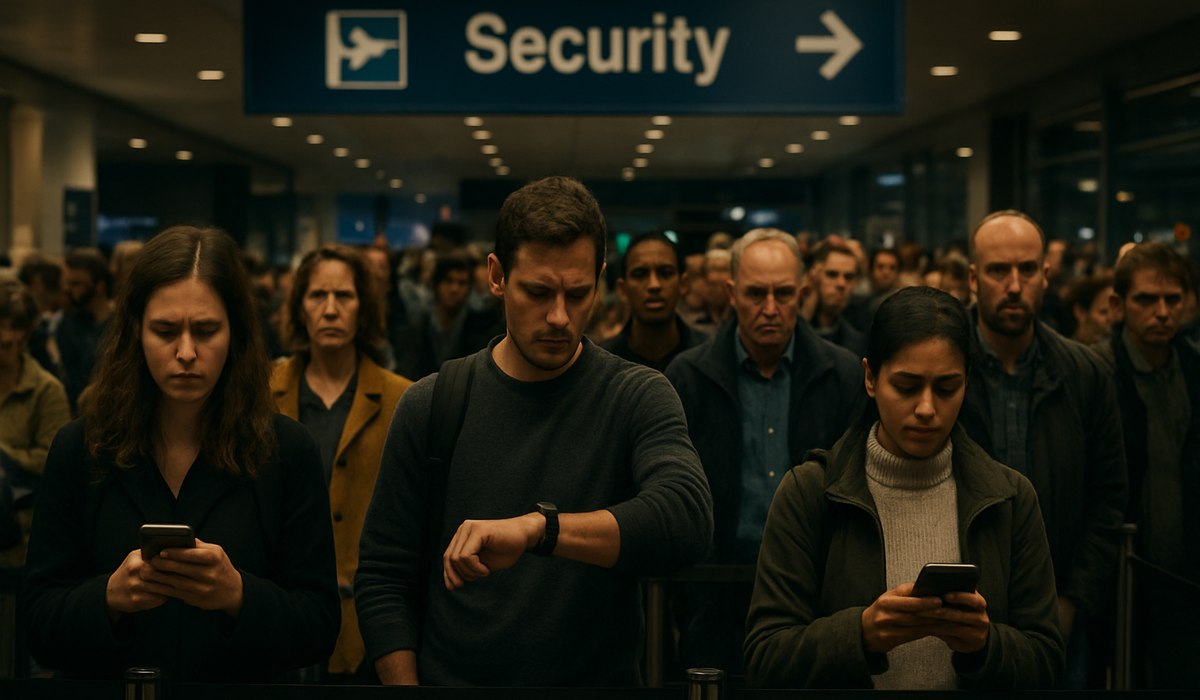
Image generated by AI
Breaking: Security delays leave 120 passengers stranded at Milan Linate
Over 120 ticketed easyJet passengers missed their departure to the United Kingdom on April 20, 2026, after biometric border checks at Milan Linate Airport created hour-long queues that prevented them from reaching the gate before boarding closed. The aircraft departed nearly empty, reigniting debate over airport staffing adequacy and passenger rights when security delays strand dozens of travelers. The incident has intensified concerns ahead of the European Union's expanded Entry/Exit System rollout, which will introduce enhanced biometric processing at EU borders.
Biometric Bottleneck: How 120 passengers missed their flight
Passengers arriving within the standard two-hour window for short-haul European flights found themselves trapped in a border control queue that moved at a walking pace. New biometric procedures implemented at Milan Linate's passport control zone created a severe bottleneck, with insufficient staff and automated systems to process the evening departure wave efficiently.
Eyewitness accounts describe travelers waiting up to 60 minutes in a single queue despite arriving on time. Gate agents continued announcing the flight while security delays left the majority of passengers airside and unable to proceed. By the time many passengers reached the front of the border control line, the aircraft had already pushed back from the gate, departing with dozens of empty seats.
The easyJet flight operated with only a fraction of its manifest boarded, making the empty departure impossible to ignore for passengers still trapped in mandatory state-run border queues. Airport staff acknowledged the delays but could not extend boarding closure, as state border agencies control when passengers are released from security zones. This created a collision between airline operations and government border control protocols that left travelers without immediate solutions.
Airport staffing fails to match new security procedures
Milan Linate's biometric infrastructure expansion proceeded without corresponding increases in trained border control personnel. European immigration outlets reported that just a small number of officers and automated biometric machines were assigned to process the surge of evening departures, creating predictable congestion.
Industry analysts note that biometric scanning—which captures fingerprints, facial recognition data, and iris scans—requires more processing time per passenger than traditional passport stamping. When staffing levels don't scale to match this increased per-passenger duration, queues compound rapidly during peak travel windows.
The incident has prompted airport authorities to review shift scheduling and personnel allocation. However, staffing decisions at state-controlled border agencies often face budget constraints and hiring delays that prevent rapid expansion. Airlines have no direct authority over border control staffing, leaving them unable to unilaterally solve security delays, even when their flights depart with empty seats.
EU Entry/Exit System expansion raises staffing concerns
The European Union's forthcoming Entry/Exit System (EES) will require enhanced biometric checks on all non-EU travelers entering the bloc. Industry commentators suggest the Milan disruption offers a cautionary preview of congestion patterns when expanded biometric processing requirements coincide with inadequate staffing levels.
The EES rollout will standardize biometric data collection across EU borders starting in 2026. While digital efficiency gains are anticipated long-term, the transition period will initially require more manual processing, scanning, and verification steps per traveler. Without proactive staffing increases at major aviation hubs, security delays leave airports vulnerable to repeating the Milan scenario at scale.
Aviation authorities and border agencies have acknowledged these concerns in early EES planning documents. However, funding mechanisms to support transitional staffing increases remain unclear. Airports like Milan Linate that handle high evening departure volumes face particular pressure to prepare adequate staffing before expanded biometric requirements take effect.
Passenger rights and compensation questions
Under standard airline conditions of carriage, passengers must present themselves at the gate by the boarding closure time printed on their boarding pass. Airlines are generally not obliged to reopen doors after closure, even if operational margins exist, due to crew duty limits and airport slot restrictions.
However, the Milan incident sits in a gray legal area when security delays strand dozens of passengers simultaneously. European passenger protection regulations under EU261/2004 typically address cancellations and long delays, not missed boardings caused by airport-side factors. Affected easyJet passengers were offered rebooking options, though many faced overnight delays and indirect routings due to limited remaining seat availability.
Some travelers have indicated plans to file formal complaints and test whether EU regulators view the situation as a denial of boarding linked to airport-side infrastructure failures rather than individual passenger tardiness. Legal specialists note that case outcomes often depend on detailed timelines and documentary evidence about when passengers cleared border control versus when boarding officially closed.
Airlines and airport operators continue debating responsibility frameworks for incidents where state-controlled security processes impact flight departures. Industry bodies have called for clearer protocols defining when boarding can be extended, how airlines and airports should coordinate during security surges, and what compensation frameworks apply when systematic delays block critical passenger cohorts.
Key data table: Milan Linate security incident summary
| Metric | Details |
|---|---|
| Airport | Milan Linate (LIN), Milan, Italy |
| Airline | easyJet |
| Route | Milan to United Kingdom |
| Passengers affected | 120+ ticketed passengers |
| Passengers boarded | Fewer than 30 |
| Queue wait time | Up to 60 minutes at border control |
| Cause | Biometric security checks with insufficient staffing |
| Incidence date | April 20, 2026 |
| Aircraft departure status | Departed on schedule with majority empty seats |
| Passenger remedy | Rebooking offered with overnight delays |
| Related regulation | EU Entry/Exit System (EES) expansion |
What this means for travelers: Action checklist
Travelers passing through European airports—especially Milan Linate and other major hubs—should take these steps to protect themselves from security delays leaving them stranded:
-
Increase airport arrival buffer. Arrive 3 hours before international departures rather than the standard 2 hours. Biometric processing adds unpredictable time, especially during evening surge periods.
-
Monitor real-time queue status. Check airport websites and mobile apps for current security and border control wait times before departing for the airport.
-
Pack travel insurance with delay coverage. Purchase policies that reimburse meals, accommodation, and rebooking fees if security delays cause missed connections.
-
Document everything if you're delayed. Photograph queue positions, timestamps, gate closure announcements, and airport signage. Collect contact information from fellow passengers in case class action claims emerge.
-
File formal complaints immediately. Contact your airline and airport operator in writing within 48 hours, referencing specific timeline details. Submit complaints to your national aviation regulator and EU dispute resolution bodies.
-
Review airline conditions of carriage. Understand your carrier's boarding closure policy and force majeure exemptions. Some airlines offer compensation for delays caused by state agencies; others explicitly exclude such scenarios.
-
Track flight status live. Use FlightAware to monitor gate closures and departure times. If queues are unusually long, contact your airline gate agent immediately.
FAQ: Security delays and passenger rights
Q: Do airlines have to hold flights when security delays strand passengers?
A: Airlines are not legally required to delay departures beyond official boarding closure times, even if security caused the delays. Crew duty limits, airport slot restrictions, and safety procedures prevent most extensions. However, when systematic security failures block dozens of passengers simultaneously, dispute resolution bodies may view the situation differently than individual tardiness.
Q: What compensation can passengers claim for missed flights due to security delays?
A: EU261/2004 compensation rules typically apply to cancellations and long delays, not missed boardings. However, if a missed
Disclaimer
This article is for informational and educational purposes only. It does not constitute legal, financial, or professional advice. While we strive to provide accurate and up-to-date information, travel policies, regulations, and conditions change rapidly. Always verify information with official sources before making travel decisions. Nomad Lawyer makes no representations about the accuracy, reliability, completeness, or suitability of the information provided. Readers should consult qualified professionals for advice specific to their circumstances. The views expressed in this article are those of the author and do not necessarily reflect the views of Nomad Lawyer.
Kunal K Choudhary
Co-Founder & Contributor
A passionate traveller and tech enthusiast. Kunal contributes to the vision and growth of Nomad Lawyer, bringing fresh perspectives and driving the community forward.
Learn more about our team →