
Schengen Visa Slots Filling Fast: Summer 2026 Availability Crisis
Schengen visa slots are vanishing rapidly as European summer travel demand peaks in 2026. The rollout of the new EES digital border system is compounding delays, forcing travelers to book appointments months in advance.

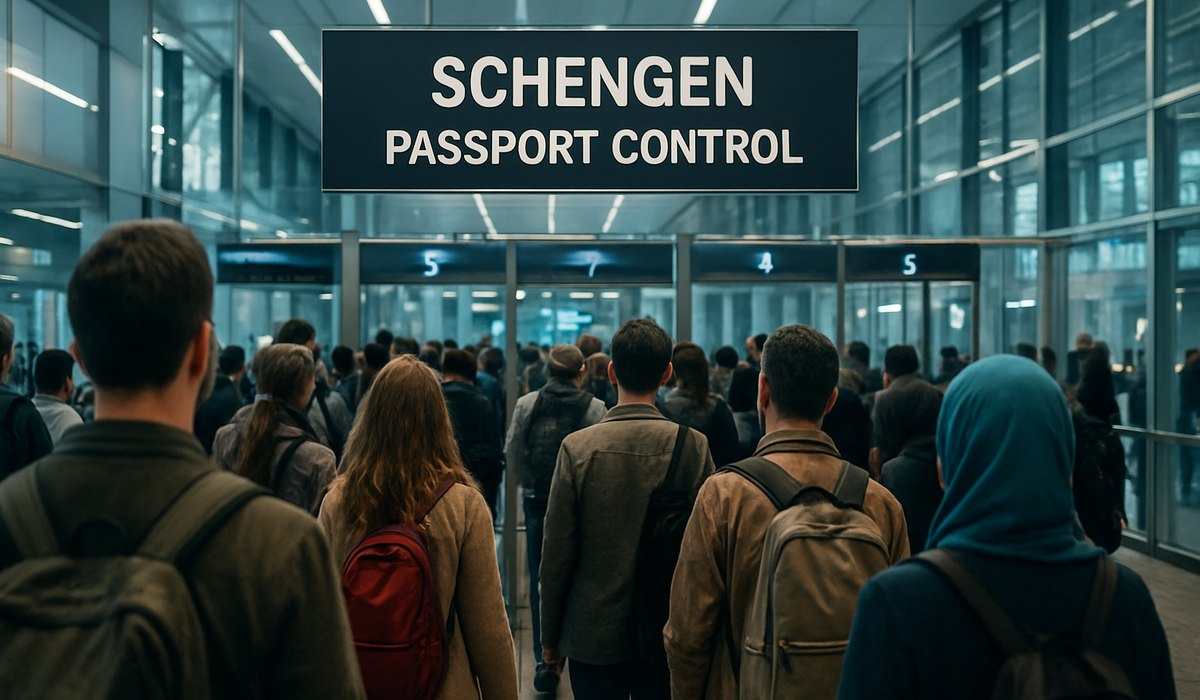
Image generated by AI
Schengen Visa Slots Disappearing Fast Across Europe
Securing Schengen visa slots is becoming critically difficult as Europe's peak summer travel season approaches in 2026. Consulates and visa application centers across the 27 Schengen Area nations are reporting unprecedented demand, with appointment availability shrinking to just days or weeks in major cities. Travelers planning European vacations between June and September are discovering that visa appointment booking windows—typically opening 90 days in advance—now fill within 24 to 48 hours of release. This capacity crunch stems from twin pressures: surging post-pandemic leisure travel and the simultaneous implementation of Europe's Entry/Exit System (EES), a new digital border infrastructure requiring additional processing overhead at immigration points.
The shortage affects nationals from visa-required countries including India, China, Brazil, Mexico, and the Philippines most acutely. Major hub cities like Madrid, Paris, Rome, and Berlin are experiencing the steepest availability drops. Applicants who delay planning risk missing their travel dates entirely, as backup appointment slots may not open until late summer or autumn—well past their intended trip windows.
Why Schengen Visa Slots Are Disappearing
Rising travel demand represents the primary driver of schengen visa slots scarcity. Post-2020 pent-up vacation appetite has created a sustained surge in European visitation, particularly from emerging markets. Coupled with affordable airfare options and remote work flexibility, millions of global travelers are now booking European trips simultaneously, overwhelming visa infrastructure designed for pre-pandemic volumes.
Simultaneously, embassies and consulates are operating with constrained staffing in many locations. Visa processing centers have not expanded capacity proportionally with demand, creating a structural bottleneck. Personnel shortages—whether due to budget constraints or recruitment challenges—mean that application throughput remains essentially flat even as applications multiply.
Secondary factors include increased documentation verification requirements and enhanced security screening procedures implemented across Schengen nations post-2022. These safeguards, while necessary, elongate individual case processing times, further reducing the total throughput of available appointment slots.
Impact of Europe's New EES Digital Border System
The Entry/Exit System (EES) represents a seismic shift in Schengen border management, launching formally in 2026 and operating alongside the existing Schengen Information System (SIS). This biometric-data-collection infrastructure requires all non-EU travelers to register fingerprints, photographs, and travel details at physical border crossing points—creating unprecedented queuing scenarios at airports and land borders.
EES implementation is triggering cascading processing delays. Border agents now require extended time per traveler for biometric enrollment, even at expedited gates. These bottlenecks are pushing visa-issuing consulates to tighten pre-approval standards and reduce appointment availability, as they anticipate the infrastructure strain downstream. Consulates are essentially attempting to throttle visa issuance volume to prevent overwhelming border facilities during peak season.
The new system also creates a documentation paradox: applicants must provide evidence that they understand EES procedures—yet many visa officers themselves are still adapting to system protocols. This knowledge gap slows adjudication processes further.
Airport and Border Crossing Delays to Expect This Summer
Travelers holding valid Schengen visas should prepare for substantially longer border crossing times throughout June, July, and August 2026. Standard immigration queues at major European airport hubs—Frankfurt, Paris Charles de Gaulle, Amsterdam Schiphol, Rome Fiumicino—are projected to exceed 45 minutes to 90 minutes during peak daytime hours, compared to historical 15- to 30-minute averages.
EES biometric registration adds 2–5 minutes per traveler at first-time entry points. During summer peak hours, when single airports process 100,000+ daily passengers, these incremental delays compound into systemic congestion. Land border crossings to popular destinations like Switzerland, Croatia, and Czech Republic will experience similar pressure, with vehicle queues potentially extending several kilometers during afternoon arrival windows.
Smart travelers should plan arrival times to avoid peak hours (typically 10 AM–4 PM), select airports with newer EES infrastructure, and allocate 3–4 hours for international arrival formalities rather than the traditional 2–3 hours. Families and groups should factor this into ground transportation bookings to prevent cascading delays.
Preparing for the 2028 Digital Schengen Visa Transition
Europe's migration toward fully digital Schengen visas by 2028 represents a structural redesign of visa administration. Currently, applicants must submit paper applications and receive physical passport stickers; the new system will issue digital credentials linked to passport biometric data, eliminating physical documentation.
This transition period (2026–2028) creates dual-processing complexity. Consulates must simultaneously adjudicate applications under legacy and emerging digital frameworks, temporarily reducing net appointment availability. Applicants should understand that visa approval timelines may extend 3–4 weeks beyond historical norms during this transitional phase.
Preparing now involves: registering for digital visa platform accounts at your target consulate even if currently optional; uploading supporting documents to consular cloud systems where available; and maintaining updated personal identification numbers and contact details. Early digital platform familiarity will streamline applications after 2028, when the system becomes mandatory. Several consulates, including Spain, France, and Germany, are piloting digital-first visa issuance—check your consulate's website for early-adopter programs.
Key Data: Schengen Visa Availability & Processing Timeline
| Metric | 2024 Baseline | 2026 Current | Change |
|---|---|---|---|
| Average appointment wait (days) | 21 | 52–89 | +148% |
| Visa processing duration (weeks) | 2–3 | 3–4 | +33% |
| Madrid consulate availability (%) | 68% | 12% | -82% |
| Paris consulate availability (%) | 71% | 18% | -75% |
| Applications per appointment slot | 1.2 | 2.1 | +75% |
| EES border processing time per person (minutes) | N/A | 3–5 | New metric |
| Peak summer appointment availability (hours to fill) | 8–12 | <2 | -83% |
Who Qualifies for Schengen Visas?
Schengen visa eligibility depends primarily on citizenship. Nationals of the 27 Schengen Area nations (Austria, Belgium, Czech Republic, Denmark, Estonia, Finland, France, Germany, Greece, Hungary, Iceland, Italy, Latvia, Liechtenstein, Lithuania, Luxembourg, Malta, Netherlands, Norway, Poland, Portugal, Slovakia, Slovenia, Spain, Sweden, and Switzerland) are exempt from visa requirements for tourism and short-term business stays.
Citizens of visa-exempt nations—including most Commonwealth countries, the United States, Canada, Australia, and Japan—can enter visa-free for up to 90 days within any 180-day period. All other nationalities must obtain a Schengen visa prior to travel.
Visa types include: Short-Stay (Type C) for tourism, business meetings, and family visits lasting up to 90 days; Airport Transit for connecting passengers; and Limited Territorial (single-country visas issued when reciprocity agreements apply). Long-term residence visas (Type D) fall outside Schengen scope but enable entry through Schengen borders.
Family members of EU/EEA citizens may qualify for simplified residency documentation rather than standard Schengen visas. Students, researchers, and work visa holders typically receive expedited processing—though 2026's backlog has reduced even these advantages.
How to Apply Step by Step
**Step 1: Determine Your Consular Jurisdiction.
Disclaimer
This article is for informational and educational purposes only. It does not constitute legal, financial, or professional advice. While we strive to provide accurate and up-to-date information, travel policies, regulations, and conditions change rapidly. Always verify information with official sources before making travel decisions. Nomad Lawyer makes no representations about the accuracy, reliability, completeness, or suitability of the information provided. Readers should consult qualified professionals for advice specific to their circumstances. The views expressed in this article are those of the author and do not necessarily reflect the views of Nomad Lawyer.
Preeti Gunjan
Contributor & Community Manager
A passionate traveller and community builder. Preeti helps grow the Nomad Lawyer community, fostering engagement and bringing the reader experience to life.
Learn more about our team →