
SaveSage and IndiGo BluChips Partner to Offer Airline Rewards for Credit Card and Utility Bill Payments in 2026
SaveSage and IndiGo BluChips have launched a strategic partnership allowing Indian consumers to earn airline loyalty rewards by paying routine utility and credit card bills through the SaveSage app.

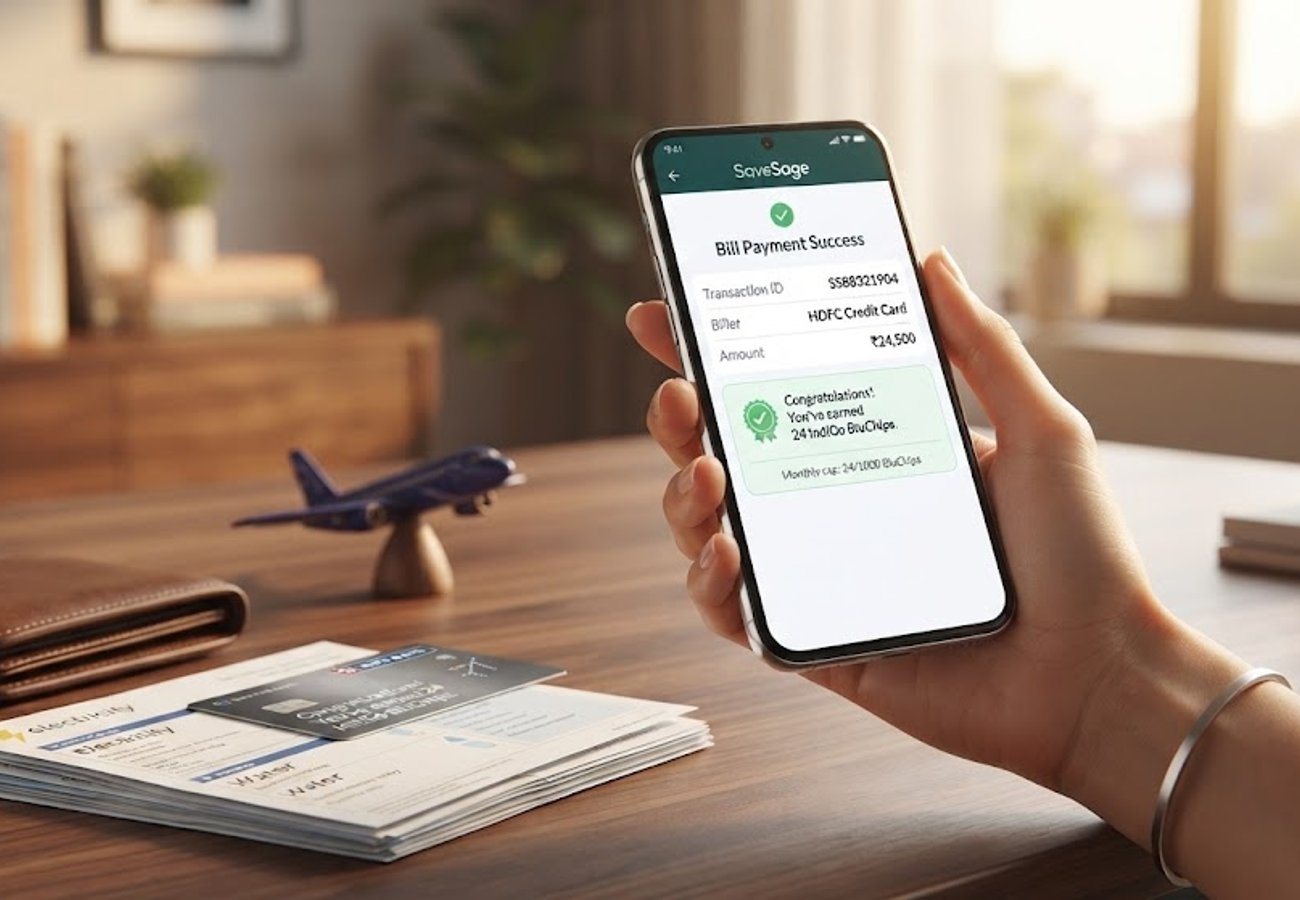
Image generated by AI
Indian consumers can now transform mandatory monthly expenses into flight rewards as SaveSage and IndiGo BluChips launch a partnership that grants 1 BluChip for every ₹1,000 spent on utility and credit card bills. This initiative, effective as of August 10, 2026, shifts the loyalty paradigm by rewarding non-discretionary spending.
The collaboration targets a specific gap in the financial ecosystem: the lack of incentives for settling outstanding balances. While traditional loyalty programs reward the act of spending, this model rewards the settlement of that spending. By integrating with the IndiGo BluChips ecosystem, SaveSage allows users to accumulate travel credits through the very process of managing their debt and household overheads.
Earning Structure for IndiGo BluChips via SaveSage
The operational framework of this partnership is designed for immediate accessibility. Users who process eligible credit card and utility payments through the SaveSage platform are automatically eligible for rewards based on the transaction volume.
The reward ratio is fixed at one IndiGo BluChip for every ₹1,000 processed. To maintain the sustainability of the program, a monthly ceiling has been implemented, capping total earnings at 1,000 BluChips per user per month. According to company reports, this feature is live and available to all SaveSage users without a phased rollout.
Once accumulated, these BluChips are integrated into the user's IndiGo account and can be redeemed for flights and other partner benefits, provided they meet the standard redemption criteria set by the airline.
Strategic Shift in Loyalty Program Architectures
For decades, airline loyalty programs have operated on a "spend-to-earn" model, focusing on high-value transactions like international flight bookings, luxury hotel stays, and retail partnerships. This new arrangement marks a departure from that strategy by targeting "unavoidable" financial obligations.
By attaching travel rewards to credit card bill payments, the partnership addresses a recurring expenditure category that typically offers zero return for the consumer. This indicates a broader trend where loyalty strategies are moving away from discretionary luxury spending and toward the integration of daily financial routines.
Analyzing the Indian Credit Card Market Growth
The timing of this launch aligns with a massive surge in digital credit adoption across India. Industry data indicates there are currently more than 120 million active credit cards in the country, with an average of over 1 million new cards being issued every single month.
Despite this rapid growth, the market remains significantly under-penetrated compared to global peers. Current data shows credit card penetration in India is below 6% of the population, a stark contrast to the 40% seen in China and the 70% observed in the United States. This gap represents a massive growth opportunity for fintech platforms like SaveSage to attract users by offering tangible value on top of standard banking services.
Evolution of the Travel Industry Ecosystem
This partnership reflects a strategic move by airlines to maintain a constant presence in the consumer's life, rather than only being relevant during the booking window. By linking rewards to monthly bills, IndiGo ensures its brand remains "top-of-mind" every time a customer settles their accounts.
In a competitive aviation market, airlines are no longer competing solely on ticket pricing or route networks. The battle has shifted toward the "loyalty ecosystem." By partnering with fintech specialists, airlines can extend their reach into the household budget, creating a psychological link between financial discipline (paying bills) and the reward of travel.
Executive Perspective on Value Extraction
Ashish Lath, Founder and CEO of SaveSage, has indicated that the primary goal is to transform mundane transactions into wealth-building opportunities for travel. The philosophy behind the move is not to encourage consumers to spend more, but to extract more value from the money they are already spending.
For the high-volume user—such as those managing multiple credit cards or large utility accounts—this creates a secondary revenue stream in the form of travel credits. It effectively turns a financial liability (a bill) into a future asset (a flight).
Consumer Impact and Reward Limitations
While the ability to earn BluChips on bills is a net positive for the traveler, the impact is tempered by the monthly cap. With a limit of 1,000 BluChips per month, the program functions as a supplemental earning channel rather than a primary method for earning free travel.
Users must balance the benefits of these rewards against any potential fees associated with using third-party payment platforms. The actual utility of the earned chips will depend entirely on IndiGo's redemption tables and the availability of reward seats on desired routes.
The Future of Non-Flight Based Loyalty
The SaveSage and IndiGo partnership serves as a blueprint for the future of airline loyalty. As the boundaries between banking, fintech, and travel blur, we can expect more "lifestyle integration" rewards. The ability to earn miles or points through insurance premiums, rent payments, or government taxes is the logical next step in this evolution.
Ultimately, the success of this model will depend on how effectively Indian consumers perceive these "bill-payment rewards" as a significant benefit. If adoption remains high, it could force other major carriers in the region to seek similar fintech partnerships to prevent their loyalty members from migrating to more flexible ecosystems.
The transition from "flying to earn" to "paying to fly" marks a pivotal shift in the economics of travel rewards.
Related Travel Guides
Disclaimer
This article is for informational and educational purposes only. It does not constitute legal, financial, or professional advice. While we strive to provide accurate and up-to-date information, travel policies, regulations, and conditions change rapidly. Always verify information with official sources before making travel decisions. Nomad Lawyer makes no representations about the accuracy, reliability, completeness, or suitability of the information provided. Readers should consult qualified professionals for advice specific to their circumstances. The views expressed in this article are those of the author and do not necessarily reflect the views of Nomad Lawyer.
Preeti Gunjan
Contributor & Community Manager
A passionate traveller and community builder. Preeti helps grow the Nomad Lawyer community, fostering engagement and bringing the reader experience to life.
Learn more about our team →