
Saudia and Qatar Airways Disruptions: 208 Flights Cancelled Across Riyadh, Jeddah, and Abha Amid Houthi Missile Threats 2026
Over 360 flights were cancelled or delayed across Saudi Arabia, including major hubs in Jeddah and Riyadh, following Houthi missile threats and airspace security alerts affecting Saudia and Qatar Airways.

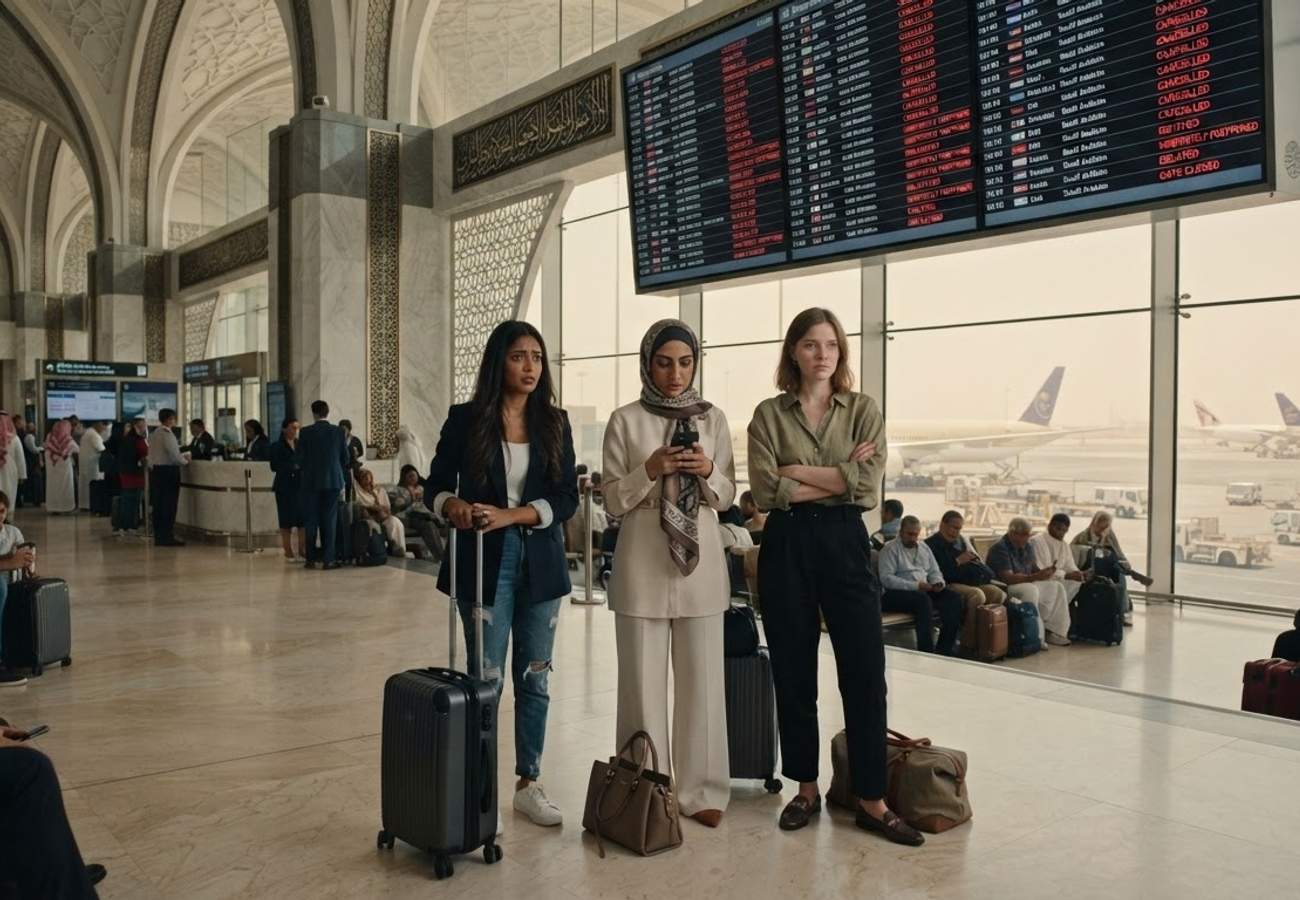
Image generated by AI
Regional security escalations have triggered a systemic failure in Saudi Arabian aviation operations, resulting in 208 cancelled flights and 158 delays. The disruption is centered on national carrier Saudia, which accounts for 75% of all cancellations.
The operational turmoil follows claims by Houthi forces of large-scale missile strikes against the Kingdom, specifically targeting Abha Airport. These attacks were reportedly retaliation for the diversion of an Iran-bound aircraft carrying a Houthi delegation. Consequently, the Houthis issued a formal warning via X (formerly Twitter), advising airlines to avoid Saudi airspace until the blockade of Sana’a International Airport is lifted.
While Saudi airspace remains officially open, carriers are proactively rerouting or cancelling flights to mitigate operational risks.
Flight and Airport Impact Breakdown
Flight tracking systems, including FlightAware, indicate that the disruptions are concentrated across six primary hubs.
Airport Operational Data
- King Abdulaziz International (Jeddah): The most affected hub for cancellations with 50 cancelled flights and 57 delays.
- King Khalid International (Riyadh): Recorded the highest volume of delays nationwide with 99 delayed flights and 48 cancellations.
- Abha Airport: 48 cancellations and 2 delays, reflecting the direct impact of missile threats.
- Gizan Airport: 36 cancellations.
- Najran Airport: 20 cancellations (zero reported delays).
- Sharurah Airport: 6 cancellations.
Airline Impact Statistics
- Saudia: The most severely impacted carrier with 156 cancellations and 32 delays.
- Flynas: 16 cancellations and 39 delays.
- flyadeal: 20 cancellations and 19 delays.
- Qatar Airways: 12 delays (no cancellations reported).
- Other Affected Carriers: FlyDubai, Air Arabia, Gulf Air, and Nile Air.
Passenger Rights & Advisory (Information Gain)
Passengers stranded or affected by these disruptions should be aware of their legal entitlements. While Saudi Arabia does not follow EU261/2004, international carriers (like Qatar Airways) or passengers flying from EU/UK origins may have specific protections.
Immediate Actions for Stranded Passengers:
- Duty of Care: If you are delayed or stranded, request meal and refreshment vouchers. For overnight delays, airlines are generally expected to provide hotel accommodation and transport.
- Rebooking Rights: Under standard aviation policy, you are entitled to the earliest possible rerouting to your destination or a full refund of the unused portion of the ticket if the flight is cancelled.
- Documentation: Retain all receipts for "out-of-pocket" expenses (hotels, food, transport) incurred due to the delay. These are essential for insurance claims or reimbursement requests.
- Force Majeure: Airlines may claim "extraordinary circumstances" (security threats/war) to avoid paying cash compensation. However, this does not exempt them from providing a refund or rebooking.
Traveler Checklist:
- Enable push notifications on airline mobile apps for real-time gate changes.
- Verify flight status via official airport portals before departing for Jeddah or Riyadh.
- Keep essential medications and travel documents in carry-on luggage to avoid reliance on checked bags during extended delays.
Industry Analyst View
The current crisis underscores the fragility of regional aviation when geopolitical tensions escalate. The decision by carriers to cancel flights despite open runways demonstrates a "risk-aversion" strategy common in high-threat environments.
The concentration of 75% of cancellations within Saudia highlights the vulnerability of national flag carriers who maintain the highest density of domestic and regional routes. For the industry, the primary challenge is the "ripple effect"—where a security incident in Abha creates a logistical bottleneck in Jeddah and Riyadh due to aircraft and crew displacement. Until a diplomatic resolution regarding Sana’a International Airport is reached, airlines will likely maintain a conservative operational posture, leading to further intermittent volatility in flight schedules.
Operational stability remains contingent on the de-escalation of Saudi-Yemen border tensions.
Related Travel Guides
Disclaimer
This article is for informational and educational purposes only. It does not constitute legal, financial, or professional advice. While we strive to provide accurate and up-to-date information, travel policies, regulations, and conditions change rapidly. Always verify information with official sources before making travel decisions. Nomad Lawyer makes no representations about the accuracy, reliability, completeness, or suitability of the information provided. Readers should consult qualified professionals for advice specific to their circumstances. The views expressed in this article are those of the author and do not necessarily reflect the views of Nomad Lawyer.
Kunal K Choudhary
Co-Founder & Contributor
A passionate traveller and tech enthusiast. Kunal contributes to the vision and growth of Nomad Lawyer, bringing fresh perspectives and driving the community forward.
Learn more about our team →