
Saudi Arabia's Vision 2030 Targets China and India as Tourism Powerhouses Amid Record Visitor Surge
Saudi Arabia is strategically positioning China and India as cornerstone tourism markets under Vision 2030, leveraging Asia's expanding middle class and outbound travel demand for record visitor growth.

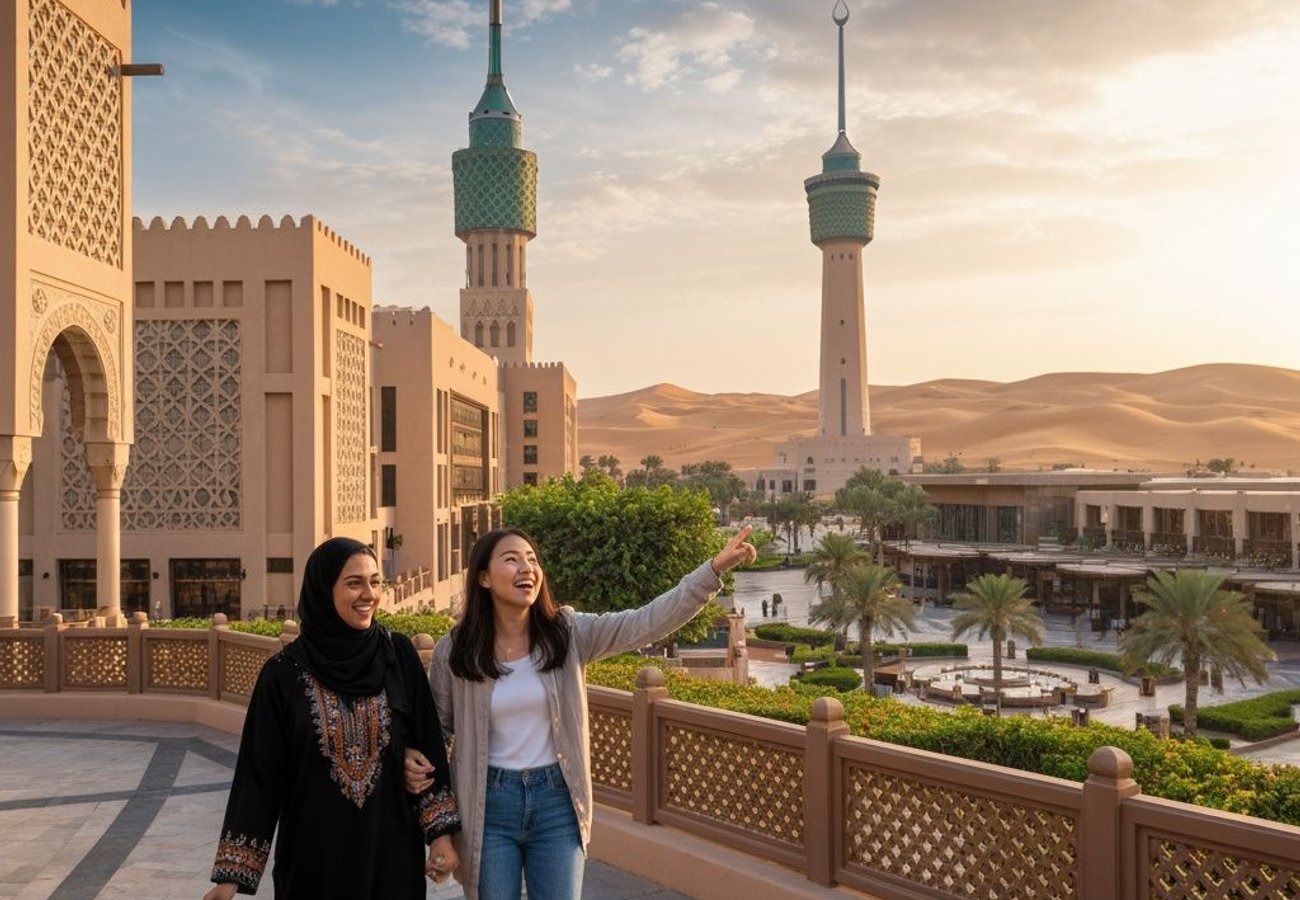
Image generated by AI
The Kingdom's Pivot Toward Asia's Travel Titans
Saudi Arabia is executing a laser-focused tourism strategy that treats China and India not as secondary markets, but as the twin engines of its visitor economy over the coming decade. Under the ambitious Vision 2030 framework, the Kingdom is deliberately repositioning itself to capture explosive growth from Asia's expanding middle class—a demographic shift that represents one of the most significant tourism opportunities of our generation.
This is not incremental growth. This is structural.
The numbers reveal the opportunity. China generates over 150 million international trips annually, while India's outbound tourism market is expanding at double-digit rates annually. Together, these two nations represent a combined population base of nearly 2.8 billion people, with rising disposable incomes and unprecedented appetite for international travel experiences.
Reddit: "Saudi Arabia under Vision 2030 is essentially betting everything on Asia's new middle class. That's where the real money is moving." — r/travel
Why China Represents Unstoppable Luxury Demand
Chinese travellers have fundamentally transformed global tourism. They arrive with high spending power, preference for premium experiences, and sophisticated digital expectations. For Saudi Arabia, this translates into immediate revenue opportunity across luxury hospitality, high-end retail, and curated cultural experiences.
The Kingdom's portfolio—including UNESCO-listed heritage sites, dramatic desert landscapes, and newly developed Red Sea luxury resorts—aligns perfectly with what Chinese tourists actually want: authentic cultural immersion paired with world-class amenities.
Chinese visitors increasingly eschew traditional group tourism in favour of independent, experience-driven travel. They document destinations extensively across social media platforms, turning personal travel into amplified destination marketing. A luxury weekend in Jeddah or Riyadh doesn't just generate direct tourism revenue; it generates organic digital promotion to hundreds of millions of potential follow-on visitors.
The infrastructure is already taking shape. Saudi Arabia has streamlined visa processes and expanded flight connectivity specifically to facilitate Chinese arrivals.
India's Volume Engine: The Numbers Game
While China drives premium spending, India contributes something equally valuable: sustained, high-volume visitor arrivals. India's outbound tourism market is one of the fastest-growing globally, powered by a youthful demographic, rising middle-class expansion, and dramatically improved international air connectivity.
Indian travellers favour family tourism, religious and cultural experiences, and accessible luxury—the exact demographic sweet spot that Saudi Arabia's diversified portfolio serves. They also bring different spending patterns: where Chinese visitors concentrate expenditure in luxury retail and premium hospitality, Indian tourists distribute spending across mid-range accommodation, dining, and entertainment sectors.
The combined effect is visitor pipeline stability. China provides revenue concentration; India provides occupancy depth.
Recent data shows Indian visitor numbers to Saudi Arabia already demonstrating consistent double-digit annual growth, a trajectory expected to accelerate sharply as Vision 2030 projects mature.
The Institutional Architecture Behind Growth
This isn't happening by accident. Saudi Arabia, China, and India have constructed multi-layered institutional frameworks linking tourism authorities, cultural bodies, and investment agencies across all three nations. The objective is deliberately straightforward: create seamless travel ecosystems that eliminate friction points and strengthen bilateral understanding.
These frameworks extend beyond tourism into education, aviation network expansion, and investment mobility—a recognition that sustainable visitor growth requires infrastructure coordination across multiple economic sectors.
According to recent Vision 2030 progress reports, Saudi Arabia has already invested substantially in aviation infrastructure, hospitality development, and digital tourism platforms. Each represents a deliberate signal to both Chinese and Indian outbound travellers that the Kingdom views them not as experimental markets, but as cornerstone growth corridors.
What Chinese and Indian Travellers Actually Expect
The modern Chinese or Indian international traveller bears little resemblance to the package-tour visitors of the previous decade. Both segments demand frictionless digital experiences, mobile-first booking systems, and culturally adapted hospitality services.
For Chinese visitors: integration with local digital payment ecosystems, Mandarin-language support, and seamless transaction flows are non-negotiable. A luxury resort that doesn't accept WeChat Pay or provide Mandarin concierge services is leaving revenue on the table.
For Indian travellers: visa simplification, English-language infrastructure, and flexible family-oriented travel options drive decision-making. Religious tourism combined with family leisure experiences represents a significant growth segment that Saudi Arabia is specifically developing.
Reddit: "The real game-changer is how Saudi Arabia is actually investing in infrastructure that serves these markets. It's not just marketing—it's genuine service adaptation." — r/hotels
Saudi Arabia's Tourism Assets: Perfectly Aligned Offerings
Here's where strategy meets execution. Saudi Arabia's tourism portfolio—Red Sea resorts, Neom entertainment projects, Riyadh's cultural districts, and vast desert heritage zones—creates genuine appeal across multiple traveller motivations simultaneously.
For luxury-focused Chinese visitors, the Red Sea development offers five-star beachfront experiences in an exclusive, newly developed corridor. For Indian family travellers, the same destination offers cultural heritage experiences, accessible luxury, and multi-generational appeal.
This isn't a destination retrofitting itself for new markets. This is a destination whose natural assets happen to align precisely with what the world's two largest emerging outbound tourism markets actively seek.
The Digital Readiness Imperative
Competing for Asian tourism traffic demands infrastructure investment that extends beyond hotels and airports. It requires wholesale digital transformation.
Saudi Arabia has already implemented visa-on-arrival systems and digital visa platforms specifically designed to reduce friction for international travellers. Airlines serving the Kingdom—particularly Saudi Arabian Airlines—have expanded capacity and flight frequencies to key Chinese and Indian cities.
But sustained competitiveness depends on continuous infrastructure investment: multilingual digital platforms, payment system compatibility, and personalized tourism services that anticipate traveller needs rather than merely responding to them.
The Economic Impact: Both Volume and Value
The mathematics are compelling. Chinese tourists generate substantial per-visit spending, particularly in premium retail and hospitality segments. Indian tourists drive high-volume arrivals that ensure strong occupancy rates across mid-range and budget hospitality stock.
Together, they create a balanced tourism economy. Neither market can independently sustain the Kingdom's tourism ambitions, but their combined effect—China's revenue density plus India's arrival volume—generates both sustainable growth and economic resilience.
Tourism revenue projections under Vision 2030 explicitly target these markets as critical growth drivers. The Kingdom has publicly committed to increasing international visitor arrivals from approximately 100 million annually by 2030, with Asian markets providing the plurality of this growth.
Geopolitical Foundations: Beyond Tourism
Tourism expansion between Saudi Arabia, China, and India doesn't emerge in a vacuum. It sits atop decades of deepening economic, trade, and energy cooperation.
China remains a critical strategic economic partner for Saudi Arabia across energy, infrastructure, and investment flows. India plays an increasingly important role in labour mobility, trade agreements, and energy cooperation.
These relationships create a sturdy foundation for tourism development as a natural extension of broader bilateral engagement. When governments invest in fundamental economic partnerships, tourism cooperation typically follows as a logical next step—and frequently accelerates faster than anticipated.
The geopolitical alignment matters because it signals government commitment beyond marketing campaigns. Tourism barriers fall when trade barriers fall. Visa restrictions ease when investment frameworks deepen. Direct flight routes open when diplomatic relations stabilize.
What Comes Next: The Implementation Phase
The strategic framework is clear. The asset portfolio is compelling. The markets are primed. What matters now is execution velocity—how rapidly Saudi Arabia can scale infrastructure, hospitality inventory, and digital services to match the demand surge already beginning from Chinese and Indian outbound travellers.
Watch for announcements around: direct flight capacity expansion, hospitality development in secondary cities, digital platform launches targeting specific Asian markets, and visa process further streamlining.
These details seem administrative. They're actually the difference between strategic ambition and realized growth.
The Kingdom's tourism transformation under Vision 2030 represents something larger than destination development. It represents a recognition that global economic gravity is shifting eastward, and tourism flows follow trade flows, investment flows, and where opportunities for mutual prosperity exist.
Saudi Arabia is positioning itself accordingly.
The real competition in global tourism isn't destination versus destination anymore—it's the speed at which nations adapt their infrastructure to serve the markets that matter.
Related Travel Guides
Disclaimer
This article is for informational and educational purposes only. It does not constitute legal, financial, or professional advice. While we strive to provide accurate and up-to-date information, travel policies, regulations, and conditions change rapidly. Always verify information with official sources before making travel decisions. Nomad Lawyer makes no representations about the accuracy, reliability, completeness, or suitability of the information provided. Readers should consult qualified professionals for advice specific to their circumstances. The views expressed in this article are those of the author and do not necessarily reflect the views of Nomad Lawyer.
Raushan Kumar
Founder & Lead Developer
Full-stack developer with 11+ years of experience and a passionate traveller. Raushan built Nomad Lawyer from the ground up with a vision to create the best travel and law experience on the web.
Learn more about our team →