
SAS Flight Cancellations Hit Stockholm Arlanda Airport: 6 Flights Grounded, 23 Delays Ripple Across 34 European Cities in June 2026
SAS and Scandinavian Airlines Ireland cancelled 6 flights at Stockholm Arlanda Airport on June 6, 2026, triggering cascading delays across 34 European destinations from London to Athens.

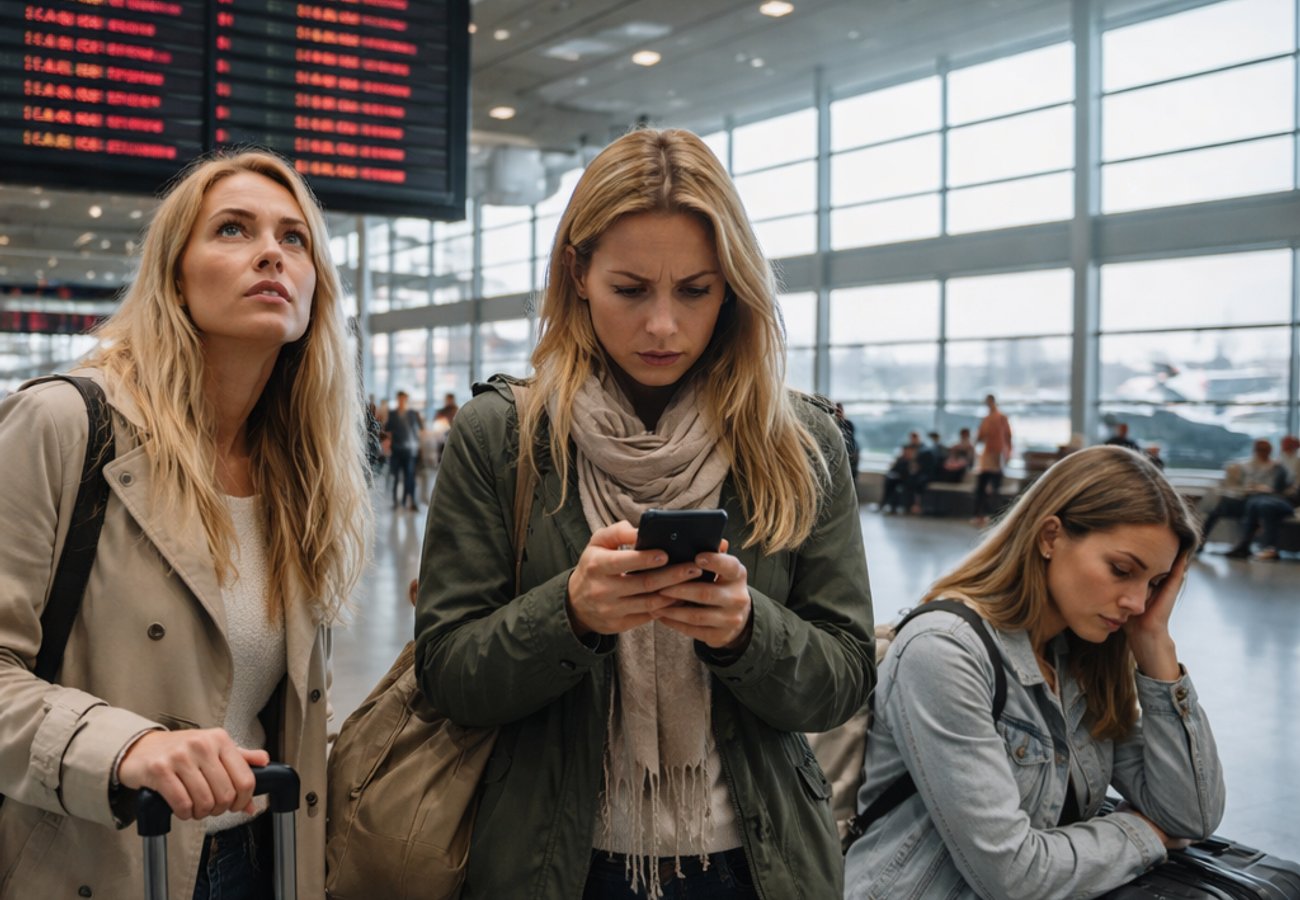
Image generated by AI
Major Airline Disruption Unfolds Across European Network
Stockholm Arlanda Airport became the epicenter of a significant travel crisis on June 6, 2026, when SAS and Scandinavian Airlines Ireland simultaneously grounded flights and reported widespread operational chaos. The twin airlines cancelled six flights and recorded 23 additional delays, creating a domino effect across one of Europe's most critical aviation hubs. What started as a localized problem at Sweden's primary international gateway rapidly metastasized into a continent-wide disruption affecting 34 major European cities.
The timing couldn't be worse. June marks peak travel season across Europe, with business travelers heading to summer conferences and leisure passengers booking weekend getaways. Passengers were left scrambling for alternatives, missing connections, and facing extended layovers while airlines worked frantically to stabilize operations.
The Scale of Cancellations: By the Numbers
The disruption broke down into stark arithmetic. SAS reported 2 cancellations alongside 15 delayed flights. Scandinavian Airlines Ireland disclosed 1 cancellation and 8 delayed flights. This wasn't a massive meltdown in absolute terms—but in an interconnected network spanning half a continent, three cancellations became a network-wide catastrophe.
According to FlightAware's real-time tracking data, the cascading effect proved exponentially worse than the headline numbers suggested. A single cancelled flight from Stockholm to Edinburgh meant dozens of connecting passengers missed their onward journeys to London, Paris, and beyond.
The Geographic Catastrophe: 34 Cities in the Crosshairs
What made this disruption genuinely alarming was its reach. Beyond the Swedish capital, the following cities experienced knock-on delays and cancellations:
United Kingdom: Edinburgh, London
Continental Western Europe: Brussels, Amsterdam, Paris, Berlin, Hamburg, Nice
Southern Europe: Barcelona, Málaga, Alicante, Athens, Rhodes, Rome, Bergamo, Malta, Split
Mediterranean & Eastern Europe: Tirana, Belgrade, Prague, Lisbon, Kraków, Warsaw
Nordic Region: Copenhagen, Bergen, Helsinki, Tromsø, Mariehamn, Halmstad, Kiruna, Umeå, Ängelholm
Other Destinations: Keflavík (Iceland)
Reddit: "I was supposed to connect through Stockholm to Nice and ended up spending 12 hours in the terminal trying to find a flight that wasn't overbooked." — r/travel
The geographic spread—from the Arctic Circle to the Mediterranean—underscored how dependent modern European air traffic is on a handful of Scandinavian hubs. When Stockholm stumbled, it rippled across 1,500 miles of airspace.
What Triggered the Crisis?
The source article citing FlightAware data provided no explanation for the root cause. Was it weather? Maintenance issues? Crew problems? The silence itself became noteworthy. In the absence of clear communication from the airlines, speculation ran rampant among stranded passengers.
This pattern of vagueness from European carriers is well-documented. When operational failures occur, airlines typically delay public disclosure while they assess liability and potential compensation claims. The EU's aggressive passenger protection regulations—which mandate compensation up to €600 per passenger for certain cancellations—give airlines financial incentives to downplay disruptions.
Your Rights When Flights Are Cancelled
If your flight was among those affected on June 6, 2026, European law offers concrete protections. Under EU Regulation 261/2004, passengers are entitled to:
Rebooking without additional charge on the next available flight to their final destination, or alternative transport (train, bus).
Hotel accommodation and meals if an overnight stay becomes necessary due to the cancellation.
Compensation of €250-€600 depending on flight distance, provided the airline cannot prove the cancellation resulted from "extraordinary circumstances" beyond their control.
The operative phrase—"extraordinary circumstances"—has become the battlefield. Airlines aggressively invoke mechanical failures, weather, air traffic control strikes, and security threats. Courts have increasingly skeptical of such claims, especially when the disruption stems from inadequate maintenance scheduling or crew planning.
Immediate Steps for Affected Travelers
If you found yourself stranded at Stockholm Arlanda or any of the 33 affected destinations, here's the critical playbook:
Document everything. Screenshot your booking confirmation, boarding pass, any communications from the airline, and receipts for meals, hotels, or alternative transport. This becomes your legal evidence trail.
Contact the airline in writing. Don't rely on phone calls or in-person conversations. Use email or the airline's official complaint portal. Written communication creates a timestamped record that holds up in disputes.
Keep alternative transport receipts. If you paid out-of-pocket for train tickets, taxis, or hotels, save every receipt. You may recover these costs.
File a compensation claim. Use AirHelp, Bott, or similar services, or directly contact the airline's claims department. Frame your claim around the flight distance and the length of delay or cancellation.
Know the clock is ticking. Claim deadlines vary by country but typically range from two to six years. Check your home country's regulations.
Why This Matters Beyond June 6
The Stockholm disruption on June 6, 2026, wasn't an isolated incident. European aviation operates at near-capacity across major hubs. Lufthansa, Air France-KLM, Ryanair, and easyJet have all reported similar cascading disruptions in recent months. The infrastructure simply cannot absorb unexpected shocks without systemic failure.
Airlines argue they're understaffed due to pandemic-era layoffs that weren't reversed when demand rebounded explosively in 2024-2025. Pilots, cabin crew, and ground handlers remain in chronic shortage across the continent. Add climate-related weather volatility, aging aircraft requiring more frequent maintenance, and understaffed air traffic control centers, and you have a recipe for recurring chaos.
The Broader Pattern: Europe's Aviation Crisis
This incident fits into a troubling trend. Summer 2024 and 2025 saw record-breaking delays across European airports. The EU has acknowledged systemic understaffing and infrastructure inadequacy but proposed fixes remain mired in bureaucratic processes. National governments have rejected proposals to hire more air traffic controllers or incentivize airline hiring, citing budget constraints.
Passengers bear the cost—literally and figuratively. Missed business meetings, ruined vacations, and the psychological toll of uncertainty have become normalized features of European air travel.
Recovery Efforts and Ongoing Impacts
By late afternoon on June 6, both SAS and Scandinavian Airlines Ireland had initiated recovery operations. Aircraft were repositioned, crews rescheduled, and rebooking waves began flowing. However, full recovery typically takes 24-48 hours for networks of this complexity. Passengers booked on June 7-8 flights should expect residual effects.
The airlines' statements—when finally released—emphasized their commitment to "minimizing passenger impact" and "operating safely." Standard corporate messaging. What passengers actually needed was transparency about the root cause and concrete compensation timelines. Neither materialized with any speed.
Looking Ahead: What Travelers Should Do
If you're booking flights through Scandinavian hubs in summer 2026, consider these precautions:
Build in connection time. If your itinerary includes Stockholm, Copenhagen, or other Nordic hubs, allow at least three hours between connections, not the typical 90 minutes.
Buy travel insurance with delay coverage. Standard policies rarely cover airline-caused delays. Seek policies that reimburse hotel, meals, and onward transportation after 12+ hour delays.
Choose direct flights when possible. Hub-dependent routing multiplies your exposure to cascading cancellations.
Monitor FlightAware before arriving at the airport. Real-time tracking reveals developing problems hours before airlines issue official statements.
Stockholm's June 6 meltdown was neither the first nor the last—prepare accordingly.
Related Travel Guides
Floating Bridge Scare: 30 Tourists Rescued From Chilika Lake Fog Stranding
Indonesia Aviation Boom: 4.4M Passengers Surge During Eid 2026
Disclaimer
This article is for informational and educational purposes only. It does not constitute legal, financial, or professional advice. While we strive to provide accurate and up-to-date information, travel policies, regulations, and conditions change rapidly. Always verify information with official sources before making travel decisions. Nomad Lawyer makes no representations about the accuracy, reliability, completeness, or suitability of the information provided. Readers should consult qualified professionals for advice specific to their circumstances. The views expressed in this article are those of the author and do not necessarily reflect the views of Nomad Lawyer.
Kunal K Choudhary
Co-Founder & Contributor
A passionate traveller and tech enthusiast. Kunal contributes to the vision and growth of Nomad Lawyer, bringing fresh perspectives and driving the community forward.
Learn more about our team →