
150 Flights Delayed, 6 Canceled at São Paulo-Congonhas Airport Disrupts LATAM, Gol, Azul June 2026
Major operational disruption at São Paulo-Congonhas Airport left hundreds stranded as 150 domestic flights delayed and 6 canceled, affecting Brazil's busiest aviation hub.

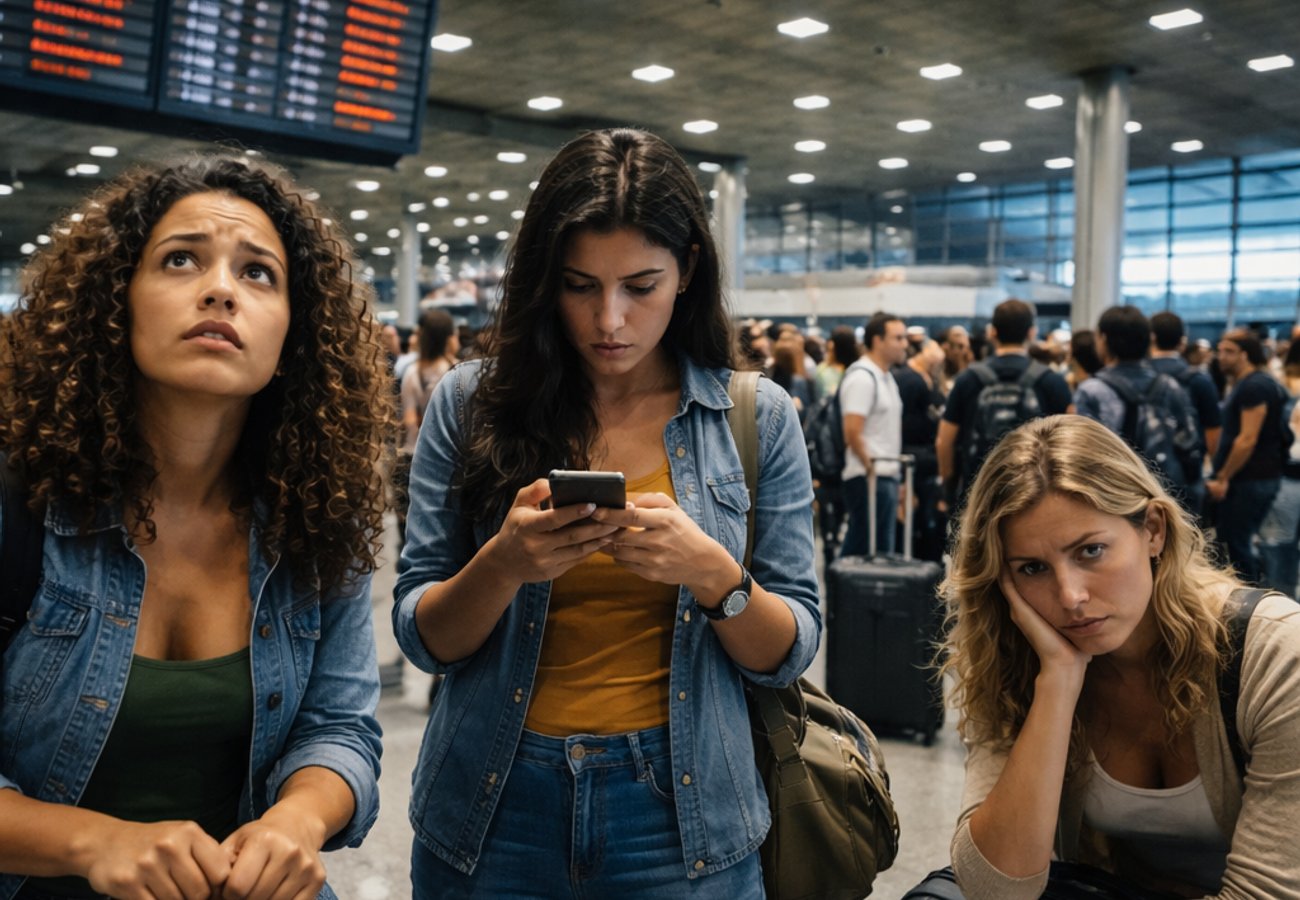
Image generated by AI
The departure board at São Paulo-Congonhas Airport told a story no traveler wants to see. Red text. Cascading numbers. A day that promised connection instead delivered frustration.
On June 9, 2026, the airport recorded 150 flight delays and 6 cancellations, rippling across Brazil's most critical domestic aviation network. Families, business professionals, and tourists watched their carefully planned itineraries dissolve into uncertainty as carriers including LATAM, Gol, and Azul scrambled to manage the chaos.
What started as operational turbulence became a masterclass in how quickly modern aviation can unravel—and what it reveals about the pressures facing one of South America's busiest airport hubs.
When One Airport Grinds to a Halt
Congonhas Airport isn't just another terminal. Nestled in the heart of São Paulo, it's the country's financial capital's primary domestic gateway, connecting Brazil's economic and political centers: Rio de Janeiro, Brasília, Belo Horizonte, Porto Alegre, and Curitiba.
This isn't a small regional airport dealing with occasional hiccups. Congonhas moves staggering volumes of passengers daily—many of them executives catching tight connections between Brazil's major business hubs.
Reddit: "Missed a critical client meeting because of the Congonhas mess. No warning, no communication. Airlines acting like delays are just weather." — r/travel
The magnitude of the disruption—150 delays simultaneously—signals something more systemic than a single weather event or mechanical issue. When that many flights back up at once, the domino effect cascades ruthlessly through the entire network.
The Anatomy of Airport Chaos
Airport delays rarely stem from one cause. Instead, they're a perfect storm of operational pressure points colliding at once.
Weather conditions remain aviation's most unpredictable variable. Heavy rain, reduced visibility, or wind shear can ground aircraft or slow arrivals to a crawl. But Brazil's winter weather in June typically runs mild—suggesting other factors were at play.
Air traffic congestion is another culprit. Congonhas isn't designed to handle unlimited volume. Peak-hour operations compress dozens of departures into narrow time windows. When one flight falls behind, subsequent flights inherit the delay like a virus spreading through a schedule.
Aircraft rotation explains how early delays metastasize into full-day disruptions. A domestic aircraft might fly four or five segments daily. When Flight A is late, Flight B becomes late, and suddenly Flight C is operating four hours behind schedule.
Ground operations—passenger boarding, baggage handling, aircraft maintenance inspections, fueling—can also create bottlenecks, especially during peak periods when every gate and tug is in simultaneous use.
Brazil's air navigation system coordinates thousands of daily movements across the nation's airspace. Any adjustment to traffic flow can cascade through connected airports.
Real Consequences for Real Travelers
Behind every delayed flight number is a human cost that statistics cannot capture.
Business travelers relying on Congonhas for rapid connections between São Paulo and Brasília suddenly face missed meetings and broken schedules. For executives whose time has monetary value, a three-hour delay translates directly to business impact.
Families with young children endure extended airport time—a challenge that compounds as waiting areas fill, patience depletes, and children grow increasingly restless.
Elderly passengers and those with mobility challenges face compounded stress during prolonged disruptions. A simple journey becomes an endurance test.
Passengers managing connections watched their transfers evaporate. A missed connection to Rio or Porto Alegre doesn't just mean waiting for the next flight—it potentially means overnight accommodation, missed events, and cascading logistical nightmares.
Who Regulates Brazilian Aviation?
Understanding passenger rights requires knowing which agencies hold authority over Brazilian skies.
ANAC (Agência Nacional de Aviação Civil) serves as Brazil's civil aviation regulator. ANAC establishes the rules that airlines and airports must follow, oversees safety compliance, and—critically—defines passenger protections during disruptions. ANAC's official passenger guidelines provide detailed information on your rights as a traveler.
When airlines fail to meet regulatory obligations during delays, passengers have grounds to file formal complaints with ANAC.
Airport operators work in coordination with ANAC and Brazil's air navigation authority to optimize operations and minimize disruptions. Their responsibility involves infrastructure maintenance, gate allocation, and coordination with ground service providers.
What Passenger Rights Actually Look Like
Brazilian aviation regulations provide concrete protections—if you know how to claim them.
Depending on delay duration, airlines must provide:
Communication Support: Airlines must inform passengers of schedule changes and reasons for delays in real-time, not after the fact.
Food and Refreshments: Extended delays (typically beyond 2-3 hours) trigger airline obligations to provide meals and beverages.
Accommodation: Overnight delays may entitle passengers to hotel accommodations and ground transportation to reach them.
Rebooking: Cancelled flights require airlines to rebook passengers on alternative flights or offer refunds.
The specific entitlements depend on delay duration, flight type, and whether the disruption results from airline responsibility or force majeure. ANAC maintains detailed compensation frameworks that specify exactly what airlines owe passengers.
Infrastructure Under Strain
Congonhas operates under permanent capacity constraints. Its location in central São Paulo makes it extraordinarily convenient—but that same geography limits physical expansion.
São Paulo International Airport (GRU), the city's larger international gateway, handles overflow traffic. But GRU sits further from the city, making it less convenient for domestic business travel.
Brazil's tourism and business aviation sectors continue expanding. Passenger demand has grown steadily year-over-year, putting sustained pressure on existing infrastructure. The nation has invested significantly in modernizing its aviation sector over the past decade, but demand growth often outpaces infrastructure improvements.
Industry analysts suggest that continued investment in airport technology, air traffic management systems, and ground operations efficiency will remain essential as travel demand accelerates.
Tactical Advice for Congonhas Travelers
If you're transiting through Congonhas, consider these practical protections:
Check flight status before departing for the airport—delays sometimes show up 24 hours in advance.
Arrive with extra buffer time during peak periods (typically 6am-10am and 4pm-7pm).
Enable airline push notifications to receive real-time schedule updates.
Keep essential items and medications in carry-on baggage, never checked luggage.
Understand your rights under Brazilian aviation regulations before flying.
Maintain copies of flight confirmations, receipts, and communication from airlines—these documents prove essential if you later file compensation claims.
The Bigger Picture
When 150 flights delay simultaneously at a major hub, it reveals structural truths about modern aviation. Capacity margins have tightened dramatically. The system operates with minimal slack. A single significant disruption cascades instantaneously.
For the thousands of travelers affected on June 9, the Congonhas disruption wasn't just an inconvenience—it was a disruption to families, business plans, and travel dreams.
Yet it also underscores why safety remains aviation's non-negotiable priority. Brazilian authorities and airlines, confronted with operational challenges, maintained safe operations even as schedules fragmented.
As Brazil's aviation sector continues modernizing and passenger demand accelerates, the pressure on hubs like Congonhas will only intensify. Whether infrastructure improvements keep pace with demand growth will determine whether similar disruptions become increasingly common or remain exceptional events.
The next time you check a departure board, remember: behind every flight number is someone's critical journey.
Related Travel Guides
Disclaimer
This article is for informational and educational purposes only. It does not constitute legal, financial, or professional advice. While we strive to provide accurate and up-to-date information, travel policies, regulations, and conditions change rapidly. Always verify information with official sources before making travel decisions. Nomad Lawyer makes no representations about the accuracy, reliability, completeness, or suitability of the information provided. Readers should consult qualified professionals for advice specific to their circumstances. The views expressed in this article are those of the author and do not necessarily reflect the views of Nomad Lawyer.
Kunal K Choudhary
Co-Founder & Contributor
A passionate traveller and tech enthusiast. Kunal contributes to the vision and growth of Nomad Lawyer, bringing fresh perspectives and driving the community forward.
Learn more about our team →