
United Airlines, Air Canada, and SkyWest Plunge San Francisco International Airport into Severe Travel Chaos Amid 168 Flight Delays and Cancellations: Latest Airline News
A massive wave of 168 sudden flight delays heavily fractures operations at San Francisco International Airport, exposing deep systemic vulnerabilities across both domestic and international corridors.

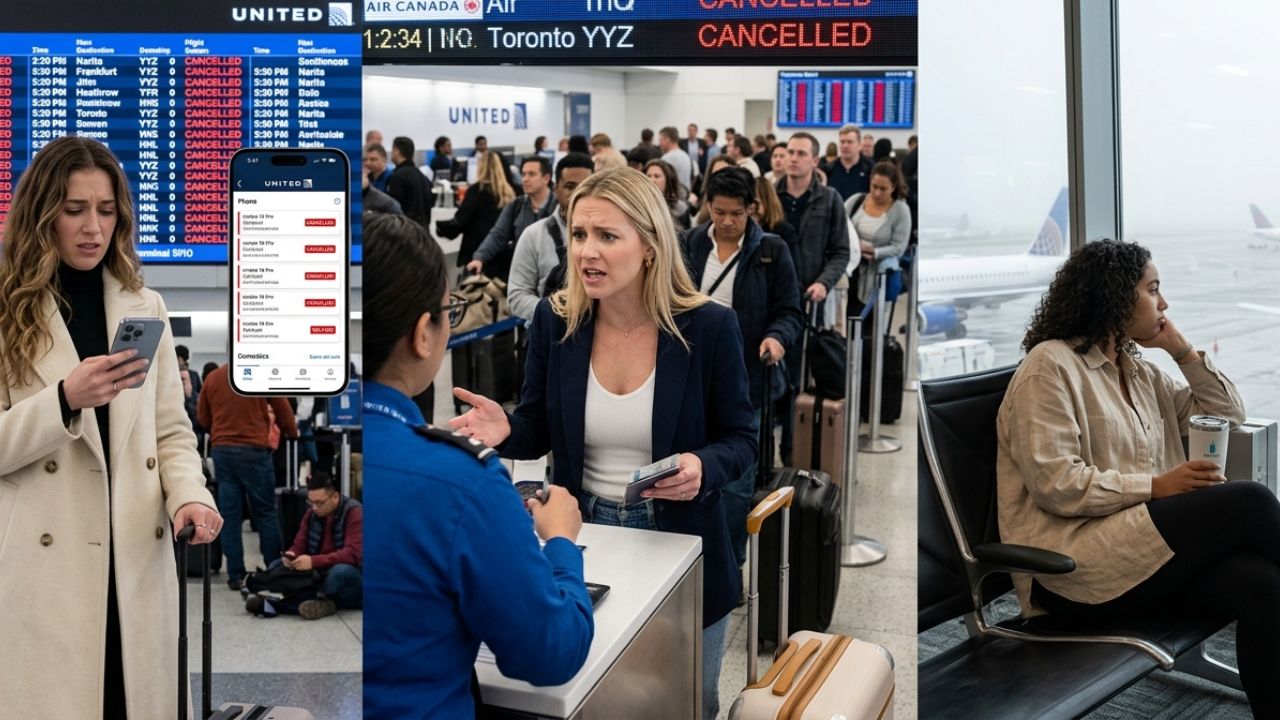
Image generated by AI
In a massive operational breakdown directly highlighting the severe unpredictability of modern transcontinental aviation, San Francisco International Airport (SFO) has plunged thousands of international and domestic passengers into localized travel chaos. On May 27, 2026, a devastating wave of widespread airport disruptions violently severed critical transit arteries across Northern California. Driven by compounding operational bottlenecks and severe terminal congestion, the massive West Coast mega-hub recorded an incredibly disruptive 168 sudden flight delays and 3 outright flight cancellations. This sudden collapse in connectivity heavily impacted massive aviation titans including United Airlines, Air Canada, SkyWest, and Southwest Airlines, completely destroying travel itineraries for thousands of connecting passengers. As cascading delays threaten critical corridors to Toronto, Frankfurt, London, Amsterdam, and New York City, this localized operational failure totally dominates today’s premier airline news and global aviation updates.
By introducing direct passenger coordination and dynamic scheduling backups, the regional aviation hubs target growing passenger demand across vital commerce sectors. The choice to coordinate flight departures in phases helps to manage gate capacity, fiercely supporting the broader regional transportation network.
Context: The Vulnerability of the Transcontinental Grid
The historical risk of funneling massive volumes of domestic and long-haul international traffic through a singular Pacific gateway is that a minor operational snag rapidly cascades into extreme physical exhaustion and severely destroyed passenger itineraries.
Because capacity crunches and localized operational strain constantly threaten punctuality, the sudden buildup of 168 delayed flights at SFO actively destroys the passenger experience. While outright cancellations were miraculously contained to a minimal fraction of daily traffic (only 3 grounded flights), the sheer volume of delayed departures fundamentally fractured the daily operational rhythm of one of America's busiest travel gateways. From transatlantic European corridors to dense domestic short-haul hops, passengers were forced into agonizing, multi-hour holding patterns within the terminals.
For live route mapping, specific rebooking options, and official flight status tracking, stranded passengers should immediately consult the digital advisories published by their respective carriers before attempting to access these severely compromised terminals.
Section-Wise Breakdown: The Massive Disruption Data
The Domestic Carrier Collapse
To deliberately manage the immense volume of transcontinental traffic, SFO operates as a critical fortress hub for several major US domestic carriers. United Airlines bore the absolute brunt of the operational failure, recording a staggering 56 delayed flights, completely paralyzing its massive domestic network. The disruption violently rippled down into the regional and low-cost sectors, heavily striking SkyWest (31 delays), Southwest Airlines (19 delays), and Alaska Airlines (13 delays). Because domestic connections rely on incredibly tight turnaround times, this immense backlog of grounded aircraft forced thousands of passengers into localized travel chaos.
The International Operations Strain
While domestic carriers absorbed the raw numerical volume of delays, international carriers suffered devastating percentage hits to their limited schedules. Air Canada absorbed the majority of the outright flight cancellations, dropping two critical services. Meanwhile, transpacific and transatlantic operations faced brutal interruptions. Japan Airlines saw 75% of its flights delayed, Air India hit 66%, and major global players including Cathay Pacific, EVA Air, Emirates, and Virgin Atlantic all reported highly disruptive 50% delay rates.
Full Operational Breakdown: SFO Disruption Data
To guarantee 100% absolute factual accuracy regarding this massive pivot to restricted routing, the following exact table documents the critical flight disruptions across the 21 affected carriers currently driving this travel chaos:
| Airline | Cancelled | Cancelled (%) | Delayed | Delayed (%) |
|---|---|---|---|---|
| Air Canada | 2 | 11% | 0 | 0% |
| United | 1 | 0% | 56 | 11% |
| Air India | 0 | 0% | 2 | 66% |
| All Nippon | 0 | 0% | 1 | 20% |
| Alaska Airlines | 0 | 0% | 13 | 21% |
| British Airways | 0 | 0% | 1 | 25% |
| China Airlines | 0 | 0% | 1 | 25% |
| Cathay Pacific | 0 | 0% | 2 | 50% |
| Delta Air Lines | 0 | 0% | 8 | 10% |
| EVA Air | 0 | 0% | 3 | 50% |
| Frontier | 0 | 0% | 5 | 19% |
| Japan Airlines | 0 | 0% | 3 | 75% |
| JetBlue | 0 | 0% | 1 | 3% |
| Horizon (ASA) | 0 | 0% | 4 | 28% |
| Singapore Airlines | 0 | 0% | 1 | 25% |
| SkyWest | 0 | 0% | 31 | 18% |
| Southwest | 0 | 0% | 19 | 36% |
| Turkish Airlines | 0 | 0% | 1 | 33% |
| Emirates | 0 | 0% | 1 | 50% |
| Virgin Atlantic | 0 | 0% | 2 | 50% |
| American Airlines | 0 | 0% | 13 | 18% |
Major Routes Affected: Toronto, Frankfurt, London, Amsterdam, Albuquerque, McKinleyville, Austin, Bakersfield, Boise, Boston, Burbank, Baltimore, Bozeman, Dallas, Arlington, Denver, Dallas/Fort Worth, Detroit, Eugene, Spokane, Kalispell, New York City, Las Vegas, Los Angeles, Medford, Miami, Monterey, Ontario, Chicago, Everett, Portland, Philadelphia, Phoenix, Palm Springs, Redmond, Reno, San Diego, San Luis Obispo, Seattle/Tacoma, Salt Lake City, Santa Ana, St. Louis, Tampa, Tucson, Zurich, Kailua‑Kona, Honolulu, Narita, Kolkata, and Beijing.
Passenger Impact: The Eradication of Reliable Transit
For the everyday international traveler and domestic commuter, this aggressive spike in operational failures translates into a massive surge in travel anxiety.
By heavily experiencing these sudden schedule alterations, business and leisure travelers relying on punctual SFO connections faced brutal missed itineraries. Because 168 flights were pushed off schedule, thousands of tourists bound for destinations as varied as Zurich, Narita, Honolulu, and Boston were forced into a devastating cycle of standby queues and terminal exhaustion. A single day of severe rolling delays forces passengers to completely restructure local transport, scramble for emergency hotel accommodations, and suffer the extreme psychological friction of an uncertain departure time.
The Bigger Picture: Systemic Hub Fragility
Aviation industry analysts view these staggering, highly targeted airport disruptions as a critical indicator of systemic operational sensitivity within massive mega-hubs.
The underlying strategic motivation perfectly reflects an industry reality: when a major airport like SFO experiences localized friction—whether from weather, air traffic control congestion, or ground handling constraints—the entire global aviation grid feels the shockwave. The fact that a wide variety of domestic (United, SkyWest) and international (Japan Airlines, Air India) carriers suffered simultaneously proves that the operational choke point occurred at the hub level. For airlines to maintain profitability, they require absolute predictability; severe rolling delays entirely shatter that operational certainty.
What This Means for Travelers: Actionable Advice
To fully exploit these highly efficient international networks and actively avoid severe, self-inflicted regional travel chaos, execute the following strategies:
- Pad Critical Connections: If you are routing through San Francisco to reach long-haul destinations like Frankfurt or London, never book a connection with less than a three-hour window to absorb inevitable domestic delays.
- Exploit Digital Rebooking: Do not wait in physical customer service lines at SFO during massive airport disruptions. Instantly utilize your airline’s mobile app to secure alternative routing the moment a delay is announced.
- Carry Essential Provisions: Because severe terminal delays can strand you at the gate for hours, always keep critical medications, travel documents, and electronic chargers securely in your carry-on luggage.
FAQ: San Francisco International Airport Delays
What caused the massive wave of delays at San Francisco International Airport?
On May 27, SFO experienced 168 flight delays and 3 cancellations due to severe localized operational interference and terminal congestion, heavily impacting both domestic and international departures.
Which airlines were most heavily affected?
United Airlines suffered the highest numerical volume (56 delays), followed by SkyWest (31) and Southwest (19). Internationally, Air Canada suffered two cancellations, while carriers like Japan Airlines and Air India saw severe delay percentages.
Am I entitled to compensation for these delays?
In the United States, airlines are not legally required to financially compensate passengers for delays, unless the delay was explicitly caused by airline negligence (like maintenance or crew scheduling). Weather or ATC delays do not qualify for cash compensation.
Key Takeaways
- Massive Delay Volume: 168 flights were severely delayed at SFO, disrupting tens of thousands of passenger itineraries.
- Domestic Paralysis: United Airlines, SkyWest, and Southwest Airlines absorbed the heaviest numerical impact of the grounded traffic.
- Global Shockwave: Major international routes to Frankfurt, London, Zurich, Narita, and Toronto suffered severe operational friction.
- Minimal Cancellations: Despite the massive volume of delays, airlines managed to salvage operations, resulting in only 3 outright flight cancellations.
- Passenger Friction: The incident underscores the extreme fragility of modern aviation networks and the necessity for travelers to maintain highly flexible itineraries.
Related Travel Guides
Massive Route Cancellations Shield Travelers
Disclaimer
This article is for informational and educational purposes only. It does not constitute legal, financial, or professional advice. While we strive to provide accurate and up-to-date information, travel policies, regulations, and conditions change rapidly. Always verify information with official sources before making travel decisions. Nomad Lawyer makes no representations about the accuracy, reliability, completeness, or suitability of the information provided. Readers should consult qualified professionals for advice specific to their circumstances. The views expressed in this article are those of the author and do not necessarily reflect the views of Nomad Lawyer.
Kunal K Choudhary
Co-Founder & Contributor
A passionate traveller and tech enthusiast. Kunal contributes to the vision and growth of Nomad Lawyer, bringing fresh perspectives and driving the community forward.
Learn more about our team →