
San Diego International Airport Passenger Traffic Surges 10.4% in 2026 Driven by Mexico and Europe
San Diego International Airport saw passenger traffic climb to 13.18 million in the first half of 2026, marking a 10.4% increase fueled by strong domestic demand and expanding global connectivity.

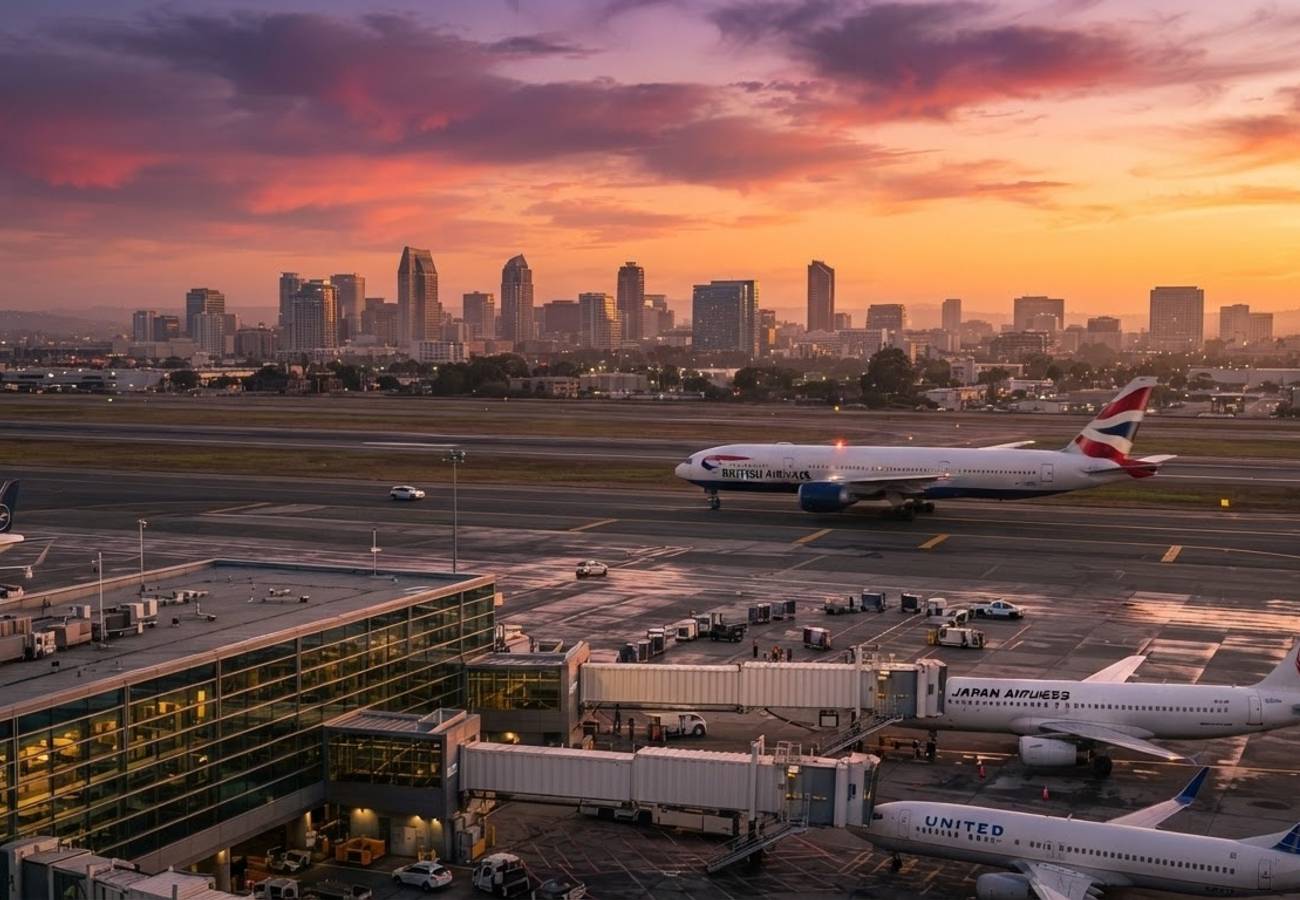
Image generated by AI
San Diego's aviation sector has hit a new milestone, with passenger traffic climbing 10.4% in the first half of 2026. This surge underscores the city's evolving status as a primary global gateway for both high-yield European travelers and strategic cross-border visitors from Mexico.
The first six months of 2026 have seen a significant acceleration in travel demand for Southern California. San Diego International Airport processed 13.18 million passengers between January and June 2026, a substantial jump from the 11.94 million recorded during the same window in 2025.
While domestic travel remains the primary engine of this growth, a diversifying international portfolio is shifting the city's tourism profile. The expansion is characterized by increased airline capacity, improved regional connectivity, and a targeted increase in arrivals from key global source markets.
Monthly Passenger Performance and Capacity Trends
The growth trajectory throughout the first half of the year was not uniform, peaking during the transition into the summer season. March emerged as the strongest month for year-on-year growth, while June set the record for total volume.
The surge in June was particularly notable, supported by a 9.6% increase in scheduled seats and a seat factor of 82.4%. Overall, passenger operations have increased by 11.6% year-to-date.
San Diego Passenger Volume Analysis (H1 2026)
| Month 2026 | Passenger Volume | Growth Compared With 2025 |
|---|---|---|
| January | 1.85 million | +3.6% |
| February | 1.84 million | +12.8% |
| March | 2.30 million | +15.3% |
| April | 2.25 million | +10.6% |
| May | 2.38 million | +9.8% |
| June | 2.55 million | +10.0% |
Strategic Market Influence: Mexico and the Cross-Border Advantage
Mexico continues to be the most critical strategic market for San Diego. Unlike other US hubs, San Diego leverages its unique geographical proximity to Baja California to maintain a constant flow of visitors.
This relationship is driven by a blend of family-centric cultural tourism, high-frequency business mobility, and leisure travel. The ability to facilitate seamless cross-border movement ensures that San Diego maintains year-round visitor demand, reducing the volatility typically seen in purely seasonal destinations.
European Expansion: The UK and Germany Corridors
San Diego is successfully diversifying its long-haul reach, with the United Kingdom and Germany serving as the primary European pillars.
- The United Kingdom: Direct connectivity via British Airways from London Heathrow has solidified the UK as a premium source market. This route attracts high-spending leisure travelers and corporate visitors drawn to Southern California's conference infrastructure and coastal attractions.
- Germany: Lufthansa’s connectivity via Munich has opened a vital channel for German tourists. This market is characterized by longer average stays and a strong interest in the region's technology sector and outdoor landscapes.
Global Connectivity and International Growth Metrics
While domestic flights carry the bulk of the volume, international traffic is growing at a steady pace. From January to June 2026, international passenger numbers reached 535,574, representing a 6.2% increase over the previous year.
This growth is underpinned by a network of strategic international links that position San Diego as a competitive global destination:
| International Market | Primary Connection | Strategic Role |
|---|---|---|
| United Kingdom | London Heathrow | Premium leisure & business |
| Germany | Munich | European diversification |
| Japan | Tokyo Narita | Asia-Pacific connectivity |
| Netherlands | Amsterdam | European gateway |
| Panama | Panama City | Central American link |
Economic Implications for Southern California
The 10.4% rise in air traffic creates a ripple effect across the regional economy. The influx of over 13 million passengers in six months directly boosts occupancy rates for hotels and increases revenue for local transport providers and hospitality venues.
The planned increase in scheduled seats for the latter half of 2026 suggests that the momentum is sustainable. As the airport expands its capacity, San Diego is transitioning from a regional destination to a globally accessible hub, improving its competitiveness against other West Coast cities.
San Diego's strategic pivot toward diversified international markets is transforming the city into a resilient global tourism powerhouse.
Related Travel Guides
Disclaimer
This article is for informational and educational purposes only. It does not constitute legal, financial, or professional advice. While we strive to provide accurate and up-to-date information, travel policies, regulations, and conditions change rapidly. Always verify information with official sources before making travel decisions. Nomad Lawyer makes no representations about the accuracy, reliability, completeness, or suitability of the information provided. Readers should consult qualified professionals for advice specific to their circumstances. The views expressed in this article are those of the author and do not necessarily reflect the views of Nomad Lawyer.
Raushan Kumar
Founder & Lead Developer
Full-stack developer with 11+ years of experience and a passionate traveller. Raushan built Nomad Lawyer from the ground up with a vision to create the best travel and law experience on the web.
Learn more about our team →