
Samoa Launches Faleolo International Airport Boundary Fence Tender Amid 14% Surge in Visitor Demand
Samoa is upgrading Faleolo International Airport's perimeter security and coastal resilience as July 2026 data shows a 14% increase in visitors and a critical 94.6% dependence on aviation for all international arrivals.

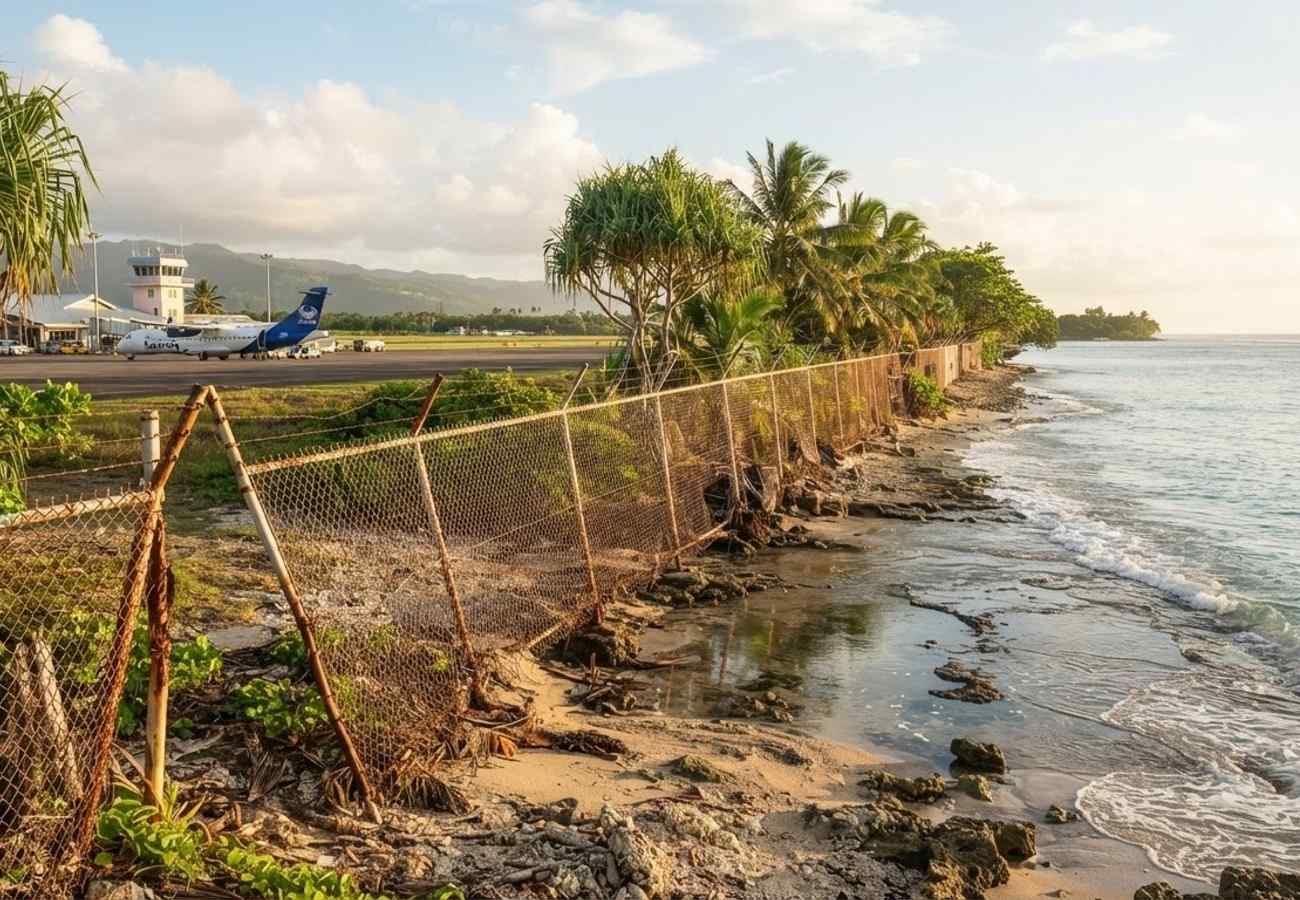
Image generated by AI
Samoa is aggressively upgrading the boundary infrastructure at Faleolo International Airport to secure its primary economic gateway. With visitor numbers climbing and a near-total reliance on air travel, the government has opened tenders for a new perimeter fence to replace deteriorating structures vulnerable to severe tidal conditions.
The Samoa Airport Authority is currently seeking bids for the Faleolo International Airport Boundary Fence Installation, with the closing deadline set for 11am on 21 September 2026. This procurement is not a routine maintenance task; it is a strategic response to accelerating travel demand and increasing climate vulnerability.
Recent data from the Samoa Bureau of Statistics confirms a sharp rebound in tourism. In July 2026, Samoa recorded 27,149 total international arrivals, a 9.9 per cent increase over July 2025 and a 14.7 per cent jump from June 2026.
Critical Aviation Dependence
The scale of Samoa's reliance on Faleolo International Airport is stark. Of the total arrivals in July 2026, 94.6 per cent entered the country by air. When isolating visitors specifically (excluding cruise passengers), the figure rises to approximately 96.9 per cent.
This concentration of entry points means any failure in airport infrastructure—even a perimeter breach or weather-related closure—creates an immediate bottleneck for the entire national tourism economy.
Infrastructure Vulnerabilities and Coastal Risks
The project is driven by more than simple security. According to the Samoa Ministry of Works Transport and Infrastructure SARIP environmental framework, the existing plastic fence is deteriorating and damaged in several sections.
Supported by a mix of wooden and metal posts, the current system is deemed insufficient to protect airport infrastructure during severe tidal events. Given that Faleolo sits on the north-western coast of Upolu, immediately adjacent to the Pacific Ocean and a coastal lagoon, the perimeter is under constant environmental stress.
July 2026 International Arrival Metrics
| Indicator | July 2026 Data | Industry Significance |
|---|---|---|
| Total International Arrivals | 27,149 | Increased pressure on gateway assets |
| Year-on-Year Arrival Growth | 9.9% | Rising demand for support infrastructure |
| Total Visitors | 21,482 | Strong inbound travel momentum |
| Visitor Growth (Year-on-Year) | 14.0% | Demand outpacing general arrival growth |
| Visitor Growth (vs. June) | 18.8% | Rapid month-on-month acceleration |
| Arrivals via Air | 94.6% | Critical dependence on aviation continuity |
| New Zealand Visitors | 11,239 | 52.3% of July visitor market |
| Australia Visitors | 4,247 | 19.8% of July visitor market |
| United States Visitors | 2,540 | 11.8% of July visitor market |
| Hotel/Motel Guests | 8,468 | Direct downstream economic exposure |
The Broader Resilience Strategy
The fence replacement is a component of the larger Samoa Aviation and Roads Investment Project (SARIP), backed by a US$66 million World Bank approval. This comprehensive program addresses systemic vulnerabilities that led to severe operational disruptions during extreme weather events in 2018 and 2020.
The SARIP framework includes:
- Flood Mitigation: Drainage master planning and a flood-hazard assessment based on one-in-100-year events.
- Coastal Defense: Seawall rehabilitation and the integration of nature-based solutions like mangrove restoration and bioswales.
- Operational Safety: Reducing the risk of airport incursions to protect community health and aviation safety.
Resilience Mapping: Risk vs. Response
| Identified Exposure | Infrastructure Response | Impact on Trade & Travel |
|---|---|---|
| Deteriorating Perimeter | New Boundary Fence | Enhanced controlled environment |
| Severe Tidal Events | Climate-Resilient Design | Reduced risk of perimeter failure |
| Flood Risk | Drainage Master Planning | Guaranteed operational continuity |
| Coastal Erosion | Seawalls & Mangroves | Protection of primary gateway assets |
| Airfield Water Pooling | Drainage Improvements | Faster recovery from heavy rainfall |
Why This Matters: The Gateway Concentration Risk
From a logistical perspective, Samoa faces an extreme "Gateway Concentration Risk." Unlike diversified hubs, Samoa has almost no viable alternative for international visitor entry.
When 96.9 per cent of visitors rely on a single airfield, the "secondary" infrastructure—such as a boundary fence—becomes a primary economic asset. A breach in the perimeter during a tidal surge isn't just a security lapse; it is a threat to the continuity of the tourism supply chain. For B2B operators, including hotel owners and tour providers, the resilience of Faleolo is the single most important variable in their revenue stability.
Industry Outlook
Market trends suggest that Samoa will continue to see double-digit growth in the visitor segment, as evidenced by the 10.5 per cent increase in visitors from January to July 2026 (108,528) compared to the same period in 2025 (98,192).
Expect further investments in "hard" infrastructure (seawalls) and "soft" infrastructure (environmental management) as the government attempts to decouple its tourism growth from climate vulnerability. The success of the September 21 tender will be the first litmus test for this new phase of coastal resilience.
Samoa is betting that reinforced borders are the only way to protect an open-door tourism economy.
Related Travel Guides
Disclaimer
This article is for informational and educational purposes only. It does not constitute legal, financial, or professional advice. While we strive to provide accurate and up-to-date information, travel policies, regulations, and conditions change rapidly. Always verify information with official sources before making travel decisions. Nomad Lawyer makes no representations about the accuracy, reliability, completeness, or suitability of the information provided. Readers should consult qualified professionals for advice specific to their circumstances. The views expressed in this article are those of the author and do not necessarily reflect the views of Nomad Lawyer.
Preeti Gunjan
Contributor & Community Manager
A passionate traveller and community builder. Preeti helps grow the Nomad Lawyer community, fostering engagement and bringing the reader experience to life.
Learn more about our team →