
How Ryanair First Quarter Profit Falls Thirty-Four Percent Despite Carrying Record Sixty-One Million Passengers Across Europe in 2026
Ryanair's first-quarter profit declines by 34 percent to 538 million euros due to lower average fares and unhedged fuel costs, despite record passenger traffic.

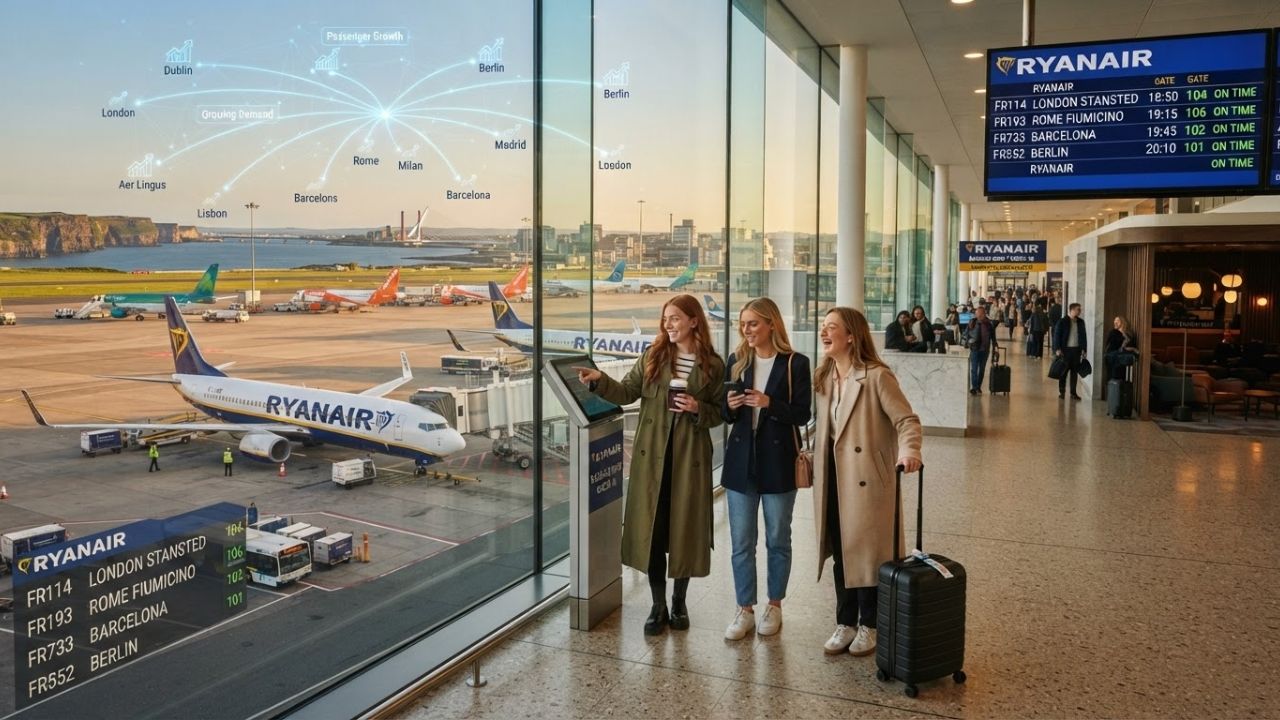
Image generated by AI
[Dublin, July 21, 2026] — Financial reports indicate that Ryanair first-quarter profit fell by 34 percent despite the carrier transporting a record 61.3 million passengers. The drop was driven by lower average airfares and a rise in unhedged fuel expenses. Although the airline continues to expand its route network and fleet, geopolitical uncertainty in the Middle East and rising operating costs are placing pressure on short-haul airline earnings across Europe.
Pricing Pressure and Rising Operating Costs Squeeze Airline Margins
For the first quarter ending June 2026, the carrier reported profit after tax of 538 million euros, representing a decline from the 820 million euros recorded during the same period in the previous year. This drop occurred despite a 6 percent increase in passenger traffic, up from 57.9 million travelers last year, and a load factor of 94 percent.
The financial contraction was primarily caused by:
- Lower Average Airfares: Ticket pricing fell by approximately 6 percent, impacted by changes in the Easter holiday calendar and regional travel caution linked to Middle Eastern conflicts.
- Unhedged Fuel Prices: The cost for the 20 percent unhedged portion of the airline's fuel requirements rose to approximately 150 US dollars per barrel.
- Operating Expenses: Total operating costs climbed by 11 percent to 3.81 billion euros, driven by fuel inflation and the end of supplier compensation for Boeing deliveries.
Although ticket revenues declined, the airline recorded total revenue of 4.38 billion euros, up 1 percent from 4.34 billion euros in the previous year. Scheduled flight revenue fell to 2.91 euros, while ancillary revenue (including baggage fees and reserved seating) rose to 1.47 billion euros.
Low-Cost Carrier Fleet Expansion and Fleet Strategy Drive Growth
To support long-term traffic targets, the airline operates a fleet of 647 aircraft, including all 210 Boeing 737-8200 Gamechanger jets. The carrier expects Boeing to certify the larger MAX-10 aircraft by late summer 2026, with the first 15 deliveries scheduled for Spring 2027. Ryanair has ordered 300 MAX-10 aircraft, with deliveries extending through March 2034, which are expected to reduce fuel consumption by 20 percent and increase passenger capacity by 20 percent.
Additionally, the carrier is retrofitting its Boeing 737NG fleet with winglets, a modification expected to reduce fuel burn by 1.5 percent and lower noise levels by 6 percent. To manage future oil market volatility, the carrier has hedged:
- Current Financial Year (ending March 2027): 80 percent of requirements hedged at approximately 67 US dollars per barrel.
- Following Financial Year: 15 percent of needs hedged at approximately 85 US dollars per barrel.
Capacity Shifts and Aviation Policy Adjustments Across European Markets
The carrier is adjusting its fleet deployment based on local airport charges and aviation taxes. For the Summer 2026 season, the airline opened three new bases in Rabat (Morocco), Tirana (Albania), and Trapani (Italy), introducing 130 new routes across its network.
The airline is increasing capacity in countries offering competitive airport charges:
- Albania
- Italy
- Morocco
- Slovakia
- Sweden
Conversely, passenger capacity is being reduced in markets with higher operating costs and environmental taxes, including Austria, Germany, regional airports in Spain, and Ireland (specifically Dublin).
Financial Health Indicators and Share Buyback Performance
Despite lower quarterly profits, the airline maintains a strong balance sheet. By the end of June 2026, the carrier held 2.8 billion euros in cash after repaying 1.3 billion euros in debt and investing 500 million euros in capital expenditure. The repayment of its final 1.2 billion euro bond leaves the Group effectively debt-free.
The Group's financial position is supported by:
- Revolving Credit: An unused 1.1 billion euro credit facility.
- Unencumbered Assets: A fleet of 620 Boeing 737 aircraft owned outright.
- Credit Rating: Investment-grade BBB+ credit ratings.
- Share Buyback: The carrier has completed 90 percent of its 750 million euro share buyback, cancelling over 25 million shares at an average price of 26.35 euros.
Summary of Ryanair First-Quarter Performance (Q1 2026)
The following table summarizes the financial and operational metrics for the first quarter ending June 2026.
| Metric / Parameter | Q1 Previous Year | Q1 2026 (Current Year) | Percentage Change | Key Drivers |
|---|---|---|---|---|
| Passenger Traffic | 57.9 million | 61.3 million | +6% | High demand and network expansion |
| Profit After Tax | 820 million euros | 538 million euros | -34% | Lower fares, unhedged fuel costs |
| Total Revenue | 4.34 billion euros | 4.38 billion euros | +1% | Offset by rising ancillary sales |
| Operating Costs | 3.43 billion euros | 3.81 billion euros | +11% | Fuel prices, supplier compensation end |
| Cash Holdings | - | 2.8 billion euros | - | Supported by debt repayments |
| Fuel Price (Unhedged) | - | ~$150 per barrel | - | 20% of fuel exposed to market spot rate |
Long-Term Constraints Shape the Short-Haul Aviation Market
Aviation analysts expect the European short-haul market to face capacity constraints until at least 2030. These constraints are driven by delays in aircraft deliveries from major manufacturers, ongoing maintenance programs for Pratt & Whitney engines, European airline consolidation, air traffic control strikes, and a strong US dollar. These industry challenges are expected to limit overall seat capacity, supporting passenger demand for low-cost options despite rising costs.
While profits have declined, the carrier has maintained its full-year passenger target of 216 million travelers, representing 4 percent annual growth. However, the airline has declined to provide full-year profit guidance, citing unpredictable fuel costs and potential geopolitical disruptions in the Middle East.
Why This Matters (Information Gain)
The drop in Ryanair's Q1 profit highlights the challenges airlines face when balancing low-cost models with unhedged fuel exposure. Even with a high load factor of 94 percent, a 20 percent exposure to spot market fuel prices can impact margins when oil prices reach $150 per barrel. This situation illustrates why airlines prioritize hedging strategies to manage price volatility.
For travelers, this pricing pressure suggests that the period of low fares may be impacted by rising environmental taxes and airport charges. As low-cost carriers redirect capacity to countries with lower taxes, passengers in higher-cost regions like Dublin and Frankfurt may see reduced flight options. This capacity shift highlights how national aviation tax policies directly influence airline network planning and regional connectivity.
Related Travel Guides
Disclaimer
This article is for informational and educational purposes only. It does not constitute legal, financial, or professional advice. While we strive to provide accurate and up-to-date information, travel policies, regulations, and conditions change rapidly. Always verify information with official sources before making travel decisions. Nomad Lawyer makes no representations about the accuracy, reliability, completeness, or suitability of the information provided. Readers should consult qualified professionals for advice specific to their circumstances. The views expressed in this article are those of the author and do not necessarily reflect the views of Nomad Lawyer.
Kunal K Choudhary
Co-Founder & Contributor
A passionate traveller and tech enthusiast. Kunal contributes to the vision and growth of Nomad Lawyer, bringing fresh perspectives and driving the community forward.
Learn more about our team →