
Ryanair Expands Málaga Winter 2026–27 Schedule with 3.4 Million Seats and Six Direct European Routes

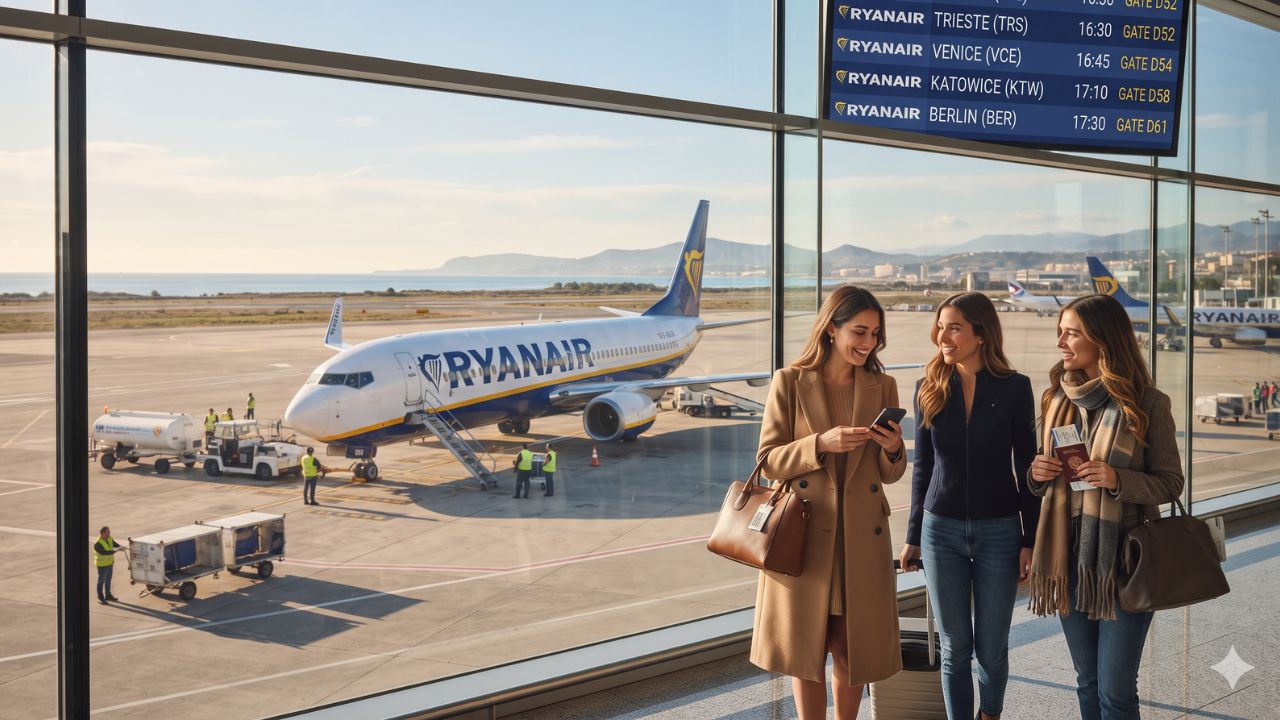
A 48% surge in Italian seat capacity anchors Ryanair's winter 2026–27 expansion at Málaga-Costa del Sol Airport, driving a network total of 3.4 million available seats across 82 European routes. Revealed on 14 October 2026, the carrier's five-month winter timetable adds more than 92,000 seats—a 3% increase over the previous winter—running from late October 2026 through late March 2027.
The capacity deployment marks an aggressive counter-seasonal push to transform Andalusia from a summer beach retreat into a year-round European city-break and remote-work magnet. Supported by 15 based aircraft representing an estimated $1.5 billion capital asset commitment and roughly 6,800 local aviation jobs, the low-cost carrier is opening six winter links across Italy, Poland, Slovakia, and Germany, alongside frequency upgrades across 31 existing European routes.
Off-Peak Mediterranean Strategy Counteracts Summer Seasonality
The decision to scale winter operations coincides with record passenger throughput across southern Spain. Official arrival metrics reported by Spanish airport manager Aena and industry monitors confirm that Málaga Airport processed over 11 million arriving passengers in the first nine months of 2026, registering a 6.7% increase compared to the identical period in 2025.
Historically, airline schedules at Costa del Sol gateways have contracted dramatically between November and March, causing regional hotel closures and suppressed commerce. By locking in 82 direct routes through the colder months, Ryanair is actively capturing decentralized leisure flows and northern European digital nomads seeking mild Mediterranean winter climates.
The expanded network provides direct outbound alternatives for Spanish residents travelling across Central and Eastern Europe, while funneling steady inbound tourist spending into Costa del Sol hospitality, retail, and rental car sectors outside the traditional July–August peak.
Breakdown of Ryanair’s Six New Winter Routes and Regional Upgrades
The six additions combine a return of summer seasonal services into the winter timetable with fresh continental city links. Italy and Poland absorb the bulk of the newly allocated aircraft hours, accompanied by strategic footholds in Slovakia and northern Germany.
| Destination City | Country | Winter Weekly Frequency | Regional Market Impact | Previous Operational Status |
|---|---|---|---|---|
| Venice Marco Polo (VCE) | Italy | 4 weekly flights | Links Costa del Sol to northeastern Italy | Winter schedule debut |
| Turin (TRN) | Italy | 4 weekly flights | Connects Piedmont industrial & ski gateway | Extended into winter operations |
| Trieste (TRS) | Italy | 2 weekly flights | Unlocks Friuli-Venezia Giulia & Balkan border | Winter schedule debut |
| Katowice (KTW) | Poland | 2 weekly flights | Bolsters Silesian industrial basin connectivity | Complementary to existing Krakow services |
| Košice (KSC) | Slovakia | 2 weekly flights | Direct link to eastern Slovak economic center | New Central European route |
| Hamburg (HAM) | Germany | 2 weekly flights | Establishes northern German corporate & leisure link | Winter schedule debut |
Beyond the six highlighted destinations, Ryanair is adding flight frequencies across 31 existing European city pairs from Málaga. Key corridors receiving supplemental weekly rotations include Rome, Cologne, Porto, Krakow, and Budapest.
Poland in particular records a 30% jump in overall winter seat allocations, bolstered by the Katowice route operating alongside higher weekly frequencies to Krakow. Italy's 48% overall capacity expansion is supported by eight combined weekly rotations into Venice and Turin, establishing substantial frequency for short weekend city breaks. To drive early cabin load factors, promotional introductory seats were priced from €24.99 for bookings confirmed before Monday, 19 October 2026.
Expert Analysis: Base Economics and Point-to-Point Yield Warfare
Ryanair's winter expansion at Málaga demonstrates the microeconomics of low-cost carrier fleet basing under the oversight of the European Union Aviation Safety Agency (EASA). Parking 15 Boeing 737 aircraft overnight at Málaga rather than northern European airports reduces de-icing overhead, mitigates severe weather turnaround disruptions, and secures favorable off-peak landing fees negotiated under multi-year airport development agreements.
For travellers, the direct consequence is severe downward pricing pressure on mid-haul European leisure corridors. By adding 92,000 off-peak seats, Ryanair forces legacy carriers and mid-tier hybrid airlines to lower base tariffs across Andalusia. The availability of four weekly flights on business-adjacent routes like Turin and Venice transforms what was once an expensive multi-segment journey into a viable low-fare weekend itinerary.
However, consumers must calculate total journey expenditures carefully. Ryanair’s unbundled revenue model means that base seat prices starting at €24.99 frequently quadruple once cabin bags, allocated seating, and airport mobility fees are factored into the checkout transaction.
Furthermore, point-to-point winter operations carry distinct operational characteristics. Secondary gateways such as Košice and Katowice experience freezing fog and de-icing queues during peak winter months. Because low-cost operating models allow tight 25-minute aircraft turns, single-aircraft rotations that experience morning delays in Central Europe tend to compound throughout the day, creating late-afternoon return flight delays back into Málaga.
Key Takeaways
- 3.4 Million Winter Seats: Ryanair will operate 82 routes with more than 3.4 million seats from Málaga between late October 2026 and late March 2027, adding over 92,000 seats to its previous winter baseline.
- Six European Additions: Direct winter links open to Venice Marco Polo (4x weekly), Turin (4x weekly), Trieste (2x weekly), Katowice (2x weekly), Košice (2x weekly), and Hamburg (2x weekly).
- Italy and Poland Expansion: Planned seat capacity jumps 48% across Italian routes and 30% across Polish connections, reinforced by frequency hikes on 31 existing services including Rome, Krakow, and Budapest.
- Based Fleet Anchor: The entire seasonal schedule is sustained by 15 permanently based aircraft at Málaga-Costa del Sol Airport, representing a $1.5 billion investment supporting 6,800 regional aviation jobs.
- Record Airport Momentum: Expansion follows a 6.7% year-on-year surge in arriving traffic at Málaga Airport, which handled more than 11 million incoming passengers through September 2026.
FAQ: Ryanair Málaga Winter Schedule 2026–2027
Which new winter destinations is Ryanair adding from Málaga in 2026?
Ryanair is introducing six direct connections: Venice Marco Polo, Turin, Trieste, Katowice, Košice, and Hamburg, operating between late October 2026 and late March 2027.
How many aircraft does Ryanair base at Málaga Airport?
Ryanair maintains 15 based aircraft at Málaga-Costa del Sol Airport, supporting an 82-route network and more than 6,800 local direct and indirect jobs.
Are existing Ryanair routes from Málaga getting more flights this winter?
Yes. Ryanair is increasing frequencies on 31 established routes, including Rome, Cologne, Porto, Krakow, and Budapest, pushing total winter capacity past 3.4 million seats.
What was the deadline for Ryanair’s €24.99 promotional winter fares?
The introductory promotional tariff starting at €24.99 applied to qualifying winter travel bookings confirmed through Ryanair’s platforms before Monday, 19 October 2026.
Related Travel Guides
- Air Canada Mexico Route Adjustments and Passenger Rights 2026
- China Airlines Baggage and Pet Travel Fee Revision Guide 2026
- Ryanair Malaga Winter Flight Routes and Costa del Sol Guide Reddit 2026
By anchoring 15 aircraft in southern Spain through the coldest months, Ryanair turns summer leisure capital into a year-round engine of European point-to-point mobility.
Disclaimer
This article is for informational and educational purposes only. It does not constitute legal, financial, or professional advice. While we strive to provide accurate and up-to-date information, travel policies, regulations, and conditions change rapidly. Always verify information with official sources before making travel decisions. Nomad Lawyer makes no representations about the accuracy, reliability, completeness, or suitability of the information provided. Readers should consult qualified professionals for advice specific to their circumstances. The views expressed in this article are those of the author and do not necessarily reflect the views of Nomad Lawyer.
Raushan Kumar
Founder & Lead Developer
Full-stack developer with 11+ years of experience and a passionate traveller. Raushan built Nomad Lawyer from the ground up with a vision to create the best travel and law experience on the web.
Learn more about our team →