
Spain Europe Aviation: Ryanair Opens €25M Madrid Maintenance Hub
Ryanair inaugurates a €25 million maintenance facility at Madrid Barajas in March 2026, signaling major growth in Spain Europe aviation infrastructure and reinforcing the airline's commitment to European operations.

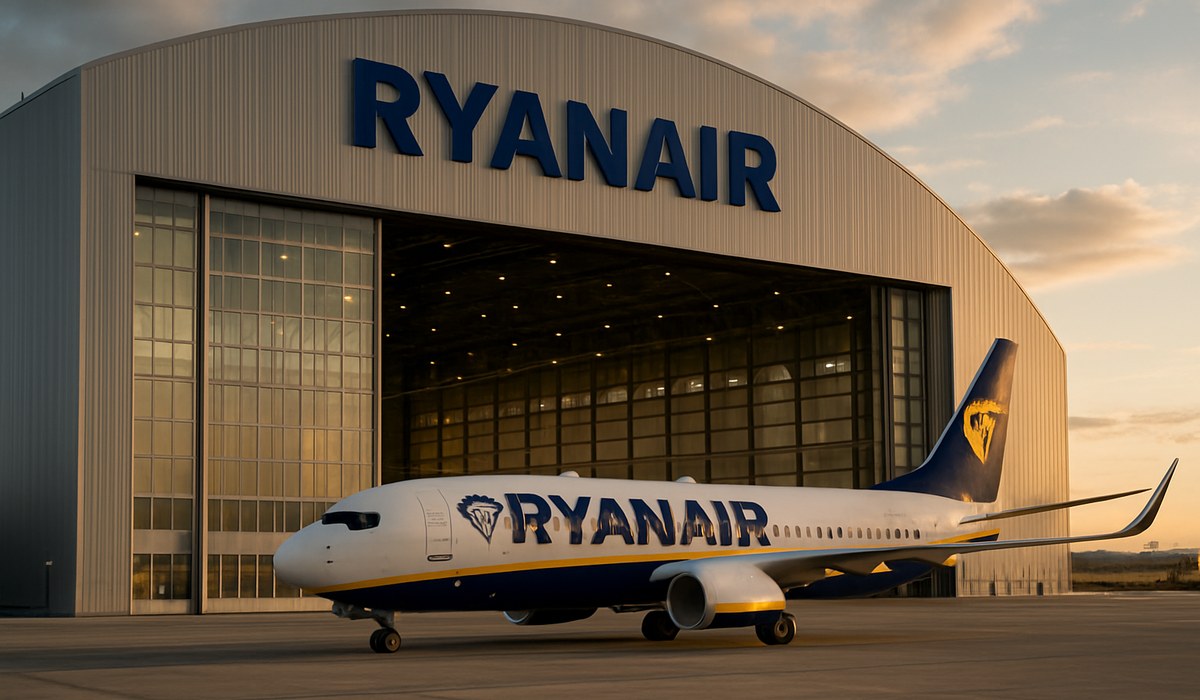
Image generated by AI
Ryanair's Strategic Investment Transforms Spain Europe Aviation Landscape
Ryanair, Europe's largest low-cost carrier, has officially opened a €25 million maintenance facility at Madrid Barajas Airport (MAD), marking a pivotal expansion for Spain Europe aviation infrastructure. The new hangar represents the Irish airline's most ambitious infrastructure project in Spain to date. This development underscores Ryanair's long-term commitment to the Iberian Peninsula and positions Madrid as a critical maintenance hub for the carrier's expanding European fleet.
The facility strengthens Spain's position as a regional aviation powerhouse. With this investment, Ryanair signals confidence in sustained travel demand across southern Europe through 2026 and beyond.
Madrid Barajas Airport Becomes Central to European Airline Operations
Madrid Barajas (MAD) has emerged as a focal point for major airlines modernizing their European networks. The 8,217-square-meter hangar complex accommodates simultaneous maintenance work on multiple narrow-body aircraft. The airport's location makes it an ideal hub for Ryanair to service aircraft operating routes across Spain, Portugal, and North Africa.
The Spanish capital's infrastructure upgrades reflect broader trends in European aviation. Major carriers recognize Madrid's geographic advantages and efficient ground operations. This facility enables faster turnarounds and reduces maintenance costs, ultimately benefiting Spanish travelers through improved schedule reliability. According to IATA, such regional maintenance hubs are essential for sustaining European airline profitability.
Technical Specifications and Operational Capacity
The maintenance hangar spans 8,217 square meters of climate-controlled workspace. The facility features advanced diagnostic equipment, spare parts storage, and specialized bays for engine and airframe work. Ryanair can simultaneously service four Boeing 737 aircraft—a capacity that increases efficiency across its Spanish route network.
The hangar operates around the clock, supporting predictive and scheduled maintenance programs. This operational model minimizes aircraft downtime and keeps more planes available for revenue flights. The investment reflects industry standards outlined by the FAA for modern aircraft maintenance centers. Such facilities directly impact service reliability for passengers traveling between Spain and other European destinations throughout 2026.
Employment Growth and Economic Impact in Madrid
The maintenance hub creates approximately 500 direct jobs for aircraft mechanics, electricians, and support technicians. Ryanair recruited skilled workers from Spain's aviation sector, offering competitive wages and career advancement opportunities. The facility also supports indirect employment through supply chain contractors and logistics providers.
This expansion demonstrates how major airlines drive economic development beyond ticket sales. Madrid's engineering and technical workforce benefits from high-skilled employment opportunities. The €25 million capital investment circulates through local economies via wages, equipment procurement, and facility maintenance contracts. Spain Europe aviation employment figures now reflect stronger regional workforce demand.
Strategic Implications for Spain Europe Aviation Expansion
Ryanair's commitment to Madrid reflects confidence in Spain's travel market stability. The airline operates over 60 routes from Spanish airports, carrying approximately 40 million passengers annually. With this hub operational, the carrier can better support route expansion and fleet growth across the peninsula.
The facility enables Ryanair to reduce dependency on maintenance partnerships elsewhere in Europe. Owning dedicated infrastructure strengthens operational resilience and cost control. For Spanish travelers, this means potentially improved flight frequencies and greater schedule reliability on domestic and international routes. The investment also signals that low-cost carriers view Spain as a long-term growth market, supporting healthy airline competition throughout 2026.
Competitive Dynamics and Industry Implications
Other major European carriers monitor Ryanair's infrastructure plays closely. Maintenance hub investments often precede network expansion announcements. Airlines maximize capital efficiency by ensuring aircraft availability aligns with growing demand. Ryanair's Madrid facility benchmarks operational excellence for competitors like EasyJet and Iberia.
The hub also reflects industry consolidation trends where carriers internalize maintenance operations rather than outsourcing. This vertical integration model reduces external dependencies and improves cost predictability. For consumers, competitive pressure from Ryanair's enhanced efficiency typically translates to competitive fares across Spain Europe aviation markets.
| Facility Metric | Specification |
|---|---|
| Investment Cost | €25 million |
| Hangar Size | 8,217 square meters |
| Aircraft Capacity (Simultaneous) | 4 Boeing 737s |
| Direct Employment Created | ~500 jobs |
| Operating Model | 24/7 operations |
| Location | Madrid Barajas Airport (MAD) |
| Primary Aircraft Type | Boeing 737 family |
| Maintenance Coverage | Scheduled and predictive services |
| Geographic Reach | Spain, Portugal, North Africa routes |
| Implementation Timeline | Q1 2026 launch |
What This Means for Travelers
Ryanair's new Madrid maintenance facility directly benefits passengers flying Spanish routes:
-
Improved Schedule Reliability — More aircraft available simultaneously reduces cancellations and delays caused by maintenance bottlenecks.
-
Faster Aircraft Turnarounds — Advanced diagnostic equipment means quicker maintenance cycles, enabling more daily flight operations.
-
Expanded Route Potential — With dedicated maintenance support, Ryanair can confidently add new Spanish routes, increasing travel options and competitive pricing.
-
Career Opportunities — 500 new jobs create economic activity that supports local hospitality and tourism services.
-
Competitive Fare Environment — Ryanair's cost efficiency improvements put pressure on competitors to match pricing and service quality across Spain Europe aviation markets.
Travelers should monitor Ryanair's 2026 route announcements, as major infrastructure investments typically precede capacity expansions.
Frequently Asked Questions
How does Ryanair's Madrid hangar impact Spain Europe aviation safety standards? The facility operates under strict FAA and EASA (European Union Aviation Safety Agency) certification standards. Modern diagnostic equipment ensures every aircraft meets rigorous airworthiness requirements before each flight. Dedicated maintenance infrastructure typically improves safety compliance and reduces deferred maintenance issues. Travelers can verify current safety records through their airline's official operations documentation.
Will this €25 million investment lead to cheaper flights within Spain Europe aviation markets? The maintenance hub reduces Ryanair's operational costs by internalizing maintenance services. These savings often translate to competitive fares, especially on competitive routes. However, pricing depends on demand, competition, and fuel costs. Booking early and flying off-peak typically offers best prices regardless of maintenance infrastructure investments.
Which Spanish airports benefit most from Ryanair's expanded Madrid operations? Madrid Barajas serves as the distribution point for aircraft serving routes throughout Spain. Secondary airports like Seville (SVQ), Valencia (VLC), and Barcelona (BCN) benefit from increased aircraft availability and potential route additions. Check individual airport websites for flight schedule updates.
What aircraft types does the Madrid maintenance hangar service? The facility focuses on Boeing 737 aircraft, Ryanair's primary narrow-body fleet. The hangar's 8,217-square-meter configuration allows for comprehensive maintenance including engine removals, airframe inspections, and avionics upgrades. Specialized Boeing 737 technicians staff the facility full-time.
Related Travel Guides
Complete Guide to Budget Airlines in Spain 2026 Madrid Barajas Airport MAD: Terminals, Gates, and Ground Transport European Low-Cost Carrier Loyalty Programs: Ryanair, EasyJet, and Alternatives
Disclaimer
Disclaimer
This article is for informational and educational purposes only. It does not constitute legal, financial, or professional advice. While we strive to provide accurate and up-to-date information, travel policies, regulations, and conditions change rapidly. Always verify information with official sources before making travel decisions. Nomad Lawyer makes no representations about the accuracy, reliability, completeness, or suitability of the information provided. Readers should consult qualified professionals for advice specific to their circumstances. The views expressed in this article are those of the author and do not necessarily reflect the views of Nomad Lawyer.
Raushan Kumar
Founder & Lead Developer
Full-stack developer with 11+ years of experience and a passionate traveller. Raushan built Nomad Lawyer from the ground up with a vision to create the best travel and law experience on the web.
Learn more about our team →