
Routes United American Airlines Launch 17-Hour Nonstop Flights in 2026
American, United, and Delta introduce five groundbreaking 17-hour nonstop routes in 2026, fundamentally transforming ultra-long-haul aviation and reshaping travel patterns across the globe.

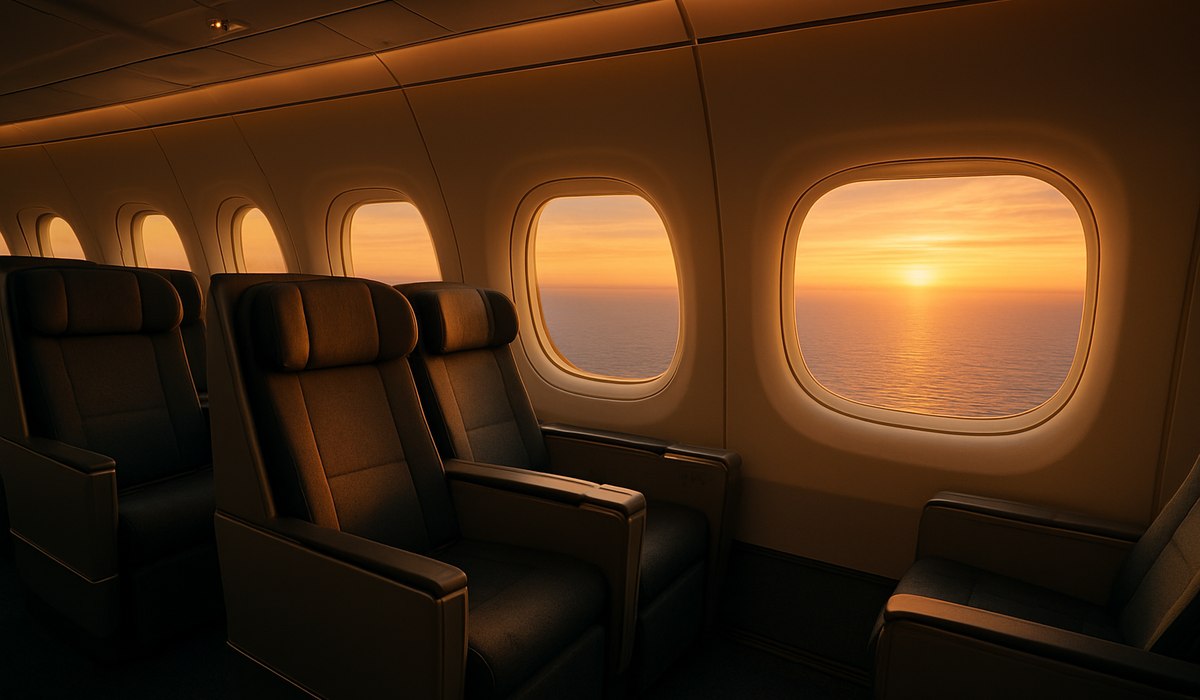
Image generated by AI
The Big Three's Ultra-Long-Haul Strategy Takes Flight
American Airlines, United Airlines, and Delta Air Lines are fundamentally reshaping transatlantic and transpacific aviation with an unprecedented rollout of five new 17-hour nonstop routes. Operating collectively as the US Big Three, these carriers transported approximately 607 million passengers in 2025, commanding 55% of domestic traffic according to the US Department of Transportation. Their latest expansion signals confidence in extended-range aircraft capabilities and growing passenger appetite for direct international connectivity, even across grueling flight durations.
The strategic rationale stems from several converging factors: newer aircraft like the Boeing 777-9 and Airbus A350-1000 offer unprecedented fuel efficiency, while digital nomads and remote workers increasingly prioritize flight duration minimization. Airlines project significant revenue uplift from premium cabin demand on these routes, where passengers willingly pay premium fares to avoid connecting flights and multi-day itineraries.
Five New 17-Hour Nonstop Routes Explained
The inaugural wave includes routes spanning both Atlantic and Pacific gateways. American Airlines is launching service between Newark (EWR) and Singapore (SIN), while United operates new nonstop flights from San Francisco (SFO) to London Gatwick (LGW) and Los Angeles (LAX) to Tokyo Haneda (HND). Delta announced services connecting Atlanta (ATL) to Frankfurt (FRA) and Los Angeles to Sydney (SYD), though seasonal scheduling will apply to the Sydney route initially.
Each of these routes United and American have prioritized carries substantial business and premium leisure demand. The Newark-Singapore corridor particularly interests corporate travelers seeking single-stop connectivity throughout Southeast Asia. United's Pacific expansion capitalizes on Bay Area tech industry demand, while Delta's transatlantic push leverages Atlanta's existing European network. Implementation phases begin in late 2026, with full operational status expected by early 2027.
Aircraft assignments feature the latest wide-body technology. American deployed Boeing 787-10 Dreamliners, known for superior cabin pressure and humidity control on extended flights. United's aircraft configuration includes Airbus A350-1000 variants with enhanced business class suites. Delta selected both Boeing 777-9 and Airbus A350 models depending on route-specific optimization studies. All aircraft feature advanced cabin crew rest areas, critical amenities for flights approaching the 17-hour threshold.
Real-Time Flight Tracking and Operational Monitoring
Travelers monitoring these new routes United operates can access live tracking through FlightAware, providing real-time altitude, speed, and estimated arrival data. The Federal Aviation Administration FAA maintains strict safety protocols for ultra-long-haul operations, requiring enhanced crew fatigue management and contingency planning.
Airlines have invested in sophisticated weather routing systems and alternate airport planning to mitigate risks associated with extended flight durations. Operational procedures now include mandatory crew rest periods that align with circadian rhythm science, reducing fatigue-related incidents. Ground handling procedures at primary gateways have been upgraded to accommodate rapid turnaround requirements, critical for maximizing aircraft utilization on capital-intensive long-haul routes.
Competitive Implications and Industry Impact
The emergence of these 17-hour nonstop routes intensifies competition among US carriers while simultaneously challenging international competitors like Singapore Airlines, Lufthansa, and Japan Airlines. By eliminating connecting flights, American, United, and Delta compress travel time dramatically—a journey from Los Angeles to Sydney traditionally required 14-16 hours of flight time plus 3-5 hour layovers, now achievable in 17 continuous hours with superior amenity standards.
Pricing strategies remain fluid. Initial fares for premium cabins range from $8,000 to $14,000, positioning these routes as premium lifestyle choices rather than mass-market solutions. However, carrier projections suggest economy fares will stabilize between $1,800 and $2,400 within 12-18 months as market competition intensifies and aircraft efficiency improves through operational refinement.
Network effects compound these advantages. American's hub strategy in Dallas and Charlotte gains efficiency when passengers can reach Singapore or other Asian markets without intermediate stops. United's SFO-Gatwick route directly competes with British Airways' transatlantic dominance, while Delta's Atlanta-Frankfurt connection enhances its position as America's leading European gateway carrier.
What This Means for Digital Nomads and Remote Workers
These ultra-long-haul routes United and American are launching directly address pain points for location-independent professionals. Digital nomads formerly managed 20-25 hour journeys through multiple airports; seventeen hours compress that experience while preserving workplace productivity through premium cabin workspace amenities.
United's San Francisco to London route particularly serves Silicon Valley remote workers maintaining Pacific-timezone office hours while residing in Europe. American's Newark-Singapore corridor appeals to tech professionals coordinating across Asia-Pacific hubs. Premium cabin features—including lie-flat beds, dedicated work stations with power and Wi-Fi, and shower spas in select aircraft—transform the flying experience into functional workspaces rather than downtime.
Cost considerations remain paramount for the remote work community. While premium fares appear prohibitive at $12,000+, strategic booking 60-90 days in advance, airline loyalty benefits accumulation, and corporate partnerships may reduce effective costs by 25-40%. Business class points redemptions through airline frequent flyer programs often require 150,000-200,000 miles, achievable through aggressive credit card spending and elite status bonuses.
Ultra-Long-Haul Data and Operations Overview
| Route | Airline | Aircraft | Duration | Launch Date | Primary Market |
|---|---|---|---|---|---|
| Newark-Singapore | American | Boeing 787-10 | 17 hrs | Late 2026 | Business/Tech |
| San Francisco-London | United | Airbus A350-1000 | 16.5 hrs | Q4 2026 | Corporate/Leisure |
| Los Angeles-Tokyo | United | Airbus A350-1000 | 15.5 hrs | Q1 2027 | Tech/Tourism |
| Atlanta-Frankfurt | Delta | Boeing 777-9 | 16 hrs | Late 2026 | Business/Connections |
| Los Angeles-Sydney | Delta | Airbus A350 | 17 hrs | Seasonal 2027 | Leisure/Premium |
Traveler Action Checklist
If you're considering routes United operates or competing American and Delta nonstop services, implement these essential steps:
-
Monitor booking windows: Set calendar reminders for 60-90 days before travel. Ultra-long-haul premium seats experience rapid sell-through; early booking captures optimal pricing.
-
Evaluate cabin configurations: Review specific aircraft types and premium cabin layouts on each airline's website. Lie-flat business class availability varies dramatically between Boeing 787-10, Airbus A350-1000, and 777-9 variants.
-
Verify frequent flyer award availability: Contact airline elite customer service to confirm premium seat award inventory before committing points. Standard search tools often underestimate available inventory.
-
Plan pre-flight and post-flight logistics: Seventeen-hour flights create circadian disruption; schedule recovery time strategically around arrival. Business class amenities mitigate fatigue but don't eliminate it.
-
Understand passenger rights and compensation: Review US DOT regulations on US Department of Transportation regarding cancellations, delays, and denied boarding on international routes.
-
Verify health and wellness requirements: Consult your physician regarding deep vein thrombosis prevention, especially
Disclaimer
This article is for informational and educational purposes only. It does not constitute legal, financial, or professional advice. While we strive to provide accurate and up-to-date information, travel policies, regulations, and conditions change rapidly. Always verify information with official sources before making travel decisions. Nomad Lawyer makes no representations about the accuracy, reliability, completeness, or suitability of the information provided. Readers should consult qualified professionals for advice specific to their circumstances. The views expressed in this article are those of the author and do not necessarily reflect the views of Nomad Lawyer.
Kunal K Choudhary
Co-Founder & Contributor
A passionate traveller and tech enthusiast. Kunal contributes to the vision and growth of Nomad Lawyer, bringing fresh perspectives and driving the community forward.
Learn more about our team →